Juan Espindola - Böcker
Visar alla böcker från författaren Juan Espindola. Handla med fri frakt och snabb leverans.
4 produkter
4 produkter
Del 248 - Proceedings of the British Academy
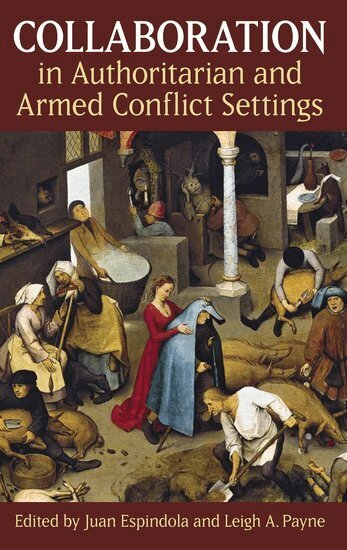
Collaboration in Authoritarian and Armed Conflict Settings
Inbunden, Engelska, 2022
1 049 kr
Skickas inom 7-10 vardagar
Who is the collaborator, or in whose eyes? What is the motivation to collaborate: for material gain, for ideology, for duty? When is collaboration betraying a hated enemy, and when is it something else: personal revenge or an instrumental, rational, or even coerced response to a situation, for example? Why do collaborators meet such harsh punishment and stigma when they are revealed as such? Can they ever atone or find redemption? Beyond the perception of the stakeholders involved, how harmful is collaboration? Does it exacerbate or abate violence? Is it always evil or can it sometimes be seen as mitigating wrongs? The chapters in Collaboration in Authoritarian and Armed Conflict Settings explore these thorny questions through a set of case studies, disciplinary approaches, and temporal and regional contexts. They show the range of the types of collaboration; the ubiquity of collaboration across time, countries, political systems, and political and cultural conflicts.
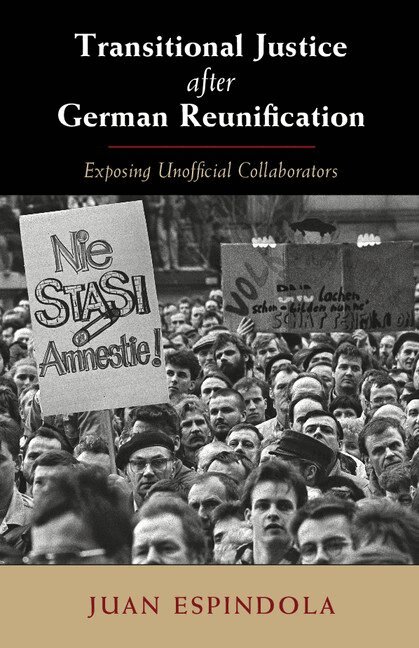
Transitional Justice after German Reunification
Exposing Unofficial Collaborators
Inbunden, Engelska, 2015
782 kr
Skickas inom 7-10 vardagar
How do societies transitioning from oppressive to democratic rule hold accountable those citizens who contributed to maintaining injustice in the ancient regime by secretly denouncing fellow citizens? Is their public identification a way of fulfilling respect for those who suffered harm as a result of their collaboration? And is public identification respectful of denunciators themselves? This book pursues these questions through a multidisciplinary investigation focusing on the denunciators for the East German secret police and the Ministry of State Security and the way in which they have been publicly unveiled in contemporary German society. The book evaluates the justifications that social actors offer to support or oppose public identifications; how targeted collaborators react to this social practice; and whether it achieves its intended purpose. At every stage, the book asks whether the motivations and the consequences of public identifications honor or undermine the value of respect for people.
Atrocity Without Punishment
A Political Theory of Leniency in Mexico's War on Drugs
Inbunden, Engelska, 2026
1 023 kr
Skickas inom 7-10 vardagar
Leniency might sometimes be the ethical response to atrocity. However, the more extraordinary an act of violence is, the greater the compulsion to severely punish the offender. The rationale is that the threat of harsh punishment will be more effective at preventing crime. At the same time, the notion that the criminal justice system is corrupt and ineffective has become commonplace. At the center of these conflicting trends is a puzzle that this book sets out to solve: what if punishment should not only be judged by its effectiveness, but also by its morality? Mexico's War on Drugs has unleashed an endless cycle of violence in the country. The resulting human toll is catastrophic. Atrocity Without Punishment advances ethically compelling reasons to impose lenient sentences on offenders involved in drug trafficking, including many who commit serious offenses. Juan Espíndola argues that this is in fact a morally permissible, even obligatory, way to hold perpetrators accountable.From this vantage point, Espíndola problematizes the relationship between punishment and core political values such as legitimacy and justice. By challenging the criminal justice system in this way, he charts a path toward a more just criminal legal system that can muster the support of those who reject abolitionism.
Atrocity Without Punishment
A Political Theory of Leniency in Mexico's War on Drugs
Häftad, Engelska, 2026
248 kr
Skickas inom 7-10 vardagar
Leniency might sometimes be the ethical response to atrocity. However, the more extraordinary an act of violence is, the greater the compulsion to severely punish the offender. The rationale is that the threat of harsh punishment will be more effective at preventing crime. At the same time, the notion that the criminal justice system is corrupt and ineffective has become commonplace. At the center of these conflicting trends is a puzzle that this book sets out to solve: what if punishment should not only be judged by its effectiveness, but also by its morality? Mexico's War on Drugs has unleashed an endless cycle of violence in the country. The resulting human toll is catastrophic. Atrocity Without Punishment advances ethically compelling reasons to impose lenient sentences on offenders involved in drug trafficking, including many who commit serious offenses. Juan Espíndola argues that this is in fact a morally permissible, even obligatory, way to hold perpetrators accountable.From this vantage point, Espíndola problematizes the relationship between punishment and core political values such as legitimacy and justice. By challenging the criminal justice system in this way, he charts a path toward a more just criminal legal system that can muster the support of those who reject abolitionism.