Juan Luis Rodriguez – författare
Visar alla böcker från författaren Juan Luis Rodriguez. Handla med fri frakt och snabb leverans.
5 produkter
5 produkter
Inbunden, Engelska, 2020
1 396 kr
Skickas inom 10-15 vardagar
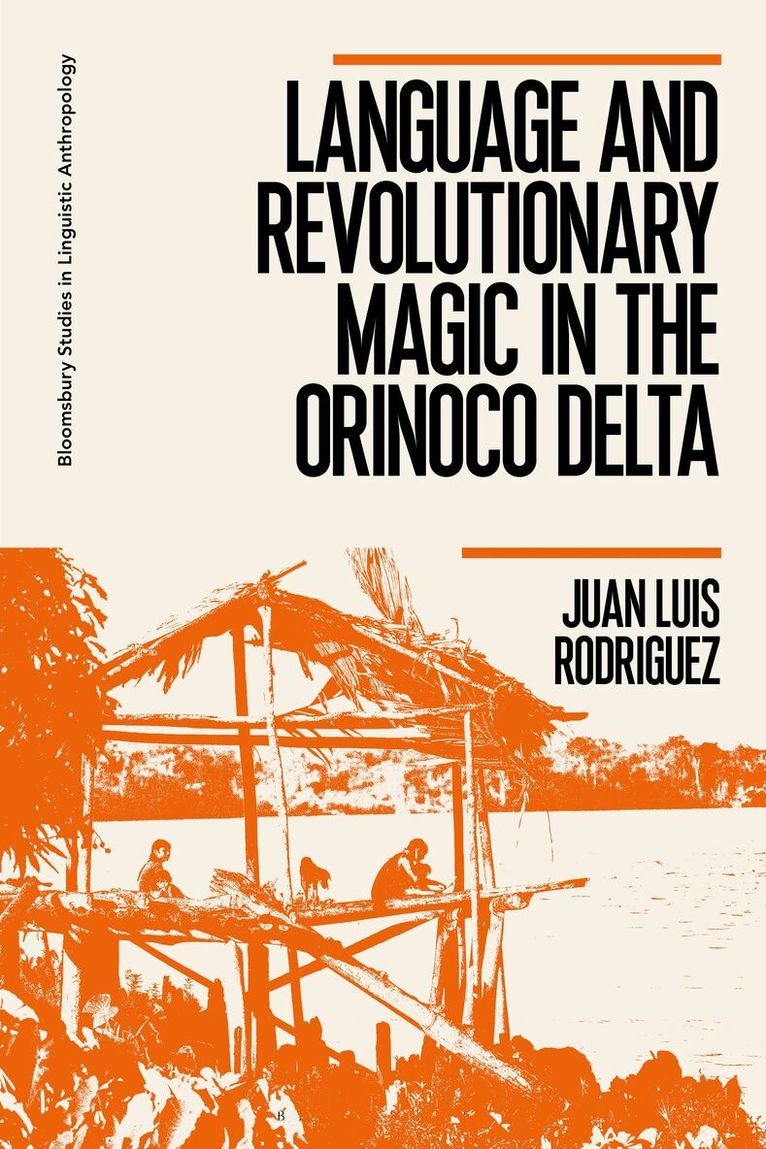
Winner of the 2021 New Voices Book Award by the Society for Linguistic AnthropologyExploring the ways in which the development of linguistic practices helped expand national politics in remote, rural areas of Venezuela, Language and Revolutionary Magic in the Orinoco Delta situates language as a mediating force in the creation of the 'magical state'. Focusing on the Waraos speakers of the Orinoco Delta, this book explores center–periphery dynamics in Venezuela through an innovative linguistic anthropological lens. Using a semiotic framework informed by concepts of 'transduction' and 'translation', this book combines ethnographic and historical evidence to analyze the ideological mediation and linguistic practices involved in managing a multi-ethnic citizenry in Venezuela. Juan Luis Rodriguez shows how indigenous populations participate in the formation and contestation of state power through daily practices and the use of different speech genres, emphasising the performative and semiotic work required to produce revolutionary subjects. Establishing the centrality of language and semiosis in the constitution of authority and political power, this book moves away from seeing revolution in solely economic or ideological terms. Through the collision between Warao and Spanish, it highlights how language ideologies can exclude or integrate indigenous populations in the public sphere and how they were transformed by Hugo Chavez' revolutionary government to promote loyalty to the regime.
E-bok
PDF, Engelska, 2020500 kr
Läs direkt efter köp
Winner of the 2021 New Voices Book Award by the Society for Linguistic AnthropologyExploring the ways in which the development of linguistic practices helped expand national politics in remote, rural areas of Venezuela, Language and Revolutionary Magic in the Orinoco Delta situates language as a mediating force in the creation of the ''magical state''. Focusing on the Waraos speakers of the Orinoco Delta, this book explores center–periphery dynamics in Venezuela through an innovative linguistic anthropological lens. Using a semiotic framework informed by concepts of ''transduction'' and ''translation'', this book combines ethnographic and historical evidence to analyze the ideological mediation and linguistic practices involved in managing a multi-ethnic citizenry in Venezuela. Juan Luis Rodriguez shows how indigenous populations participate in the formation and contestation of state power through daily practices and the use of different speech genres, emphasising the performative and semiotic work required to produce revolutionary subjects. Establishing the centrality of language and semiosis in the constitution of authority and political power, this book moves away from seeing revolution in solely economic or ideological terms. Through the collision between Warao and Spanish, it highlights how language ideologies can exclude or integrate indigenous populations in the public sphere and how they were transformed by Hugo Chavez'' revolutionary government to promote loyalty to the regime.
E-bok
Engelska, 2020482 kr
Läs direkt efter köp
Winner of the 2021 New Voices Book Award by the Society for Linguistic AnthropologyExploring the ways in which the development of linguistic practices helped expand national politics in remote, rural areas of Venezuela, Language and Revolutionary Magic in the Orinoco Delta situates language as a mediating force in the creation of the ''magical state''. Focusing on the Waraos speakers of the Orinoco Delta, this book explores center–periphery dynamics in Venezuela through an innovative linguistic anthropological lens. Using a semiotic framework informed by concepts of ''transduction'' and ''translation'', this book combines ethnographic and historical evidence to analyze the ideological mediation and linguistic practices involved in managing a multi-ethnic citizenry in Venezuela. Juan Luis Rodriguez shows how indigenous populations participate in the formation and contestation of state power through daily practices and the use of different speech genres, emphasising the performative and semiotic work required to produce revolutionary subjects. Establishing the centrality of language and semiosis in the constitution of authority and political power, this book moves away from seeing revolution in solely economic or ideological terms. Through the collision between Warao and Spanish, it highlights how language ideologies can exclude or integrate indigenous populations in the public sphere and how they were transformed by Hugo Chavez'' revolutionary government to promote loyalty to the regime.
Häftad, Engelska, 2021
465 kr
Skickas inom 10-15 vardagar
Winner of the 2021 New Voices Book Award by the Society for Linguistic AnthropologyExploring the ways in which the development of linguistic practices helped expand national politics in remote, rural areas of Venezuela, Language and Revolutionary Magic in the Orinoco Delta situates language as a mediating force in the creation of the 'magical state'. Focusing on the Waraos speakers of the Orinoco Delta, this book explores center–periphery dynamics in Venezuela through an innovative linguistic anthropological lens. Using a semiotic framework informed by concepts of 'transduction' and 'translation', this book combines ethnographic and historical evidence to analyze the ideological mediation and linguistic practices involved in managing a multi-ethnic citizenry in Venezuela. Juan Luis Rodriguez shows how indigenous populations participate in the formation and contestation of state power through daily practices and the use of different speech genres, emphasising the performative and semiotic work required to produce revolutionary subjects. Establishing the centrality of language and semiosis in the constitution of authority and political power, this book moves away from seeing revolution in solely economic or ideological terms. Through the collision between Warao and Spanish, it highlights how language ideologies can exclude or integrate indigenous populations in the public sphere and how they were transformed by Hugo Chavez' revolutionary government to promote loyalty to the regime.
140 kr
Läs direkt efter köp
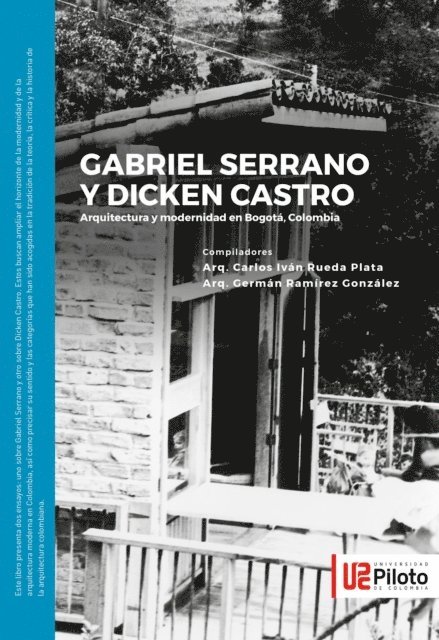
Este libro presenta dos ensayos que buscan ampliar el horizonte de qué significa la modernidad y la arquitectura moderna en Colombia, y a la vez precisar su sentido de cómo acotar el término arquitectura moderna y las categorías que han sido acogidas en la tradición de la teoría, la crítica y la historia de la arquitectura colombiana. El ensayo sobre Gabriel Serrano Busca definir la ideología que definió su práctica arquitectónica desde el programa arquitectónico como programa ideológico. El ensayo sobre Dicken Castro muestra la senda moderna que abre Dicken Castro en la alternativa al dogma moderno dominante, que no constituye una ruptura, sino un punto de inflexión al incluir técnicas que hacen parte de la historia y la memoria, entre ellos el uso de ladrillo de chircal y de la guadua. En conjunto, el libro propone revisar el sentido de lo moderno en un sentido más amplio a un problema de estilo o lenguaje o a la forma tradicional como se han acotado ciertos términos relacionados con la arquitectura moderna.