Juan R. I. Cole – författare
Visar alla böcker från författaren Juan R. I. Cole. Handla med fri frakt och snabb leverans.
3 produkter
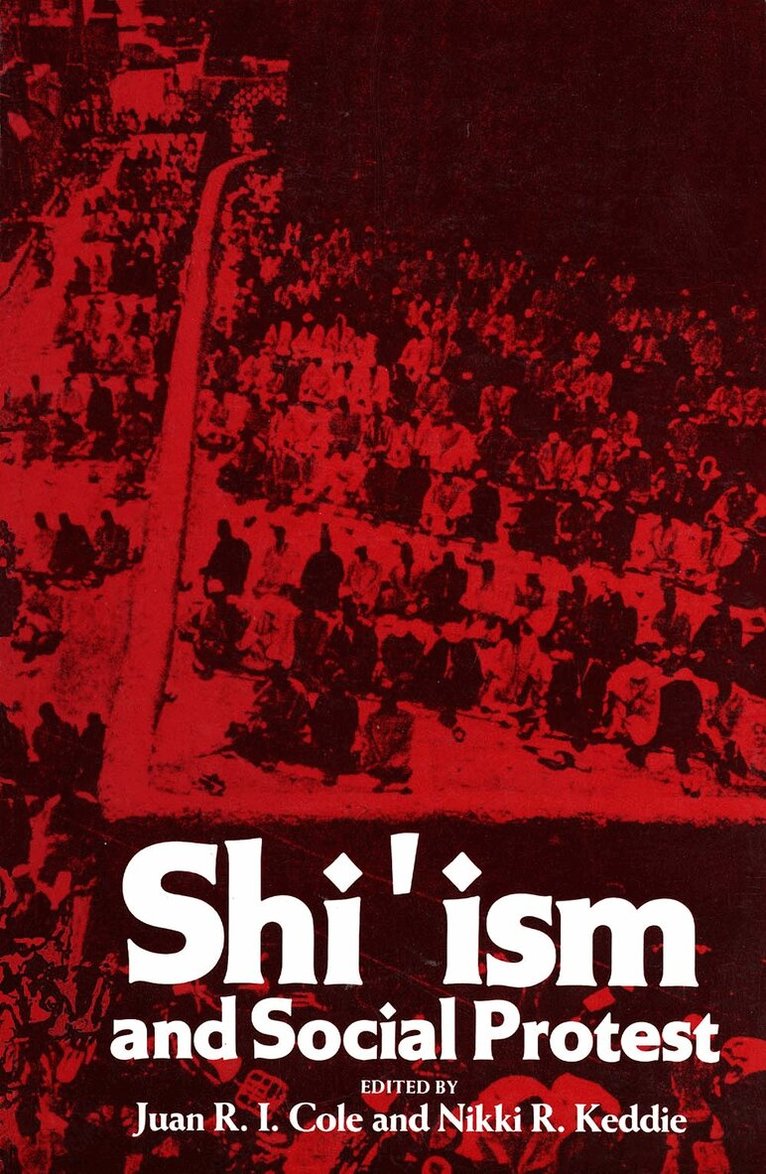
Shi'ism and Social Protest
Av Juan R. I. Cole, Nikki R. Keddie
Häftad, 1986
565 kr
Lägg i varukorg
Shi’i Muslims, who make up eleven percent of the population of Islamic nations, have produced more than their share of political activism – from the Iranian revolution in 1978-79 to a series of dramatic individual actions, most recently in Lebanon. Why has Twelver Shi’ism changed from quietism to …
Comparing Muslim Societies
Knowledge and the State in a World Civilization
Häftad, 1992
323 kr
Lägg i varukorg
This book departs from stereotypes that often dominate Western discourse about Muslim societies. The Muslim world encompasses a wide range of countries—among them Turkey, Iraq, Egypt, Senegal, Saudi Arabia, and Morocco—each with a varying degree of religious stricture. Generalizations, therefore, …
Comparing Muslim Societies
Knowledge and the State in a World Civilization
E-bok, 2025
892 kr
Lägg i varukorg
This book departs from stereotypes that often dominate Western discourse about Muslim societies. The Muslim world encompasses a wide range of countries—among them Turkey, Iraq, Egypt, Senegal, Saudi Arabia, and Morocco—each with a varying degree of religious stricture. Generalizations, therefore, …