Judith D. Toland - Böcker
Visar alla böcker från författaren Judith D. Toland. Handla med fri frakt och snabb leverans.
3 produkter
3 produkter
2 098 kr
Skickas inom 10-15 vardagar
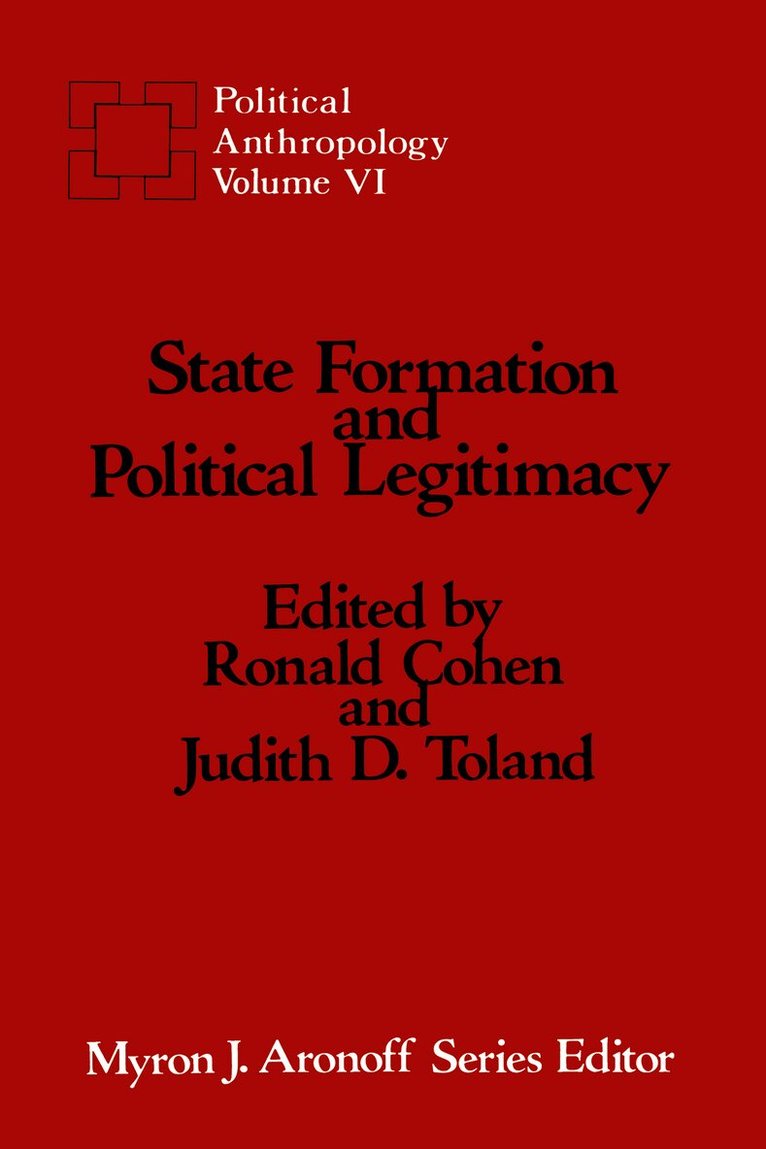
The evolution of the state from earlier forms of political organization is associated with revolutionary changes in the structure of inequality. These magnify distinctions in rank and power that outweigh anything previously known in so-called primitive societies. This volume explains how and why people came to accept and even identify themselves with this new form of authority. The introduction provides a new theory of legitimacy by synthesizing and uniting earlier theories from psychological, cultural-materialist, rational choice, and Marxist approaches. The case studies which follow present a wide range of materials on cultures in both Western and non-Western settings, and across a number of different historical periods. Included are examples from Africa, Asia, Europe, and the New World. Older states such as Ur, Inca, and medieval France are examined along with more contemporary states including Indonesia, Tanzania, and the revolutionary beginnings of the United States.Using a variety of approaches the contributors show in each instance how the state obtained and used its power, then attempted to have its power accepted as the natural order under the protection of supra-naturally ordained authority. No matter how tyrannical or benign, the cases show that state power must be justified by faith and experience that demonstrates its value to the participants. Through such analysis, the book demonstrates that states must be capable of enforcing their rule, but that they cannot deceive populations into accepting state domination. Indeed, the book suggests that social evolution moves toward less coercive rule and increased democratization. Ronald Cohen is a political anthropologist who has taught at the Universities of Toronto, McGill, Northwestern, and Ahmadu Bello, and is on the faculty of the University of Florida. He has carried out field research in Africa, the Arctic and Washington. His major works include The Kanuri of Borno, Dominance and Defiance, Origins of the State, and a book in preparation on food policy and agricultural transformation in Africa.Judith D. Toland is a lecturer at University College, Northwestern University, and the College of Arts and Sciences, Loyola University of Chicago. She is the director of her own corporate and non-profit consulting firm. She has done fieldwork in Ayacucho, Peru and has written widely on the Inca State.
969 kr
Tillfälligt slut
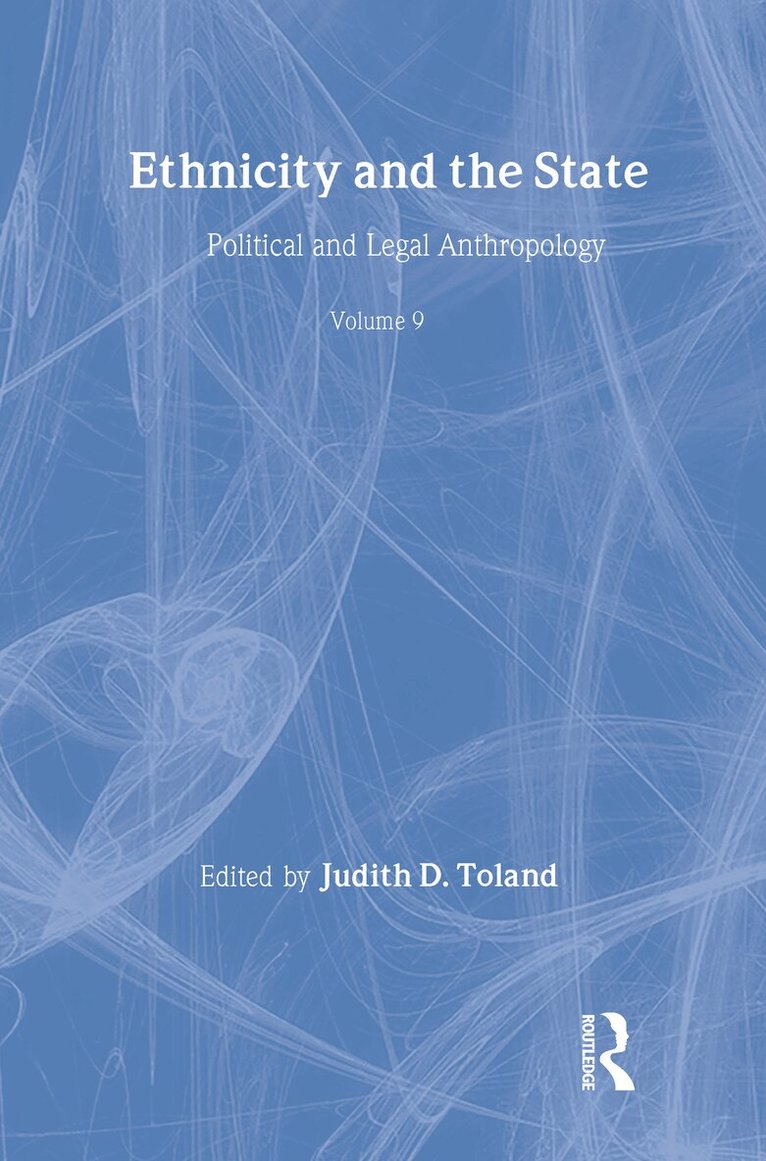
Modern states have evolved as complex political structures in which unitary forms of government maintain an uncertain equilibrium with ethnically plural societies. Historically, ruling elites have tried with little success to eradicate ethnicity through genocide, bury it under accusations of tribalism, discredit it with the mind-frame of modernization, or confine it to local rather than national political arenas. This broad-ranging volume examines the dynamics of ethnic manipulation and accommodation by dominant and subordinate groups in the state-building process.Ethnicity and the State reflects the widely varying political contexts and cultures in which reasons of state contend with unyielding ethnic allegiances. European, South American, Asian, and Middle Eastern examples reveal a consistent set of themes and attitudes. The authors find that while the state must realize its authority and stability through a strictly defined charter of rights and values, ethnic identity exercises its power more freely and flexibly. The sense of peoplehood may be artificially constructed in response to immediate need, or it may be ancient and organic, growing over time. It has the potential to cut across race, class, and gender. Its central tenets and myths may be reinterpreted, recreated, enlarged upon, or modified as the political situation warrants. Flexibility of belief and the need to identify with a larger group account both for the durability of ethnic loyalty and its vulnerability to manipulation.This volume is particularly timely at a moment when national governments in many parts of the world must face the adoption of more equitable forms of rule to hold their ethnically diverse societies together. Taken together, the analyses presented here warn against institutionalizing ethnic strife and offer a vision of how the state may foster expectations and policies that serve the interests of all ethnic groups within their borders. Political scientists, historians, and anthropologists will find this book valuable for its interpretations of forces that continue to reshape the social and political fabric of the world.
688 kr
Skickas inom 10-15 vardagar
Modern states have evolved as complex political structures in which unitary forms of government maintain an uncertain equilibrium with ethnically plural societies. Historically, ruling elites have tried with little success to eradicate ethnicity through genocide, bury it under accusations of tribalism, discredit it with the mind-frame of modernization, or confine it to local rather than national political arenas. This broad-ranging volume examines the dynamics of ethnic manipulation and accommodation by dominant and subordinate groups in the state-building process.Ethnicity and the State reflects the widely varying political contexts and cultures in which reasons of state contend with unyielding ethnic allegiances. European, South American, Asian, and Middle Eastern examples reveal a consistent set of themes and attitudes. The authors find that while the state must realize its authority and stability through a strictly defined charter of rights and values, ethnic identity exercises its power more freely and flexibly. The sense of peoplehood may be artificially constructed in response to immediate need, or it may be ancient and organic, growing over time. It has the potential to cut across race, class, and gender. Its central tenets and myths may be reinterpreted, recreated, enlarged upon, or modified as the political situation warrants. Flexibility of belief and the need to identify with a larger group account both for the durability of ethnic loyalty and its vulnerability to manipulation.This volume is particularly timely at a moment when national governments in many parts of the world must face the adoption of more equitable forms of rule to hold their ethnically diverse societies together. Taken together, the analyses presented here warn against institutionalizing ethnic strife and offer a vision of how the state may foster expectations and policies that serve the interests of all ethnic groups within their borders. Political scientists, historians, and anthropologists will find this book valuable for its interpretations of forces that continue to reshape the social and political fabric of the world.