Judith Roosblad - Böcker
Visar alla böcker från författaren Judith Roosblad. Handla med fri frakt och snabb leverans.
4 produkter
4 produkter
Trade Unions, Immigration, and Immigrants in Europe, 1960-1993
A Comparative Study of the Actions of Trade Unions in Seven West European Countries
Inbunden, Engelska, 2001
2 014 kr
Skickas inom 3-6 vardagar
European trade unions are among the most influential and powerful institutions within Western economies, in many cases cooperating with the government and employers' associations in socio-economic decision-making processes. Consequently they also play an important role in the formulation of policies relating to immigration and the migrant workers, who are arriving and becoming part of the workforce the unions are representing and protecting against employers and other authorities. However, trade unions have not always fulfilled their role as the most obvious organization to defend the interests of foreign workers to the extent they could be expected. The reasons for this are complex and due to conflicts of interests that arise from their intermediary position between employers, government authorities, and indigenous workers.This volume offers a rich analysis of the situation in seven major European countries but also a comparison of the data found and an attempt to account for the differences established. It ends with some conclusions on the prospects of trade unions within the European Union, and on the lessons to be learned from the present analysis.
Trade Unions, Immigration, and Immigrants in Europe, 1960-1993
A Comparative Study of the Actions of Trade Unions in Seven West European Countries
Häftad, Engelska, 2002
583 kr
Skickas inom 3-6 vardagar
European trade unions are among the most influential and powerful institutions within Western economies, in many cases cooperating with the government and employers' associations in socio-economic decision-making processes. Consequently they also play an important role in the formulation of policies relating to immigration and the migrant workers, who are arriving and becoming part of the workforce the unions are representing and protecting against employers and other authorities. However, trade unions have not always fulfilled their role as the most obvious organization to defend the interests of foreign workers to the extent they could be expected. The reasons for this are complex and due to conflicts of interests that arise from their intermediary position between employers, government authorities, and indigenous workers.This volume offers a rich analysis of the situation in seven major European countries but also a comparison of the data found and an attempt to account for the differences established. It ends with some conclusions on the prospects of trade unions within the European Union, and on the lessons to be learned from the present analysis.
2 363 kr
Skickas inom 7-10 vardagar
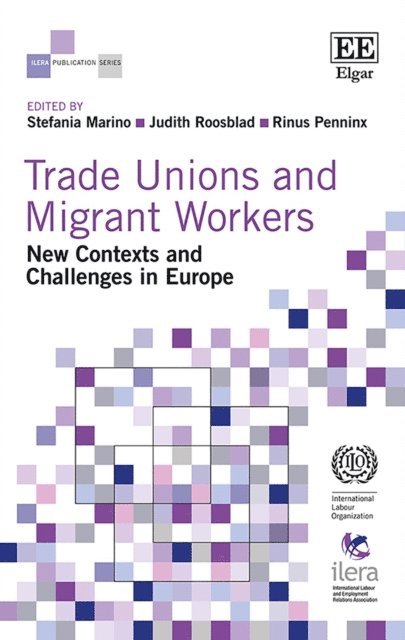
'This timely book offers not only richly textured studies of European trade union responses to the influx of immigrant workers across the continent, but also an insightful comparative analysis. Building on an earlier volume that the editors published at the turn of the 21st century, this one focuses on the new challenges posed by growing economic globalization, trade union decline, and the surge of xenophobia among European workers. It deserves a prominent spot on the bookshelf of anyone interested in labor movements and migration, not only in Europe but worldwide.'- Ruth Milkman, The Graduate Center, City University of New York'Trade Unions and Migrant Workers updates the classic ''three-dilemmas'' thesis of Penninx and Roosblad, demonstrating its continuing relevance in today's shifting migration context. Drawing on national case studies of union responses to labour migration, it shows that while the balance of power and incentive structures unions face have shifted, the fundamental strategic dilemmas posed to unions by labour migration remain the same. This book will be a go-to citation for me in the coming years.'- Nathan Lillie, University of Jyvaskyla, Finland This timely book analyzes the relationship between trade unions, immigration and migrant workers across eleven European countries in the period between the 1990s and 2015. It constitutes an extensive update of a previous comparative analysis - published by Rinus Penninx and Judith Roosblad in 2000 - that has become an important reference in the field. The book offers an overview of how trade unions manage issues of inclusion and solidarity in the current economic and political context, characterized by increasing challenges for labour organizations and rising hostility towards migrants. The qualitative analysis of trade union strategies towards immigration and migrant workers is based on a common analytical framework centred on the idea of 'dilemmas' that trade unions have to face when dealing with immigration and migrant workers. This approach facilitates comparative analysis and distinguishes patterns of union policies and actions across three groups of countries, identifying some explanations for observed similarities and differences. In addition, the book also includes theoretical chapters by expert scholars from a range of disciplinary fields including industrial relations, migration studies and political economy. This comprehensive comparative analysis is an essential resource for academics across a range of disciplines as well as policy-makers, practitioners and organizations involved in trade unions and migrant inclusion and integration.Contributors include: M. Bernaciak, L. Berntsen, M. Canek, H. Connolly, S. Contrepois, A. Gachter, A. Giorgi, R. Gumbrell-McCormick, T. Hastings, J. Heyes, M. Hyland, R. Hyman, J. Kubisa, S. Marino, M. Martinez Lucio, A. Neergaard, R. Penninx, M. Rinaldini, J. Roosblad, B. Sellers, T. Vitale, I. Wagner, C. Woolfson
Equal Opportunities and Ethnic Inequality in European Labour Markets
Discrimination, Gender and Policies of Diversity
Häftad, Engelska, 2009
549 kr
Skickas inom 10-15 vardagar
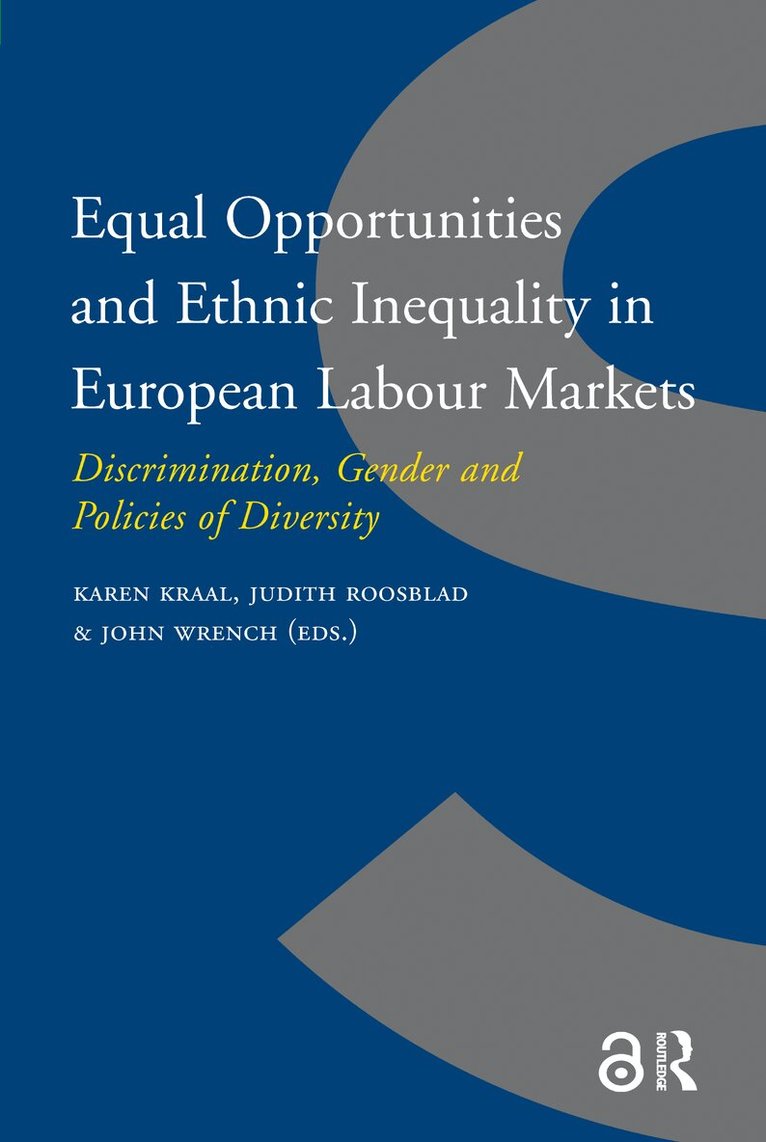
The need to analyse labour market mechanisms in post-industrial Western societies is urgent. Despite laws and policy measures being developed at the European, national and local levels, job-seeking immigrants and ethnic minorities still suffer unequal access and ethnic discrimination. This volume endeavours to understand why. Four chapters dealing with discrimination, gender, equity policies and diversity management present a lively discussion of the current scientific debate. Besides providing empirical evidence, the authors recommend methods for conducting further research in the field and evaluate the actual effects of discrimination-combating policies. One conclusion is that systematic analysis of the labour market and its subsequent equity policies must be supported by hard data, such as statistics. With its state-of-the-art scope and unique thematic exploration, this volume transfers knowledge from social science studies to a more operational realm. From here, both scholars and practitioners can help make equal opportunities more accessible than ever.