
Jules Supervielle – författare
Visar alla böcker från författaren . Handla med fri frakt och snabb leverans.
11 produkter
11 produkter
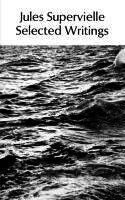
Inbunden, Engelska, 1967
215 kr
Kommande
This is the first presentation in depth of the work of one of the most influential writers of modern France, Jules Supervielle (1884-1960). Up to now, only an occasional selection has appeared in an anthology, and he is still little known to American readers. Yet Supervielle is one of the unique creators of our time. His fables have the clear-eyed, slightly wry vision of the intelligent child. His poems have a Iucidity of language that throws new light on each word, each thought. In his novel The Man Who Stole Children, complete in this volume, he uses the fantastic premise that a child uncared for by its parents may simply be picked up off the street and adopted, to illuminate man’s problems of human behavior and emotion. Supervielle in his poetry and prose, as in his personal influence on other writers, is quiet, unassuming, matter-of-fact. There is a quietness, too, almost an impersonality about his approach to life and the events of every day. His poems are statements and almost never is there the fireworks of imagery or startling figure of speech that one associates with some twentieth-century schools of writing. Throughout his work may be felt the vast spaces of Uruguay, where he was born, and of the sea, a pervading symbol. This edition contains eight of his stories. translated by Enid McLeod, more than forty of his poems with French text en face translated by James Kirkup, Denise Levertov, and Kenneth Rexroth, and the complete novel, Le Voleur d’enfants, translated by Alan Pryce-Jones.
Inbunden, Engelska, 2015
849 kr
Skickas inom 3-6 vardagar
Inbunden, Franska, 2022
430 kr
Skickas inom 5-8 vardagar
Häftad, Franska, 2022
271 kr
Skickas inom 5-8 vardagar
Inbunden, Engelska, 2026
430 kr
Skickas inom 5-8 vardagar
Häftad, Engelska, 2026
246 kr
Skickas inom 5-8 vardagar
Inbunden, Franska, 2026
430 kr
Skickas inom 5-8 vardagar

Häftad, Franska, 2026
271 kr
Skickas inom 5-8 vardagar
Inbunden, Franska, 2026
430 kr
Skickas inom 5-8 vardagar

Häftad, Franska, 2026
271 kr
Skickas inom 5-8 vardagar
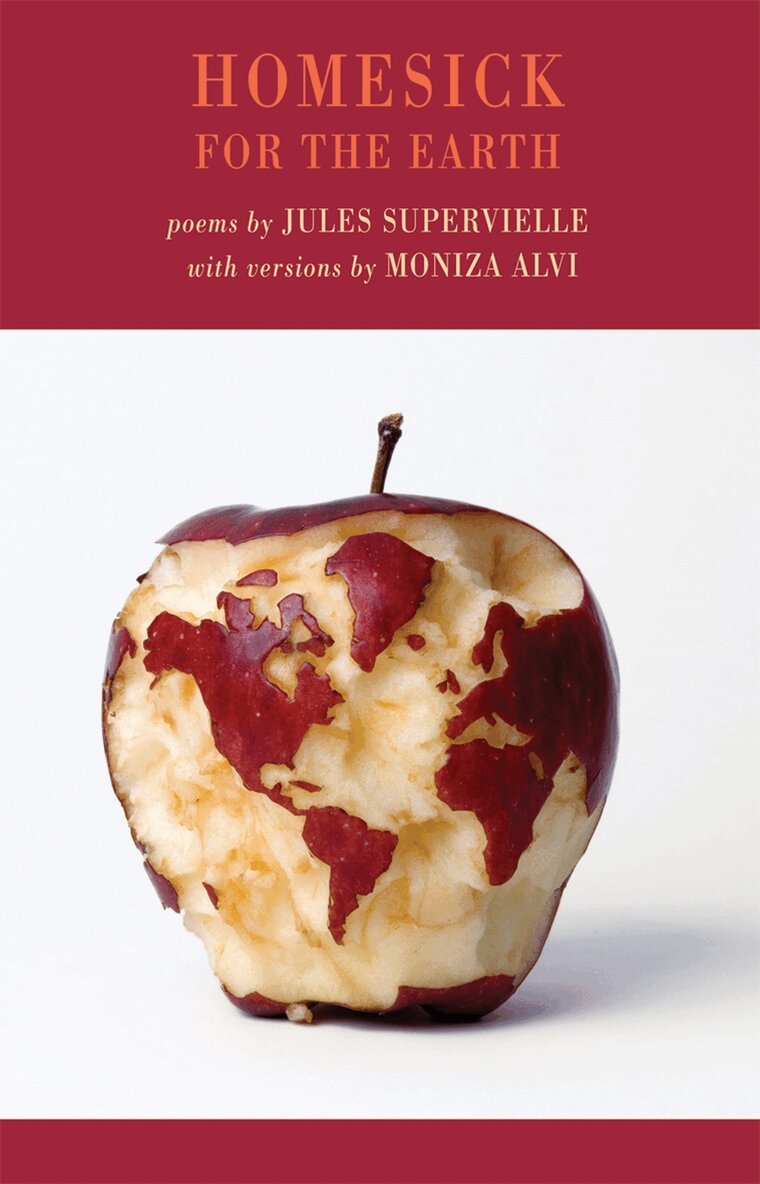
Häftad, Engelska, 2011
199 kr
Skickas inom 7-10 vardagar
Jules Supervielle (1884-1960) was born to French parents in Montevideo, orphaned within a year of his birth, and grew up in Uruguay and France. He spent the Second World War exiled in Uruguay, afflicted by ill health and financial ruin. His poems are dreamlike, often gently fantastical, imbued with an appealing surface clarity. His work stands apart from much 20th-century French poetry, and he has been characterised as a writer of Basque descent who wrote in French but in the Spanish tradition, with a strong affinity for the open spaces of his South American childhood and nostalgia for a cosmic brotherhood of men. In many respects he seems our contemporary, a writer of highly personal poems as well as poems concerned with war and the environment.Moniza Alvi writes: ‘I have been making versions of Supervielle’s poems for several years, strongly drawn to his style of writing, while also finding coincidental parallels with my own life, such as his birth “elsewhere” on another continent. My aim has been to retain the spirit of the French poems, and as many of their implications as I can, while making a poem that has a life in English. I thought he was an enchanting, inspiring poet who deserved to be so much better known in this country.’