Julia F. Saville - Böcker
Visar alla böcker från författaren Julia F. Saville. Handla med fri frakt och snabb leverans.
3 produkter
3 produkter
704 kr
Skickas inom 7-10 vardagar
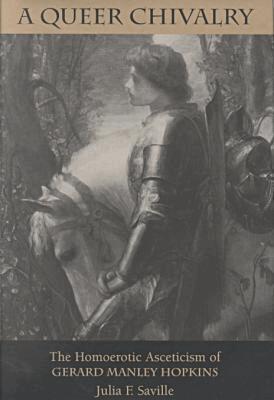
The Jesuit poet Gerard Manley Hopkins was a practitioner of strict asceticism in its broadest definition - the refusal of physical pleasure or comfort in the interests of moral or spiritual gain. As a result, his commentators have felt obliged to take a stand approving or disapproving of this rigorous self-discipline. Many idealize his allegiance to the Society of Jesus as motivated by his determination to conquer his attraction to other men, and thus as the source of the spiritual strength from which his eucharistic and Christological verse derived. Others decry his monasticism as the regrettably oppressive regimen from which he was able to escape only occasionally through his sensuous, sometimes overtly homoerotic verse. Julia F. Saville uses Lacanian theories of sublimation and courtly love to reconfigure this long-standing rift in the field of Hopkins criticism. This study displaces hagiographic interpretations of the poet's life, arguing that Hopkins's poetics of homoerotic asceticism shaped his work in such a way that his career should be viewed not as a steady linear progression but as an ongoing process of negotiating his desire. It also constitutes a map tracing the alternating practices of self-discipline and self-indulgence, self-expression and self-silencing performed by Hopkins's verse. The result is a reading of asceticism that does not advocate or condemn its practice. What is needed, Saville argues, is a reading that explains first the dialectic capacity of asceticism both to constrain and to liberate, to cause discomfort and to give satisfaction, and second, the ethical value of recognizing and encouraging this dialectical operation.
1 281 kr
Skickas inom 10-15 vardagar
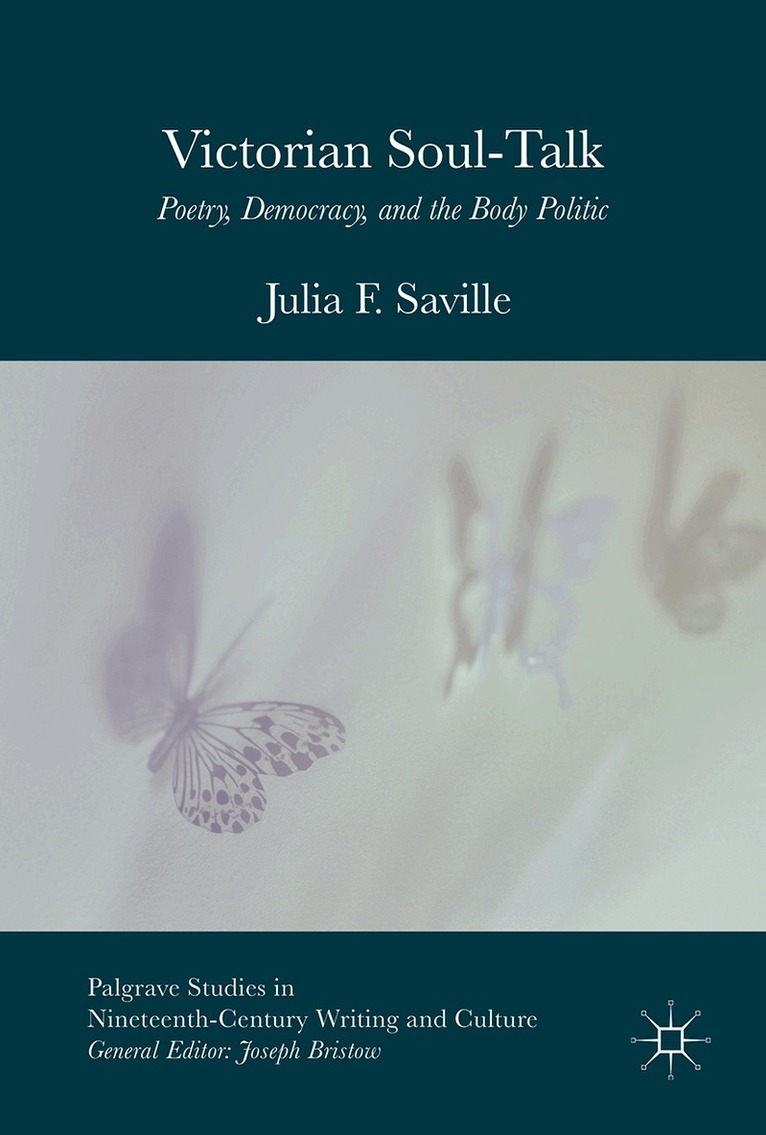
This book explores the decades between the Reform Acts of 1832 and 1884 when British poets such as Elizabeth Barrett Browning, Arthur Hugh Clough, Robert Browning, and Algernon Charles Swinburne, along with their transatlantic contemporary Walt Whitman, defended the civil rights of disenfranchised souls as Western nations slowly evolved toward modern democracies with shared transnational connections. For in the decades before the new science of psychology transformed the soul into the psyche, poets claimed the spiritual well-being of the body politic as their special moral responsibility. Exploiting the rich aesthetic potential of language, they created poetry with striking sensory appeal to make their readers experience the complex effects of political decisions on public spirit. Within contexts such as Risorgimento Italy, Civil War America, and Second Empire France, these poets spoke from their souls to the souls of their readers to reveal insights that eluded the prosaic formsof fiction, essay, and journalism.
1 281 kr
Skickas inom 10-15 vardagar
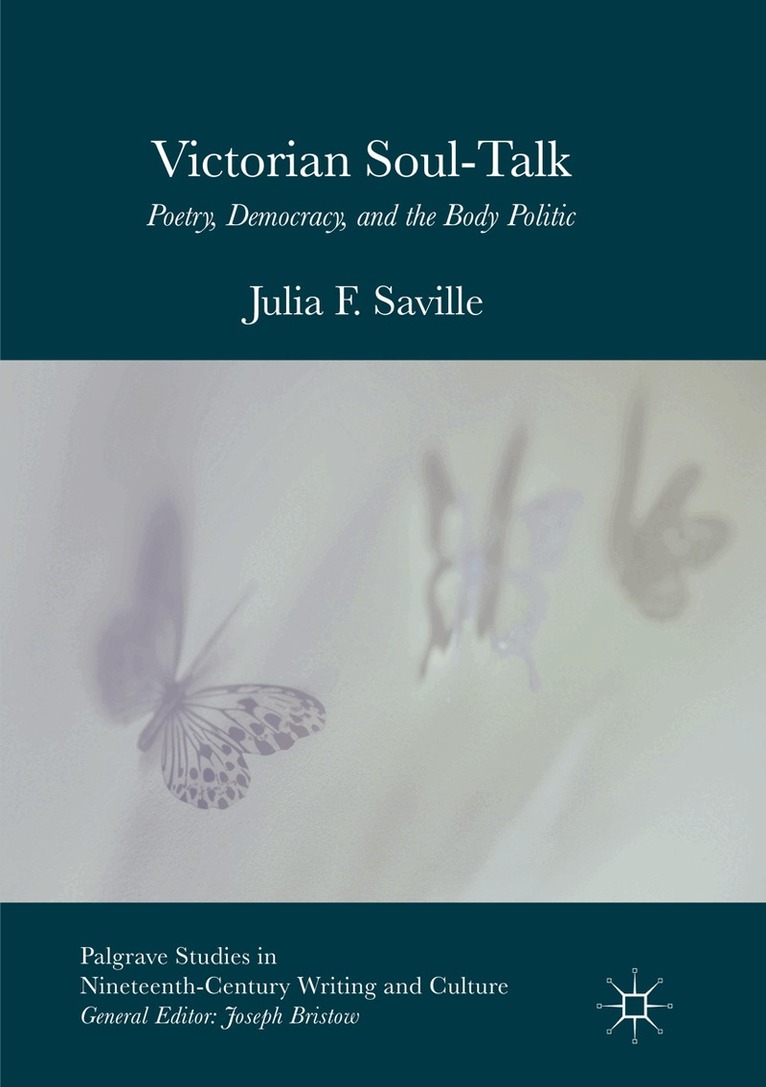
This book explores the decades between the Reform Acts of 1832 and 1884 when British poets such as Elizabeth Barrett Browning, Arthur Hugh Clough, Robert Browning, and Algernon Charles Swinburne, along with their transatlantic contemporary Walt Whitman, defended the civil rights of disenfranchised souls as Western nations slowly evolved toward modern democracies with shared transnational connections. For in the decades before the new science of psychology transformed the soul into the psyche, poets claimed the spiritual well-being of the body politic as their special moral responsibility. Exploiting the rich aesthetic potential of language, they created poetry with striking sensory appeal to make their readers experience the complex effects of political decisions on public spirit. Within contexts such as Risorgimento Italy, Civil War America, and Second Empire France, these poets spoke from their souls to the souls of their readers to reveal insights that eluded the prosaic formsof fiction, essay, and journalism.