Julia Gaffield – författare
Visar alla böcker från författaren Julia Gaffield. Handla med fri frakt och snabb leverans.
11 produkter
I Have Avenged America
Jean-Jacques Dessalines and Haiti’s Fight for Freedom
Inbunden, 2025
352 kr
Lägg i varukorg
A moving and humane portrait of the abolitionist revolutionary Jean-Jacques Dessalines, who led Haiti’s fight for independence from French colonial rule“My name has become a horror to all those who want slavery,” declared Jean‑Jacques Dessalines as he announced the independence of Haiti, the most …
I Have Avenged America
Jean-Jacques Dessalines and Haiti's Fight for Freedom
Häftad, 2026
214 kr
Lägg i varukorg
A moving and humane portrait of the abolitionist revolutionary Jean-Jacques Dessalines, who led Haiti’s fight for independence from French colonial rule“My name has become a horror to all those who want slavery,” declared Jean‑Jacques Dessalines as he announced the independence of Haiti, the most …
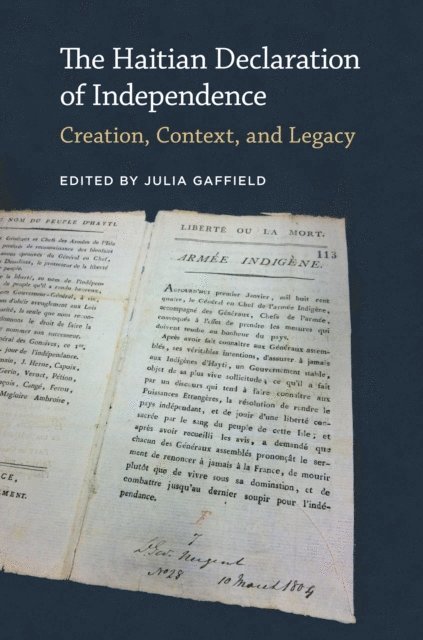
Haitian Declaration of Independence
Creation, Context, and Legacy
E-bok, 2016
669 kr
Lägg i varukorg
While the Age of Revolution has long been associated with the French and American Revolutions, increasing attention is being paid to the Haitian Revolution as the third great event in the making of the modern world. A product of the only successful slave revolution in history, Haiti’s Declaration …
Haitian Connections in the Atlantic World
Recognition After Revolution
Häftad, 2015
460 kr
Lägg i varukorg
On January 1, 1804, Haiti shocked the world by declaring independence. Historians have long portrayed Haiti's postrevolutionary period as one during which the international community rejected Haiti's Declaration of Independence and adopted a policy of isolation designed to contain the impact of the …
Haitian Connections in the Atlantic World
Recognition after Revolution
E-bok, 2015
415 kr
Lägg i varukorg
On January 1, 1804, Haiti shocked the world by declaring independence. Historians have long portrayed Haiti''s postrevolutionary period as one during which the international community rejected Haiti''s Declaration of Independence and adopted a policy of isolation designed to contain the impact of …
Haitian Connections in the Atlantic World
Recognition after Revolution
E-bok, 2015
1134 kr
Lägg i varukorg
On January 1, 1804, Haiti shocked the world by declaring independence. Historians have long portrayed Haiti''s postrevolutionary period as one during which the international community rejected Haiti''s Declaration of Independence and adopted a policy of isolation designed to contain the impact of …
Constitutional Documents of Haiti 1790–1860
Av Michel Acacia, Julia Gaffield m. fl.
E-bok, 2013
4251 kr
Lägg i varukorg
Mit den Verfassungsdokumenten Haitis von den Anfängen bis zur Mitte des 19. Jahrhunderts liegt als Band 10 des Amerika-Teils der Reihe Verfassungen der Welt eine weiter verfassungshistorisch bedeutsame Edition vor. In der Folge der amerikanischen und der französischen Revolutionen entstanden hier …
Constitutional Documents of Haiti 1790–1860
Av Laurent Dubois, Julia Gaffield m. fl.
Inbunden, 2013
4839 kr
Lägg i varukorg
In the wake of the American and French revolutions at the end of the 18th century, the first modern constitutional documents adopted in the Americas outside of the US were penned in Haiti. This newly revised edition takes into account for the first time all constitutional documents from 1790 …
Haitian Connections in the Atlantic World
Recognition after Revolution
E-bok, 2015
347 kr
Lägg i varukorg
On January 1, 1804, Haiti shocked the world by declaring independence. Historians have long portrayed Haiti''s postrevolutionary period as one during which the international community rejected Haiti''s Declaration of Independence and adopted a policy of isolation designed to contain the impact of …
Haitian Connections in the Atlantic World
Recognition after Revolution
E-bok, 2015
1159 kr
Lägg i varukorg
On January 1, 1804, Haiti shocked the world by declaring independence. Historians have long portrayed Haiti''s postrevolutionary period as one during which the international community rejected Haiti''s Declaration of Independence and adopted a policy of isolation designed to contain the impact of …
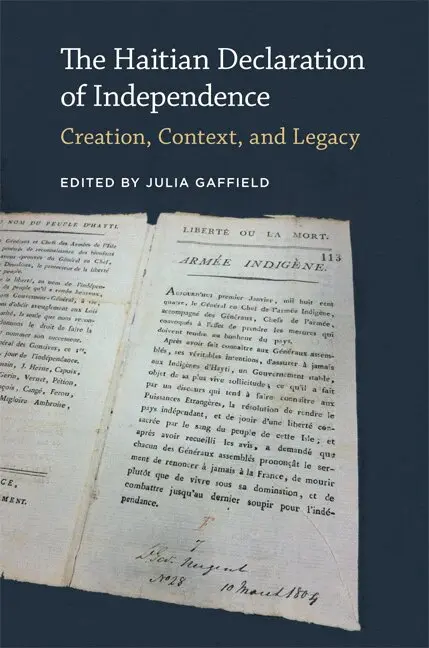
Haitian Declaration of Independence
Creation, Context, and Legacy
Inbunden, 2016
541 kr
Tillfälligt slut
A product of the only successful slave revolution in history, Haiti’s Declaration of Independence in 1804 stands at a major turning point in the trajectory of social, economic, and political relations in the modern world. Despite Haiti’s global significance, however, scholars are only now beginning …