Julia Gatley – författare
Visar alla böcker från författaren Julia Gatley. Handla med fri frakt och snabb leverans.
8 produkter
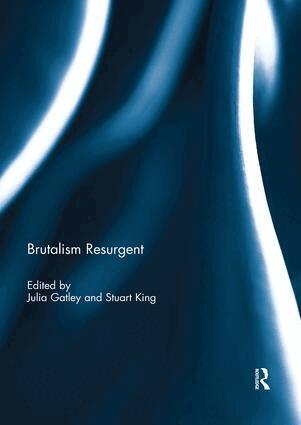
Brutalism Resurgent
Häftad, 2018
771 kr
Lägg i varukorg
Brutalism had its origins in béton brut – concrete in the raw – and thus in the post-war work of Le Corbusier. The British architects Alison and Peter Smithson used the term "New Brutalism" from 1953, claiming that if their house in Soho had been built, "it would have been the first exponent of the …
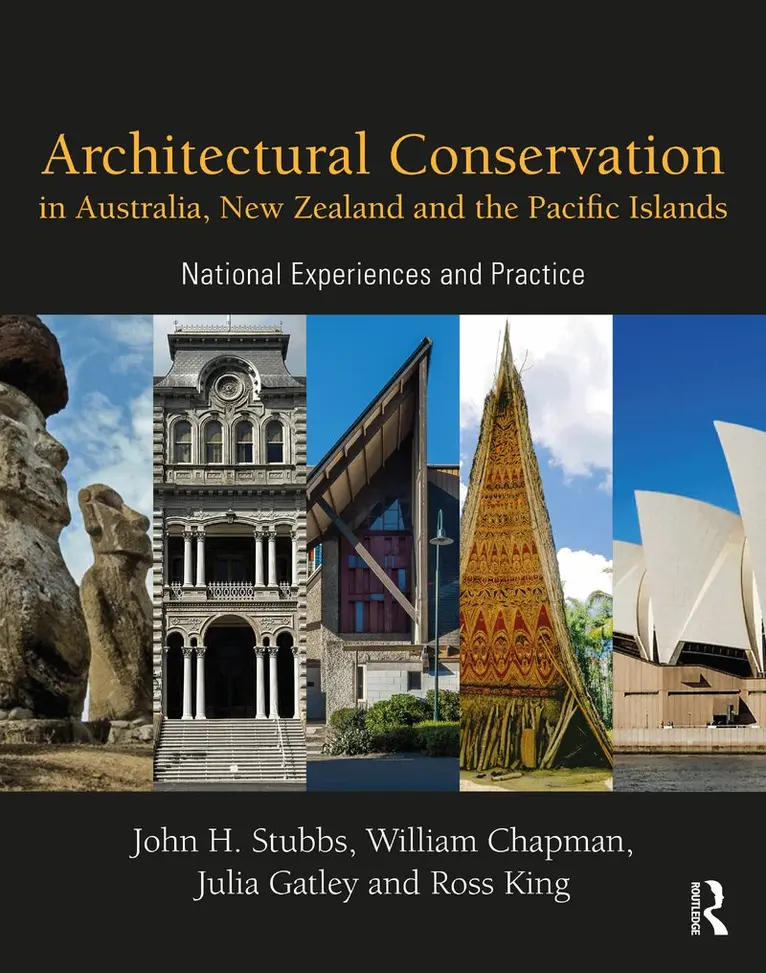
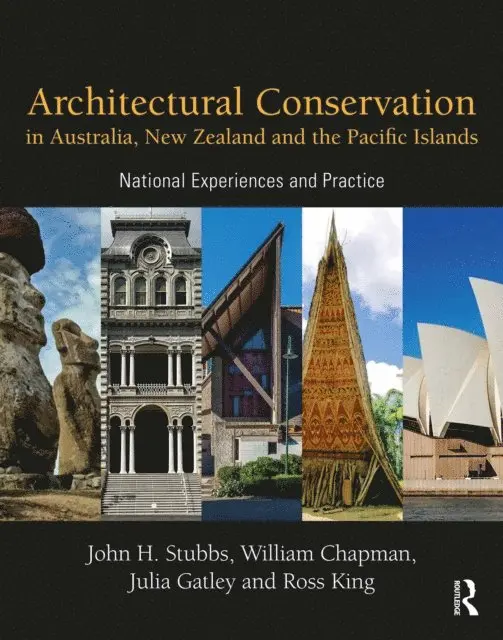
Architectural Conservation in Australia, New Zealand and the Pacific Islands
National Experiences and Practice
Av John Stubbs, William Chapman m. fl.
Inbunden, 2023
1520 kr
Lägg i varukorg
The fourth in a series that documents architectural conservation in different parts of the world, Architectural Conservation in Australia, New Zealand and the Pacific Islands: National Experiences and Practice addresses cultural heritage protection in a region which comprises one third of the …
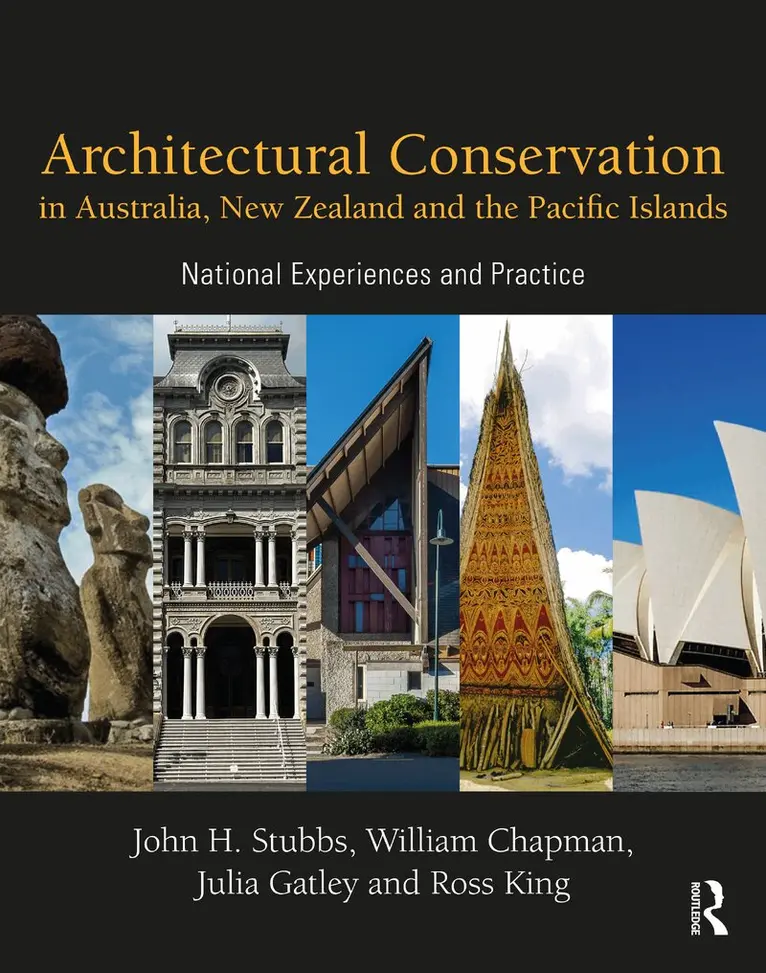
Architectural Conservation in Australia, New Zealand and the Pacific Islands
National Experiences and Practice
Av John Stubbs, William Chapman m. fl.
Häftad, 2026
1051 kr
Lägg i varukorg
The fourth in a series that documents architectural conservation in different parts of the world, Architectural Conservation in Australia, New Zealand and the Pacific Islands: National Experiences and Practice addresses cultural heritage protection in a region which comprises one third of the …
Architectural Conservation in Australia, New Zealand and the Pacific Islands
National Experiences and Practice
Av Ross King, Julia Gatley m. fl.
E-bok, 2023
1309 kr
Lägg i varukorg
The fourth in a series that documents architectural conservation in different parts of the world, Architectural Conservation in Australia, New Zealand and the Pacific Islands: National Experiences and Practice addresses cultural heritage protection in a region which comprises one third of the …
Architectural Conservation in Australia, New Zealand and the Pacific Islands
National Experiences and Practice
Av Ross King, Julia Gatley m. fl.
E-bok, 2023
1309 kr
Lägg i varukorg
The fourth in a series that documents architectural conservation in different parts of the world, Architectural Conservation in Australia, New Zealand and the Pacific Islands: National Experiences and Practice addresses cultural heritage protection in a region which comprises one third of the …
Brutalism Resurgent
Inbunden, 2016
2585 kr
Lägg i varukorg
Brutalism had its origins in béton brut – concrete in the raw – and thus in the post-war work of Le Corbusier. The British architects Alison and Peter Smithson used the term "New Brutalism" from 1953, claiming that if their house in Soho had been built, "it would have been the first exponent of the …
Brutalism Resurgent
E-bok, 2018
910 kr
Lägg i varukorg
Brutalism had its origins in béton brut – concrete in the raw – and thus in the post-war work of Le Corbusier. The British architects Alison and Peter Smithson used the term "New Brutalism" from 1953, claiming that if their house in Soho had been built, "it would have been the first exponent …
Brutalism Resurgent
E-bok, 2018
910 kr
Lägg i varukorg
Brutalism had its origins in béton brut – concrete in the raw – and thus in the post-war work of Le Corbusier. The British architects Alison and Peter Smithson used the term "New Brutalism" from 1953, claiming that if their house in Soho had been built, "it would have been the first exponent …