Julia Koralun-Bereźnicka - Böcker
Visar alla böcker från författaren . Handla med fri frakt och snabb leverans.
7 produkter
7 produkter
2 176 kr
Skickas inom 10-15 vardagar
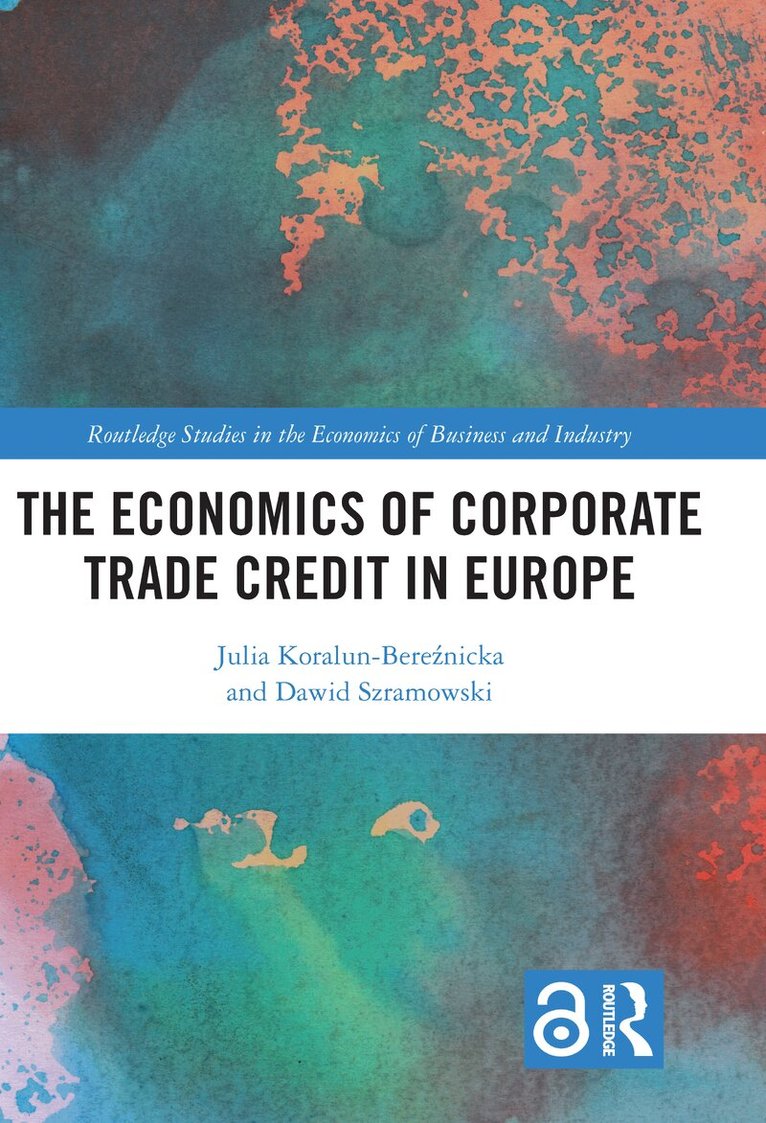
This book is a research monograph addressed to a wide range of academics interested in corporate short-term capital. The study shows the role of trade credit in the functioning of economic entities. It constitutes a comprehensive source of knowledge about the role of trade credit in the development of enterprises, as well as the impact of this form of finance on the development of economies. Apart from an extensive review of the theoretical aspects of the role of trade credit in the economy, the study discusses the importance of factors influencing trade credit behaviour. Trade credit, despite its versatility, has not yet been fully described, particularly with regard to the specificity of domestic markets. This study aggregates and supplements the existing sources. The monograph is of an international character, as it covers a substantial group of European countries. Therefore, it is likely to have international appeal. The findings may be of interest to those involved in finance management. Understanding the differences in receivables management resulting from the country specificity can contribute to a better understanding of business finance and its operational functions. This knowledge may support the effective management of receivables and liabilities, especially in companies operating on the global market. Chapters 1 and 5 of this book are freely available as a downloadable Open Access PDF under a Creative Commons Attribution-Non Commercial-No Derivatives 4.0 license available at http://www.taylorfrancis.com
637 kr
Skickas inom 10-15 vardagar
This book is a research monograph addressed to a wide range of academics interested in corporate short-term capital. The study shows the role of trade credit in the functioning of economic entities. It constitutes a comprehensive source of knowledge about the role of trade credit in the development of enterprises, as well as the impact of this form of finance on the development of economies. Apart from an extensive review of the theoretical aspects of the role of trade credit in the economy, the study discusses the importance of factors influencing trade credit behaviour. Trade credit, despite its versatility, has not yet been fully described, particularly with regard to the specificity of domestic markets. This study aggregates and supplements the existing sources. The monograph is of an international character, as it covers a substantial group of European countries. Therefore, it is likely to have international appeal. The findings may be of interest to those involved in finance management. Understanding the differences in receivables management resulting from the country specificity can contribute to a better understanding of business finance and its operational functions. This knowledge may support the effective management of receivables and liabilities, especially in companies operating on the global market. Chapters 1 and 5 of this book are freely available as a downloadable Open Access PDF under a Creative Commons Attribution-Non Commercial-No Derivatives 4.0 license available at http://www.taylorfrancis.com
Corporate Capital Structure in Europe
The Role of Country, Industry and Firm Size
Inbunden, Engelska, 2024
2 246 kr
Skickas inom 10-15 vardagar
This book offers a comprehensive examination of the factors affecting corporate capital structures across 12 European Union countries, focusing on the influence of country-specific, industry-specific and firm-size-related determinants.It provides a comprehensive review of various interpretations of the capital structure concept and offers a detailed characterisation of commonly employed metrics. Furthermore, it offers an overview of capital structure theories and attempts to classify the factors that shape the financial leverage of enterprises within the framework of these theories. Additionally, it draws readers’ attention to contemporary factors potentially affecting corporate financing decisions, such as Environmental, Social and Governance (ESG) considerations or technological advances and innovations in finance. It combines theoretical insights with empirical research to explore the direct and indirect impacts of these factors on companies’ financing patterns.Targeting a broad readership including students, Ph.D. candidates, researchers, academics and financial practitioners, the book offers a rich understanding of capital structure optimisation and its significance for enhancing company value. Through its coverage of various capital structure theories, determinants and the role of external and internal factors in capital structure decisions, the book is an essential resource for those interested in the complex nature of these influences within the European landscape.With the exception of Chapter 2, no part of this book may be reprinted or reproduced or utilised in any form or by any electronic, mechanical, or other means, now known or hereafter invented, including photocopying and recording, or in any information storage or retrieval system, without permission in writing from the publishers. Chapter 2 of this book is freely available as a downloadable Open Access PDF at http://www.taylorfrancis.com under a Creative Commons Attribution-Non Commercial-No Derivatives (CC-BY-NC-ND) 4.0 license. Any third party material in this book is not included in the OA Creative Commons license, unless indicated otherwise in a credit line to the material. Please direct any permissions enquiries to the original rightsholder.
Corporate Capital Structure in Europe
The Role of Country, Industry and Firm Size
Häftad, Engelska, 2026
695 kr
Kommande
This book offers a comprehensive examination of the factors affecting corporate capital structures across 12 European Union countries, focusing on the influence of country-specific, industry-specific and firm-size-related determinants.It provides a comprehensive review of various interpretations of the capital structure concept and offers a detailed characterisation of commonly employed metrics. Furthermore, it offers an overview of capital structure theories and attempts to classify the factors that shape the financial leverage of enterprises within the framework of these theories. Additionally, it draws readers’ attention to contemporary factors potentially affecting corporate financing decisions, such as Environmental, Social and Governance (ESG) considerations or technological advances and innovations in finance. It combines theoretical insights with empirical research to explore the direct and indirect impacts of these factors on companies’ financing patterns.Targeting a broad readership including students, Ph.D. candidates, researchers, academics and financial practitioners, the book offers a rich understanding of capital structure optimisation and its significance for enhancing company value. Through its coverage of various capital structure theories, determinants and the role of external and internal factors in capital structure decisions, the book is an essential resource for those interested in the complex nature of these influences within the European landscape.With the exception of Chapter 2, no part of this book may be reprinted or reproduced or utilised in any form or by any electronic, mechanical, or other means, now known or hereafter invented, including photocopying and recording, or in any information storage or retrieval system, without permission in writing from the publishers. Chapter 2 of this book is freely available as a downloadable Open Access PDF at http://www.taylorfrancis.com under a Creative Commons Attribution-Non Commercial-No Derivatives (CC-BY-NC-ND) 4.0 license. Any third party material in this book is not included in the OA Creative Commons license, unless indicated otherwise in a credit line to the material. Please direct any permissions enquiries to the original rightsholder.
Corporate Short-Term Financing in Europe
The Role of Trade Credit and Bank Loans in Liquidity Management
Inbunden, Engelska, 2025
791 kr
Skickas inom 10-15 vardagar
Corporate Short-Term Financing in Europe offers a thorough analysis of how European companies manage liquidity, with a particular focus on trade credit and bank credit as key instruments. Drawing on rich cross-country data, this book examines the relationship between trade credit and short-term bank loans, analysing when firms substitute one for the other or use them together to optimise cash flow. With Europe’s financial systems ranging from bank-based systems to market-driven economies, this study uncovers how firm size, industry, and national context shape short-term financing strategies. The book also addresses how financial crises and regulatory shifts affect corporate short-term funding decisions. Combining theoretical frameworks with empirical evidence, the book provides fresh insights for academics, policymakers, financial managers and business leaders concerned with corporate liquidity, SME support and financial resilience, and practitioners involved in credit risk assessment and working capital management. Essential reading for anyone managing short-term corporate finance in today’s fast-changing environment.
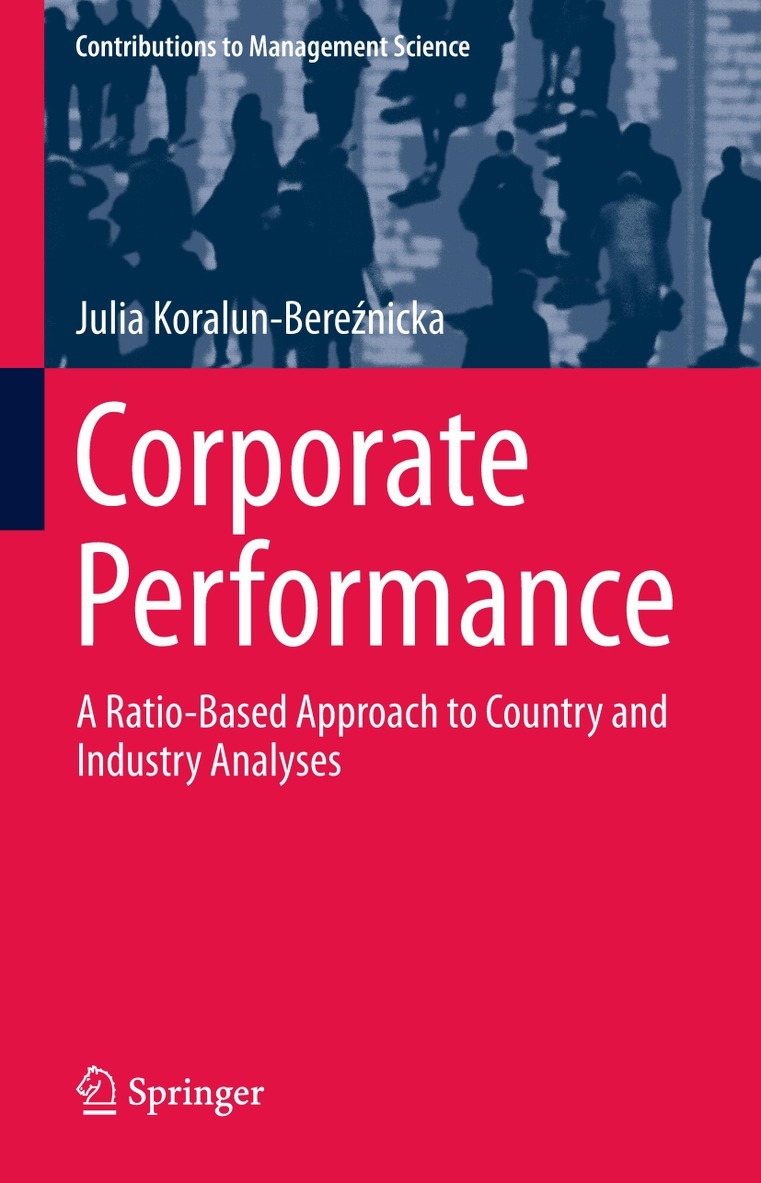
Corporate Performance
A Ratio-Based Approach to Country and Industry Analyses
Inbunden, Engelska, 2013
1 094 kr
Skickas inom 10-15 vardagar
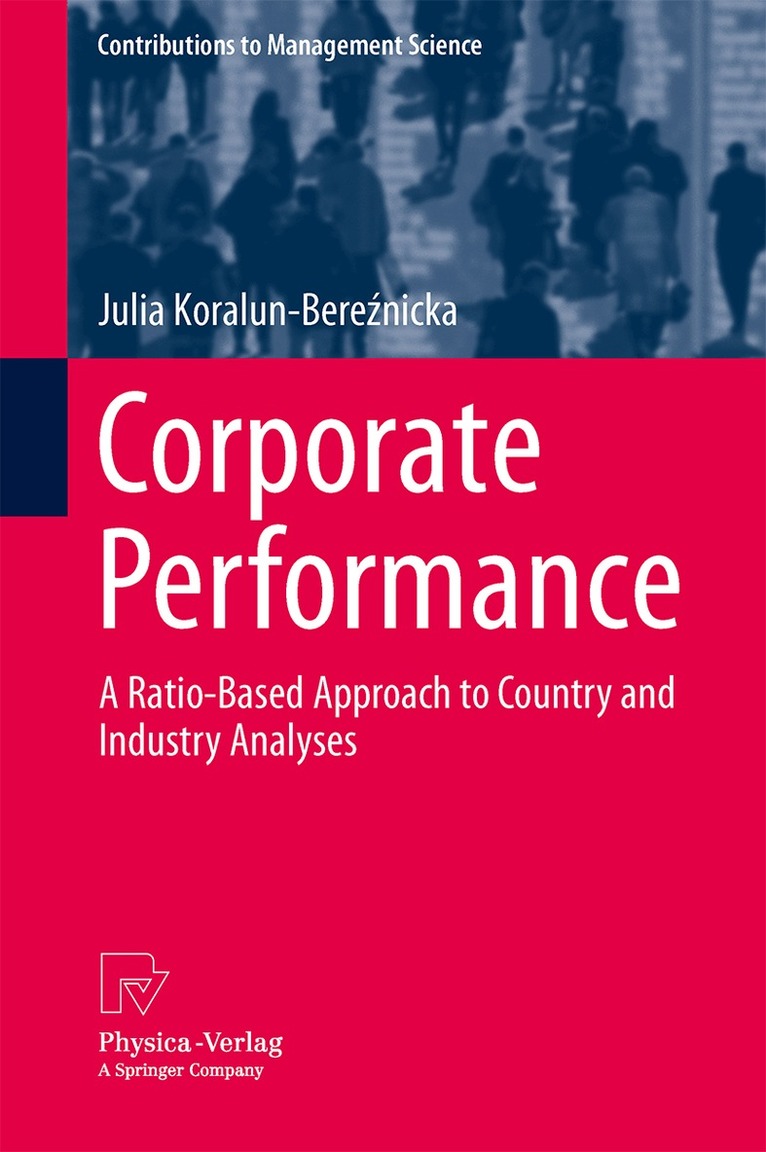
This book presents the comparative evaluation of international and industrial factors affecting the financial condition of enterprises. The aim of the empirical study is to determine such factors – national or industrial ones – that have a greater impact on the corporate performance in the selected European Union countries.
1 094 kr
Skickas inom 10-15 vardagar
This book presents the comparative evaluation of international and industrial factors affecting the financial condition of enterprises. The aim of the empirical study is to determine such factors – national or industrial ones – that have a greater impact on the corporate performance in the selected European Union countries.