Julia L. Higle – författare
Visar alla böcker från författaren Julia L. Higle. Handla med fri frakt och snabb leverans.
3 produkter
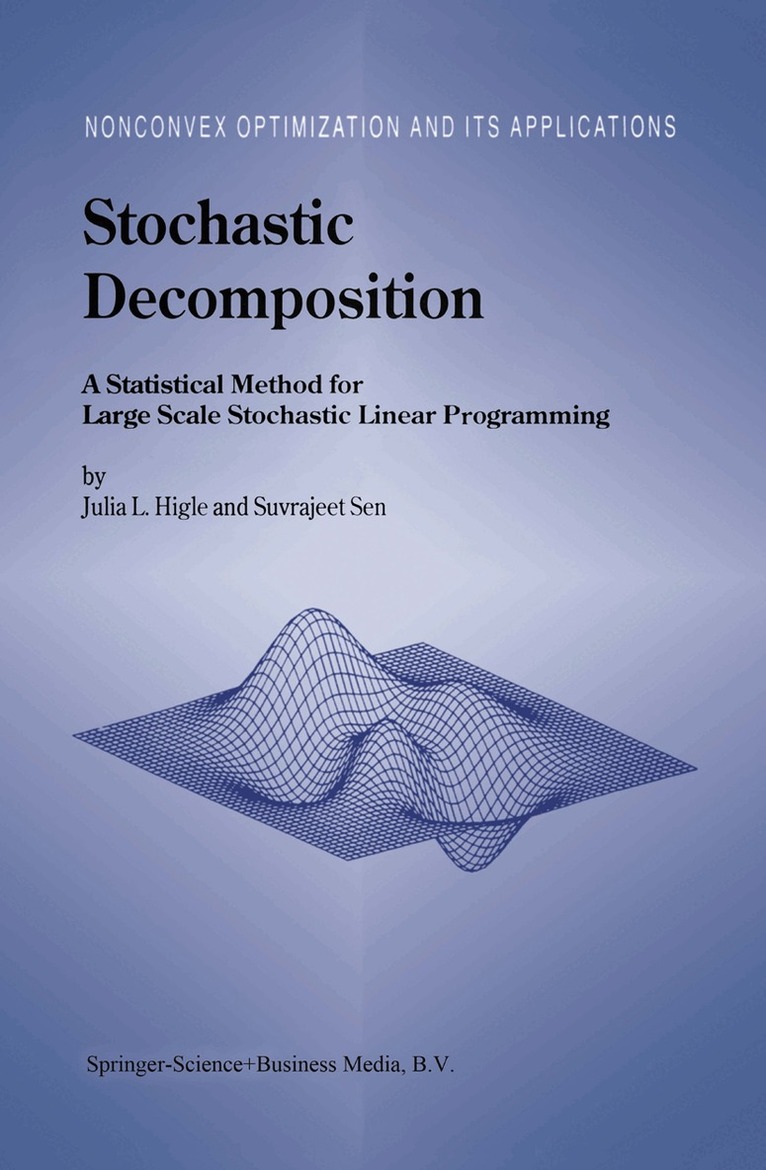
Stochastic Decomposition
A Statistical Method for Large Scale Stochastic Linear Programming
Av Julia L. Higle, S. Sen
Inbunden, 1996
1098 kr
Lägg i varukorg
Motivation Stochastic Linear Programming with recourse represents one of the more widely applicable models for incorporating uncertainty within in which the SLP optimization models. There are several arenas model is appropriate, and such models have found applications in air line yield management, …
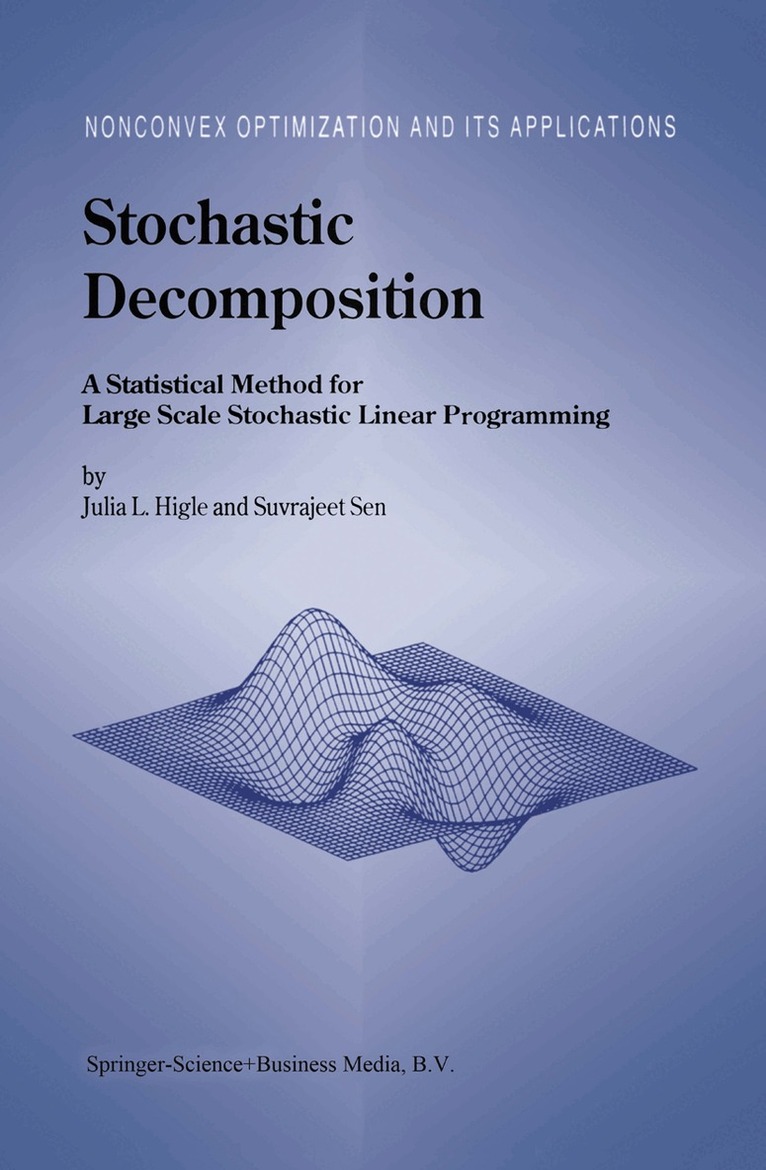
Stochastic Decomposition
A Statistical Method for Large Scale Stochastic Linear Programming
Av Julia L. Higle, S. Sen
Häftad, 2013
1098 kr
Lägg i varukorg
Motivation Stochastic Linear Programming with recourse represents one of the more widely applicable models for incorporating uncertainty within in which the SLP optimization models. There are several arenas model is appropriate, and such models have found applications in air line yield management, …
Stochastic Decomposition
A Statistical Method for Large Scale Stochastic Linear Programming
Av S. Sen, Julia L. Higle
E-bok, 2013
1459 kr
Lägg i varukorg
Motivation Stochastic Linear Programming with recourse represents one of the more widely applicable models for incorporating uncertainty within in which the SLP optimization models. There are several arenas model is appropriate, and such models have found applications in air line yield management, …