Julian Yates - Böcker
Visar alla böcker från författaren Julian Yates. Handla med fri frakt och snabb leverans.
6 produkter
6 produkter
298 kr
Skickas inom 5-8 vardagar
279 kr
Skickas inom 7-10 vardagar
1 270 kr
Skickas inom 7-10 vardagar
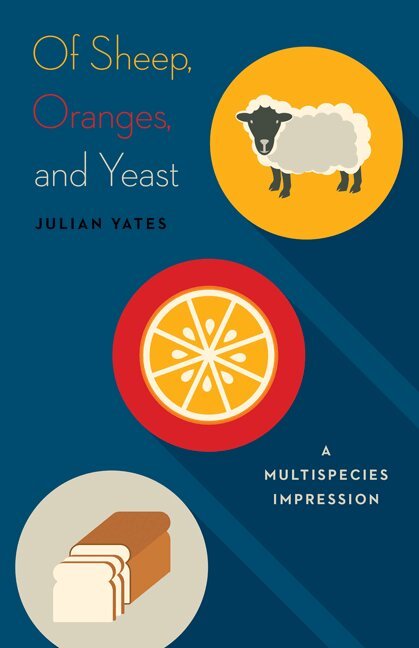
In what senses do animals, plants, and minerals write? How does their writingmark our livesour past, present, and future? Addressing such questions with an exhilarating blend of creative flair and theoretical depth, Of Sheep, Oranges, and Yeast traces how the lives of, yes, sheep, oranges, gold, and yeast mark the stories of those animals we call human. Bringing together often separate conversations in animal studies, plant studies, ecotheory, and biopolitics, Of Sheep, Oranges, and Yeast crafts scripts for literary and historical study that embrace the fact that we come into being through our relations to other animal, plant, fungal, microbial, viral, mineral, and chemical actors. The book opens and closes in the company of a Shakespearean character talking through his painful encounter with the skin of a lamb (in the form of parchment). This encounter stages a visceral awareness of what Julian Yates names a multispecies impression,the way all acts of writing are saturated with the writingof other beings. Yates then develops a multimodal reading strategy that traces a series of anthropo-zoo-genetic figures that derive from our comaking with sheep (keyed to the story of biopolitics), oranges (keyed to economy), and yeast (keyed to the notion of foundation or infrastructure). Working with an array of materials (published and archival), across disciplines and historical periods (Classical to postmodern), the book allows sheep, oranges, and yeast to dictate their own chronologies and plot their own stories. What emerges is a methodology that fundamentally alters what it means to read in the twenty-first century.
309 kr
Skickas inom 7-10 vardagar
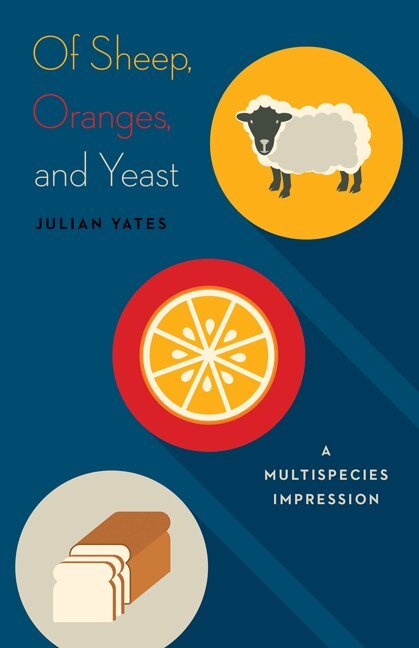
In what senses do animals, plants, and minerals write? How does their writingmark our livesour past, present, and future? Addressing such questions with an exhilarating blend of creative flair and theoretical depth, Of Sheep, Oranges, and Yeast traces how the lives of, yes, sheep, oranges, gold, and yeast mark the stories of those animals we call human. Bringing together often separate conversations in animal studies, plant studies, ecotheory, and biopolitics, Of Sheep, Oranges, and Yeast crafts scripts for literary and historical study that embrace the fact that we come into being through our relations to other animal, plant, fungal, microbial, viral, mineral, and chemical actors. The book opens and closes in the company of a Shakespearean character talking through his painful encounter with the skin of a lamb (in the form of parchment). This encounter stages a visceral awareness of what Julian Yates names a multispecies impression,the way all acts of writing are saturated with the writingof other beings. Yates then develops a multimodal reading strategy that traces a series of anthropo-zoo-genetic figures that derive from our comaking with sheep (keyed to the story of biopolitics), oranges (keyed to economy), and yeast (keyed to the notion of foundation or infrastructure). Working with an array of materials (published and archival), across disciplines and historical periods (Classical to postmodern), the book allows sheep, oranges, and yeast to dictate their own chronologies and plot their own stories. What emerges is a methodology that fundamentally alters what it means to read in the twenty-first century.
1 460 kr
Skickas inom 7-10 vardagar
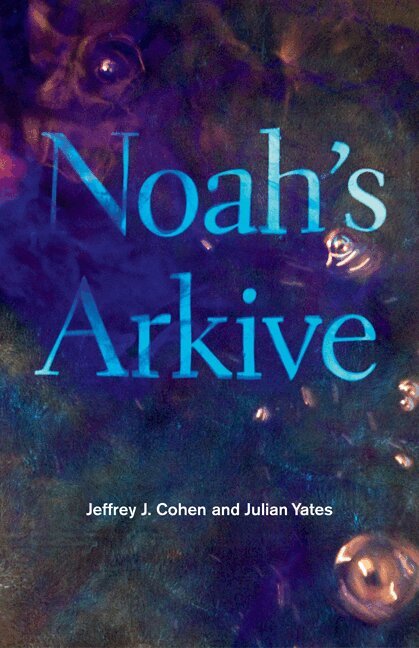
A timely rethinking of the archetypal story of Noah, the great flood, and who was left behind as the waters roseMost people know the story of Noah from a children’s bible or a play set with a colorful ship, bearded Noah, pairs of animals, and an uncomplicated vision of survival. Noah’s ark, however, will forever be haunted by what it leaves to the rising waters so that the world can begin again.In Noah’s Arkive, Jeffrey J. Cohen and Julian Yates examine the long history of imagining endurance against climate catastrophe-as well as alternative ways of creating refuge. They trace how the elements of the flood narrative were elaborated in medieval and early modern art, text, and music, and now shape writing and thinking during the current age of anthropogenic climate change. Arguing that the biblical ark may well be the worst possible exemplar of human behavior, the chapters draw on a range of sources, from the Epic of Gilgamesh and Ovid’s tale of Deucalion and Pyrrah, to speculative fiction, climate fiction, and stories and art dwelling with environmental catastrophe. Noah’s Arkive uncovers the startling afterlife of the Genesis narrative written from the perspective of Noah’s wife and family, the animals on the ark, and those excluded and so left behind to die. This book of recovered stories speaks eloquently to the ethical and political burdens of living through the Anthropocene.Following a climate change narrative across the millennia, Noah’s Arkive surveys the long history of dwelling with the consequences of choosing only a few to survive in order to start the world over. It is an intriguing meditation on how the story of the ark can frame how we think about environmental catastrophe and refuge, conservation and exclusion, offering hope for a better future by heeding what we know from the past.
356 kr
Skickas inom 7-10 vardagar
A timely rethinking of the archetypal story of Noah, the great flood, and who was left behind as the waters roseMost people know the story of Noah from a children’s bible or a play set with a colorful ship, bearded Noah, pairs of animals, and an uncomplicated vision of survival. Noah’s ark, however, will forever be haunted by what it leaves to the rising waters so that the world can begin again.In Noah’s Arkive, Jeffrey J. Cohen and Julian Yates examine the long history of imagining endurance against climate catastrophe-as well as alternative ways of creating refuge. They trace how the elements of the flood narrative were elaborated in medieval and early modern art, text, and music, and now shape writing and thinking during the current age of anthropogenic climate change. Arguing that the biblical ark may well be the worst possible exemplar of human behavior, the chapters draw on a range of sources, from the Epic of Gilgamesh and Ovid’s tale of Deucalion and Pyrrah, to speculative fiction, climate fiction, and stories and art dwelling with environmental catastrophe. Noah’s Arkive uncovers the startling afterlife of the Genesis narrative written from the perspective of Noah’s wife and family, the animals on the ark, and those excluded and so left behind to die. This book of recovered stories speaks eloquently to the ethical and political burdens of living through the Anthropocene.Following a climate change narrative across the millennia, Noah’s Arkive surveys the long history of dwelling with the consequences of choosing only a few to survive in order to start the world over. It is an intriguing meditation on how the story of the ark can frame how we think about environmental catastrophe and refuge, conservation and exclusion, offering hope for a better future by heeding what we know from the past.