Jeffrey Jerome Cohen - Böcker
Visar alla böcker från författaren Jeffrey Jerome Cohen. Handla med fri frakt och snabb leverans.
18 produkter
18 produkter
1 095 kr
Skickas inom 10-15 vardagar
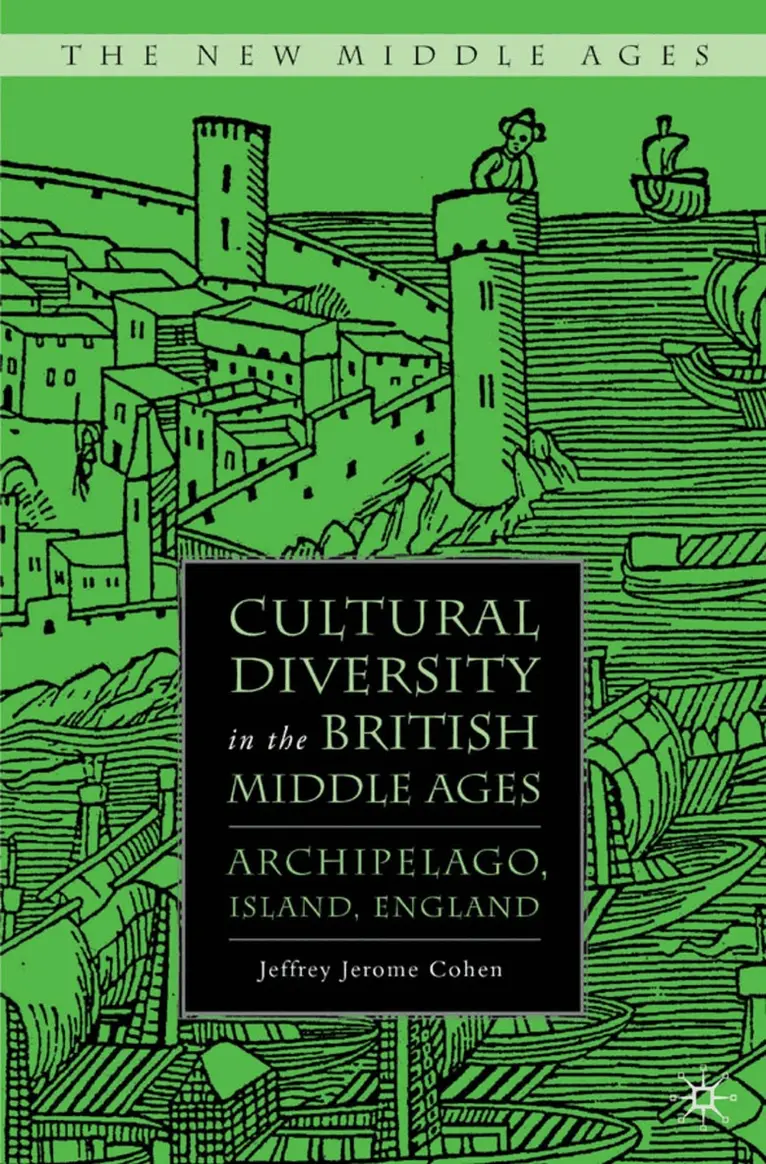
Through close readings of both familiar and obscure medieval texts, the contributors to this volume attempt to read England as a singularly powerful entity within a vast geopolitical network.
310 kr
Skickas inom 5-8 vardagar
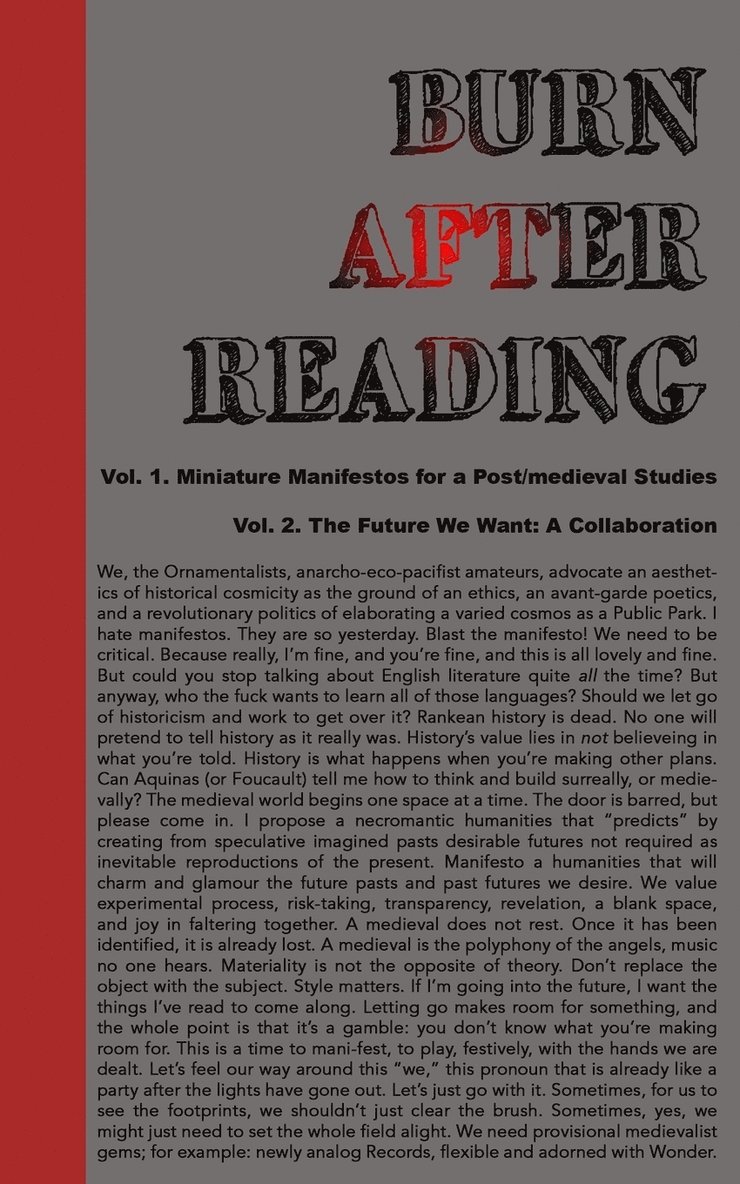
Burn After Reading
Miniature Manifestos for a Post/medieval Studies + The Future We Want
Häftad, Engelska, 2014
298 kr
Skickas inom 5-8 vardagar
239 kr
Skickas inom 5-8 vardagar
298 kr
Skickas inom 5-8 vardagar
989 kr
Skickas inom 7-10 vardagar
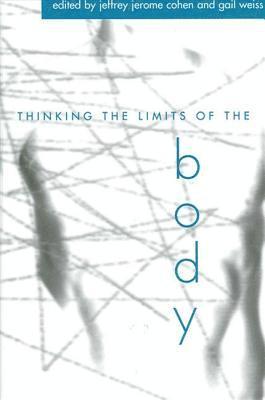
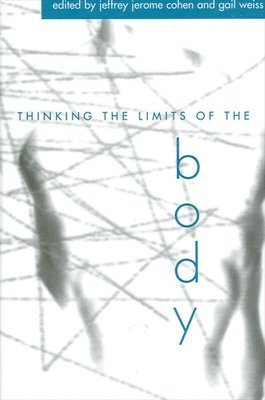
Shows the inseparability of textuality, materiality, and history in discussions of the body.This collection maps the very best efforts to think the body at its limits. Because the body encompasses communities (social and political bodies), territories (geographical bodies), and historical texts and ideas (a body of literature, a body of work), Cohen and Weiss seek trans-disciplinary points of resonance and divergence to examine how disciplinary metaphors materialize specific bodies, and where these bodies break down and/or refuse prescribed paths. Whereas postmodern theorizations of the body often neglect its corporeality in favor of its cultural construction, this book demonstrates the inseparability of textuality, materiality, and history in any discussion of the body.
382 kr
Tillfälligt slut
Shows the inseparability of textuality, materiality, and history in discussions of the body.This collection maps the very best efforts to think the body at its limits. Because the body encompasses communities (social and political bodies), territories (geographical bodies), and historical texts and ideas (a body of literature, a body of work), Cohen and Weiss seek trans-disciplinary points of resonance and divergence to examine how disciplinary metaphors materialize specific bodies, and where these bodies break down and/or refuse prescribed paths. Whereas postmodern theorizations of the body often neglect its corporeality in favor of its cultural construction, this book demonstrates the inseparability of textuality, materiality, and history in any discussion of the body.
2 151 kr
Skickas inom 10-15 vardagar
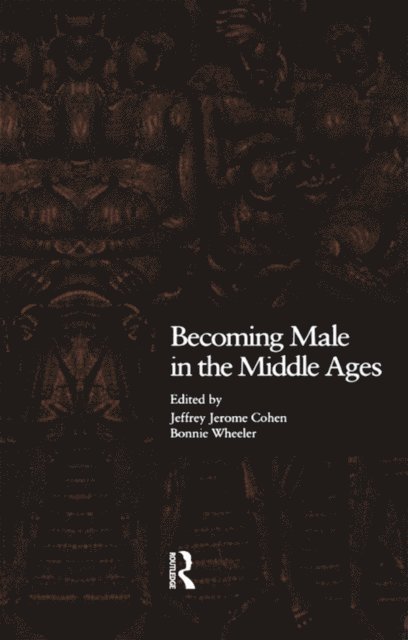
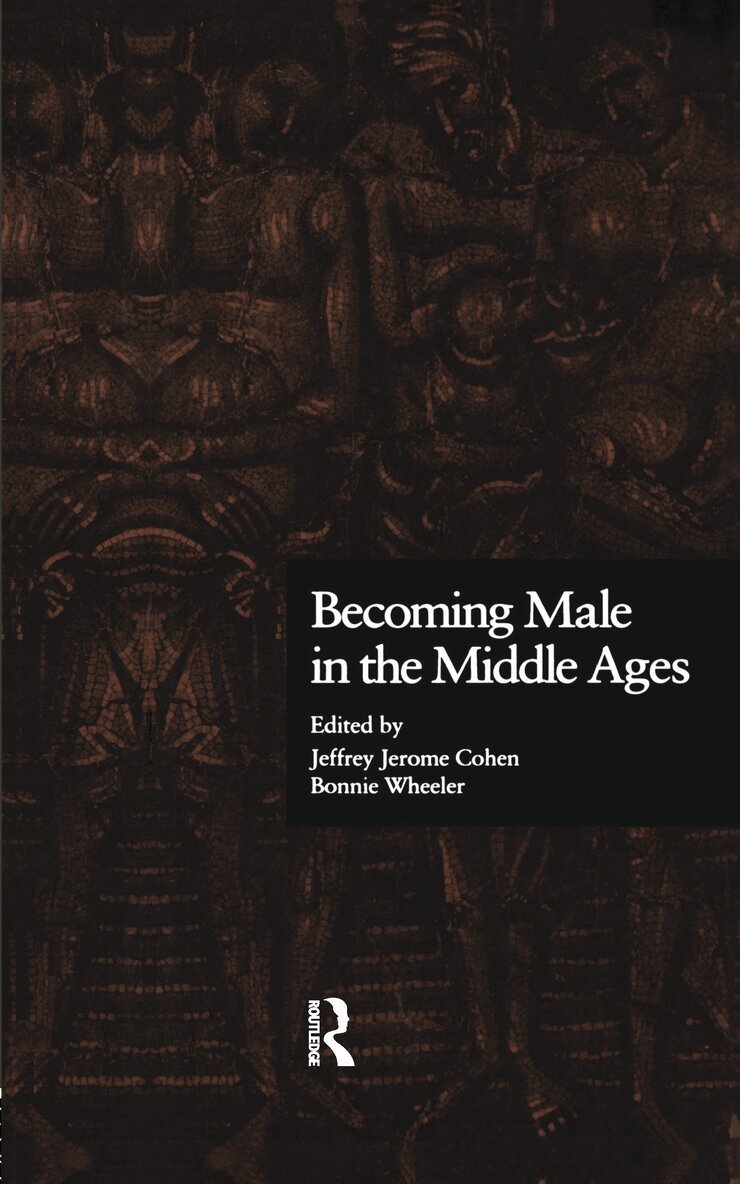
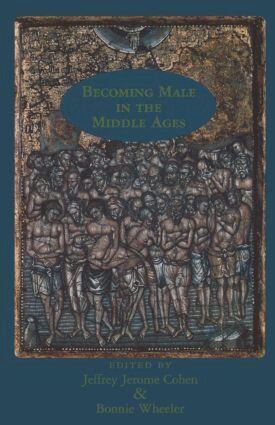
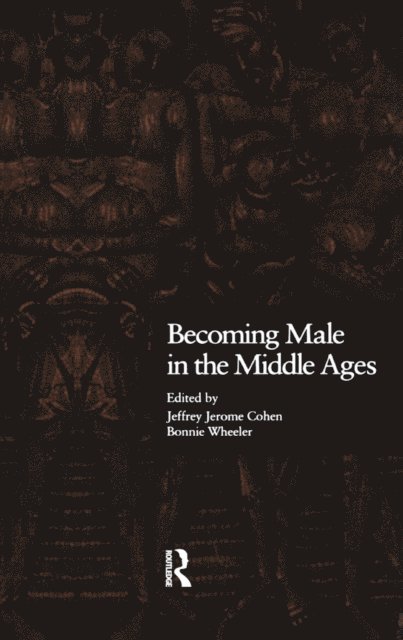
First published in 1997. Most work in gender studies has focused on women. This volume brings together various forms of gender theory, especially feminist and queer theory, to explore how men made cultures and culture made men, in the Middle Ages.
594 kr
Skickas inom 10-15 vardagar
First published in 1997. Most work in gender studies has focused on women. This volume brings together various forms of gender theory, especially feminist and queer theory, to explore how men made cultures and culture made men, in the Middle Ages.
299 kr
Skickas inom 7-10 vardagar
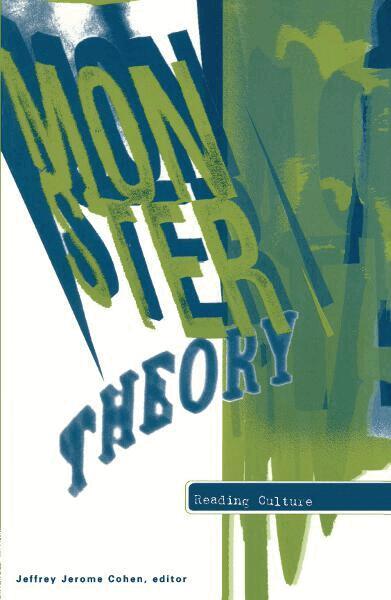
Explores concepts of monstrosity in Western civilization from Beowulf to Jurassic Park.We live in a time of monsters. Monsters provide a key to understanding the culture that spawned them. So argue the essays in this wide-ranging and fascinating collection that asks the question, What happens when critical theorists take the study of monsters seriously as a means of examining our culture? In viewing the monstrous body as a metaphor for the cultural body, the contributors to Monster Theory consider beasts, demons, freaks, and fiends as symbolic expressions of cultural unease that pervade a society and shape its collective behavior. Through a historical sampling of monsters, these essays argue that our fascination for the monstrous testifies to our continued desire to explore difference and prohibition.Contributors: Mary Baine Campbell, Brandeis U; David L. Clark, McMaster U; Frank Grady, U of Missouri, St. Louis; David A. Hedrich Hirsch, U of Illinois; Lawrence D. Kritzman, Dartmouth College; Kathleen Perry Long, Cornell U; Stephen Pender; Allison Pingree, Harvard U; Anne Lake Prescott, Barnard College; John O'Neill, York U; William Sayers, George Washington U; Michael Uebel, U of Virginia; Ruth Waterhouse.
326 kr
Skickas inom 7-10 vardagar
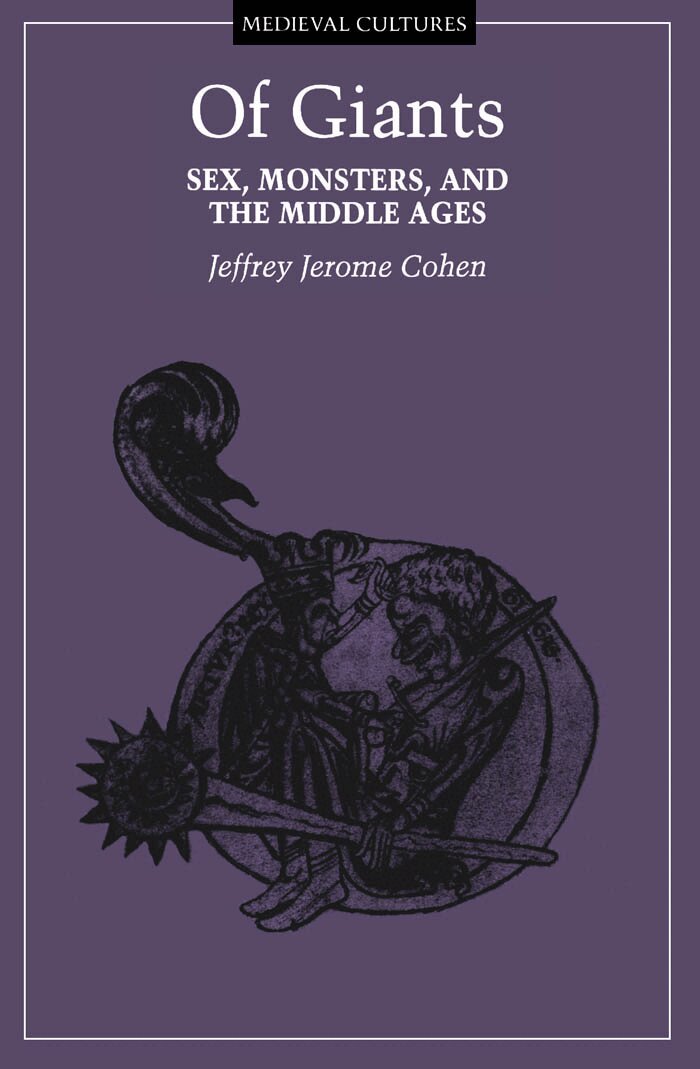
Considers what monsters tell us about identity in the medieval period.A monster lurks at the heart of medieval identity, and this book seeks him out. Reading a set of medieval texts in which giants and dismemberment figure prominently, Jeffrey Jerome Cohen brings a critical psychoanalytic perspective to bear on the question of identity formation-particularly masculine identity-in narrative representation. The giant emerges here as an intimate stranger, a monster who stands at the limits of selfhood.Arguing that in the romance tradition of late fourteenth-century England, identity is inscribed on sexed bodies only through the agency of a monster, Cohen looks at the giant as the masculine body writ large. In the giant he sees an uncanny figure, absolutely other and curiously familiar, that serves to define the boundaries of masculine embodiment. Philosophically compelling, the book is also a philologically rigorous inquiry into the phenomenon of giants and giant-slaying in various texts from the Anglo-Saxon period to late Middle English, including Beowulf, ChrÉtien de Troyes’s The Knight and the Lion, Geoffrey of Monmouth’s History of the Kings of Britain, several works by Chaucer, Sir Gowther, Sir Gawain and the Green Knight, and more.A significant contribution to our understanding of medieval culture, Of Giants also provides surprising insights into questions about the psychosocial work of representation in its key location for the individual: the construction of gender and the social formation of the boundaries of gender identification. It will engage students of the Middle Ages as well as those interested in discourses of the body, social identity, and the grotesque. ISBN 0-8166-3216-2 Cloth £00.00 $47.95xxISBN 0-8166-3217-0 Paper £00.00 $18.95x240 Pages 5 black-and-white photos 5 7/8 x 9 MayMedieval Cultures Series, volume 17Translation inquiries: University of Minnesota Press
283 kr
Skickas inom 7-10 vardagar
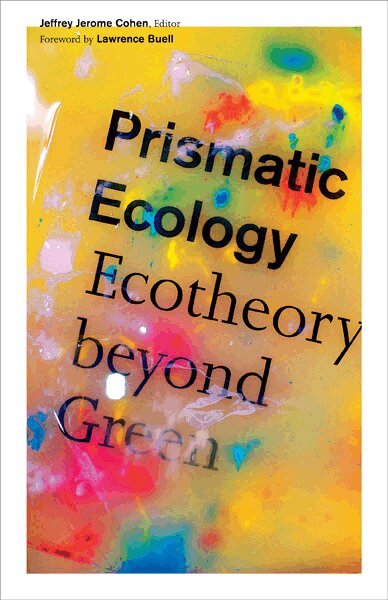
Emphasizing sustainability, balance, and the natural, green dominates our thinking about ecology like no other color. What about the catastrophic, the disruptive, the inaccessible, and the excessive? What of the ocean’s turbulence, the fecundity of excrement, the solitude of an iceberg, multihued contaminations? Prismatic Ecology moves beyond the accustomed green readings of ecotheory and maps a colorful world of ecological possibility.In a series of linked essays that span place, time, and discipline, Jeffrey Jerome Cohen brings together writers who illustrate the vibrant worlds formed by colors. Organized by the structure of a prism, each chapter explores the coming into existence of nonanthropocentric ecologies. “Red” engages sites of animal violence, apocalyptic emergence, and activism; “Maroon” follows the aurora borealis to the far North and beholds in its shimmering alternative modes of world composition; “Chartreuse” is a meditation on postsustainability and possibility within sublime excess; “Grey” is the color of the undead; “Ultraviolet” is a potentially lethal force that opens vistas beyond humanly known nature.Featuring established and emerging scholars from varying disciplines, this volume presents a collaborative imagining of what a more-than-green ecology offers. While highlighting critical approaches not yet common within ecotheory, the contributions remain diverse and cover a range of topics including materiality, the inhuman, and the agency of objects. By way of color, Cohen guides readers through a reflection of an essentially complex and disordered universe and demonstrates the spectrum as an unfinishable totality, always in excess of what a human perceives.Contributors: Stacy Alaimo, U of Texas at Arlington; Levi R. Bryant, Collin College; Lowell Duckert, West Virginia U; Graham Harman, American U in Cairo; Bernd Herzogenrath, Goethe U of Frankfurt; Serenella Iovino, U of Turin, Italy; Eileen A. Joy; Robert McRuer, George Washington U; Tobias Menely, Miami U; Steve Mentz, St. John’s U, New York City; Timothy Morton, Rice U; Vin Nardizzi, U of British Columbia; Serpil Oppermann, Hacettepe U, Ankara; Margaret Ronda, Rutgers U; Will Stockton, Clemson U; Allan Stoekl, Penn State U; Ben Woodard; Julian Yates, U of Delaware.
270 kr
Skickas inom 7-10 vardagar
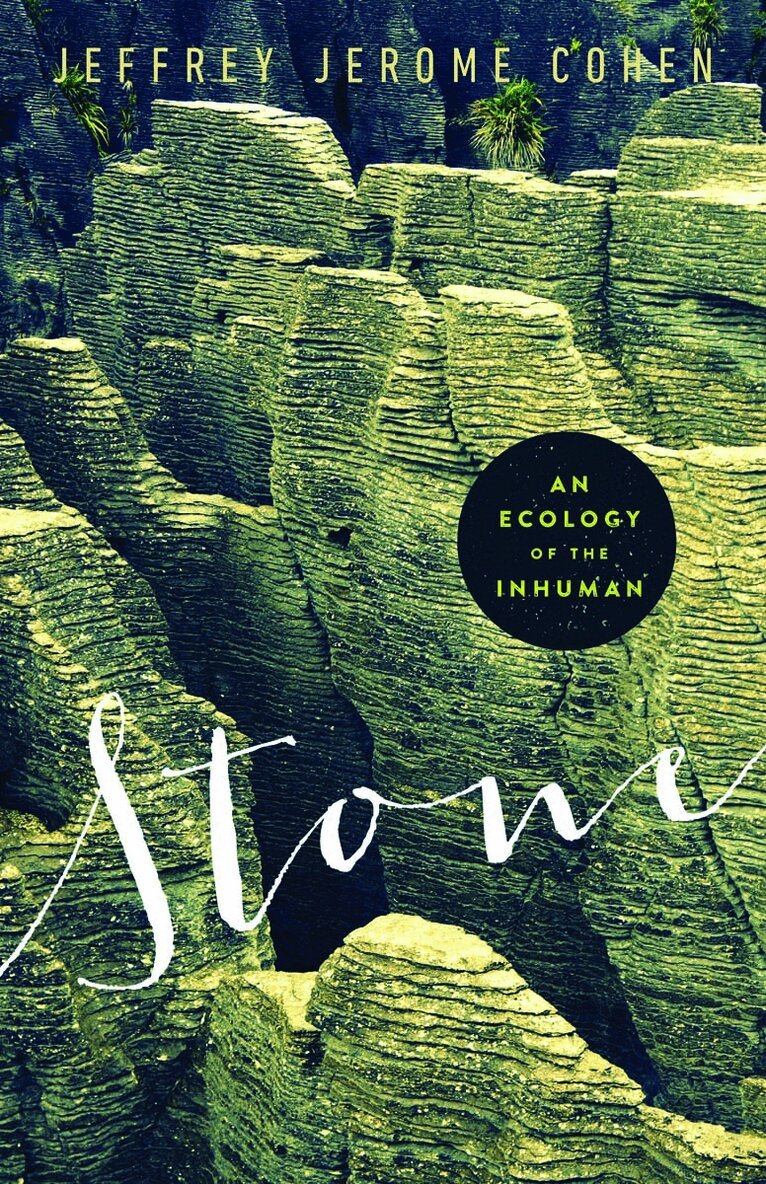
Stone maps the force, vivacity, and stories within our most mundane matter, stone. For too long stone has served as an unexamined metaphor for the “really real”: blunt factuality, nature’s curt rebuke. Yet, medieval writers knew that stones drop with fire from the sky, emerge through the subterranean lovemaking of the elements, tumble along riverbeds from Eden, partner with the masons who build worlds with them. Such motion suggests an ecological enmeshment and an almost creaturely mineral life. Although geological time can leave us reeling, Jeffrey Jerome Cohen argues that stone’s endurance is also an invitation to apprehend the world in other than human terms. Never truly inert, stone poses a profound challenge to modernity’s disenchantments. Its agency undermines the human desire to be separate from the environment, a bifurcation that renders nature “out there,” a mere resource for recreation, consumption, and exploitation. Written with great verve and elegance, this pioneering work is notable not only for interweaving the medieval and the modern but also as a major contribution to ecotheory. Comprising chapters organized by concept -“Geophilia,” “Time,” “Force,” and “Soul”-Cohen seamlessly brings together a wide range of topics including stone’s potential to transport humans into nonanthropocentric scales of place and time, the “petrification” of certain cultures, the messages fossils bear, the architecture of Bordeaux and Montparnasse, Yucca Mountain and nuclear waste disposal, the ability of stone to communicate across millennia in structures like Stonehenge, and debates over whether stones reproduce and have souls. Showing that what is often assumed to be the most lifeless of substances is, in its own time, restless and forever in motion, Stone fittingly concludes by taking us to Iceland⎯a land that, writes the author, “reminds us that stone like water is alive, that stone like water is transient.”
283 kr
Skickas inom 7-10 vardagar
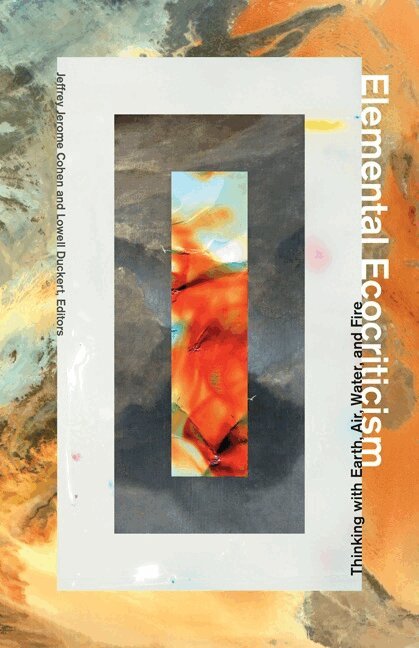
For centuries it was believed that all matter was composed of four elements: earth, air, water, and fire in promiscuous combination, bound by love and pulled apart by strife. Elemental theory offered a mode of understanding materiality that did not center the cosmos around the human. Outgrown as a science, the elements are now what we build our houses against. Their renunciation has fostered only estrangement from the material world.The essays collected in Elemental Ecocriticism show how elemental materiality precipitates new engagements with the ecological. Here the classical elements reveal the vitality of supposedly inert substances (mud, water, earth, air), chemical processes (fire), and natural phenomena, as well as the promise in the abandoned and the unreal (ether, phlogiston, spontaneous generation).Decentering the human, this volume provides important correctives to the idea of the material world as mere resource. Three response essays meditate on the connections of this collaborative project to the framing of modern-day ecological concerns. A renewed intimacy with the elemental holds the potential of a more dynamic environmental ethics and the possibility of a reinvigorated materialism.
124 kr
Skickas
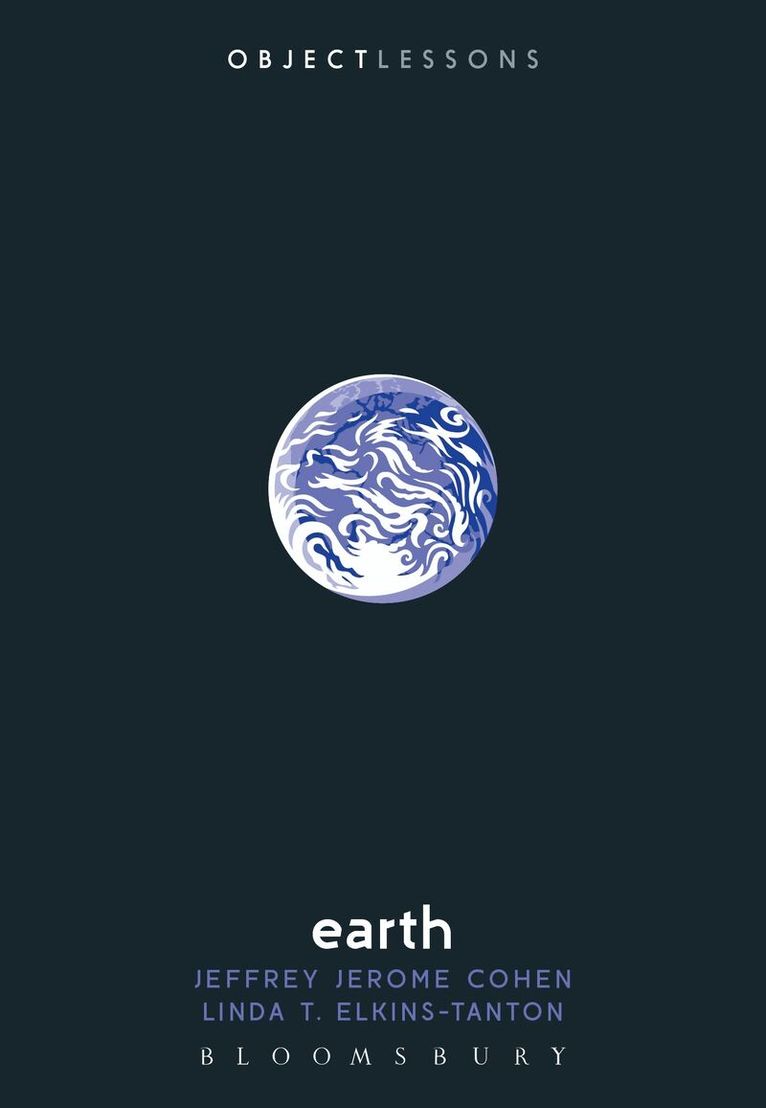
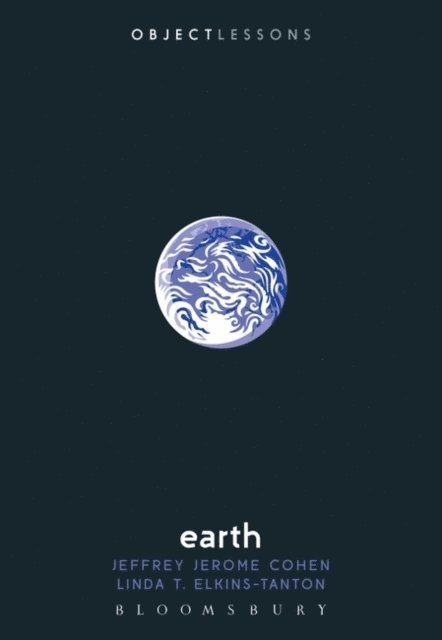
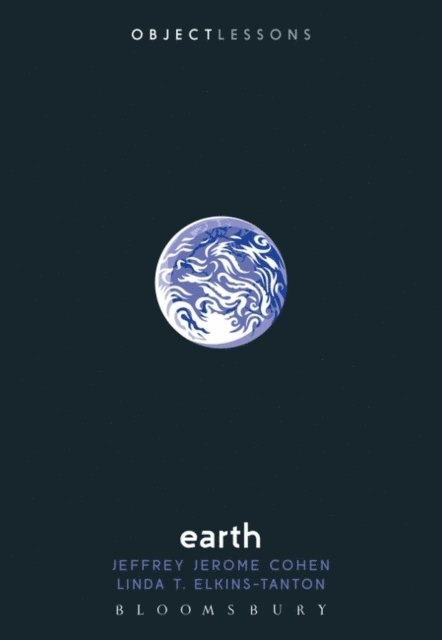
Object Lessons is a series of short, beautifully designed books about the hidden lives of ordinary things.In Earth, a planetary scientist and a literary humanist explore what happens when we think of the Earth as an object viewable from space. As a “blue marble,” “a blue pale dot,” or, as Chaucer described it, “this litel spot of erthe,” the solitary orb is a challenge to scale and to human self-importance. Beautiful and self-contained, the Earth turns out to be far less knowable than it at first appears: its vast interior an inferno of incandescent and yet solid rock and a reservoir of water vaster than the ocean, a world within the world. Viewing the Earth from space invites a dive into the abyss of scale: how can humans apprehend the distances, the temperatures, and the time scale on which planets are born, evolve, and die?Object Lessons is published in partnership with an essay series in The Atlantic.
1 168 kr
Skickas inom 10-15 vardagar
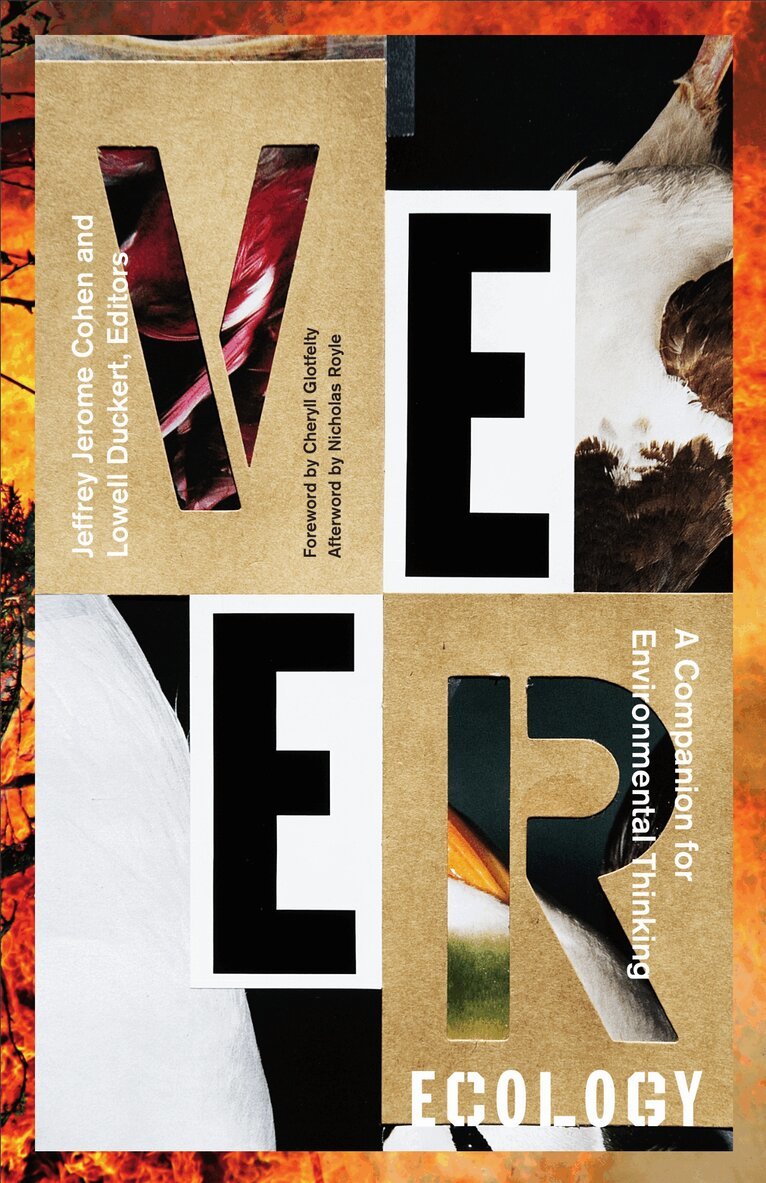
The words most commonly associated with the environmental movement-save, recycle, reuse, protect, regulate, restore-describe what we can do to help the environment, but few suggest how we might transform ourselves to better navigate the sudden turns of the late Anthropocene. Which words can help us to veer conceptually along with drastic environmental flux? Jeffrey Jerome Cohen and Lowell Duckert asked thirty brilliant thinkers to each propose one verb that stresses the forceful potential of inquiry, weather, biomes, apprehensions, and desires to swerve and sheer. Each term is accompanied by a concise essay contextualizing its meaning in times of resource depletion, environmental degradation, and global climate change. Some verbs are closely tied to natural processes: compost, saturate, seep, rain, shade, sediment, vegetate, environ. Many are vaguely unsettling: drown, unmoor, obsolesce, power down, haunt. Others are enigmatic or counterintuitive: curl, globalize, commodify, ape, whirl. And while several verbs pertain to human affect and action-love, represent, behold, wait, try, attune, play, remember, decorate, tend, hope-a primary goal of Veer Ecology is to decenter the human. Indeed, each of the essays speaks to a heightened sense of possibility, awakening our imaginations and inviting us to think the world anew from radically different perspectives. A groundbreaking guide for the twenty-first century, Veer Ecology foregrounds the risks and potentialities of living on-and with-an alarmingly dynamic planet. Contributors: Stacy Alaimo, U of Texas at Arlington; Joseph Campana, Rice U; Holly Dugan, George Washington U; Lara Farina, West Virginia U; Cheryll Glotfelty, U of Nevada, Reno; Anne F. Harris, DePauw U; Tim Ingold, U of Aberdeen; Serenella Iovino, U of Turin; Stephanie LeMenager, U of Oregon; Scott Maisano, U of Massachusetts, Boston; Tobias Menely, U of California, Davis; Steve Mentz, St. Johns U; J. Allan Mitchell, U of Victoria; Timothy Morton, Rice U; Vin Nardizzi, U of British Columbia; Laura Ogden, Dartmouth College; Serpil Opperman, Hacettepe U, Ankara; Daniel C. Remein, U of Massachusetts, Boston; Margaret Ronda, U of California, Davis; Nicholas Royle, U of Sussex; Catriona Sandilands, York U; Christopher Schaberg, Loyola U; Rebecca R. Scott, U of Missouri; Theresa Shewry, U of California, Santa Barbara; Mick Smith, Queens U; Jesse Oak Taylor, U of Washington; Brian Thill, Golden West College; Coll Thrush, U of British Columbia, Vancouver; Cord J. Whitaker, Wellesley College; Julian Yates, U of Delaware.
292 kr
Skickas inom 11-20 vardagar
The words most commonly associated with the environmental movement-save, recycle, reuse, protect, regulate, restore-describe what we can do to help the environment, but few suggest how we might transform ourselves to better navigate the sudden turns of the late Anthropocene. Which words can help us to veer conceptually along with drastic environmental flux? Jeffrey Jerome Cohen and Lowell Duckert asked thirty brilliant thinkers to each propose one verb that stresses the forceful potential of inquiry, weather, biomes, apprehensions, and desires to swerve and sheer. Each term is accompanied by a concise essay contextualizing its meaning in times of resource depletion, environmental degradation, and global climate change. Some verbs are closely tied to natural processes: compost, saturate, seep, rain, shade, sediment, vegetate, environ. Many are vaguely unsettling: drown, unmoor, obsolesce, power down, haunt. Others are enigmatic or counterintuitive: curl, globalize, commodify, ape, whirl. And while several verbs pertain to human affect and action-love, represent, behold, wait, try, attune, play, remember, decorate, tend, hope-a primary goal of Veer Ecology is to decenter the human. Indeed, each of the essays speaks to a heightened sense of possibility, awakening our imaginations and inviting us to think the world anew from radically different perspectives. A groundbreaking guide for the twenty-first century, Veer Ecology foregrounds the risks and potentialities of living on-and with-an alarmingly dynamic planet. Contributors: Stacy Alaimo, U of Texas at Arlington; Joseph Campana, Rice U; Holly Dugan, George Washington U; Lara Farina, West Virginia U; Cheryll Glotfelty, U of Nevada, Reno; Anne F. Harris, DePauw U; Tim Ingold, U of Aberdeen; Serenella Iovino, U of Turin; Stephanie LeMenager, U of Oregon; Scott Maisano, U of Massachusetts, Boston; Tobias Menely, U of California, Davis; Steve Mentz, St. Johns U; J. Allan Mitchell, U of Victoria; Timothy Morton, Rice U; Vin Nardizzi, U of British Columbia; Laura Ogden, Dartmouth College; Serpil Opperman, Hacettepe U, Ankara; Daniel C. Remein, U of Massachusetts, Boston; Margaret Ronda, U of California, Davis; Nicholas Royle, U of Sussex; Catriona Sandilands, York U; Christopher Schaberg, Loyola U; Rebecca R. Scott, U of Missouri; Theresa Shewry, U of California, Santa Barbara; Mick Smith, Queens U; Jesse Oak Taylor, U of Washington; Brian Thill, Golden West College; Coll Thrush, U of British Columbia, Vancouver; Cord J. Whitaker, Wellesley College; Julian Yates, U of Delaware.
429 kr
Skickas inom 3-6 vardagar