Juliana Geran Pilon – Författare
Visar alla böcker från författaren Juliana Geran Pilon. Handla med fri frakt och snabb leverans.
17 produkter
17 produkter
299 kr
Skickas inom 3-6 vardagar
1 476 kr
Skickas inom 10-15 vardagar
History offers ample proof of AmericaOs pride and prejudice, a twin handicap that prevents effective communication with the rest of the world. Using literature, political science, philosophy, and humor, the book explores some of the reasons for AmericaOs current predicament. It ends, however, on a positive note, describing some heartening initiatives, and expressing confidence in the sustaining power of the American spirit. Dr. Pilon's analysis should prove useful to scholars and practitioners, indeed to anyone interested in improving the interaction between America and the world.
568 kr
Skickas inom 10-15 vardagar
History offers ample proof of AmericaOs pride and prejudice, a twin handicap that prevents effective communication with the rest of the world. Using literature, political science, philosophy, and humor, the book explores some of the reasons for AmericaOs current predicament. It ends, however, on a positive note, describing some heartening initiatives, and expressing confidence in the sustaining power of the American spirit. Dr. Pilon's analysis should prove useful to scholars and practitioners, indeed to anyone interested in improving the interaction between America and the world.
568 kr
Skickas inom 10-15 vardagar
Every Vote Counts starts from the premise that free and fair elections are the foundation upon which democracy is built. Given this fact, the study explores the role of foreign electoral assistance in helping to spread democracy around the globe during the past two decades. Among other issues, its authors examine: (1) the challenges of organizing elections in two of the most demanding environments of recent years (Iraq and Afghanistan); (2) the effect of African popular opinion about the quality of elections on citizens' trust in their political institutions; (3) how Ukrainians have chosen legal and electoral means to resolve disputes rather than open conflict; (4) Indonesia's growing understanding of democracy, which has resulted in increased participation; and (5) electoral assistance as a critical component of American public diplomacy and efforts to reach out to the rest of the world.Each chapter of Every Vote Counts documents the experiences of democracy professionals, who often use case studies to describe what worked-and what didn't-on the ground, instead of relying on mere conjectures. Above all, these experts underscore the importance of providing democratic assistance long enough for local officials to acquire the expertise and confidence they need to manage elections on their own.
481 kr
Tillfälligt slut
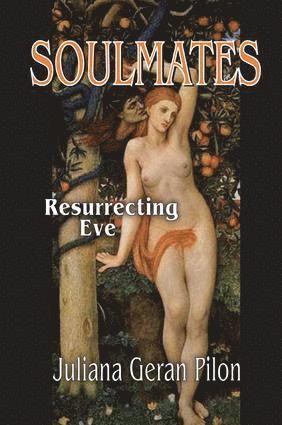
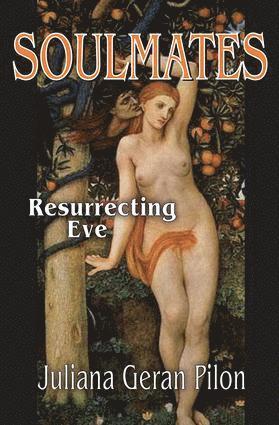
In Soulmates: Resurrecting Eve, Juliana Geran Pilon argues for a return to an egalitarian view of men and women, found in the original Genesis narrative, as reflected through Judaism, Christianity, and Islam. In each of these Abrahamic traditions, it was understood that man and woman were created to be soulmates in God's image equal despite their different functions within society. Pilon writes that this original message has gradually been distorted, with disastrous effect. Any hope for an ennobling human community begins by resurrecting Eve as an equal partner to Adam.The work examines the Biblical creation narrative, comparing it to Greek and other ancient mythologies. Pilon explains how the disturbing association of woman with sin and death led to Eve's demise as Adam's equal. The final section of the work deals with the Goddess myth, love and marriage in early religious narratives, and modern man's search for his soul no less than for a soulmate.The book, at its core, is a meditation on the relationship between men and women but also among human beings. The resurrection of Eve is indispensable to attaining a true appreciation of love and faith. Pilon uses religious texts, expert commentary, and various works of fiction, poetry, and psychology to make her argument come alive. The work is strengthened by the writing style, alternately poetic and humorous, and a clear and illuminating progression of ideas. Its emphasis on reconciliation and understanding, and its post-feminist outlook will find a receptive audience.
1 434 kr
Tillfälligt slut
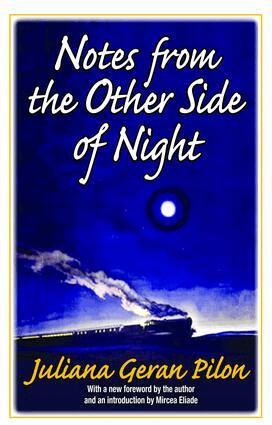
Notes from the Other Side of Night is a diary-memoir written upon Juliana Geran Pilon's return to her native Romania in 1975, which she had left along with her family when she was just fourteen. Poetically weaving together modern insight and realities with childhood perceptions, Pilon tells the haunting stories of her parents, grandparents, neighbors, and friends.Although the scenery of her native home had remained essentially unchanged since her childhood, Pilon recalls streets that are no more, homes and churches that have been demolished. Yet, the hills and forests, the flowers and mountains, the heat of old Bucharest, remained the same. The scenes and characters described in this book are simply unforgettable.Despite the many tragedies it describes anti-semitism, political imprisonment, and judicial execution were ruthless realities under communismNotes from the Other Side of Night is not a depressing book. Pilon writes with a detached melancholy about events and characters that illustrate Hannah Arendt's terrifying "banality of evil." But she remembers, as well, those few who managed to remain human beings until the end. Ultimately, hope triumphs in this memoir. This edition includes a new foreword, which discusses the initial writing and publication of this and previous editions.
1 115 kr
Tillfälligt slut
In Soulmates: Resurrecting Eve, Juliana Geran Pilon argues for a return to an egalitarian view of men and women, found in the original Genesis narrative, as reflected through Judaism, Christianity, and Islam. In each of these Abrahamic traditions, it was understood that man and woman were created to be soulmates in God's image—equal despite their different functions within society. Pilon writes that this original message has gradually been distorted, with disastrous effect. Any hope for an ennobling human community begins by resurrecting Eve as an equal partner to Adam.The work examines the Biblical creation narrative, comparing it to Greek and other ancient mythologies. Pilon explains how the disturbing association of woman with sin and death led to Eve's demise as Adam's equal. The final section of the work deals with the Goddess myth, love and marriage in early religious narratives, and modern man's search for his soul no less than for a soulmate.The book, at its core, is a meditation on the relationship between men and women but also among human beings. The resurrection of Eve is indispensable to attaining a true appreciation of love and faith. Pilon uses religious texts, expert commentary, and various works of fiction, poetry, and psychology to make her argument come alive. The work is strengthened by the writing style, alternately poetic and humorous, and a clear and illuminating progression of ideas. Its emphasis on reconciliation and understanding, and its post-feminist outlook will find a receptive audience.
523 kr
Tillfälligt slut
Notes from the Other Side of Night is a diary-memoir written upon Juliana Geran Pilon's return to her native Romania in 1975, which she had left along with her family when she was just fourteen. Poetically weaving together modern insight and realities with childhood perceptions, Pilon tells the haunting stories of her parents, grandparents, neighbors, and friends.Although the scenery of her native home had remained essentially unchanged since her childhood, Pilon recalls streets that are no more, homes and churches that have been demolished. Yet, the hills and forests, the flowers and mountains, the heat of old Bucharest, remained the same. The scenes and characters described in this book are simply unforgettable.Despite the many tragedies it describes—anti-semitism, political imprisonment, and judicial execution were ruthless realities under communism—Notes from the Other Side of Night is not a depressing book. Pilon writes with a detached melancholy about events and characters that illustrate Hannah Arendt's terrifying "banality of evil." But she remembers, as well, those few who managed to remain human beings until the end. Ultimately, hope triumphs in this memoir. This edition includes a new foreword, which discusses the initial writing and publication of this and previous editions.
2 113 kr
Skickas inom 10-15 vardagar
Sun Tzu, author of 'The Art of War', believed that the acme of leadership consists in figuring out how to subdue the enemy with the least amount of fighting—a fact that America's Founders also understood, and practiced with astonishing success. For it to work, however, a people must possess both the ability and the willingness to use all available instruments of power in peace as much as in war. US foreign policy has increasingly neglected the instruments of civilian power and become overly dependent on lethal solutions to conflict. The steep rise in unconventional conflict has increased the need for diplomatic and other non-hard power tools of statecraft. The United States can no longer afford to sit on the proverbial three-legged national security stool ("military, diplomacy, development"), where one leg is a lot longer than either of the other two, almost forgetting altogether the fourth leg—information, especially strategic communication and public diplomacy. The United States isn't so much becoming militarized as DE civilianized. According to Sun Tzu, self-knowledge is as important as knowledge of one's enemy: "if you know neither yourself nor the enemy, you will succumb in every battle." Alarmingly, the United States is deficient on both counts. And though we can stand to lose a few battles, the stakes of losing the war itself in this age of nuclear proliferation are too high to contemplate.
686 kr
Skickas inom 10-15 vardagar
Sun Tzu, author of 'The Art of War', believed that the acme of leadership consists in figuring out how to subdue the enemy with the least amount of fighting—a fact that America's Founders also understood, and practiced with astonishing success. For it to work, however, a people must possess both the ability and the willingness to use all available instruments of power in peace as much as in war. US foreign policy has increasingly neglected the instruments of civilian power and become overly dependent on lethal solutions to conflict. The steep rise in unconventional conflict has increased the need for diplomatic and other non-hard power tools of statecraft. The United States can no longer afford to sit on the proverbial three-legged national security stool ("military, diplomacy, development"), where one leg is a lot longer than either of the other two, almost forgetting altogether the fourth leg—information, especially strategic communication and public diplomacy. The United States isn't so much becoming militarized as DE civilianized. According to Sun Tzu, self-knowledge is as important as knowledge of one's enemy: "if you know neither yourself nor the enemy, you will succumb in every battle." Alarmingly, the United States is deficient on both counts. And though we can stand to lose a few battles, the stakes of losing the war itself in this age of nuclear proliferation are too high to contemplate.
Bloody Flag
Post Communist Nationalism in Eastern Europe - Spotlight on Romania
Häftad, Engelska, 1992
508 kr
Tillfälligt slut
In the aftermath of the collapse of communism, the future of Eastern Europe is uncertain. After suffering for decades under totalitarian regimes, the people of the region are struggling to rediscover their cultural past and to establish political arrangements that will enable them to achieve peace and prosperity. The resurgence of nationalism accompanying these developments is powerful evidence of the need to reestablish a strong sense of identity but is also potentially the greatest obstacle to peace in the region. The Bloody Flag is a timely study of nationalism's dual nature. Focusing on Romania, Pilon analyzes the unifying and destructive capacities of nationalist passions in a period of historical transition.Designed to appeal to a wide audience, The Bloody Flag combines inquiry into the nature of nationalism with historical illustrations of its influence. The Romanian context is exemplary of many newly liberated nations facing the possibility of ethnic violence and antidemocratic resurgence. As Pilon points out, numerous representatives of the old order remain entrenched in power and there is real danger that the defeated elites will attempt to harness nationalist energies for their own ends. If they succeed, the world may witness the rise of new authoritarian regimes to replace the old communist ones.Pilon argues that the best hope for Romanians, and for all the peoples of Eastern Europe, is to embrace the positive aspects of nationalism while rejecting the negative. The political system that can allow them to do this is the classical-liberal model defended by such figures as Ludwig von Mises and Friedrich Hayek - a model that makes possible the peaceful coexistence of different nationalities by protecting the rights of individuals and leaving them free to pursue their own interests. Graced with a foreword by the eminent historian Robert Conquest, The Bloody Flag is an important contribution to the understanding of current and future events in Europe.
1 504 kr
Skickas inom 10-15 vardagar
After the unexpected collapse of the Soviet Union, the categories of “Left” and “Right” continue to be used to describe political ideologies, despite their historic ambiguity and a shared utopian root. The idealistic belief that a perfect world is possible continues to dwell on existential hope for messianic salvation. This belief lay at the heart of the apocalyptic narratives of the Bible and reflects what the Greeks called hubris, a fatal and destructive form of conceit. This conceit reemerged in the Gnostic sects of early Christianity, then again in medieval millenarianism, Jacobinism, Marxism, Fascism, and secular “liberal” collectivism. Modern-day Salafi Islam is the latest manifestation in this nefarious tradition. In The Utopian Conceit and the War on Freedom, noted political philosopher Juliana Geran Pilon explores the roots of this malevolent ideology as the common ancestor of both anti-capitalism and anti-Semitism in the contemporary world, where political and religious freedom is increasingly under assault.In an age of rampant religious and philosophical skepticism and national and ethnic deracination, religious and quasi-religious ideologies bent on the vilification and destruction of entire communities are confronting and undermining a confused, guilt-ridden, materialistic, and often nihilistic Western society. In this bold and dynamic book, Pilon argues that a strong defense of freedom and pluralism, which forms the basis of constitutional democracy, is essential for the survival of civilization. Culturally sensitive and empirically tested outreach, predicated on an uncompromising defense against disinformation and terror, must be waged by all civilized nations, but especially the United States as its role evolves in a changing world.
496 kr
Skickas inom 3-6 vardagar
863 kr
Skickas inom 10-15 vardagar
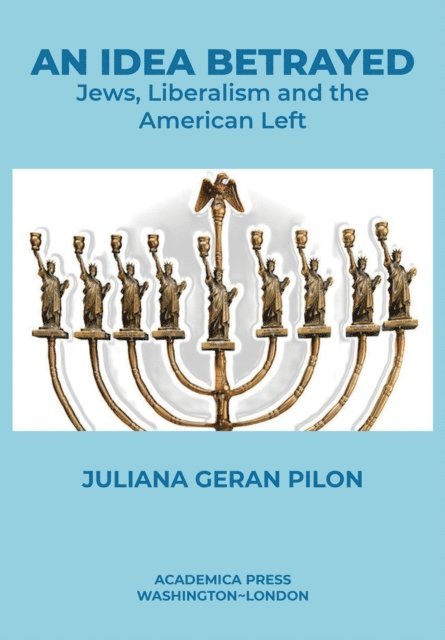
In calling America "the almost chosen nation," Abraham Lincoln invoked at once the Old Testament and the Founders' belief in the two covenantal communities' common ideal: equal liberty. The Declaration of Independence proclaimed that ideal. Our Constitution instituted it. Although it took the Civil War to abolish the original sin of slavery, equal freedom defined the nation's philosophical foundation. Beginning late in the nineteenth century, however, that vision of liberty under constitutionally limited government mutated into progressivism. An aggressive mix of collectivism and scientism, fueled by Marxism and other toxic European ideologies, its early expression was eugenics, its later ambitious central planning. Meanwhile, an influx of immigrants during times of economic displacement would kindle widespread xenophobia, while populist distrust of financial profit, often associated with Jews, would stoke anti-Semitism. Over time, equal freedom fell into disrepute. Among the idea-elites, "right-wing" and "conservative" became pejoratives. But the rise of the Soviet Union and the aftermath of World War II proved a watershed for Americans, especially for American Jews, for those developments placed the liberal idea in a clarifying geopolitical context. Today, with equality and equity often used synonymously, a conflation of anti-capitalism, anti-Semitism, and anti-Zionism has gained prominence while Islamists make common cause with the enemies of freedom from within. Given the stakes, Jews must reassert the basic principles of their ancient tradition, which are also America's.
483 kr
Skickas inom 3-6 vardagar
373 kr
Kommande
A lyrical memoir ofliving under, and escaping from, anti-Semitism and the tyranny of communism.“There are scenes in this book that thereader will never forget.”—Mircea EliadeWith a new Afterwordby the author and a new Introduction by bestselling historian Wilfred M. McClayIn Notes from theOther Side of Night, Juliana Geran Pilon provides a beautiful memoir of areturn to her native Romania in 1975, which she left with her family when shewas just fourteen. Poetically weaving together hard-won adult insights with herchildhood perceptions, Pilon tells the haunting stories of her parents,grandparents, neighbors, and friends. She recounts the chilling realities of anti-Semitism,political imprisonment, and judicial execution under Romania’s ruthlesscommunist authorities. And she remembers those few who managed to retain theirhumanity despite the horrors that surrounded them.Told with detachedmelancholy, the result is a book full of political and spiritual wisdom. At atime when the totalitarian crimes of the last century are being minimized, ifnot entirely ignored, Pilon’s meditation on evil, hope, and love is profoundly moving.
265 kr
Kommande
A lyrical memoir of living under, and escaping from, anti-Semitism and the tyranny of communism.“There are scenes in this book that the reader will never forget.”—Mircea EliadeWith a new Afterword by the author and a new Introduction by bestselling historian Wilfred M. McClayIn Notes from the Other Side of Night, Juliana Geran Pilon provides a beautiful memoir of a return to her native Romania in 1975, which she left with her family when she was just fourteen. Poetically weaving together hard-won adult insights with her childhood perceptions, Pilon tells the haunting stories of her parents, grandparents, neighbors, and friends. She recounts the chilling realities of anti-Semitism, political imprisonment, and judicial execution under Romania’s ruthless communist authorities. And she remembers those few who managed to retain their humanity despite the horrors that surrounded them.Told with detached melancholy, the result is a book full of political and spiritual wisdom. At a time when the totalitarian crimes of the last century are being minimized, if not entirely ignored, Pilon’s meditation on evil, hope, and love is profoundly moving.