
Julie A. Cassiday – författare
Visar alla böcker från författaren Julie A. Cassiday. Handla med fri frakt och snabb leverans.
2 produkter
2 produkter
351 kr
Skickas inom 10-15 vardagar
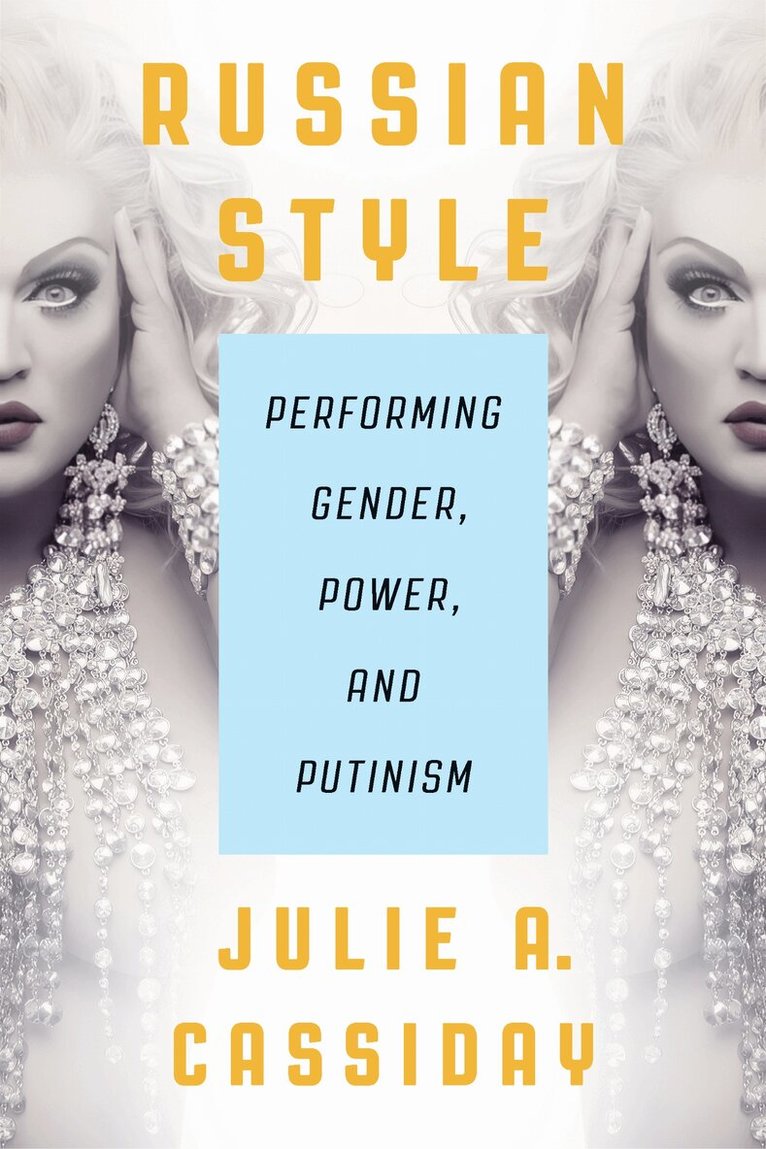
As the West liberalized its stance on sexuality and gender between 2000 and 2020, Vladimir Putin’s Russia moved in the opposite direction, remolding the performance of Russian citizenship according to a neoconservative agenda characterized by increasingly exaggerated gender roles. By connecting gendered and sexualized citizenship to developments in Russian popular culture, Julie A. Cassiday argues that heteronormativity and homophobia became a kind of politicized style under Putin’s leadership. However, the multiple modes of gender performativity simultaneously helped citizens resist and protest the state’s mandate of heteronormativity. Examining everything from memes to the Eurovision Song Contest and self-help literature, Cassiday untangles the discourse of gender to argue that drag, or travesti, became the performative trope par excellence in Putin’s Russia. Provocatively, Cassiday further argues that the exaggerated expressions of gender demanded by Putin’s regime are best understood as a form of cisgender drag. This smart and lively study provides critical, nuanced analysis of the relationship between popular culture and politics in Russia during Putin’s first two decades in power.

2 460 kr
Kommande
This volume honors the work of Dan Healey in Russian, East European, and Eurasian Studies (REES), reflecting the full range of his research interests, from Soviet and Russian history of sexuality to the studies of medicine and the Gulag. The volume includes contributions from Healey’s former students and colleagues, who together represent several generations, diverse genders and sexualities, multiple national traditions, and a variety of academic disciplines. Its fourteen essays pay special attention to his influence in crossing, breaching, and even breaking the disciplinary, geopolitical, and generational boundaries that have defined REES since the Cold War.Contributions to the volume demonstrate how Healey’s influence has not simply broadened the scope of REES overall, but just as importantly aided in current efforts to decolonize the field. As a result, the volume offers a provocative survey of contemporary research into the questions of power and sexuality, medical expertise, and archival methods. As such, it will appeal to both students and researchers interested in these topics.