Julie Buckner Armstrong - Böcker
Visar alla böcker från författaren Julie Buckner Armstrong. Handla med fri frakt och snabb leverans.
5 produkter
5 produkter
579 kr
Skickas inom 10-15 vardagar
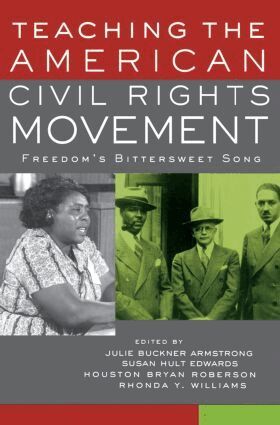
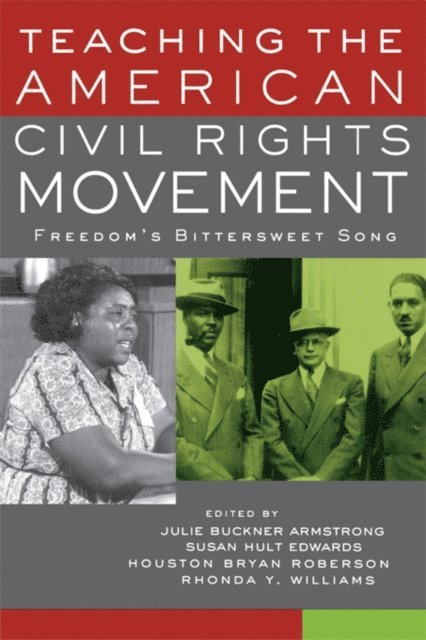
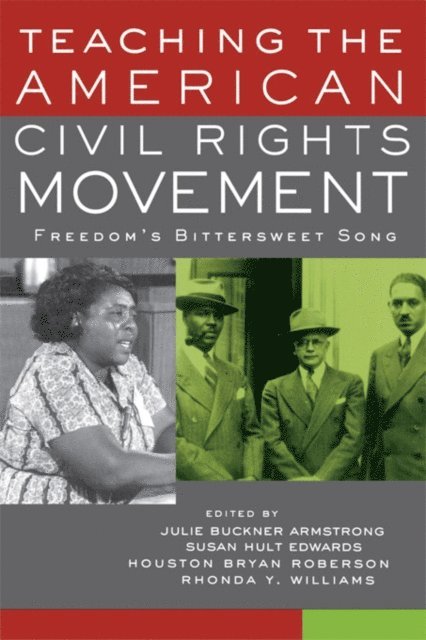
The past fifteen years have seen renewed interest in the civil rights movement. Television documentaries, films and books have brought the struggles into our homes and classrooms once again. New evidence in older criminal cases demands that the judicial system reconsider the accuracy of investigations and legal decisions. Racial profiling, affirmative action, voting districting, and school voucher programs keep civil rights on the front burner in the political arena. In light of this, there are very few resources for teaching the civil rights at the university level. This timely and invaluable book fills this gap. This book offers perspectives on presenting the movement in different classroom contexts; strategies to make the movement come alive for students; and issues highlighting topics that students will find appealing. Including sample syllabi and detailed descriptions from courses that prove effective, this work will be useful for all instructors, both college and upper level high school, for courses in history, education, race, sociology, literature and political science.
273 kr
Skickas inom 7-10 vardagar
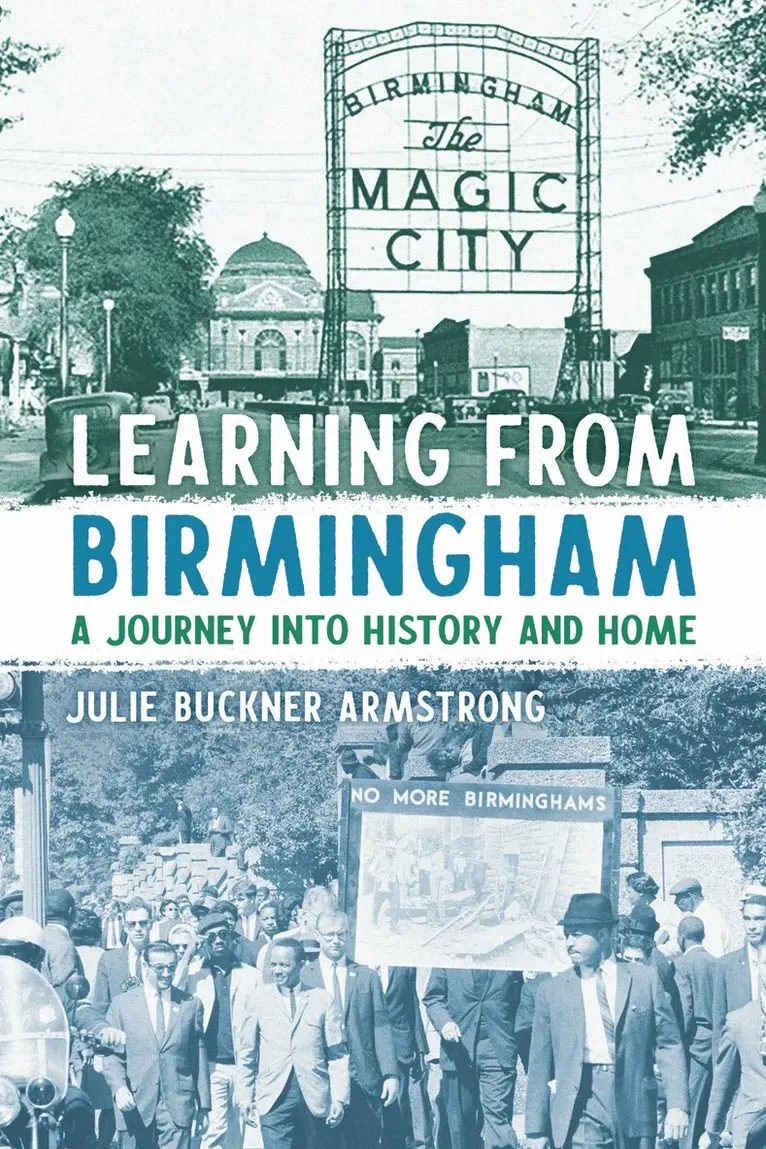
A steel town daughter’s search for truth and beauty in Birmingham, Alabama“As Birmingham goes, so goes the nation,” Fred Shuttlesworth observed when he invited Martin Luther King Jr. to the city for the transformative protests of 1963. From the height of the Civil Rights Movement through its long aftermath, images of police dogs, fire hoses and four girls murdered when Ku Klux Klan members bombed the Sixteenth Street Baptist Church have served as an uncomfortable racial mirror for the nation. Like many white people who came of age in the Civil Rights Movement’s wake, Julie Buckner Armstrong knew little about this history. Only after moving away and discovering writers like Toni Morrison and Alice Walker did she realize how her hometown and family were part of a larger, ongoing story of struggle and injustice.When Armstrong returned to Birmingham decades later to care for her aging mother, Shuttlesworth’s admonition rang in her mind. By then an accomplished scholar and civil rights educator, Armstrong found herself pondering the lessons Birmingham holds for a twenty-first century America. Those lessons extended far beyond what a 2014 Teaching Tolerance report describes as the common distillation of the Civil Rights Movement into “two names and four words: Martin Luther King Jr, Rosa Parks, and ‘I have a dream.’” Seeking to better understand a more complex local history, its connection to broader stories of oppression and resistance, and her own place in relation to it, Armstrong embarked on a journey to unravel the standard Birmingham narrative to see what she would find.Beginning at the center, with her family’s 1947 arrival to a housing project near the color line, within earshot of what would become known as Dynamite Hill, Armstrong works her way over time and across the map. Weaving in stories of her white working-class family, classmates, and others not traditionally associated with Birmingham’s civil rights history, including members of the city’s LGBTQ community, she forges connections between the familiar and lesser-known. The result is a nuanced portrait of Birmingham--as seen in public housing, at old plantations, in segregated neighborhoods, across contested boundary lines, over mountains, along increasingly polluted waterways, beneath airport runways, on highways cutting through town, and under the gaze of the iconic statue of Vulcan.In her search for truth and beauty in Birmingham, Armstrong draws on the powers of place and storytelling to dig into the cracks, complicating easy narratives of civil rights progress. Among the discoveries she finds in America’s racial mirror is a nation that has failed to recognize itself in the horrific images from Birmingham’s past and to acknowledge the continuing inequalities that make up the Civil Right’s Movement’s unfinished business. Learning from Birmingham reminds us that stories of civil rights, structural oppression, privilege, abuse, race and gender bias, and inequity are difficult and complicated, but their telling, especially from multiple stakeholder perspectives, is absolutely necessary.
652 kr
Skickas inom 3-6 vardagar
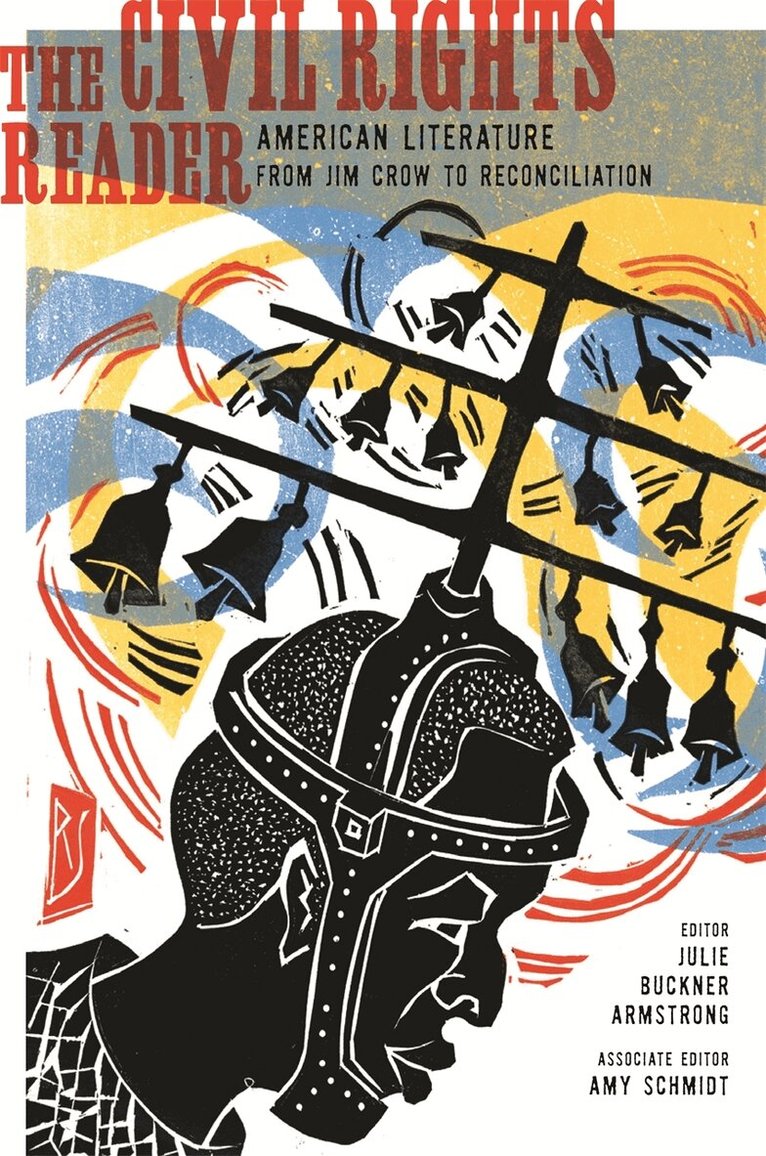
This anthology of drama, essays, fiction, and poetry presents a thoughtful, classroom-tested selection of the best literature for learning about the long civil rights movement. Unique in its focus on creative writing, the volume also ranges beyond a familiar 1954-68 chronology to include works from the 1890s to the present. The civil rights movement was a complex, ongoing process of defining national values such as freedom, justice, and equality. In ways that historical documents cannot, these collected writings show how Americans negotiated this process—politically, philosophically, emotionally, spiritually, and creatively.Gathered here are works by some of the most influential writers to engage issues of race and social justice in America, including James Baldwin, Flannery O'Connor, Amiri Baraka, and Nikki Giovanni. The volume begins with works from the post-Reconstruction period when racial segregation became legally sanctioned and institutionalized. This section, titled "The Rise of Jim Crow," spans the period from Frances E. W. Harper's Iola Leroy to Ralph Ellison's Invisible Man. In the second section, "The Fall of Jim Crow," Martin Luther King Jr.'s "Letter from Birmingham Jail" and a chapter from The Autobiography of Malcolm X appear alongside poems by Robert Hayden, June Jordan, and others who responded to these key figures and to the events of the time. "Reflections and Continuing Struggles," the last section, includes works by such current authors as Rita Dove, Anthony Grooms, and Patricia J. Williams. These diverse perspectives on the struggle for civil rights can promote the kinds of conversations that we, as a nation, still need to initiate.
1 236 kr
Skickas inom 5-8 vardagar
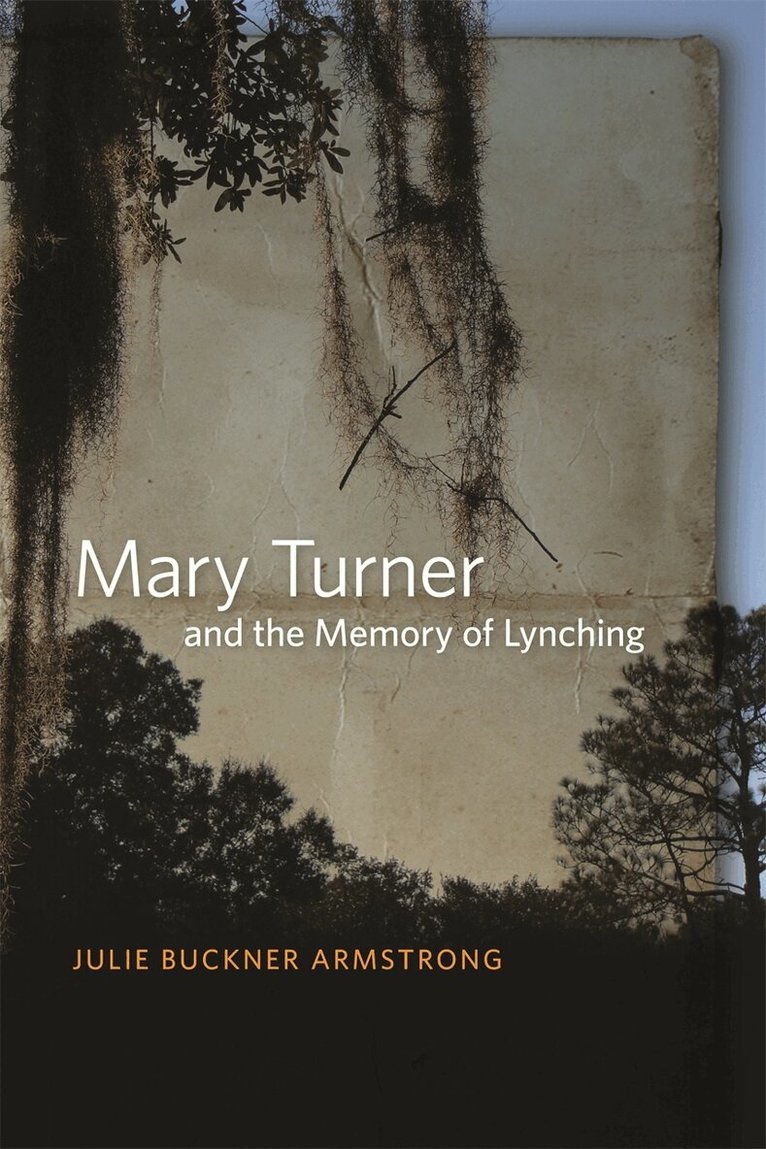
Mary Turner and the Memory of Lynching traces the reaction of activists, artists, writers, and local residents to the brutal lynching of a pregnant woman near Valdosta, Georgia. In 1918, the murder of a white farmer led to a week of mob violence that claimed the lives of at least eleven African Americans, including Hayes Turner. When his wife Mary vowed to press charges against the killers, she too fell victim to the mob.Mary’s lynching was particularly brutal and involved the grisly death of her eight-month-old fetus. It led to both an entrenched local silence and a widespread national response in newspaper and magazine accounts, visual art, film, literature, and public memorials. Turner’s story became a centerpiece of the Anti-Lynching Crusaders campaign for the 1922 Dyer Bill, which sought to make lynching a federal crime. Julie Buckner Armstrong explores the complex and contradictory ways this horrific event was remembered in works such as Walter White’s report in the NAACP’s newspaper the Crisis, the “Kabnis” section of Jean Toomer’s Cane, Angelina Weld Grimké’s short story “Goldie,” and Meta Fuller’s sculpture Mary Turner: A Silent Protest against Mob Violence.Like those of Emmett Till and Leo Frank, Turner’s story continues to resonate on multiple levels. Armstrong’s work provides insight into the different roles black women played in the history of lynching: as victims, as loved ones left behind, and as those who fought back. The crime continues to defy conventional forms of representation, illustrating what can, and cannot, be said about lynching and revealing the difficulty and necessity of confronting this nation’s legacy of racial violence.
502 kr
Skickas inom 5-8 vardagar
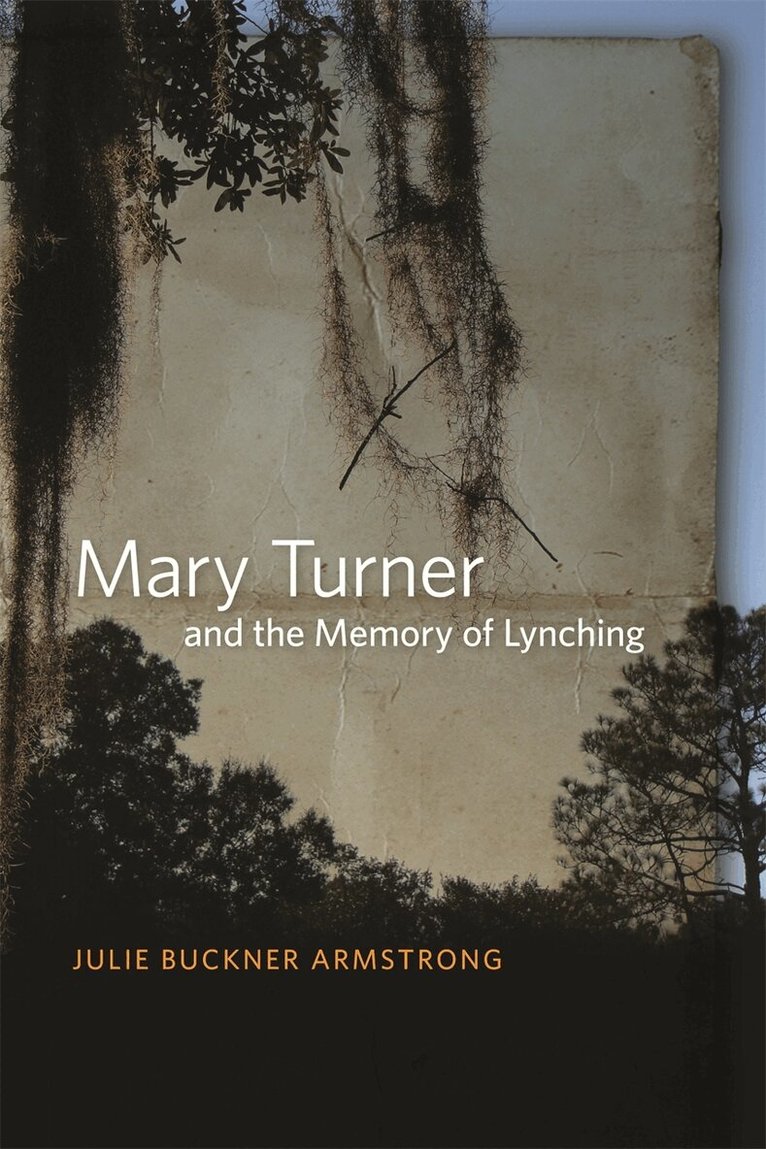
Mary Turner and the Memory of Lynching traces the reaction of activists, artists, writers, and local residents to the brutal lynching of a pregnant woman near Valdosta, Georgia. In 1918, the murder of a white farmer led to a week of mob violence that claimed the lives of at least eleven African Americans, including Hayes Turner. When his wife Mary vowed to press charges against the killers, she too fell victim to the mob.Mary’s lynching was particularly brutal and involved the grisly death of her eight-month-old fetus. It led to both an entrenched local silence and a widespread national response in newspaper and magazine accounts, visual art, film, literature, and public memorials. Turner’s story became a centerpiece of the Anti-Lynching Crusaders campaign for the 1922 Dyer Bill, which sought to make lynching a federal crime. Julie Buckner Armstrong explores the complex and contradictory ways this horrific event was remembered in works such as Walter White’s report in the NAACP’s newspaper the Crisis, the “Kabnis” section of Jean Toomer’s Cane, Angelina Weld Grimké’s short story “Goldie,” and Meta Fuller’s sculpture Mary Turner: A Silent Protest against Mob Violence.Like those of Emmett Till and Leo Frank, Turner’s story continues to resonate on multiple levels. Armstrong’s work provides insight into the different roles black women played in the history of lynching: as victims, as loved ones left behind, and as those who fought back. The crime continues to defy conventional forms of representation, illustrating what can, and cannot, be said about lynching and revealing the difficulty and necessity of confronting this nation’s legacy of racial violence.