Julie Dickson – författare
Visar alla böcker från författaren Julie Dickson. Handla med fri frakt och snabb leverans.
16 produkter
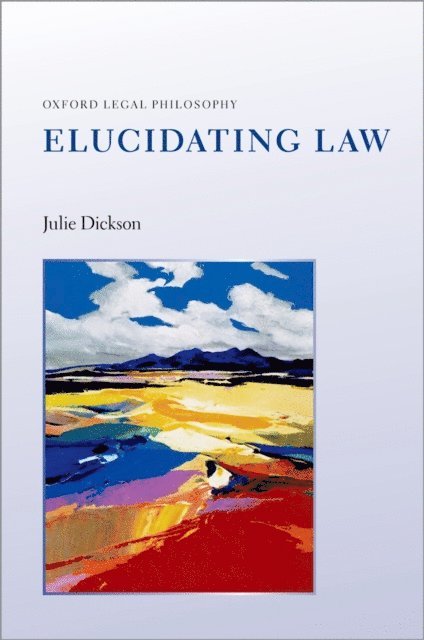
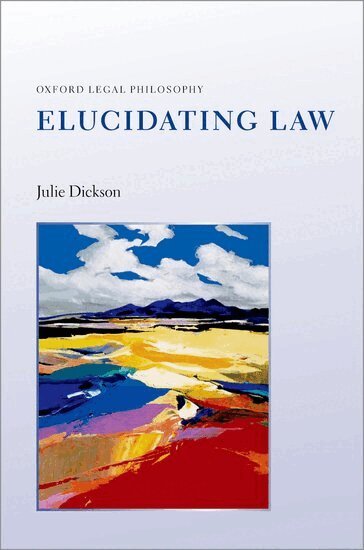
Elucidating Law
E-bok, 2022
1299 kr
Lägg i varukorg
What are the aims of legal philosophy? Which questions should it seek to address? How should legal philosophers approach and engage with their subject-matter, and what constraints are incumbent on them as they do so? What are the criteria of success of theories of law, and how do we know if they …
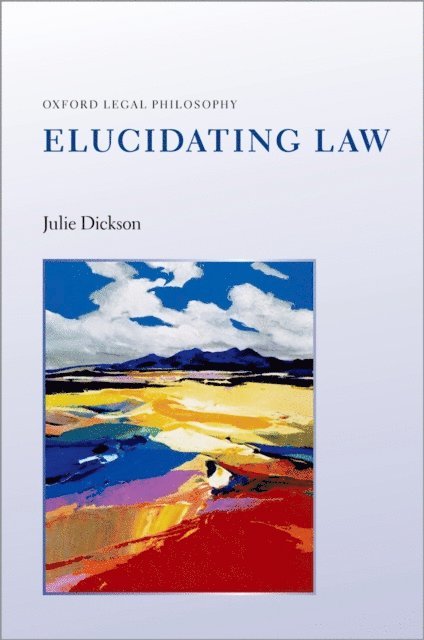
Elucidating Law
E-bok, 2022
1299 kr
Lägg i varukorg
What are the aims of legal philosophy? Which questions should it seek to address? How should legal philosophers approach and engage with their subject-matter, and what constraints are incumbent on them as they do so? What are the criteria of success of theories of law, and how do we know if they …
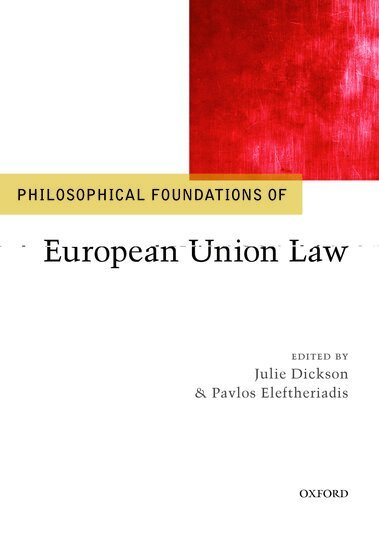
Philosophical Foundations of European Union Law
Av Pavlos Eleftheriadis, Julie Dickson
E-bok, 2012
1265 kr
Lägg i varukorg
The supranational law of the European Union represents a uniquely powerful, far-reaching, and controversial instance of the growth of international legal governance, one that has forever altered the political and legal landscape of its Member States. The EU has attracted significant attention from …
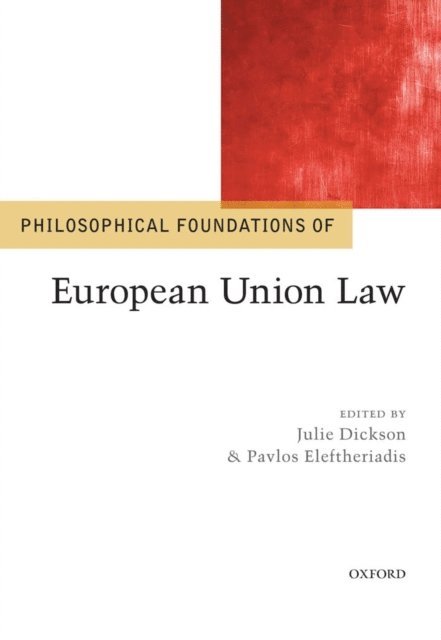
Philosophical Foundations of European Union Law
Av Pavlos Eleftheriadis, Julie Dickson
E-bok, 2012
914 kr
Lägg i varukorg
The supranational law of the European Union represents a uniquely powerful, far-reaching, and controversial instance of the growth of international legal governance, one that has forever altered the political and legal landscape of its Member States. The EU has attracted significant attention from …
Elucidating Law
Inbunden, 2022
1450 kr
Lägg i varukorg
What are the aims of legal philosophy? Which questions should it seek to address? How should legal philosophers approach and engage with their subject-matter, and what constraints are incumbent on them as they do so? What are the criteria of success of theories of law, and how do we know if they …
Philosophical Foundations of European Union Law
Av Julie Dickson, Pavlos Eleftheriadis
Inbunden, 2012
1953 kr
Lägg i varukorg
The supranational law of the European Union represents a uniquely powerful, far-reaching, and controversial instance of the growth of international legal governance, one that has forever altered the political and legal landscape of its Member States. The EU has attracted significant attention from …
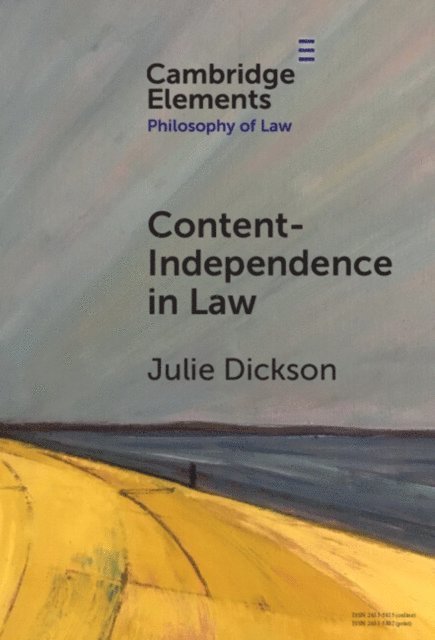
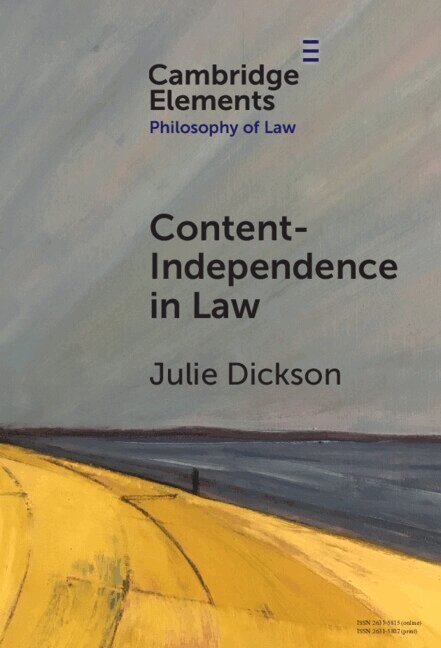
Content-Independence in Law
Possibility and Potential
Häftad, 2024
284 kr
Lägg i varukorg
This Element examines the notion of content-independence and its relevance for understanding various aspects of the character of law. Its task should be understood expansively, as encompassing both inquiry into that which makes law into what it is, and inquiry into what law ought to be, which …
Content-Independence in Law
Possibility and Potential
Inbunden, 2024
838 kr
Lägg i varukorg
This Element examines the notion of content-independence and its relevance for understanding various aspects of the character of law. Its task should be understood expansively, as encompassing both inquiry into that which makes law into what it is, and inquiry into what law ought to be, which …
Evaluation and Legal Theory
Av Julie Dickson, John Gardner
Häftad, 2001
3,0 utav 5 stjärnor. Totalt antal röster: (1)
447 kr
Lägg i varukorg
If Raz and Dworkin disagree over how law should be characterised,how are we, their jurisprudential public, supposed to go about adjudicating between the rival theories which they offer us? To what considerations would those theorists themselves appeal in order to convince us that their accounts of …
Evaluation and Legal Theory
Av Julie Dickson, John Gardner
Inbunden, 2001
1108 kr
Lägg i varukorg
If Raz and Dworkin disagree over how law should be characterised,how are we, their jurisprudential public, supposed to go about adjudicating between the rival theories which they offer us? To what considerations would those theorists themselves appeal in order to convince us that their accounts of …
Evaluation and Legal Theory
E-bok, 2001
488 kr
Lägg i varukorg
If Raz and Dworkin disagree over how law should be characterised,how are we, their jurisprudential public, supposed to go about adjudicating between the rival theories which they offer us? To what considerations would those theorists themselves appeal in order to convince us that their accounts of …