Juliet Hooker – författare
Visar alla böcker från författaren Juliet Hooker. Handla med fri frakt och snabb leverans.
7 produkter
7 produkter
363 kr
Skickas inom 5-8 vardagar
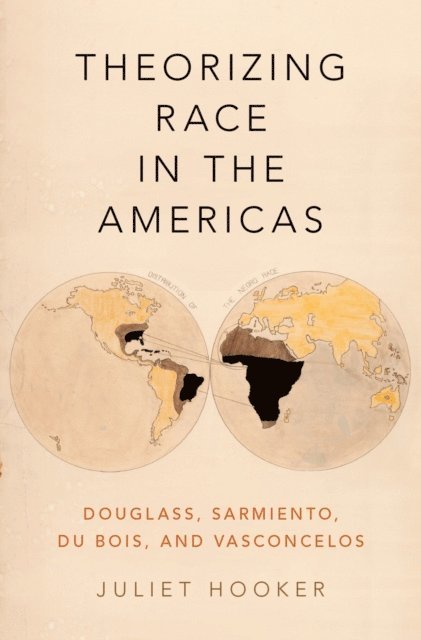
In 1845 two thinkers from the American hemisphere--the Argentinean statesman Domingo Faustino Sarmiento, and the fugitive ex-slave, abolitionist leader, and orator from the United States, Frederick Douglass--both published their first works. Each would become the most famous and enduring texts in what were both prolific careers, and they ensured Sarmiento and Douglass' position as leading figures in the canon of Latin American and U.S. African-American political thought, respectively. But despite the fact that both deal directly with key political and philosophical questions in the Americas, Douglass and Sarmiento, like African-American and Latin American thought more generally, are never read alongside each other. This may be because their ideas about race differed dramatically. Sarmiento advocated the Europeanization of Latin America and espoused a virulent form of anti-indigenous racism, while Douglass opposed slavery and defended the full humanity of black persons. Still, as Juliet Hooker contends, looking at the two together allows one to chart a hemispheric intellectual geography of race that challenges political theory's preoccupation with and assumptions about East/West comparisons, and questions the use of comparison as a tool in the production of theory and philosophy.By juxtaposing four prominent nineteenth and twentieth-century thinkers--Frederick Douglass, Domingo F. Sarmiento, W. E. B. Du Bois, and José Vasconcelos--her book will be the first to bring African-American and Latin American political thought into conversation. Hooker stresses that Latin American and U.S. ideas about race were not developed in isolation, but grew out of transnational intellectual exchanges across the Americas. In so doing, she shows that nineteenth and twentieth-century U.S. and Latin American thinkers each looked to political models in the "other" America to advance racial projects in their own countries. Reading these four intellectuals hemispheric thinkers, Hooker foregrounds elements of their work that have been dismissed by dominant readings, and provides a crucial platform to bridge the canons of Latin American and African-American political thought.
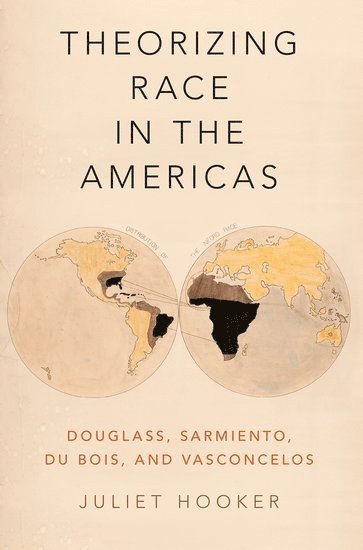
Theorizing Race in the Americas
Douglass, Sarmiento, Du Bois, and Vasconcelos
Inbunden, Engelska, 2017
825 kr
Skickas inom 5-8 vardagar
In 1845 two thinkers from the American hemisphere - the Argentinean statesman Domingo Faustino Sarmiento, and the fugitive ex-slave, abolitionist leader, and orator from the United States, Frederick Douglass - both published their first works. Each would become the most famous and enduring texts in what were both prolific careers, and they ensured Sarmiento and Douglass' position as leading figures in the canon of Latin American and U.S. African-American political thought, respectively. But despite the fact that both deal directly with key political and philosophical questions in the Americas, Douglass and Sarmiento, like African-American and Latin American thought more generally, are never read alongside each other. This may be because their ideas about race differed dramatically. Sarmiento advocated the Europeanization of Latin America and espoused a virulent form of anti-indigenous racism, while Douglass opposed slavery and defended the full humanity of black persons. Still, as Juliet Hooker contends, looking at the two together allows one to chart a hemispheric intellectual geography of race that challenges political theory's preoccupation with and assumptions about East / West comparisons, and questions the use of comparison as a tool in the production of theory and philosophy.By juxtaposing four prominent nineteenth and twentieth-century thinkers - Frederick Douglass, Domingo F. Sarmiento, W. E. B. Du Bois, and José Vasconcelos - her book will be the first to bring African-American and Latin American political thought into conversation. Hooker stresses that Latin American and U.S. ideas about race were not developed in isolation, but grew out of transnational intellectual exchanges across the Americas. In so doing, she shows that nineteenth and twentieth-century U.S. and Latin American thinkers each looked to political models in the 'other' America to advance racial projects in their own countries. Reading these four intellectuals as hemispheric thinkers, Hooker foregrounds elements of their work that have been dismissed by dominant readings, and provides a crucial platform to bridge the canons of Latin American and African-American political thought.
720 kr
Skickas inom 5-8 vardagar
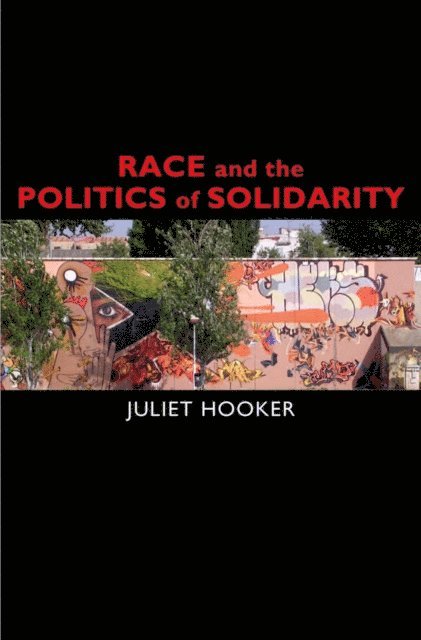
Solidarity-the reciprocal relations of trust and obligation between citizens that are essential for a thriving polity-is a basic goal of all political communities. Yet it is extremely difficult to achieve, especially in multiracial societies. In an era of increasing global migration and democratization, that issue is more pressing than perhaps ever before. In the past few decades, racial diversity and the problems of justice that often accompany it have risen dramatically throughout the world. It features prominently nearly everywhere: from the United States, where it has been a perennial social and political problem, to Europe, which has experienced an unprecedented influx of Muslim and African immigrants, to Latin America, where the rise of vocal black and indigenous movements has brought the question to the fore. Political theorists have long wrestled with the topic of political solidarity, but they have not had much to say about the impact of race on such solidarity, except to claim that what is necessary is to move beyond race. The prevailing approach has been: How can a multicultural and multiracial polity, with all of the different allegiances inherent in it, be transformed into a unified, liberal one? Juliet Hooker flips this question around. In multiracial and multicultural societies, she argues, the practice of political solidarity has been indelibly shaped by the social fact of race. The starting point should thus be the existence of racialized solidarity itself: How can we create political solidarity when racial and cultural diversity are more or less permanent? Unlike the tendency to claim that the best way to deal with the problem of racism is to abandon the concept of race altogether, Hooker stresses the importance of coming to terms with racial injustice, and explores the role that it plays in both the United States and Latin America. Coming to terms with the lasting power of racial identity, she contends, is the starting point for any political project attempting to achieve solidarity.
260 kr
Skickas inom 7-10 vardagar
How race shapes expectations about whose losses matterIn democracies, citizens must accept loss; we can’t always be on the winning side. But in the United States, the fundamental civic capacity of being able to lose is not distributed equally. Propped up by white supremacy, whites (as a group) are accustomed to winning; they have generally been able to exercise political rule without having to accept sharing it. Black citizens, on the other hand, are expected to be political heroes whose civic suffering enables progress toward racial justice. In this book, Juliet Hooker, a leading thinker on democracy and race, argues that the two most important forces driving racial politics in the United States today are Black grief and white grievance. Black grief is exemplified by current protests against police violence—the latest in a tradition of violent death and subsequent public mourning spurring Black political mobilization. The potent politics of white grievance, meanwhile, which is also not new, imagines the United States as a white country under siege.Drawing on African American political thought, Hooker examines key moments in US racial politics that illuminate the problem of loss in democracy. She connects today’s Black Lives Matter protests to the use of lynching photographs to arouse public outrage over post–Reconstruction era racial terror, and she discusses Emmett Till’s funeral as a catalyst for the civil rights struggles of the 1950s and 1960s. She also traces the political weaponization of white victimhood during the Obama and Trump presidencies. Calling for an expansion of Black and white political imaginations, Hooker argues that both must learn to sit with loss, for different reasons and to different ends.
165 kr
Skickas inom 7-10 vardagar
How race shapes expectations about whose losses matterIn democracies, citizens must accept loss; we can’t always be on the winning side. But in the United States, the fundamental civic capacity of being able to lose is not distributed equally. Propped up by white supremacy, whites (as a group) are accustomed to winning; they have generally been able to exercise political rule without having to accept sharing it. Black citizens, on the other hand, are expected to be political heroes whose civic suffering enables progress toward racial justice. In this book, Juliet Hooker, a leading thinker on democracy and race, argues that the two most important forces driving racial politics in the United States today are Black grief and white grievance. Black grief is exemplified by current protests against police violence—the latest in a tradition of violent death and subsequent public mourning spurring Black political mobilization. The potent politics of white grievance, meanwhile, which is also not new, imagines the United States as a white country under siege.Drawing on African American political thought, Hooker examines key moments in US racial politics that illuminate the problem of loss in democracy. She connects today’s Black Lives Matter protests to the use of lynching photographs to arouse public outrage over post–Reconstruction era racial terror, and she discusses Emmett Till’s funeral as a catalyst for the civil rights struggles of the 1950s and 1960s. She also traces the political weaponization of white victimhood during the Obama and Trump presidencies. Calling for an expansion of Black and white political imaginations, Hooker argues that both must learn to sit with loss, for different reasons and to different ends.
After #Ferguson, After #Baltimore
The Challenge of Black Death and Black Life for Black Political Thought
Häftad, Engelska, 2017
172 kr
Skickas inom 10-15 vardagar
Drawing primarily on the US #blacklivesmatter movement, contributors to this issue come to terms with the crisis in the meaning of black politics during the post–civil rights era as evidenced in the unknown trajectories of black protests. The authors' timely essays frame black protests and the implications of contemporary police killings of black people as symptomatic of a crisis in black politics within the white limits of liberal democracy.Topics in this issue include the contemporary politics of black rage; the significance of the Ferguson and Baltimore black protests in circumventing formal electoral politics; the ways in which centering the dead black male body draws attention away from other daily forms of racial and gender violence that particularly affect black women; the problem of white nationalisms motivated by a sense of white grievance; the international and decolonial dimensions of black politics; and the relation between white sovereignty and black life politics.Contributors. Barnor Hesse, Juliet Hooker, Minkah Makalani, John MÁrquez, Junaid Rana, Deborah Thompson, Shatema Threadcraft
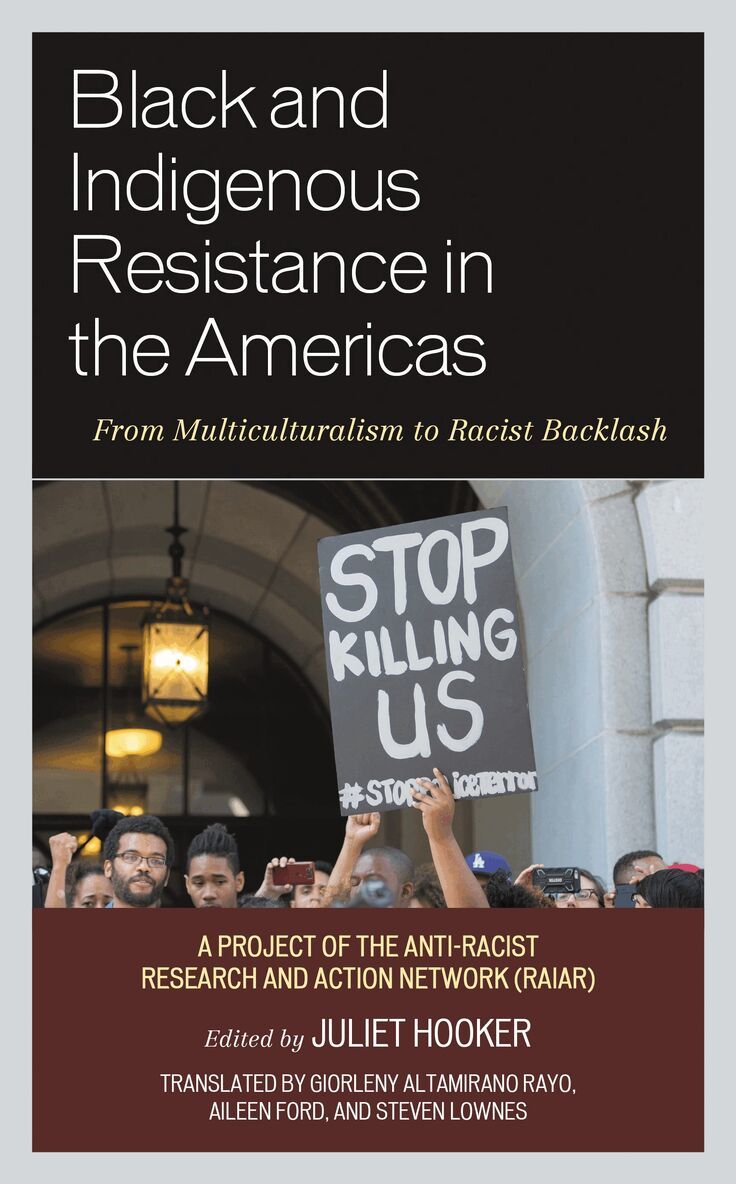
Black and Indigenous Resistance in the Americas
From Multiculturalism to Racist Backlash
Häftad, Engelska, 2021
528 kr
Skickas inom 10-15 vardagar
Black and Indigenous Resistance in the Americas is an essential roadmap to understanding contemporary racial politics across the Americas, where openly white supremacist politics are on the rise. It is the product of a multiyear, transnational research project by the Anti-racist Research and Action Network of the Americas in collaboration with resistance movements confronting racial retrenchment in Brazil, Bolivia, Chile, Colombia, Guatemala, Mexico, and the United States. How did we get here? And what anti-racist strategies are equal to the dire task of confronting resurgent racism? This volume provides powerful answers to these pressing questions. 1) It traces the making and contestation of state-led racial projects in response to black and indigenous mobilization during an era of expansion of multicultural rights in the context of neoliberal capitalism. 2) It identifies the origins and manifestations of the backlash against hard-fought (but hardly far-reaching) gains by marginalized peoples, showing that (contrary to critiques of “identity politics”) the losses and anxieties produced by the failures of neoliberalism have been understood in racial terms. 3) It distills a path forward for progressive anti-racist activism in the Americas that looks beyond state-centered, rights-seeking strategies and instead situates a critique of racial capitalism as central to the contestation of white supremacy.