Julius Bautista - Böcker
Visar alla böcker från författaren Julius Bautista. Handla med fri frakt och snabb leverans.
5 produkter
5 produkter
2 155 kr
Skickas inom 10-15 vardagar
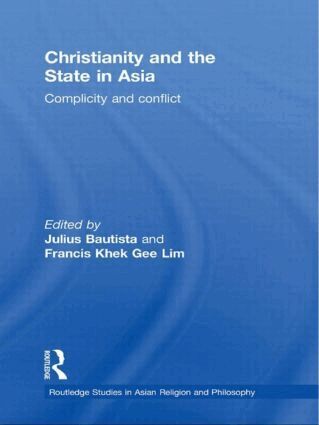
Christianity is one of the most rapidly growing religions in Asia. Despite the challenges of political marginalisation, church organisations throughout much of Asia are engaged in activities - such as charity, education and commentary on public morality - that may either converge or conflict with the state's interests. Considering Christianity’s growing prominence, and the various ways Asian nation states respond to this growth, this book brings into sharper analytical focus the ways in which the faith is articulated at the local, regional, and global level.Contributors from diverse disciplinary and institutional backgrounds offer in-depth analyses of the complex interactions between Asian nation-states and Christianity in the context of modernisation and nation-building. Exploring the social and political ramifications of Christian conversions in Asia and their impact on state policies, the book analyses how Christian followers, missionaries, theologians and activists negotiate their public roles and identities vis-à-vis various forms of Asian states, particularly in the context of post-colonial nation-building and socio-economic development. This volume represents a critical contribution to the existing scholarship on Christianity's global reach and its local manifestations, and demonstrates the significance of the Asian experience in our understanding of Christianity as a global religion.
671 kr
Skickas inom 10-15 vardagar
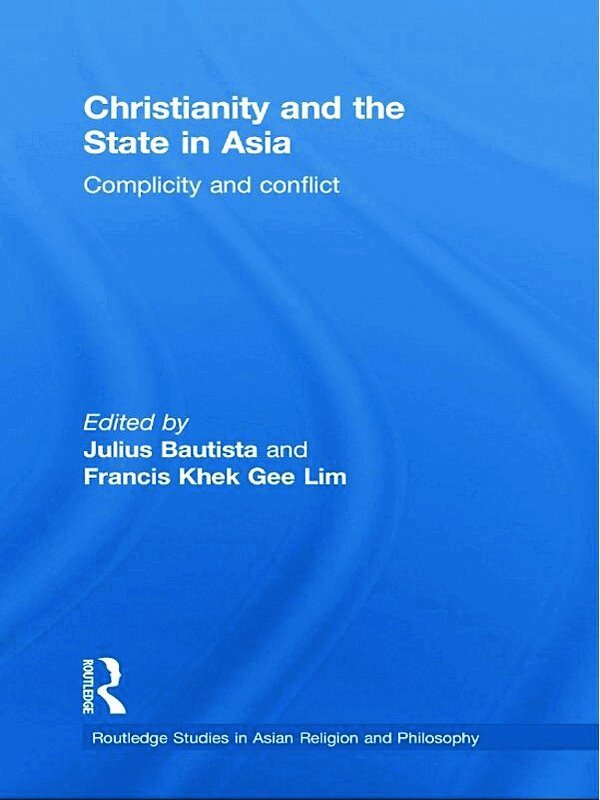
Christianity is one of the most rapidly growing religions in Asia. Despite the challenges of political marginalisation, church organisations throughout much of Asia are engaged in activities - such as charity, education and commentary on public morality - that may either converge or conflict with the state's interests. Considering Christianity’s growing prominence, and the various ways Asian nation states respond to this growth, this book brings into sharper analytical focus the ways in which the faith is articulated at the local, regional, and global level.Contributors from diverse disciplinary and institutional backgrounds offer in-depth analyses of the complex interactions between Asian nation-states and Christianity in the context of modernisation and nation-building. Exploring the social and political ramifications of Christian conversions in Asia and their impact on state policies, the book analyses how Christian followers, missionaries, theologians and activists negotiate their public roles and identities vis-à-vis various forms of Asian states, particularly in the context of post-colonial nation-building and socio-economic development. This volume represents a critical contribution to the existing scholarship on Christianity's global reach and its local manifestations, and demonstrates the significance of the Asian experience in our understanding of Christianity as a global religion.
434 kr
Skickas inom 10-15 vardagar
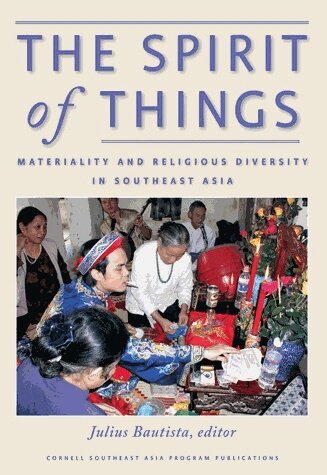
What role do objects play in crafting the religions of Southeast Asia and shaping the experiences of believers? The Spirit of Things explores religious materiality in a region marked by shifting boundaries, multiple beliefs, and trends toward religious exclusivism. While most studies of religion in Southeast Asia focus on doctrines or governmental policy, contributors to this volume recognize that religious "things"—statues, talismans, garments, even sacred automobiles—are crucial to worship, and that they have a broad impact on social cohesion. By engaging with religion in its tangible forms, faith communities reiterate their essential narratives, allegiances, and boundaries, and negotiate their coexistence with competing belief systems. These ethnographic and historical studies of Southeast Asia furnish us with intriguing perspectives on wider debates concerning the challenges of secularization, pluralism, and interfaith interactions around the world.In this volume, contributors offer rich ethnographic analyses of religious practices in the Philippines, Thailand, Malaysia, Vietnam, Indonesia, and Burma that examine the roles materiality plays in the religious lives of Southeast Asians. These essays demonstrate that religious materials are embedded in a host of practices that enable the faithful to negotiate the often tumultuous experience of living amid other believers. What we see is that the call for plurality, often initiated by government, increases the importance of religious objects, as they are the means by which the distinctiveness of a particular faith is "fenced" in a field of competing religious discourses. This project is called "the spirit of things" to evoke both the "aura" of religious objects and the power of material things to manifest "that which is fundamental" about faith and belief.Contributors: Julius Bautista, National University of Singapore; Sandra Cate, San Jose State University, California; Margaret Chan, Singapore Management University; Liana Chua, Brunel University, London; Cecilia S. de la Paz, University of the Philippines (Diliman); Alexandra de Mersan, Centre Asie du Sud-Est (Paris) and Institut National des Langues et Civilisations Orientales; Johan Fischer, Roskilde University, Denmark; Janet Hoskins, University of Southern California; Klemens Karlsson, KTH Royal Institute of Technology, Stockholm; Laurel Kendall, American Museum of Natural History and Columbia University, New York City; H. Leedom Lefferts, Drew University and Asian Civilisations Museum, Singapore; Nguyên Thi Thu Huong, Academic Council of the National Museum of History, Hanoi, and Vietnam Museum of Ethnology; Anthony Reid, Australian National University, University of California–Los Angeles, and National University of Singapore; Richard A. Ruth, United States Naval Academy; Kenneth Sillander, University of Helsinki; Vu Thi Thanh Tâm, Vietnam Museum of Ethnology; and Yeoh Seng Guan, Monash University, Malaysia
567 kr
Skickas inom 10-15 vardagar
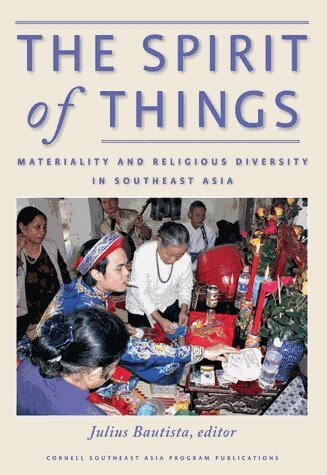
What role do objects play in crafting the religions of Southeast Asia and shaping the experiences of believers? The Spirit of Things explores religious materiality in a region marked by shifting boundaries, multiple beliefs, and trends toward religious exclusivism. While most studies of religion in Southeast Asia focus on doctrines or governmental policy, contributors to this volume recognize that religious "things"—statues, talismans, garments, even sacred automobiles—are crucial to worship, and that they have a broad impact on social cohesion. By engaging with religion in its tangible forms, faith communities reiterate their essential narratives, allegiances, and boundaries, and negotiate their coexistence with competing belief systems. These ethnographic and historical studies of Southeast Asia furnish us with intriguing perspectives on wider debates concerning the challenges of secularization, pluralism, and interfaith interactions around the world.In this volume, contributors offer rich ethnographic analyses of religious practices in the Philippines, Thailand, Malaysia, Vietnam, Indonesia, and Burma that examine the roles materiality plays in the religious lives of Southeast Asians. These essays demonstrate that religious materials are embedded in a host of practices that enable the faithful to negotiate the often tumultuous experience of living amid other believers. What we see is that the call for plurality, often initiated by government, increases the importance of religious objects, as they are the means by which the distinctiveness of a particular faith is "fenced" in a field of competing religious discourses. This project is called "the spirit of things" to evoke both the "aura" of religious objects and the power of material things to manifest "that which is fundamental" about faith and belief.Contributors: Julius Bautista, National University of Singapore; Sandra Cate, San Jose State University, California; Margaret Chan, Singapore Management University; Liana Chua, Brunel University, London; Cecilia S. de la Paz, University of the Philippines (Diliman); Alexandra de Mersan, Centre Asie du Sud-Est (Paris) and Institut National des Langues et Civilisations Orientales; Johan Fischer, Roskilde University, Denmark; Janet Hoskins, University of Southern California; Klemens Karlsson, KTH Royal Institute of Technology, Stockholm; Laurel Kendall, American Museum of Natural History and Columbia University, New York City; H. Leedom Lefferts, Drew University and Asian Civilisations Museum, Singapore; Nguyên Thi Thu Huong, Academic Council of the National Museum of History, Hanoi, and Vietnam Museum of Ethnology; Anthony Reid, Australian National University, University of California–Los Angeles, and National University of Singapore; Richard A. Ruth, United States Naval Academy; Kenneth Sillander, University of Helsinki; Vu Thi Thanh Tâm, Vietnam Museum of Ethnology; and Yeoh Seng Guan, Monash University, Malaysia
Managing Disruption and Developing Resilience for a Better Southeast Asia
The 4th SEASIA Biennial Conference 2022
Inbunden, Engelska, 2025
552 kr
Skickas inom 7-10 vardagar
This open access book, stemming from the biennial Consortium for Southeast Asian Studies in Asia conference, confronts numerous contemporary issues in the Southeast Asia region, under the banner of the 2022 theme “Managing Disruption, Developing Resilience for a Better Southeast Asia.” Providing a platform for discussion and collaboration in the fields of sociology, education, population studies, cultural studies, public health, international relations, and other humanities and social science disciplines, the range of interdisciplinary chapters focus their critical analyses vis-à-vis the interpellation of economic, social, historical, artistic, cultural, religious, and political viewpoints. Organized into three sections, the first looks at new models of economic development, the challenges to education quality, the labor market in the digital era, and the demographic changes and critical issues facing both the young and elderly in the region. The second examines disasters as a future challenge for risk management, understandings of contemporary society and culture, the digital humanities, social development in the time of COVID-19, and identities in relation to religion, minorities, and social harmony. The final section addresses diaspora, migration, the region in the pandemic, citizenship and human security, democracy, and human rights, as well as foreign policy, diplomacy, and state sovereignty in Southeast Asia. As ASEAN comes of age, there has never been a more compelling need to provide region-based perspectives to complement the deepening economic, social, and cultural integration in the region. For scholars working on Southeast Asia, “area” matters in geopolitical, economic, intellectual, institutional, social, cultural, and affective terms, and so this book transports the study of Southeast Asia from the periphery to the center, so as to enable scholars who live in and research the region to bring their research to a global readership. Relevant to scholars, public intellectuals, policy-makers, and activists working in all areas of the social sciences and humanities, this comprehensive book presents the very latest research on, and from, Southeast Asia.