Julius Ruiz – Författare
Visar alla böcker från författaren Julius Ruiz. Handla med fri frakt och snabb leverans.
4 produkter
4 produkter
2 528 kr
Skickas inom 5-8 vardagar
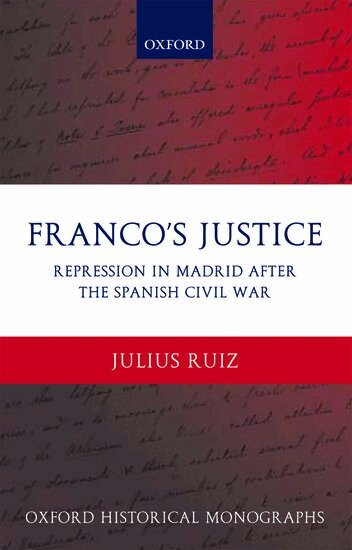
Madrid became one of the key symbols of Republican resistance to General Franco during the Spanish Civil War following the Nationalists' failure to take the city in the winter of 1936-7. Yet despite the defiant cries of 'No pasarán', they did eventually pass on 28 March 1939. This book examines the consequences in Madrid of Franco's unconditional victory in the Spanish Civil War. Using recently available archival material, this study shows how the punishment of the vanquished was based on a cruel irony - Republicans, not the military rebels of July 1936, were held responsible for the fratricidal conflict. Military tribunals handed out sentences for the crime of 'military rebellion'; mere passivity towards the Nationalists before 1939 was not only made a civil offence under the Law of Political Responsibilities but could cause dismissal from work; and freemasons and Communists, specifically blamed for the Civil War, were criminalized by decree in March 1940.However, contrary to much that has been written on the subject, the post-war Francoist repression was not exterminatory. Genocide did not take place in post-war Madrid. While a minimum of 3113 judicial executions took place between 1939 and 1944, death sentences were largely based on accusations of participation in 'blood crimes' that occured in Madrid in 1936. Moreover, and unlike most other accounts of the Francoist political violence, this book is concerned with the question of when and why mass repression came to an end. It shows that the sheer numbers of cases opened against Republican 'rebels', and the use of complex pre-war bureaucratic procedures to process them, produced a crisis that was only resolved by decisions taken by the Franco regime in 1940-1 to abandon much of the repressive system. By 1944, mass repression had come to an end.
1 485 kr
Skickas inom 7-10 vardagar
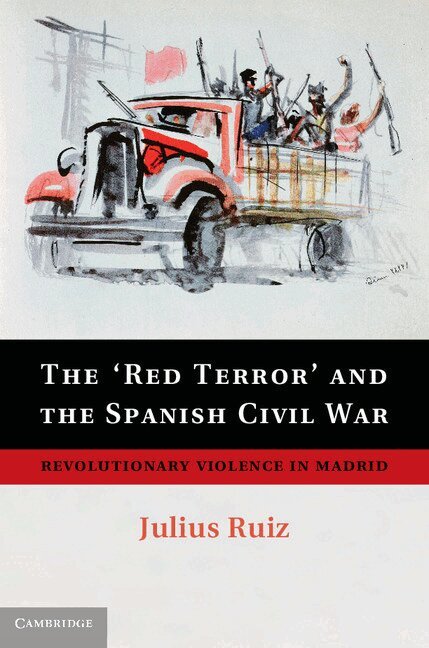
This book deals with one of most controversial issues of the Spanish Civil War (1936-9): the 'Red Terror'. Approximately 50,000 Spaniards were extrajudicially executed in Republican Spain following the failure of the military rebellion in July 1936. This mass killing of 'fascists' seriously undermined attempts by the legally constituted Republican government to present itself in foreign quarters as fighting a war for democracy. This study, based on a wealth of scholarship and archival sources, challenges the common view that executions were the work of criminal or anarchist 'uncontrollables'. Its focus is on Madrid, which witnessed at least 8,000 executions in 1936. It shows that the terror was organized and was carried out with the complicity of the police, and argues that terror was seen as integral to the antifascist war effort. Indeed, the elimination of the internal enemy - the 'Fifth Column' - was regarded as important as the war on the front line.
387 kr
Skickas inom 7-10 vardagar
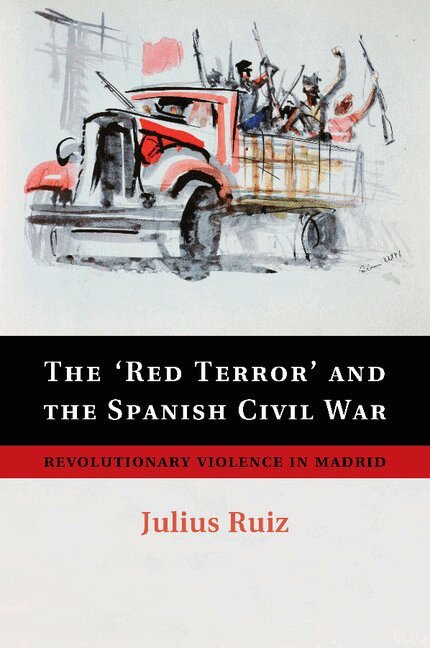
This book deals with one of most controversial issues of the Spanish Civil War (1936-9): the 'Red Terror'. Approximately 50,000 Spaniards were extrajudicially executed in Republican Spain following the failure of the military rebellion in July 1936. This mass killing of 'fascists' seriously undermined attempts by the legally constituted Republican government to present itself in foreign quarters as fighting a war for democracy. This study, based on a wealth of scholarship and archival sources, challenges the common view that executions were the work of criminal or anarchist 'uncontrollables'. Its focus is on Madrid, which witnessed at least 8,000 executions in 1936. It shows that the terror was organized and was carried out with the complicity of the police, and argues that terror was seen as integral to the antifascist war effort. Indeed, the elimination of the internal enemy - the 'Fifth Column' - was regarded as important as the war on the front line.
'Paracuellos'
The Elimination of the 'Fifth Column' in Republican Madrid During the Spanish Civil War
Inbunden, Engelska, 2016
1 761 kr
Skickas inom 7-10 vardagar
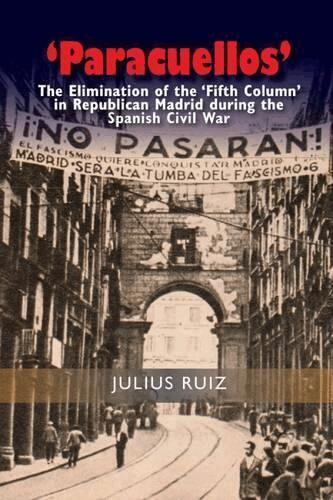
This book examines the most polemical atrocity of the Spanish Civil War: the massacre of 2,500 political prisoners by Republican security forces in the villages of Paracuellos and Torrejâon de Ardoz near Madrid in November/December 1936. The atrocity took place while Santiago Carrillo -- later Communist Party leader in the 1970s -- was responsible for public order. Although Carrillo played a key role in the transition to democracy after Franco's death in 1975, he passed away at the age of 97 in 2012 still denying any involvement in 'Paracuellos' (the generic term for the massacres). The issue of Carrillo's responsibility has been the focus of much historical research. Julius Ruiz places Paracuellos in the wider context of the 'Red Terror' in Madrid, where a minimum of 8,000 'fascists' were murdered after the failure of military rebellion in July 1936. He rejects both 'revisionist' right-wing writers such as Cesar Vidal who cite Paracuellos as evidence that the Republic committed Soviet-style genocide and left-wing historians such as Paul Preston, who in his Spanish Holocaust argues that the massacres were primarily the responsibility of the Soviet secret police, the NKVD. The book argues that Republican actions influenced the Soviets, not the other way round: Paracuellos intensified Stalin's fears of a 'Fifth Column' within the USSR that facilitated the Great Terror of 1937-38. It concludes that the perpetrators were primarily members of the Provincial Committee of Public Investigation (CPIP), a murderous all-leftist revolutionary tribunal created in August 1936, and that its work of eliminating the 'Fifth Column' (an imaginary clandestine Francoist organisation) was supported not just by Carrillo, but also by the Republican government. In Autumn 2015 the book was serialised in El Mundo, Spain's second largest selling daily, to great acclaim.