June Manning Thomas – författare
Visar alla böcker från författaren June Manning Thomas. Handla med fri frakt och snabb leverans.
4 produkter
4 produkter
Häftad, Engelska, 1997
2 626 kr
Skickas inom 3-6 vardagar
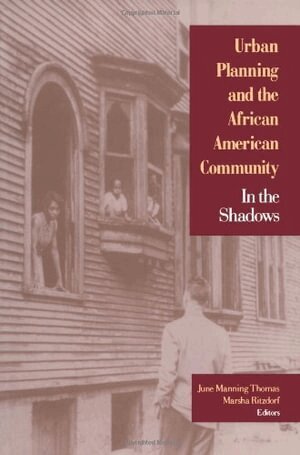
How have urban planning policies contributed to racial injustices in American cities? Does contemporary urban planning really address and attempt to solve the social and economic problems of African Americans in cities, or does it just perpetuate ghetto conditions? What have African Americans done to confront injustices in planning? Historically, race and city design are linked, and Urban Planning and the African American Community aims to clarify the historical connections between the African American population and the urban planning profession and to suggest means by which cooperation and justice may be increased. The book focuses on the areas of zoning and real estate, planning and public policy, African American initiatives and responses to urban planning, and urban planning education. Individual chapters examine the racial origins of zoning in American cities; how Eurocentric family models have shaped planning policies applied to African American families; the rise of equity planning and its effects; the role of race and empowerment in the Model Cities experiment; African American experiences with shaping the planning of such cities as Los Angeles, Greensboro, and Birmingham; and provides a plan for diversifying planning education in order to advance the profession. The editors also include a chapter of excerpts from important court cases and government reports that have shaped or reflected the racial aspects of urban planning. This important new volume bridges the gap between urban planning and issues of race and will be an essential resource for academics and students in urban studies, urban planning, and race/ethnic studies.
E-bok
PDF, Engelska, 20121 541 kr
Läs direkt efter köp
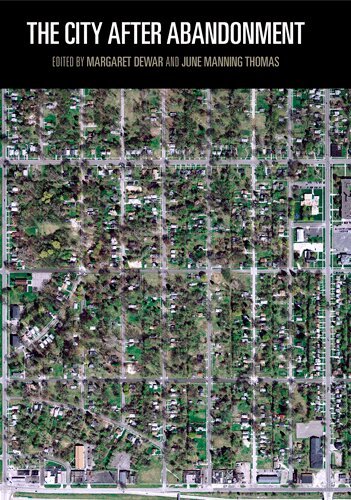
A number of U.S. cities, former manufacturing centers of the Northeast and Midwest, have suffered such dramatic losses in population and employment that urban experts have put them in a class by themselves, calling them "rustbelt cities," "shrinking cities," and more recently "legacy cities." This decline has led to property disinvestment, extensive demolition, and abandonment. While much policy and planning have focused on growth and redevelopment, little research has investigated the conditions of disinvested places and why some improvement efforts have greater impact than others.The City After Abandonment brings together essays from top urban planning experts to focus on policy and planning issues related to three questions. What are cities becoming after abandonment? The rise of community gardens and artists' installations in Detroit and St. Louis reveal numerous unexamined impacts of population decline on the development of these cities. Why these outcomes? By analyzing post-hurricane policy in New Orleans, the acceptance of becoming a smaller city in Youngstown, Ohio, and targeted assistance to small areas of Baltimore, Cleveland, and Detroit, this book assesses how varied institutions and policies affect the process of change in cities where demand for property is very weak. What should abandoned areas of cities become? Assuming growth is not a choice, this book assesses widely cited formulas for addressing vacancy; analyzes the sustainability plans of Cleveland, Buffalo, Philadelphia, and Baltimore; suggests an urban design scheme for shrinking cities; and lays out ways policymakers and planners can approach the future through processes and ideas that differ from those in growing cities.
Häftad, Engelska, 2013
352 kr
Skickas inom 10-15 vardagar
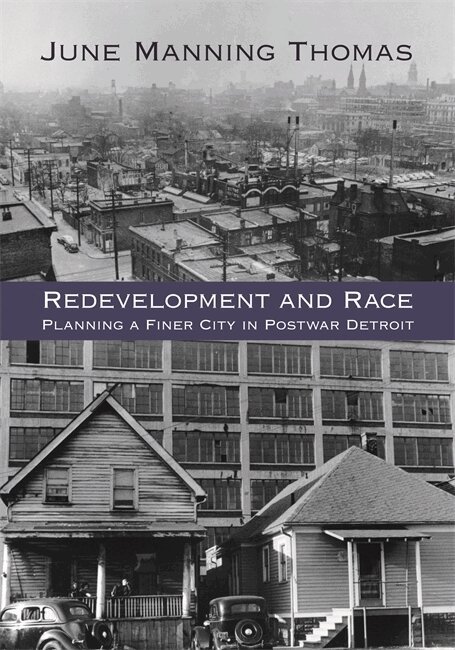
In the decades following World War II, professional city planners in Detroit made a concerted effort to halt the city's physical and economic decline. Their successes included an award-winning master plan, a number of laudable redevelopment projects, and exemplary planning leadership in the city and the nation. Yet despite their efforts, Detroit was rapidly transforming into a notorious symbol of urban decay. In Redevelopment and Race: Planning a Finer City in Postwar Detroit, June Manning Thomas takes a look at what went wrong, demonstrating how and why government programs were ineffective and even destructive to community needs.In confronting issues like housing shortages, blight in older areas, and changing economic conditions, Detroit's city planners worked during the urban renewal era without much consideration for low-income and African-American residents, and their efforts to stabilise racially-mixed neighbourhoods faltered as well. Steady declines in industrial prowess and the constant decentralisation of white residents counteracted planners' efforts to rebuild the city. Among the issues Thomas discusses in this volume are the harmful impacts of Detroit's highways, the mixed record of urban renewal projects like Lafayette Park, the effects of the 1967 riots on Detroit's ability to plan, the city-building strategies of Coleman Young (the city's first black mayor) and his mayoral successors, and the evolution of the Detroit's federally-designated Empowerment Zone. Examining the city she knew first as an undergraduate student at Michigan State University and later as a scholar and planner, Thomas ultimately argues for a different approach to traditional planning that places social justice, equity, and community ahead of purely physical and economic objectives. Redevelopment and Race was originally published in 1997 and was given the Paul Davidoff Award from the Association of Collegiate Schools of Planning in 1999. Students and teachers of urban planning will be grateful for this re-release. A new postscript offers insights into changes since 1997.
Häftad, Engelska, 2024
245 kr
Skickas inom 3-6 vardagar