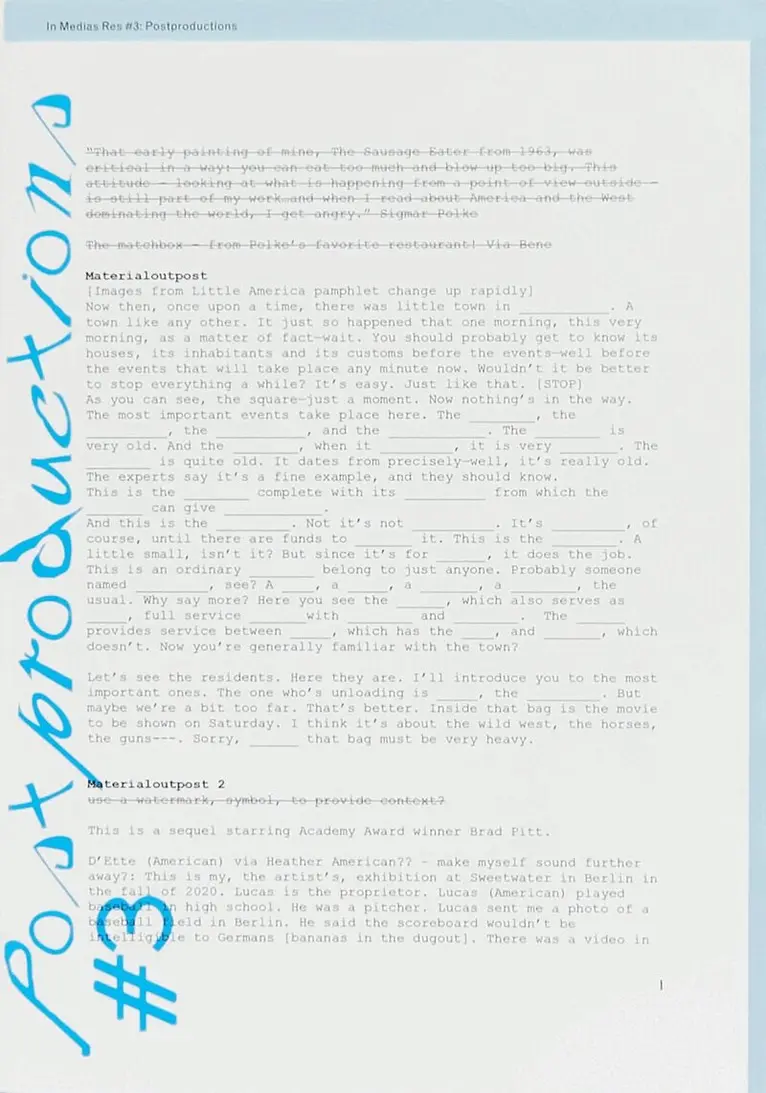
With Postproduction, the third and final issue of In Medias Res, Fluentum's research project on the history of its premises concludes by literally taking stock of both the production of and productivity inherent in moving images. At the core of this publication are new essays on film shot in the building: beginning in the mid-1990s, mere months after the US abandoned its West Berlin headquarters, these films formed part of reunified Germany's nascent creative industry, and continued to be made throughout the 2000s. This chronology is speculatively extended by time-based artworks that were commissioned as part of Fluentum's multiyear program series In Medias Res: Media, (Still) Moving, which this publication both documents and further explores through artistic contributions. Though varying in their commerciality, audience, and aesthetic, they similarly employ the material and ideological architecture of the space as a matrix for creating history, allowing one to uniquely trace how the past becomes real through the present.
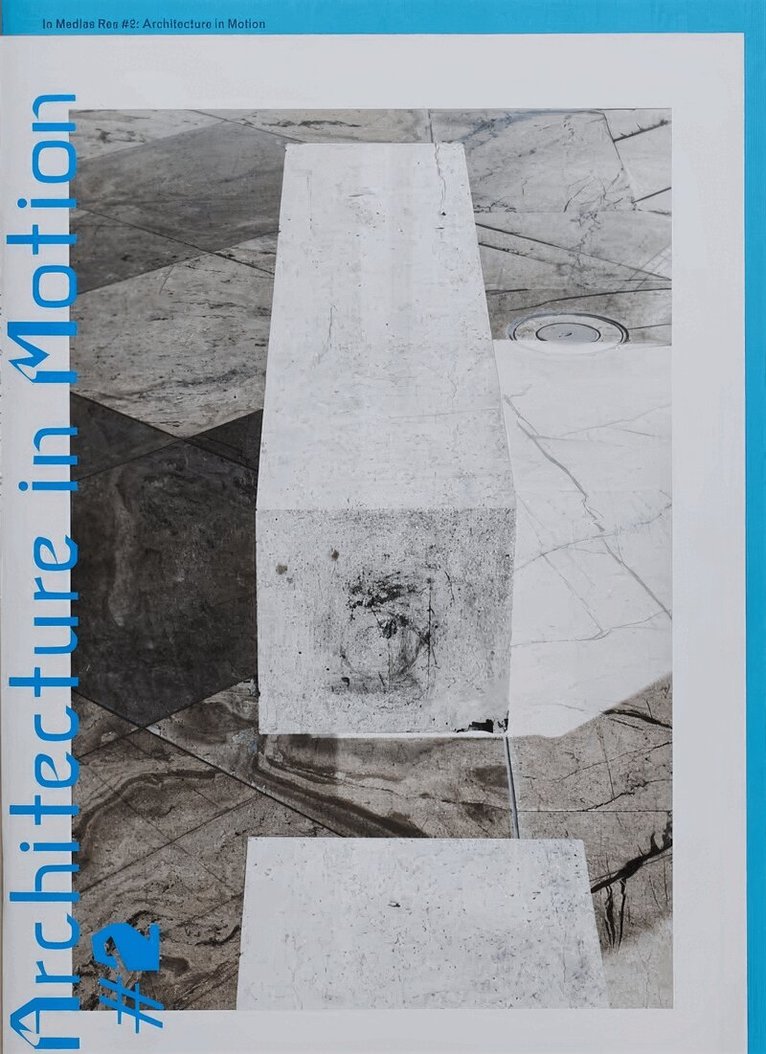
After a previous focus on questions of historiography and the archive, In Medias Res #2: Architecture in Motion continues Fluentum’s ongoing investigation into the history of its grounds with a focus on its architecture and surrounding material culture, both past and present. It does so by combining formal surveys, critical essays, artist contributions, and visual collages, dissecting the manifold layers hiding in plain sight. Central for this investigation is the idea of the palimpsest, also referenced by architects Matthias Sauerbruch and David Wegener, who give insight into their process of remodeling the former military facility to become an exhibition space. With the fundamental overlapping of times, people, but also political ideologies––its palimpsestic quality, so to speak––, the former Luftgaukommando is an emblematic site for investigating the politicization of built forms, as contributions by architecture historian Petra Kind, artist and photographer Daniel Poller, and architecture theorist Stephan Trüby make apparent. Following these attempts to formalize and categorize, the contributions by artists Julian Irlinger and Anja Kirschner allow for a necessary interrogation of the methods at play when knowledge is generated. In Medias Res #2: Architecture in Motion not only attempts to historicize and record, but raises questions about the presence of ruinous, failed ideologies—their strategies of violence, aesthetic power, and propaganda, as well as contemporary debates about their (dis)continuities in the here and now.
With Postproduction, the third and final issue of In Medias Res, Fluentum's research project on the history of its premises concludes by literally taking stock of both the production of and productivity inherent in moving images. At the core of this publication are new essays on film shot in the building: beginning in the mid-1990s, mere months after the US abandoned its West Berlin headquarters, these films formed part of reunified Germany's nascent creative industry, and continued to be made throughout the 2000s. This chronology is speculatively extended by time-based artworks that were commissioned as part of Fluentum's multiyear program series In Medias Res: Media, (Still) Moving, which this publication both documents and further explores through artistic contributions. Though varying in their commerciality, audience, and aesthetic, they similarly employ the material and ideological architecture of the space as a matrix for creating history, allowing one to uniquely trace how the past becomes real through the present.
After a previous focus on questions of historiography and the archive, In Medias Res #2: Architecture in Motion continues Fluentum’s ongoing investigation into the history of its grounds with a focus on its architecture and surrounding material culture, both past and present. It does so by combining formal surveys, critical essays, artist contributions, and visual collages, dissecting the manifold layers hiding in plain sight. Central for this investigation is the idea of the palimpsest, also referenced by architects Matthias Sauerbruch and David Wegener, who give insight into their process of remodeling the former military facility to become an exhibition space. With the fundamental overlapping of times, people, but also political ideologies––its palimpsestic quality, so to speak––, the former Luftgaukommando is an emblematic site for investigating the politicization of built forms, as contributions by architecture historian Petra Kind, artist and photographer Daniel Poller, and architecture theorist Stephan Trüby make apparent. Following these attempts to formalize and categorize, the contributions by artists Julian Irlinger and Anja Kirschner allow for a necessary interrogation of the methods at play when knowledge is generated. In Medias Res #2: Architecture in Motion not only attempts to historicize and record, but raises questions about the presence of ruinous, failed ideologies—their strategies of violence, aesthetic power, and propaganda, as well as contemporary debates about their (dis)continuities in the here and now.