Jürgen Heyde – författare
Visar alla böcker från författaren Jürgen Heyde. Handla med fri frakt och snabb leverans.
3 produkter
3 produkter
Häftad, Tyska, 2023
149 kr
Skickas inom 3-6 vardagar
E-bok
PDF, Tyska, 2019248 kr
Läs direkt efter köp
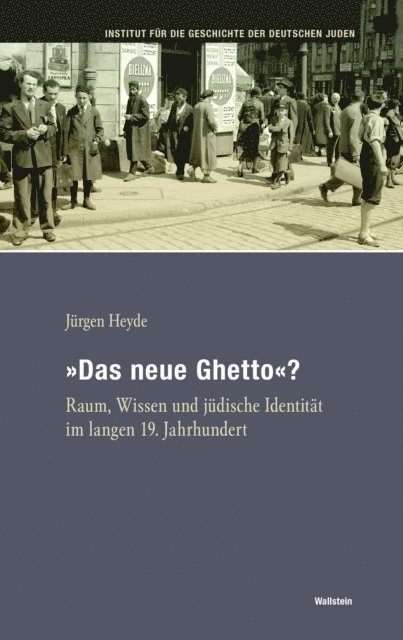
"e;Ghetto"e; ist mehr als ein Ort. Diskussionen um einen Zentralbegriff judischer Identitat im langen 19. Jahrhundert. Auf den ersten Blick scheint "e;Ghetto"e; vor allem eine Ortsbezeichnung zu sein. Ursprnglich hie so der Wohnbezirk, den der Senat von Venedig 1516 fr die jdische Bevlkerung festlegte. Zu Beginn des Zweiten Weltkriegs richteten die deutschen Besatzer in vielen Stdten Ost- und Sdosteuropas erneut Bezirke ein, in die Juden zwangsweise einquartiert wurden. Auer dem ueren Zwang gibt es kaum etwas, was beide Arten von "e;Ghetto"e; verbindet. Der Begriff funktioniert bis heute in einer Vielzahl von Kontexten, in ganz unterschiedlichen Regionen der Welt, auch ohne Bezug zur jdischen Bevlkerung. Gemeinsam ist allen diesen Zuschreibungen, dass der Begriff "e;Ghetto"e; starke Emotionen in sich trgt und zum Ausdruck bringt. berwiegend negativ besetzt, markiert er die Bewohner als eine Randgruppe, verweist auf Ungleichheit, Ausgrenzung und soziales Elend. Er suggeriert aber auch eine gewisse Zusammengehrigkeit der Bewohner, die aus einer Innenperspektive auch als Aneignung dieses Raumes verstanden werden kann. Jrgen Heyde untersucht, wie der Begriff im 19. und frhen 20. Jahrhundert von Italien nach Mitteleuropa wanderte und dort zu einem Zentralbegriff fr die Suche nach jdischer Identitt wurde.
E-bok
PDF, Engelska, 2015288 kr
Läs direkt efter köp
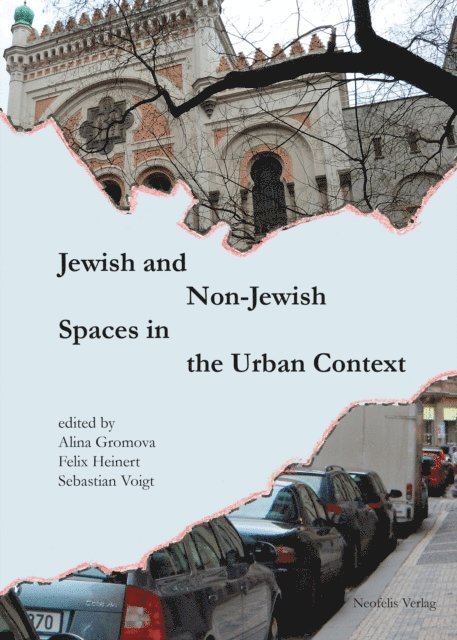
The unifying thread of the interdisciplinary volume Jewish and Non-Jewish Spaces in the Urban Context is the fact that Jewish spaces are almost always generated in relation to non-Jewish spaces; they determine and influence each other.This general phenomenon will be scrutinized and put to the test again and again in a varied collection of articles by international experienced researchers as well as junior scholars using various urban contexts and discourses as data. From the viewpoints of different temporal and regional research traditions and disciplines the contributors deal with the question of how Jewish and non-Jewish spaces are imagined, constructed, negotiated and intertwined. All examples and case studies together create a mosaic of possibilities for the construction of Jewish and non-Jewish spaces in different settings.The list of examined topics ranges from synagogues to ghettos, from urban neighborhoods to cafés and festivals, from art to literature. This diversity makes the volume a challenging effort of giving an overview of the current academic discussion in Europe and beyond. Although the majority of the contributions are focused on Central and Eastern Europe, a more general tendency becomes apparent in all articles: the negotiation of urban spaces seems to be a complex and ambivalent process in which a large number of participants are involved. In this regard, the volume would also like to contribute to trans-disciplinary urban studies and critical research on spatial relations.