Jurrie Reiding - Böcker
Visar alla böcker från författaren Jurrie Reiding. Handla med fri frakt och snabb leverans.
3 produkter
3 produkter
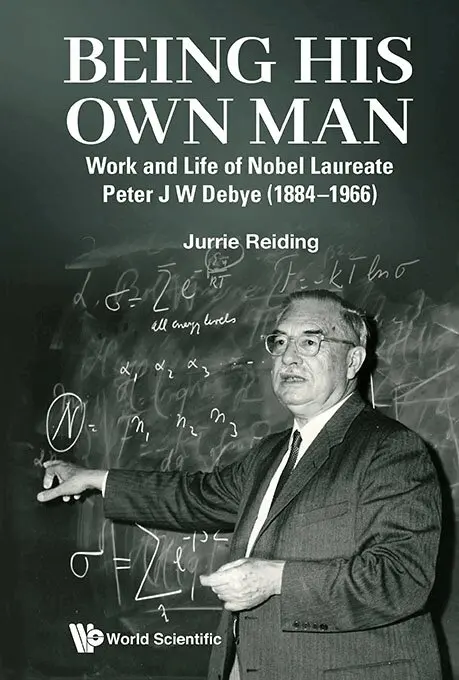
Being His Own Man: Work And Life Of Nobel Laureate Peter J W Debye (1884-1966)
Inbunden, Engelska, 2026
1 302 kr
Kommande
Peter Debye was a brilliant teacher and great communicator, who could get along with people from all layers of society. Born in The Netherlands, he studied in Germany and thereafter held teaching and research positions in Germany (Munich, Göttingen, Leipzig and Berlin), Switzerland (Zurich University and ETH), The Netherlands (Utrecht), and the USA (Cornell University). He was a pioneer in many different fields of chemistry and physics, such as the theory of strong electrolytes, the theory of molecular dipoles, low temperature physics, intermolecular forces, solid-state physics, X-ray analysis, molecular weight determination of polymers, and scattering studies with X-rays and light. As a result, he bridged in the first part of the 20th century the gap that existed between chemistry and physics and contributed to the emerging field of chemical physics.This book presents both an in-depth overview of Debye's many pathbreaking scientific achievements, and a full and balanced account of his professional life, against the background of major events in world history, such as the First and the Second World Wars. Until 1939 Debye lived and worked in Europe, and from 1940 to his death in 1966 in the USA. The story of his USA years is completely new, and has been written on the basis of Debye's personal archive. In the chapter the "Debye affair" — about his last two years in Nazi Germany — which attracted much publicity during 2006-2010, is described in detail and put in the larger context of Debye's life and character. This book is richly illustrated, with many rather unknown photographs.
Being His Own Man: Work And Life Of Nobel Laureate Peter J W Debye (1884-1966)
Häftad, Engelska, 2026
799 kr
Kommande
Peter Debye was a brilliant teacher and great communicator, who could get along with people from all layers of society. Born in The Netherlands, he studied in Germany and thereafter held teaching and research positions in Germany (Munich, Göttingen, Leipzig and Berlin), Switzerland (Zurich University and ETH), The Netherlands (Utrecht), and the USA (Cornell University). He was a pioneer in many different fields of chemistry and physics, such as the theory of strong electrolytes, the theory of molecular dipoles, low temperature physics, intermolecular forces, solid-state physics, X-ray analysis, molecular weight determination of polymers, and scattering studies with X-rays and light. As a result, he bridged in the first part of the 20th century the gap that existed between chemistry and physics and contributed to the emerging field of chemical physics.This book presents both an in-depth overview of Debye's many pathbreaking scientific achievements, and a full and balanced account of his professional life, against the background of major events in world history, such as the First and the Second World Wars. Until 1939 Debye lived and worked in Europe, and from 1940 to his death in 1966 in the USA. The story of his USA years is completely new, and has been written on the basis of Debye's personal archive. In the chapter the "Debye affair" — about his last two years in Nazi Germany — which attracted much publicity during 2006-2010, is described in detail and put in the larger context of Debye's life and character. This book is richly illustrated, with many rather unknown photographs.
244 kr
Skickas inom 5-8 vardagar
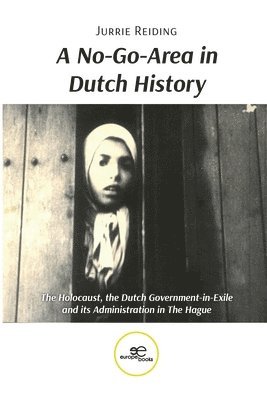
The book deals, essentially, with an untold history of Dutch collaboration during the German occupation (1940-1945). Principally, theruling class and its political institutions must be held accountable for this collaboration.Immediately after the defeat of the Dutch army in May 1940, the Dutch Queen and the ministers went into exile in London, while the rest of theministries, headed by the Secretaries-General, remained in The Hague.Officially, the Government-in-exile joined the Allied Forces, but at thesame time it allowed the administration in The Hague to establish cordial relations with the occupier, in order to safeguard a proper place for the Netherlands in the "New Europe" in case of a German victory.This policy of 'backing two horses' had to be abandoned at the turning of the year 1942/1943, when the prospect of an Allied victory began to dawn.Unfortunately, at that time a substantial part of the Dutch Jewish citizens had already been deported to the German extermination camps, effectively supported by the Dutch administration in The Hague. The 'London' Government did not make any attempt to call its subordinates inThe Hague to order and made itself an accomplice in genocide.