K. J. Dover – författare
Visar alla böcker från författaren K. J. Dover. Handla med fri frakt och snabb leverans.
18 produkter
Marginal Comment
A Memoir Revisited
Av K. J. Dover, Stephen Halliwell m. fl.
Häftad, 2023
398 kr
Lägg i varukorg
Marginal Comment, which attracted keen and widespread interest on its original publication in 1994, is the remarkable memoir of one of the most distinguished classical scholars of the modern era. Its author, Sir Kenneth Dover, whose academic publications included the pathbreaking book Greek …
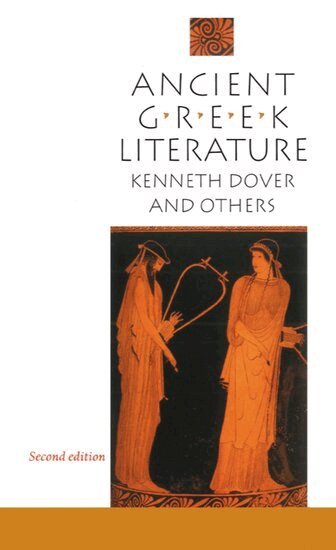
Ancient Greek Literature
Av K. J. Dover
Häftad, 1997
714 kr
Lägg i varukorg
This historical survey of Greek literature from 700 BC to 550 AD concentrates on the principal authors and quotes many passages from their work in translation, to allow the reader to form his own impression of its quality, including Homer, Plato, Aristophanes, and Euripides. Attention is drawn both …
An Historical Commentary on Thucydides: Volume 4. Books V(25)-VII
Av A. W. Gomme, A. Andrewes m. fl.
Inbunden, 1970
3759 kr
Lägg i varukorg
An Historical Commentary on Thucydides Volume 4. Books V(25)-VII
An Historical Commentary on Thucydides: Volume 5. Book VIII
Av A. W. Gomme, A. Andrewes m. fl.
Inbunden, 1980
3601 kr
Lägg i varukorg
An Historical Commentary on Thucydides Volume 5. Book VIII
Lysias and the Corpus Lysiacum
Av K. J. Dover
Häftad, 2018
403 kr
Lägg i varukorg
Lysias, a resident alien at Athens in the late fifth and early fourth centuries B.C.E., acted as a consultant for clients involved in litigation and put into circulation written versions of the speeches that he composed for them. In the early Hellenistic period, a corpus of more than four hundred …
Lysias and the Corpus Lysiacum
Av K. J. Dover
E-bok, 2024
399 kr
Lägg i varukorg
Lysias, a resident alien at Athens in the late fifth and early fourth centuries B.C.E., acted as a consultant for clients involved in litigation and put into circulation written versions of the speeches that he composed for them. In the early Hellenistic period, a corpus of more than four hundred …
Lysias and the Corpus Lysiacum
Av K. J. Dover
Inbunden, 2024
947 kr
Lägg i varukorg
Lysias, a resident alien at Athens in the late fifth and early fourth centuries B.C.E., acted as a consultant for clients involved in litigation and put into circulation written versions of the speeches that he composed for them. In the early Hellenistic period, a corpus of more than four hundred …
Plato: Symposium
Av Plato, K. J. Dover
Häftad, 1980
542 kr
Lägg i varukorg
Plato's Symposium is the most literary of all his works and one which all students of classics are likely to want to read whether or not they are studying Plato's philosophy. But the reader does need help in appreciating both the artistry and the arguments, and in comprehending the social and …
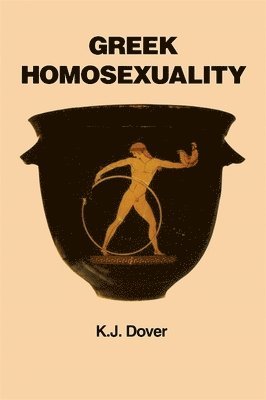
Greek Homosexuality
Updated and with a New Postscript
Av K. J. Dover
Häftad, 1989
407 kr
Lägg i varukorg
To what extent and in what ways was homosexuality approved by the ancient Greeks? An eminent classicist examines the evidence—vase paintings, archaic and classical poetry, the dialogues of Plato, speeches in the law courts, the comedies of Aristophanes—and reaches provocative conclusions. A …
Marginal Comment
A Memoir Revisited
Av K. J. Dover, Stephen Halliwell m. fl.
Inbunden, 2023
1211 kr
Lägg i varukorg
Marginal Comment, which attracted keen and widespread interest on its original publication in 1994, is the remarkable memoir of one of the most distinguished classical scholars of the modern era. Its author, Sir Kenneth Dover, whose academic publications included the pathbreaking book Greek …
Marginal Comment
A Memoir Revisited
Av K. J. Dover, Stephen Halliwell m. fl.
E-bok, 2023
430 kr
Lägg i varukorg
Marginal Comment , which attracted keen and widespread interest on its original publication in 1994, is the remarkable memoir of one of the most distinguished classical scholars of the modern era. Its author, Sir Kenneth Dover, whose academic publications included the pathbreaking book Greek …
Marginal Comment
A Memoir Revisited
Av K. J. Dover, Stephen Halliwell m. fl.
E-bok, 2023
430 kr
Lägg i varukorg
Marginal Comment , which attracted keen and widespread interest on its original publication in 1994, is the remarkable memoir of one of the most distinguished classical scholars of the modern era. Its author, Sir Kenneth Dover, whose academic publications included the pathbreaking book Greek …
Greek Homosexuality
with Forewords by Stephen Halliwell, Mark Masterson and James Robson
Av K. J. Dover
Häftad, 2016
513 kr
Lägg i varukorg
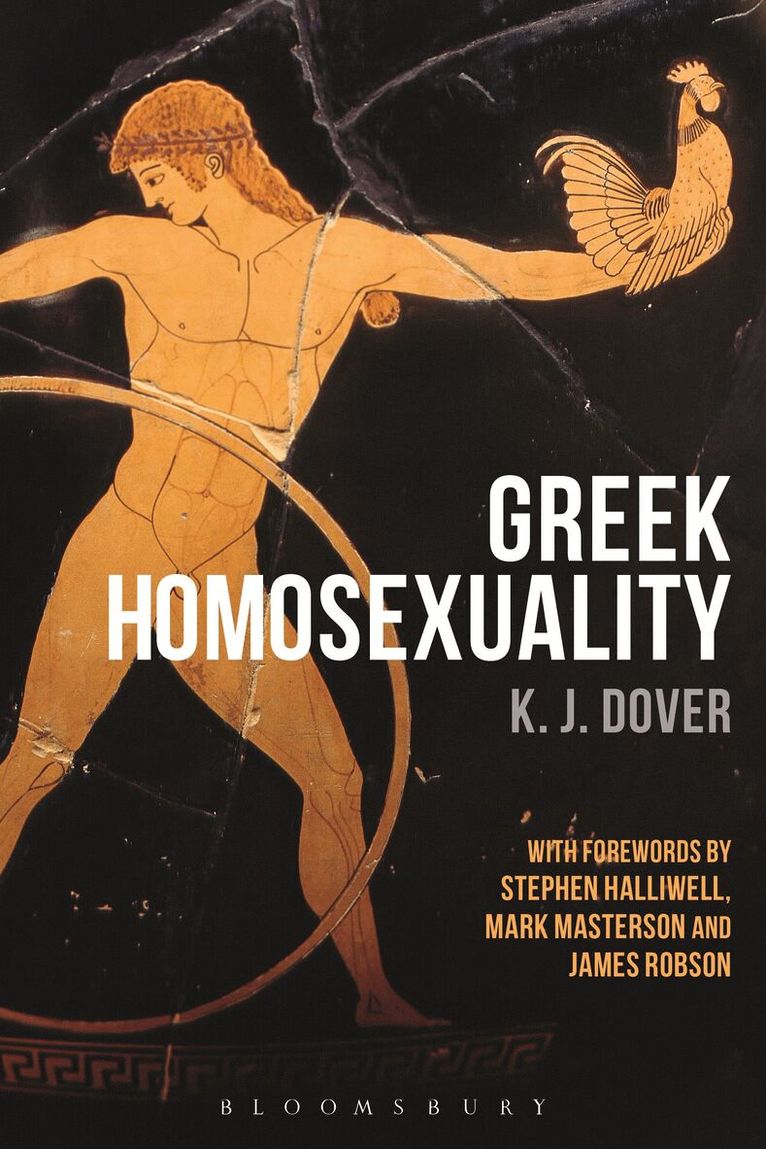
Hailed as magisterial when it first appeared, Greek Homosexuality remains an academic milestone and continues to be of major importance for students and scholars of gender studies. Kenneth Dover explores the understanding of homosexuality in ancient Greece, examining a vast array of material and …
Greek Homosexuality
With Forewords by Stephen Halliwell, Mark Masterson and James Robson
Av K. J. Dover
E-bok, 2016
546 kr
Lägg i varukorg
Hailed as magisterial when it first appeared, Greek Homosexuality remains an academic milestone and continues to be of major importance for students and scholars of gender studies. Kenneth Dover explores the understanding of homosexuality in ancient Greece, examining a vast array of material and …
Greek Homosexuality
With Forewords by Stephen Halliwell, Mark Masterson and James Robson
Av K. J. Dover
E-bok, 2016
534 kr
Lägg i varukorg
Hailed as magisterial when it first appeared, Greek Homosexuality remains an academic milestone and continues to be of major importance for students and scholars of gender studies. Kenneth Dover explores the understanding of homosexuality in ancient Greece, examining a vast array of material and …
Greek Particles
Av J.D. Denniston, K. J. Dover
Inbunden, 1998
2126 kr
Lägg i varukorg
This revised edition incorporates additional examples from the original author in conjunction with K.J. Dover's own material. In presenting the first (1934) edition, Denniston set himself to cut down the etymological discussion which characterised his German predecessors in the field. He was …
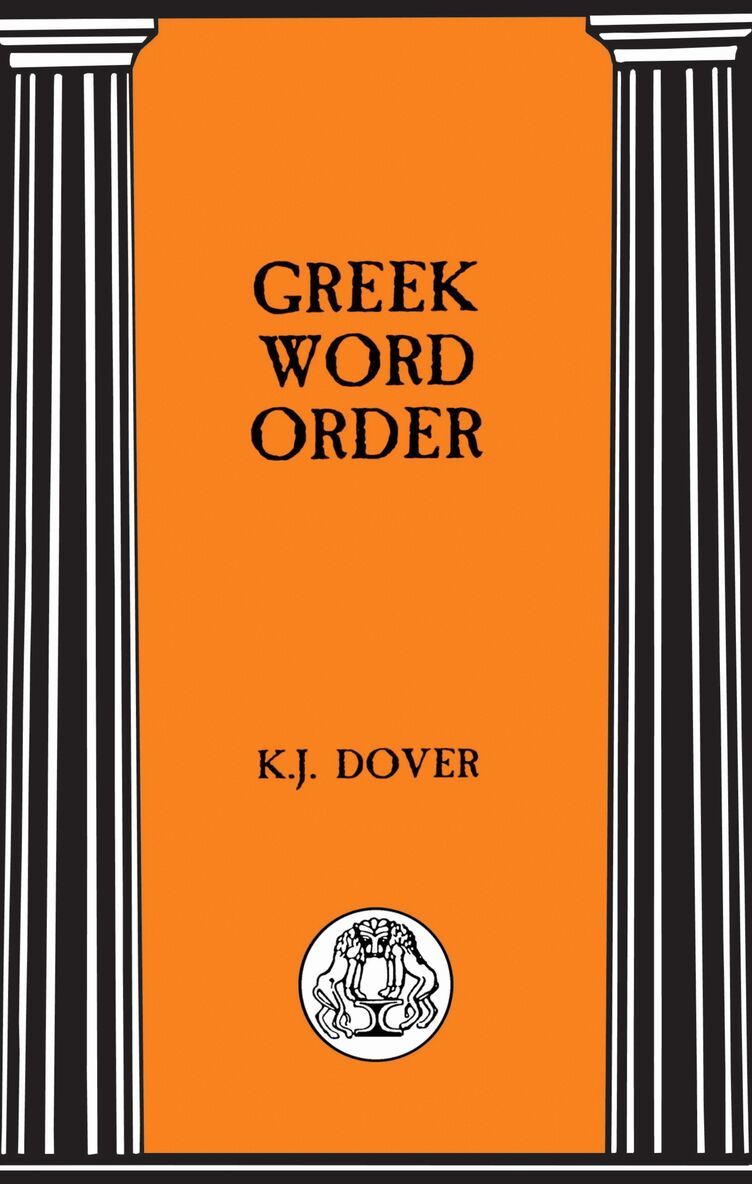
Greek Word Order
Av K. J. Dover
Häftad, 2000
416 kr
Lägg i varukorg
The order of words in a Greek sentence is much freer and less predictable than in most European languages. The author explains and illustrates the principles which govern word order in Greek. He finds three: the tendency of certain words to take a constant position; certain types of logical …