K. Sabeel Rahman – författare
Visar alla böcker från författaren K. Sabeel Rahman. Handla med fri frakt och snabb leverans.
4 produkter
4 produkter
1 130 kr
Skickas inom 5-8 vardagar
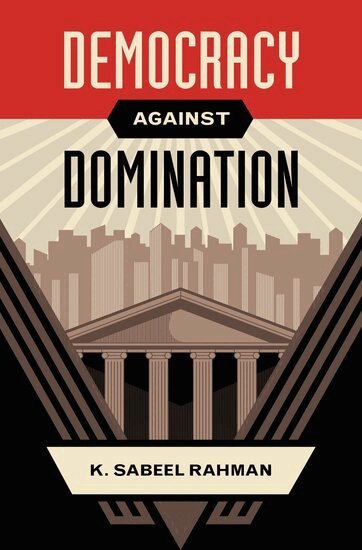
In 2008, the collapse of the US financial system plunged the economy into the worst economic downturn since the Great Depression. In its aftermath, the financial crisis pushed to the forefront fundamental moral and institutional questions about how we govern the modern economy. What are the values that economic policy ought to prioritize? What institutions do we trust to govern complex economic dynamics? Much of popular and academic debate revolves around two competing approaches to these fundamental questions: laissez-faire defenses of self-correcting and welfare-enhancing markets on the one hand, and managerialist turns to the role of insulated, expert regulation in mitigating risks and promoting growth on the other. In Democracy Against Domination, K. Sabeel Rahman offers an alternative vision for how we should govern the modern economy in a democratic society. Drawing on a rich tradition of economic reform rooted in the thought and reform politics of early twentieth century progressives like John Dewey and Louis Brandeis, Rahman argues that the fundamental moral challenge of economic governance today is two-fold: first, to counteract the threats of economic domination whether in the form of corporate power or inequitable markets; and second, to do so by expanding the capacity of citizens themselves to exercise real political power in economic policymaking. This normative framework in turn suggests a very different way of understanding and addressing major economic governance issues of the post-crisis era, from the challenge of too-big-to-fail financial firms, to the dangers of regulatory capture and regulatory reform. Synthesizing a range of insights from history to political theory to public policy, Democracy Against Domination offers an exciting reinterpretation of progressive economic thought; a fresh normative approach to democratic theory; and an urgent hope for realizing a more equitable and democratically accountable economy through practical reforms in our policies and regulatory institutions.
363 kr
Skickas inom 5-8 vardagar
The 2008 collapse of the US financial system plunged the economy into the worst economic downturn since the Great Depression, raising deep moral and institutional questions about the problems of economic inequality and economic power on the one hand, and the tensions between democracy and bureaucratic policymaking on the other. In Democracy Against Domination , K. Sabeel Rahman draws on a rich tradition of political economy rooted in the thought and reform politics of early twentieth-century progressives like John Dewey and Louis Brandeis to argue that, first, we should reconceive economic governance as focused not just on growth or efficiency but rather on counteracting the threat of domination whether in the form of corporate power or inequitable markets; and second, that we must do so by expanding the capacity of citizens themselves to exercise real political power in economic policymaking. Synthesizing a range of insights from law, history, political theory, and public policy, Rahman combines a fresh normative approach to democratic theory and economic power with a concrete analysis of the institutions needed to realize urgent hopes for a more equitable and democratic economy.
158 kr
Tillfälligt slut
215 kr
Kommande
American democracy is in trouble—but not only for the reasons we think.Beyond elections, polarization, or money in politics lies a quieter, more dangerous failure: the state itself has stopped working. Policies are promised, passed, and praised—and then stall, unravel, or never arrive.In Remaking the State, K. Sabeel Rahman argues this breakdown is no accident. The old administrative state was built as a technocratic, expert-driven black box—distant, unaccountable, and ultimately unable to deliver. The machinery of government lacked a democratic soul.Rahman offers a different path: a moral vision of administration rooted not in expertise alone, but in purpose. He reimagines the state as a vehicle for democratic freedom, one that protects against harm, secures basic needs, and confronts the deeper structures of inequality.Remaking the State argues that American democracy will survive only if government can once again deliver. Against both technocratic nostalgia and anti-government reaction, Rahman offers a bold new blueprint: rebuild public institutions around democratic freedom, with stronger protections, broader public provision, deeper participation, and firmer checks on autocratic power. Urgent and clarifying, this is a bracing case for remaking the state before democracy is remade against us.