Kaare Strøm - Böcker
Visar alla böcker från författaren Kaare Strøm. Handla med fri frakt och snabb leverans.
8 produkter
8 produkter
3 195 kr
Skickas inom 5-8 vardagar
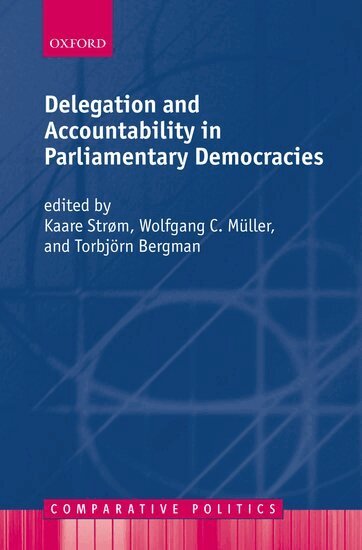
Parliamentary democracy is the most common way of organizing delegation and accountability in contemporary democracies. Yet knowledge of this type of regime has been incomplete and often unsystematic. Delegation and Accountability in Parliamentary Democracies offers new conceptual clarity on the topic. Taking principal-agent theory as its framework, the work illustrates how a variety of apparently unrelated representation issues can now be understood. This procedure allows scholarship to move well beyond what have previously been cloudy and confusing debates aimed at defining the virtues and perils of parliamentarism. This new empirical investigation includes all seventeen West European parliamentary democracies. These countries are compared in a series of cross-national tables and figures, and seventeen country chapters provide a wealth of information on four discrete stages in the delegation process: delegation from voters to parliamentary representatives, delegation from parliament to the prime minister and cabinet, delegation within the cabinet, and delegation from cabinet ministers to civil servants. Each chapter illustrates how political parties serve as bonding instruments which align incentives and permit citizen control of the policy process. This is complemented by a consideration of external constraints, such as courts, central banks, corporatism, and the European Union, which can impinge on national-level democratic delegation. The concluding chapters go on to consider how well the problems of delegation and accountability are solved in these countries.Delegation and Accountability in Parliamentary Democracies provides an unprecedented guide to contemporary European parliamentary democracies. As democratic governance is transformed at the dawn of the twenty-first century, it illustrates the important challenges faced by the parliamentary democracies of Western Europe.
1 430 kr
Skickas inom 5-8 vardagar
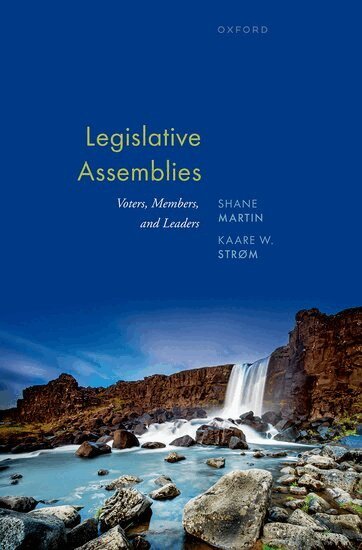
By whatever name they are known (Parliaments, Legislatures, or Assemblies, to name but three) legislative assemblies in democratic societies face the twin challenges of institutional capacity and accountability to their citizens. In addressing these challenges, assemblies vary in the extent to which they serve the respective interests of three critical sets of actors: their members, party leaders, and voters. In this book, Shane Martin and Kaare W. Strøm identify three ideal types of democratic assemblies - the members' assembly, the leaders' assembly, and the voters' assembly - and analyze national legislative assemblies in the world's 68 most populous democracies, from Finland to Papua New Guinea, in light of these models. Based on extensive new cross-national data, they trace the implications of the three assembly types for the design, internal organization, resources, and powers of democratic national assemblies, develop indices of each assembly type, and score each of the 68 legislative assemblies on these indices. The analysis of legislative re-election rates in these countries reveals that the fate of incumbents depends on member resources as well as on leadership control, but is ultimately constrained by voter confidence. In conclusion, the authors discuss the past and future trajectories of legislative assemblies, including their susceptibility to democratic backsliding.
491 kr
Skickas inom 5-8 vardagar
By whatever name they are known (Parliaments, Legislatures, or Assemblies, to name but three) legislative assemblies in democratic societies face the twin challenges of institutional capacity and accountability to their citizens. In addressing these challenges, assemblies vary in the extent to which they serve the respective interests of three critical sets of actors: their members, party leaders, and voters. In this book, Shane Martin and Kaare W. Strøm identify three ideal types of democratic assemblies - the members' assembly, the leaders' assembly, and the voters' assembly - and analyze national legislative assemblies in the world's 68 most populous democracies, from Finland to Papua New Guinea, in light of these models. Based on extensive new cross-national data, they trace the implications of the three assembly types for the design, internal organization, resources, and powers of democratic national assemblies, develop indices of each assembly type, and score each of the 68 legislative assemblies on these indices. The analysis of legislative re-election rates in these countries reveals that the fate of incumbents depends on member resources as well as on leadership control, but is ultimately constrained by voter confidence. In conclusion, the authors discuss the past and future trajectories of legislative assemblies, including their susceptibility to democratic backsliding.
1 078 kr
Skickas inom 5-8 vardagar
Comparative Politics is a series for students and teachers of political science that deals with contemporary issues in comparative government and politics. The General Editors are Max Kaase, Professor of Political Science, Vice President and Dean, School of Humanities and Social Science, International University Bremen, Germany; and Kenneth Newton, Professor of Comparative Politics, University of Southampton. The series is published in association with the European Consortium for Political Research.Today, parliamentarism is the most common form of democratic government. Yet knowledge of this regime type has been incomplete and often unsystematic. Delegation and Accountability in Parliamentary Democracies offers new conceptual clarity on the topic. This book argues that representative democracies can be understood as chains of delegation and accountability between citizens and politicians. Under parliamentary democracy, this chain of delegation is simple but also long and indirect. Principal-agent theory helps us to understand the perils of democratic delegation, which include the problems of adverse selection and moral hazard. Citizens in democratic states, therefore, need institutional mechanisms by which they can control their representatives. The most important such control mechanisms are on the one hand political parties and on the other external constraints such as courts, central banks, referendums, and supranational institutions such as those of the European Union. Traditionally, parliamentary democracies have relied heavily on political parties and presidential systems more on external constraints. This new empirical investigation includes all seventeen West European parliamentary democracies. These countries are compared in a series of cross-national tables and figures, and seventeen country chapters provide a wealth of information on four discrete stages in the delegation process: delegation from voters to parliamentary representatives, delegation from parliament to the prime minister and cabinet, delegation within the cabinet, and delegation from cabinet ministers to civil servants. Each chapter illustrates how political parties serve as bonding instruments which align incentives and permit citizen control of the policy process. This is complemented by a consideration of external constraints. The concluding chapters go on to consider how well the problems of delegation and accountability are solved in these countries. They show that political systems with cohesive and competitive parties and strong mechanisms of external constraint solve their democratic agency problems better than countries with weaker control mechanisms. But in many countries political parties are now weakening, and parliamentary systems face new democratic challenges.Delegation and Accountability in Parliamentary Democracies provides an unprecedented guide to contemporary European parliamentary democracies. As democratic governance is transformed at the dawn of the twenty-first century, it illustrates the important challenges faced by the parliamentary democracies of Western Europe.
1 364 kr
Skickas inom 10-15 vardagar
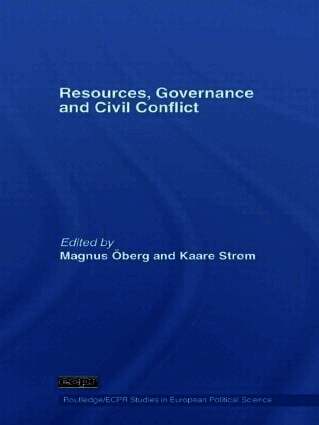
This book explores how governance structures - domestic political institutions, international peacekeeping efforts, armed interventions by other states - and natural resources affect the onset, dynamics and the termination of civil wars.Written by leading researchers in the field of conflict research, it provides new insights into, and offers fresh perspectives on the role of governance structures and resources in civil conflict, suggesting that many of the same set of factors play important roles in the onset and dynamics of civil conflict as well as in the termination of such conflicts and in post-conflict stability. Presenting a variety of theoretical approaches and case studies on India, Sudan, the Basque country and Costa Rica, Governance, Resources and Civil Conflict will be of interest to students and scholars of politics, international relations and conflict studies.
441 kr
Skickas inom 10-15 vardagar
This book explores how governance structures - domestic political institutions, international peacekeeping efforts, armed interventions by other states - and natural resources affect the onset, dynamics and the termination of civil wars.Written by leading researchers in the field of conflict research, it provides new insights into, and offers fresh perspectives on the role of governance structures and resources in civil conflict, suggesting that many of the same set of factors play important roles in the onset and dynamics of civil conflict as well as in the termination of such conflicts and in post-conflict stability. Presenting a variety of theoretical approaches and case studies on India, Sudan, the Basque country and Costa Rica, Governance, Resources and Civil Conflict will be of interest to students and scholars of politics, international relations and conflict studies.
432 kr
Skickas inom 7-10 vardagar
"The Madisonian Turn is an outstanding assessment of the functioning of democratic institutions in the Nordic countries. If democracy is in trouble in Scandinavia, then it is surely facing problems everywhere, so the book will be read carefully by those concerned about contemporary governance in all modern democracies."---Michael Gallagher, Trinity College, Dublin"This welcome and timely re-evaluation of Nordic politics constitutes a major contribution to comparative government, and is likely to stand as the definitive treatment of politics in the region for many years to come."---Peter Mair, European University Institute"This book is unique in its comparative scope and the wealth of information on the state of parliamentary democracy in the Nordic countries. It is particularly useful for the comparativists who do not come from these countries, because the original literature which it covers in detail is often not accessible for the English-speaking audience."---Hanspeter Kriesi, University of Zurich"The strength of The Madisonian Turn is to interface detailed empirical evidence on the dynamics of democratic politics in Scandinavia with an elaboration and test of rival theories of change in the politics of postindustrial democracies. This book is an inspiration for students of Northern Europe, but also for scholars of comparative legislatures and political parties more generally."---Herbert Kitschelt, Duke UniversityParliamentary democracy is the most common regime type in the contemporary political world, but the quality of governance depends on effective parliamentary oversight and strong political parties. Denmark, Finland, Iceland, Norway, and Sweden have traditionally been strongholds of parliamentary democracy. In recent years, however, critics have suggested that new challenges such as weakened popular attachment, the advent of cartel parties, the judicialization of politics, and European integration have threatened the institutions of parliamentary democracy in the Nordic region.This volume examines these claims and their implications. The authors find that the Nordic states have moved away from their previous resemblance to a Westminster model toward a form of parliamentary democracy with more separation-of-powers features---a Madisonian model. These features are evident both in vertical power relations (e.g., relations with the European Union) and horizontal ones (e.g., increasingly independent courts and central banks). Yet these developments are far from uniform and demonstrate that there may be different responses to the political challenges faced by contemporary Western democracies.Torbjörn Bergman is Professor of Political Science at Umeå University, Sweden.Kaare Strøm is Professor of Political Science at the University of California, San Diego.Jacket Credit: Heidi Hobde Dailey
Madisonian Turn
Political Parties and Parliamentary Democracy in Nordic Europe
Inbunden, Engelska, 2011
1 319 kr
Skickas inom 7-10 vardagar
"The Madisonian Turn is an outstanding assessment of the functioning of democratic institutions in the Nordic countries. If democracy is in trouble in Scandinavia, then it is surely facing problems everywhere, so the book will be read carefully by those concerned about contemporary governance in all modern democracies."---Michael Gallagher, Trinity College, Dublin"This welcome and timely re-evaluation of Nordic politics constitutes a major contribution to comparative government, and is likely to stand as the definitive treatment of politics in the region for many years to come."---Peter Mair, European University Institute"This book is unique in its comparative scope and the wealth of information on the state of parliamentary democracy in the Nordic countries. It is particularly useful for the comparativists who do not come from these countries, because the original literature which it covers in detail is often not accessible for the English-speaking audience."---Hanspeter Kriesi, University of Zurich"The strength of The Madisonian Turn is to interface detailed empirical evidence on the dynamics of democratic politics in Scandinavia with an elaboration and test of rival theories of change in the politics of postindustrial democracies. This book is an inspiration for students of Northern Europe, but also for scholars of comparative legislatures and political parties more generally."---Herbert Kitschelt, Duke UniversityParliamentary democracy is the most common regime type in the contemporary political world, but the quality of governance depends on effective parliamentary oversight and strong political parties. Denmark, Finland, Iceland, Norway, and Sweden have traditionally been strongholds of parliamentary democracy. In recent years, however, critics have suggested that new challenges such as weakened popular attachment, the advent of cartel parties, the judicialization of politics, and European integration have threatened the institutions of parliamentary democracy in the Nordic region.This volume examines these claims and their implications. The authors find that the Nordic states have moved away from their previous resemblance to a Westminster model toward a form of parliamentary democracy with more separation-of-powers features---a Madisonian model. These features are evident both in vertical power relations (e.g., relations with the European Union) and horizontal ones (e.g., increasingly independent courts and central banks). Yet these developments are far from uniform and demonstrate that there may be different responses to the political challenges faced by contemporary Western democracies.Torbjörn Bergman is Professor of Political Science at Umeå University, Sweden.Kaare Strøm is Professor of Political Science at the University of California, San Diego.Jacket Credit: Heidi Hobde Dailey