Wolfgang C. Müller - Böcker
Visar alla böcker från författaren Wolfgang C. Müller. Handla med fri frakt och snabb leverans.
10 produkter
10 produkter
3 195 kr
Skickas inom 5-8 vardagar
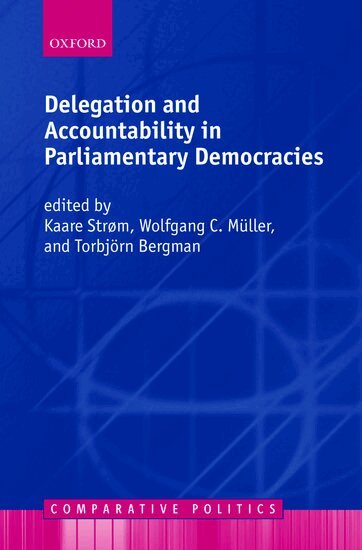
Parliamentary democracy is the most common way of organizing delegation and accountability in contemporary democracies. Yet knowledge of this type of regime has been incomplete and often unsystematic. Delegation and Accountability in Parliamentary Democracies offers new conceptual clarity on the topic. Taking principal-agent theory as its framework, the work illustrates how a variety of apparently unrelated representation issues can now be understood. This procedure allows scholarship to move well beyond what have previously been cloudy and confusing debates aimed at defining the virtues and perils of parliamentarism. This new empirical investigation includes all seventeen West European parliamentary democracies. These countries are compared in a series of cross-national tables and figures, and seventeen country chapters provide a wealth of information on four discrete stages in the delegation process: delegation from voters to parliamentary representatives, delegation from parliament to the prime minister and cabinet, delegation within the cabinet, and delegation from cabinet ministers to civil servants. Each chapter illustrates how political parties serve as bonding instruments which align incentives and permit citizen control of the policy process. This is complemented by a consideration of external constraints, such as courts, central banks, corporatism, and the European Union, which can impinge on national-level democratic delegation. The concluding chapters go on to consider how well the problems of delegation and accountability are solved in these countries.Delegation and Accountability in Parliamentary Democracies provides an unprecedented guide to contemporary European parliamentary democracies. As democratic governance is transformed at the dawn of the twenty-first century, it illustrates the important challenges faced by the parliamentary democracies of Western Europe.
1 956 kr
Skickas inom 3-6 vardagar
This volume investigates nuclear energy policies in Western Europe over the entire post-war period, but with special attention to the two most recent decades. The comparative analytical perspective draws on the interplay between voters' attitudes, challenging movements, party competition, and coalition formation. Spanning more than 60 years and 16 countries, the researchers examine the underlying causal processes leading to the observed varieties of Western European nuclear energy policies. Based on a mixed methods approach using both structured case studies as well as quantitative analyses, the study shows that the nature of party competition under given institutional contexts is a key-driver for, as a rule, tactically motivated governmental policy changes and stability, respectively. Part I introduces the practical and theoretical relevance of the topic. It outlines the reasoning of the major scientific contributions with regard to nuclear energy policies, and offers a theoretical alternative to the previous literatures that has been predominantly movements-oriented. Additionally, it provides core economic and political indicators of the changing role of nuclear energy in the countries. Part II consists of seven in-depth case studies where the outlined theoretical perspective is applied. Part III consists of a general summary, short narratives of the countries not covered in case studies, qualitative comparison and an assessment of the factors for policy change from multivariate analysis.
1 583 kr
Skickas inom 5-8 vardagar
Coalition government among different political parties is the way most European democracies are governed. Traditionally, the study of coalition politics has been focused on Western Europe. Coalition governance in Central Eastern Europe brings the study of the full coalition life-cycle to a region that has undergone tremendous political transformation, but which has not been studied from this perspective. The volume covers Bulgaria, Estonia, the Czech Republic, Latvia, Lithuania, Hungary, Poland, Romania, Slovakia, and Slovenia. It provides information and analyses of the coalition life-cycle, from pre-electoral alliances to coalition formation and portfolio distribution, governing in coalitions, the stages that eventually lead to government termination, and the electoral performance of coalition parties. In Central Eastern Europe, few single-party cabinets form and there have been only a few early elections. The evidence provided shows that coalition partners in the region write formal agreements (coalition agreements) to an extent that is similar to the patterns that we find in Western Europe, but also that they adhere less closely to these contracts. While the research on Western Europe tends to stress that coalition partners emphasize coalition compromise and mutual supervision, there is more evidence of 'ministerial government' by individual ministers and their parties. There are also some systems where coalition governance is heavily dominated by the prime minister. No previous study has covered the full coalition life-cycle in all of the ten countries with as much detail. Systematic information is presented in 10 figures and in more than one hundred tables.Comparative Politics is a series for researchers, teachers, and students of political science that deals with contemporary government and politics. Global in scope, books in the series are characterised by a stress on comparative analysis and strong methodological rigour. The series is published in association with the European Consortium for Political Research. For more information visit: www.ecprnet.eu. The series is edited by Emilie van Haute, Professor of Political Science, Université libre de Bruxelles; Ferdinand Müller-Rommel, Director of the Center for the Study of Democracy, Leuphana University; and Susan Scarrow, John and Rebecca Moores Professor of Political Science, University of Houston.
1 078 kr
Skickas inom 5-8 vardagar
Comparative Politics is a series for students and teachers of political science that deals with contemporary issues in comparative government and politics. The General Editors are Max Kaase, Professor of Political Science, Vice President and Dean, School of Humanities and Social Science, International University Bremen, Germany; and Kenneth Newton, Professor of Comparative Politics, University of Southampton. The series is published in association with the European Consortium for Political Research.Today, parliamentarism is the most common form of democratic government. Yet knowledge of this regime type has been incomplete and often unsystematic. Delegation and Accountability in Parliamentary Democracies offers new conceptual clarity on the topic. This book argues that representative democracies can be understood as chains of delegation and accountability between citizens and politicians. Under parliamentary democracy, this chain of delegation is simple but also long and indirect. Principal-agent theory helps us to understand the perils of democratic delegation, which include the problems of adverse selection and moral hazard. Citizens in democratic states, therefore, need institutional mechanisms by which they can control their representatives. The most important such control mechanisms are on the one hand political parties and on the other external constraints such as courts, central banks, referendums, and supranational institutions such as those of the European Union. Traditionally, parliamentary democracies have relied heavily on political parties and presidential systems more on external constraints. This new empirical investigation includes all seventeen West European parliamentary democracies. These countries are compared in a series of cross-national tables and figures, and seventeen country chapters provide a wealth of information on four discrete stages in the delegation process: delegation from voters to parliamentary representatives, delegation from parliament to the prime minister and cabinet, delegation within the cabinet, and delegation from cabinet ministers to civil servants. Each chapter illustrates how political parties serve as bonding instruments which align incentives and permit citizen control of the policy process. This is complemented by a consideration of external constraints. The concluding chapters go on to consider how well the problems of delegation and accountability are solved in these countries. They show that political systems with cohesive and competitive parties and strong mechanisms of external constraint solve their democratic agency problems better than countries with weaker control mechanisms. But in many countries political parties are now weakening, and parliamentary systems face new democratic challenges.Delegation and Accountability in Parliamentary Democracies provides an unprecedented guide to contemporary European parliamentary democracies. As democratic governance is transformed at the dawn of the twenty-first century, it illustrates the important challenges faced by the parliamentary democracies of Western Europe.
686 kr
Skickas inom 5-8 vardagar
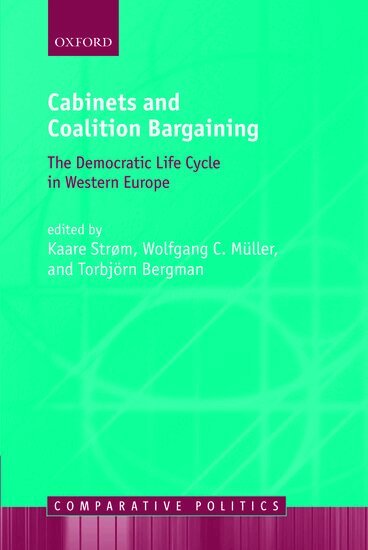
Cabinets and Coalition Bargaining: The Democratic Life Cycle in Western Europe provides a comprehensive analysis of coalition politics in Western Europe over the post-1945 period. It champions a dynamic approach using bargaining and transaction cost theory to understand the 'life cycle' of parliamentary politics. After a review of the literature the theory chapter addresses the roles of bargaining and transaction costs in coalition governance. Eight comparative chapters address the topics of government formation, cabinet membership, coalition agreements, portfolio allocation, conflict management, cabinet termination and duration, and the electoral consequences of coalition politics. The book is based on the most comprehensive data set ever employed in coalition studies, which includes both coalitional and single-party countries and governments. Each chapter provides a comparative overview of its topic and state-of-the art statistical analysis. Conceptually and empirically the study argues for an integrated approach to coalition politics, stressing six clusters of explanatory factors: country-specific and temporal circumstances, 'structural attributes', actors' preferences, institutions, the bargaining environment, and 'critical events'. While the importance of different causal factors varies between the various phases of the parliamentary life cycle, no facet of coalition politics can be understood without reference to several of these factors.Comparative Politics is a series for students and teachers of political science that deals with contemporary issues in comparative government and politics. The General Editors are David M. Farrell, Jean Monnet Chair in European Politics and Head of School of Social Sciences, University of Manchester and Alfio Mastropaolo, University of Turin. The series is published in association with the European Consortium for Political Research.
348 kr
Skickas inom 10-15 vardagar
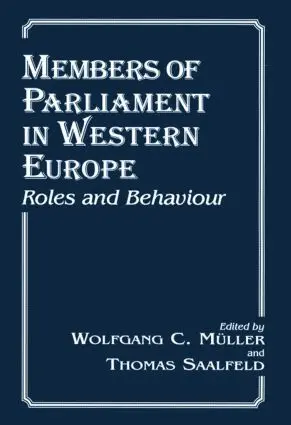
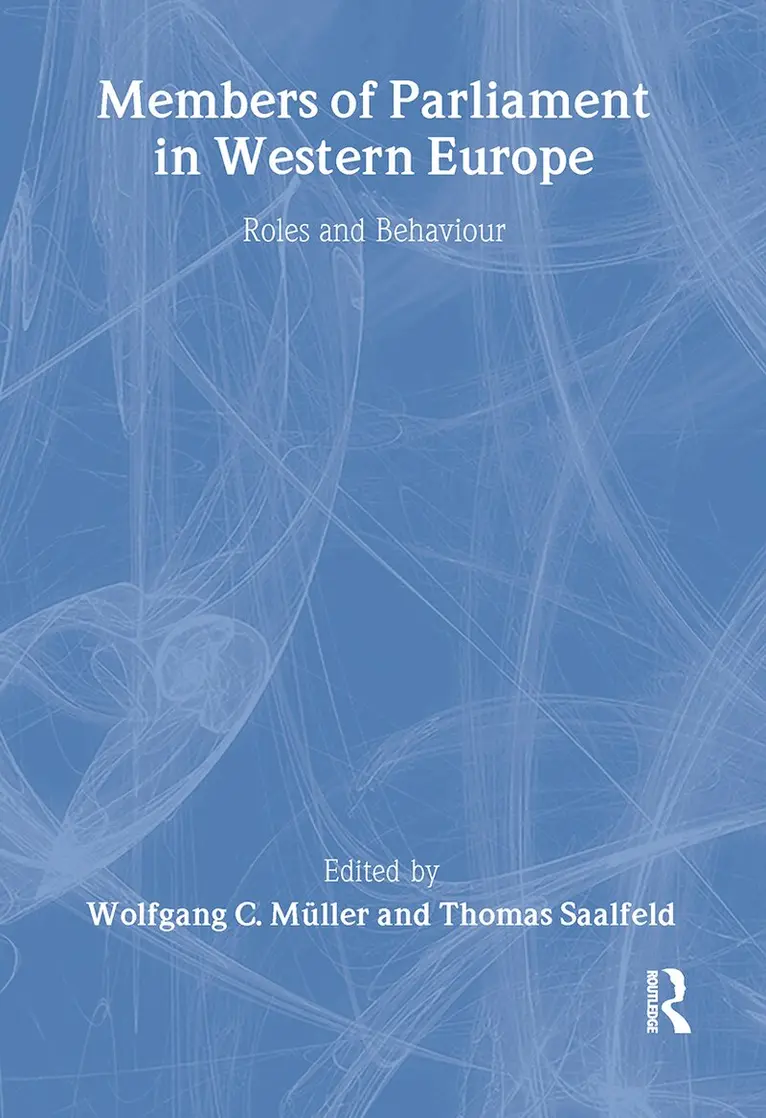
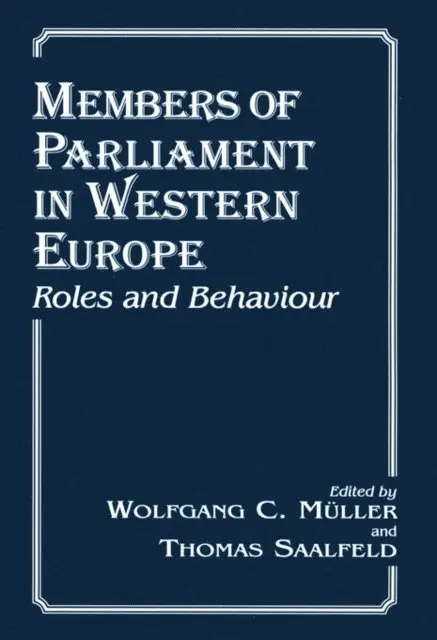
Traditional comparative studies of parliaments have focused on constitutional and organizational characteristics of parliaments, or differences in the historical contexts, in which legislative assemblies have developed. The motivations of individual Members of Parliament have been neglected.This volume provides empirical work on legislative role orientations and behaviour in six West European parliaments: Belgium, Denmark, Germany, the Netherlands, Norway and the United Kingdom. All contributions present a wealth of empirical findings on parliamentarians' role orientations in different institutional contexts.
646 kr
Skickas inom 7-10 vardagar
Traditional comparative studies of parliaments have focused on constitutional and organizational characteristics of parliaments, or differences in the historical contexts, in which legislative assemblies have developed. The motivations of individual Members of Parliament have been neglected.This volume provides empirical work on legislative role orientations and behaviour in six West European parliaments: Belgium, Denmark, Germany, the Netherlands, Norway and the United Kingdom. All contributions present a wealth of empirical findings on parliamentarians' role orientations in different institutional contexts.
1 073 kr
Skickas inom 10-15 vardagar
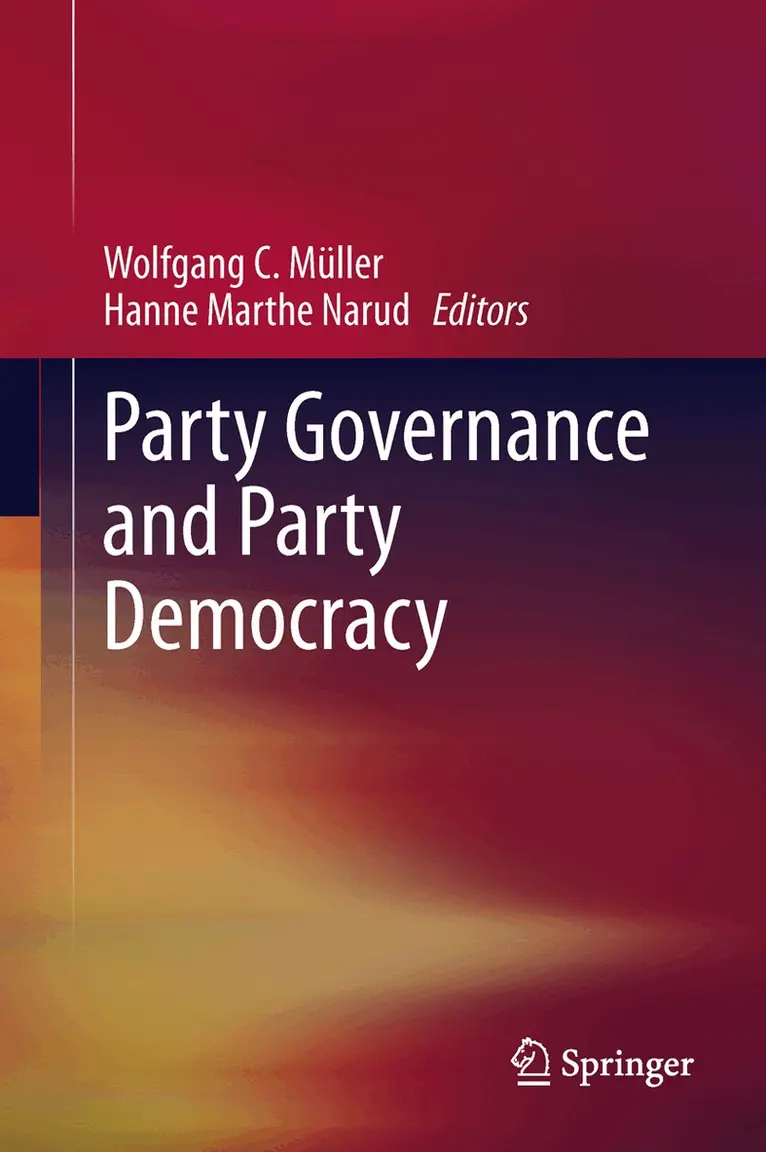
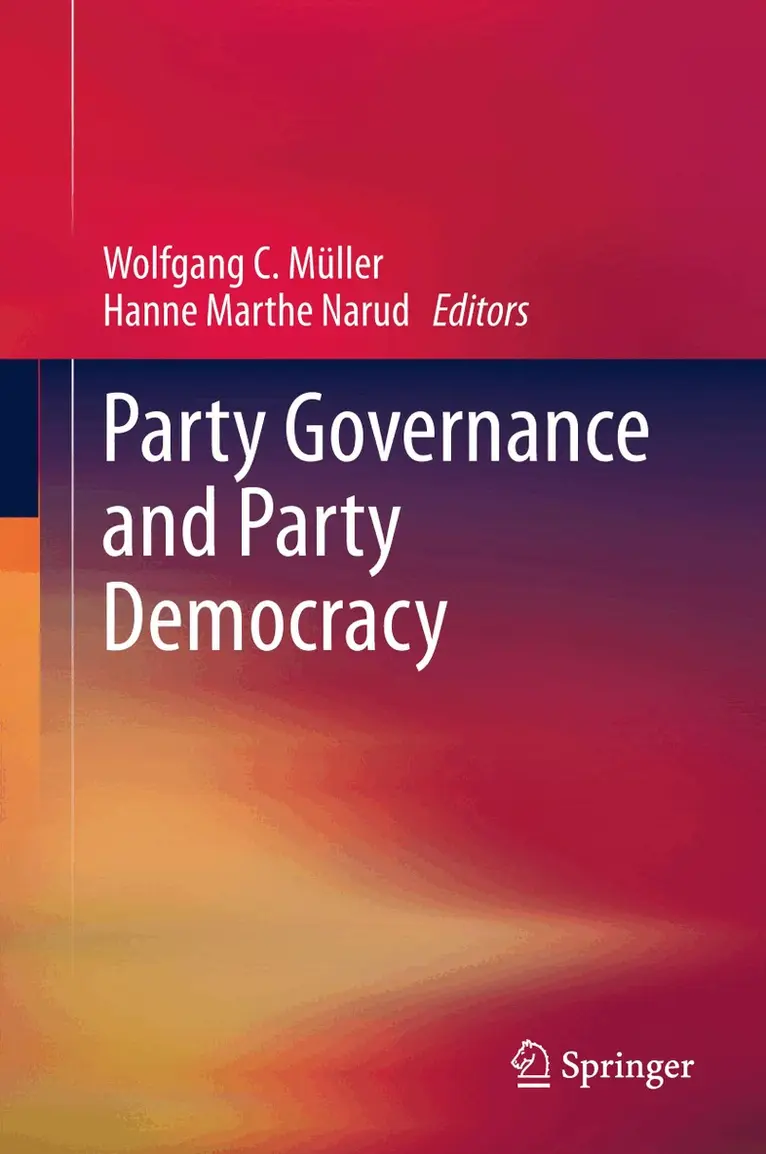
Given the centrality of political parties in modern democracies, most research on these systems either directly address their internal functioning and activities or question their critical role. Political science has moved from describing institutions to the thorough analysis of behavior within these institutions and the interactions between them. The inevitable consequences of the maturing and institutionalization of the discipline of political science in many countries include the forming of sub-fields and specialized research communities. At the same time the number of democracies has vastly increased since the 1980s and although not each attempt at democratization was eventually successful, more heterogeneous systems with some form of party competition exist than ever before. As a consequence, the literature addressing the large issues of party democracy spreads over many research fields and has become difficult to master for individual students of party democracy and party governance. The present volume sets out to review the behavior and larger role of political parties in modern democracies. In so doing the book takes its departure from the idea that the main contribution of political parties to the working of democracy is their role as vehicles of political competition in systems of government. Consequently the focus is not merely in the internal functioning of political parties, but rather their behavior the electoral, legislative, and governmental arenas. Thus several chapters address how political parties perform within the existing institutional frameworks. One more chapter looks at the role of political parties in building and adapting these institutions. Finally, two chapters explicitly address the party contributions to democracy in established and new democracies, respectively.
1 073 kr
Skickas inom 10-15 vardagar
Given the centrality of political parties in modern democracies, most research on these systems either directly address their internal functioning and activities or question their critical role. Political science has moved from describing institutions to the thorough analysis of behavior within these institutions and the interactions between them. The inevitable consequences of the maturing and institutionalization of the discipline of political science in many countries include the forming of sub-fields and specialized research communities. At the same time the number of democracies has vastly increased since the 1980s and although not each attempt at democratization was eventually successful, more heterogeneous systems with some form of party competition exist than ever before. As a consequence, the literature addressing the large issues of party democracy spreads over many research fields and has become difficult to master for individual students of party democracy and party governance. The present volume sets out to review the behavior and larger role of political parties in modern democracies. In so doing the book takes its departure from the idea that the main contribution of political parties to the working of democracy is their role as vehicles of political competition in systems of government. Consequently the focus is not merely in the internal functioning of political parties, but rather their behavior the electoral, legislative, and governmental arenas. Thus several chapters address how political parties perform within the existing institutional frameworks. One more chapter looks at the role of political parties in building and adapting these institutions. Finally, two chapters explicitly address the party contributions to democracy in established and new democracies, respectively.
352 kr
Skickas inom 3-6 vardagar