Kalevi Kull – författare
Visar alla böcker från författaren Kalevi Kull. Handla med fri frakt och snabb leverans.
9 produkter
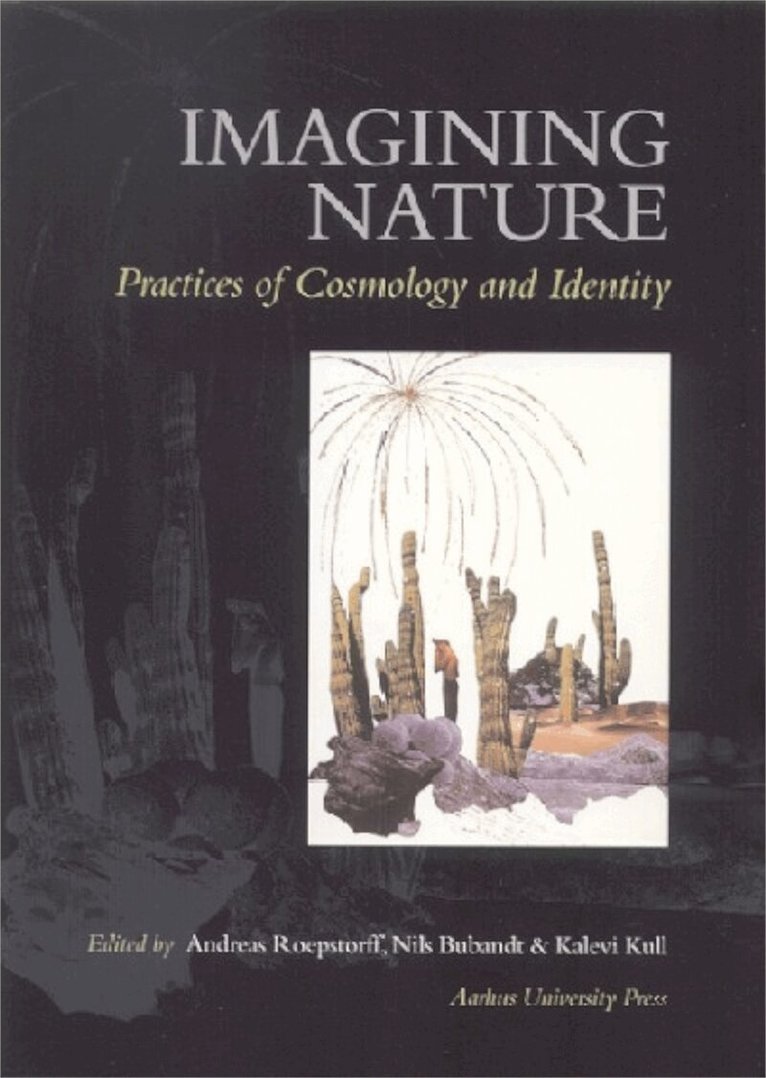
Imagining Nature
Practices of Cosmology & Identity
Av Kalevi Kull, Andreas Roepstorff
Häftad, 2004
399 kr
Lägg i varukorg
During the last decade, many social scientists have sought to show that nature is not an eternal constant but an intrinsically unstable concept - a historical, cultural and social construct with powerful emotional, moral and political connotations. Imagining Nature sets out to explore some of the …
Towards a Biosemiotic Theoretical Biology
Sign Processes and Meaning-Making in Living Systems
Av Kalevi Kull, Donald Favareau m. fl.
Häftad, 2026
1091 kr
Lägg i varukorg
An edited volume bringing together 25 of today’s most forward-thinking biologists and philosophers on sign processes and meaning-making in organisms.Theoretical biology is concerned with providing science with explanatory frameworks within which to fit its findings. Biosemiotics is the study of …
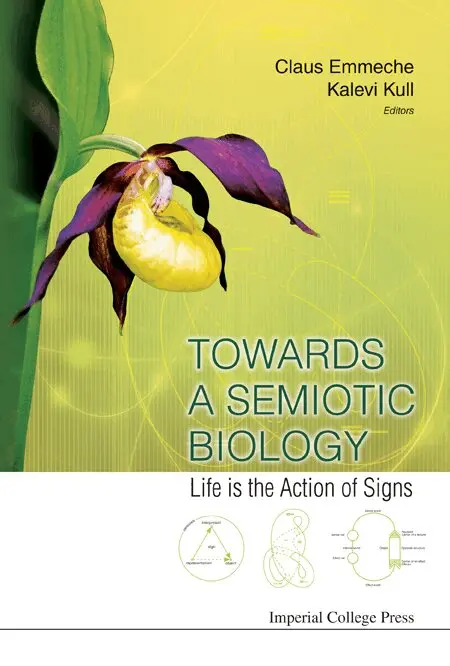
TOWARDS A SEMIOTIC BIOLOGY: LIFE IS THE ACTION OF SIGNS
Av Emmeche Claus, Claus Emmeche m. fl.
Inbunden, 2011
1612 kr
Lägg i varukorg
This book presents programmatic texts on biosemiotics, written collectively by world leading scholars in the field (Deacon, Emmeche, Favareau, Hoffmeyer, Kull, Markoš, Pattee, Stjernfelt). In addition, the book includes chapters which focus closely on semiotic case studies (Bruni, Kotov, Maran, …
Semiotics Continues to Astonish
Thomas A. Sebeok and the Doctrine of Signs
Av Paul Cobley, John Deely m. fl.
Inbunden, 2011
2566 kr
Lägg i varukorg
Peirce's (1906) proposal that the universe as a whole, even if it does not consist exclusively of signs, is yet everywhere perfused with signs, is a thesis that better than any other sums up the life and work of Thomas A. Sebeok, "inventor" of semiotics as we know it today.Semiotics - the doctrine …
Semiotics Continues to Astonish
Thomas A. Sebeok and the Doctrine of Signs
Av Susan Petrilli, Kalevi Kull m. fl.
E-bok, 2011
2517 kr
Lägg i varukorg
Peirce''s (1906) proposal that the universe as a whole, even if it does not consist exclusively of signs, is yet everywhere perfused with signs, is a thesis that better than any other sums up the life and work of Thomas A. Sebeok, "inventor" of semiotics as we know it today. Semiotics - the …
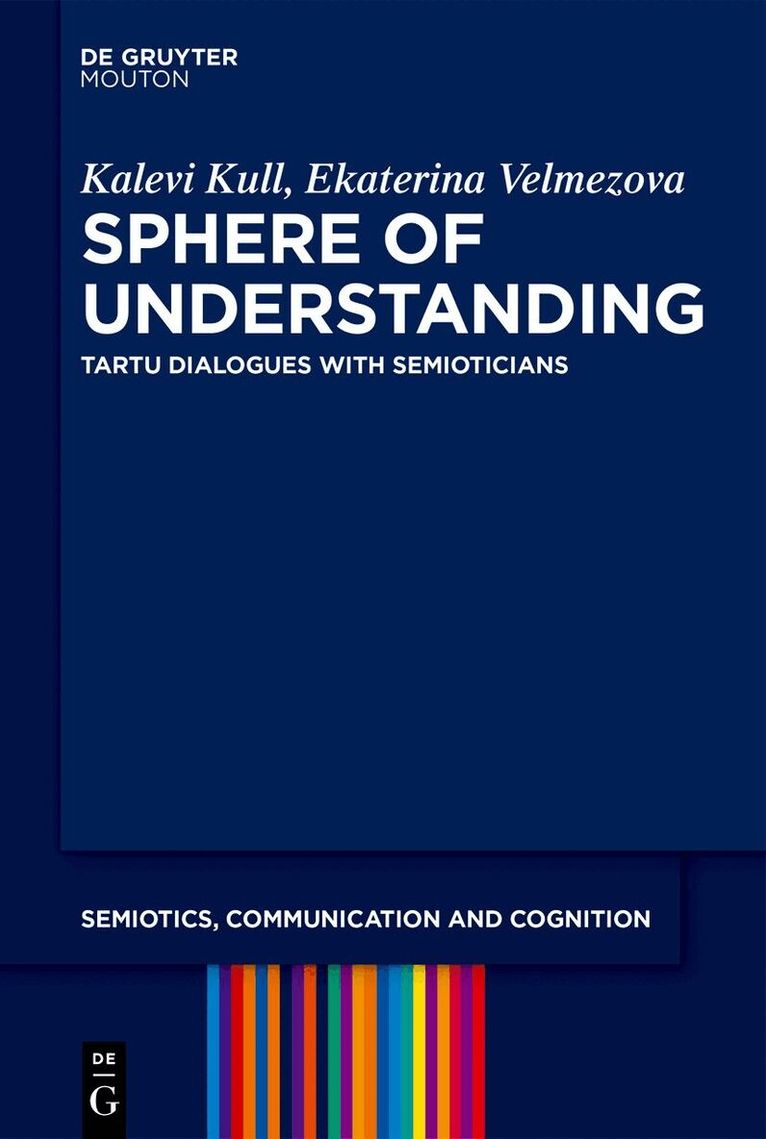
Sphere of Understanding
Tartu Dialogues with Semioticians
Av Kalevi Kull, Ekaterina Velmezova
Inbunden, 2025
1883 kr
Lägg i varukorg
The book presents dialogues with fourteen highly influential semioticians: Juri Lotman, Vyacheslav Ivanov, Boris Uspenskij, Umberto Eco, Paolo Fabbri, Myrdene Anderson, Winfried Nöth, Gunther Kress, Roland Posner, Stuart Kauffman, Jesper Hoffmeyer, Terrence Deacon, Paul Cobley, and Jaan Valsiner. …
Biosemiotic Perspectives on Language and Linguistics
Av Ekaterina Velmezova, Kalevi Kull m. fl.
Inbunden, 2015
1098 kr
Lägg i varukorg
The first international volume on the topic of biosemiotics and linguistics. It aims to establish a new relationship between linguistics and biology as based on shared semiotic foundation.
Biosemiotic Perspectives on Language and Linguistics
Av Stephen J. Cowley, Kalevi Kull m. fl.
E-bok, 2015
1459 kr
Lägg i varukorg
The first international volume on the topic of biosemiotics and linguistics. It aims to establish a new relationship between linguistics and biology as based on shared semiotic foundation.
Biosemiotic Perspectives on Language and Linguistics
Av Ekaterina Velmezova, Kalevi Kull m. fl.
Häftad, 2019
1101 kr
Lägg i varukorg
The first international volume on the topic of biosemiotics and linguistics. It aims to establish a new relationship between linguistics and biology as based on shared semiotic foundation.