Kamala Visweswaran - Böcker
Visar alla böcker från författaren Kamala Visweswaran. Handla med fri frakt och snabb leverans.
4 produkter
4 produkter
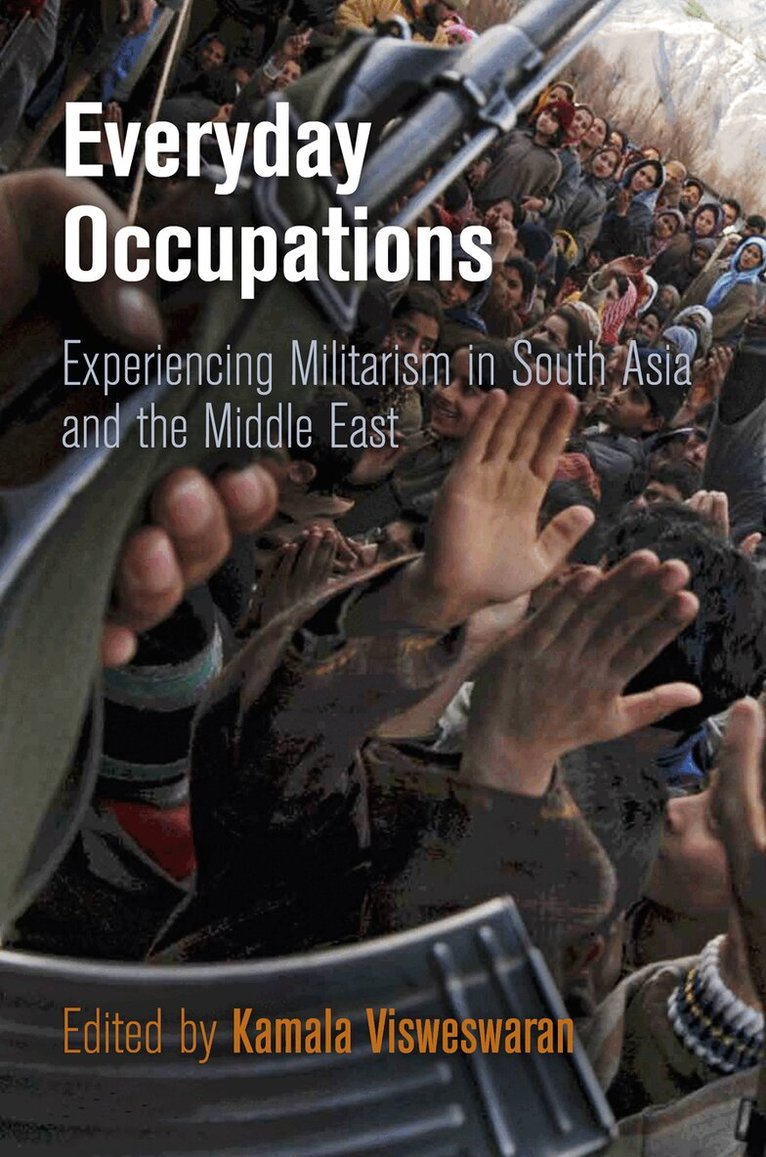
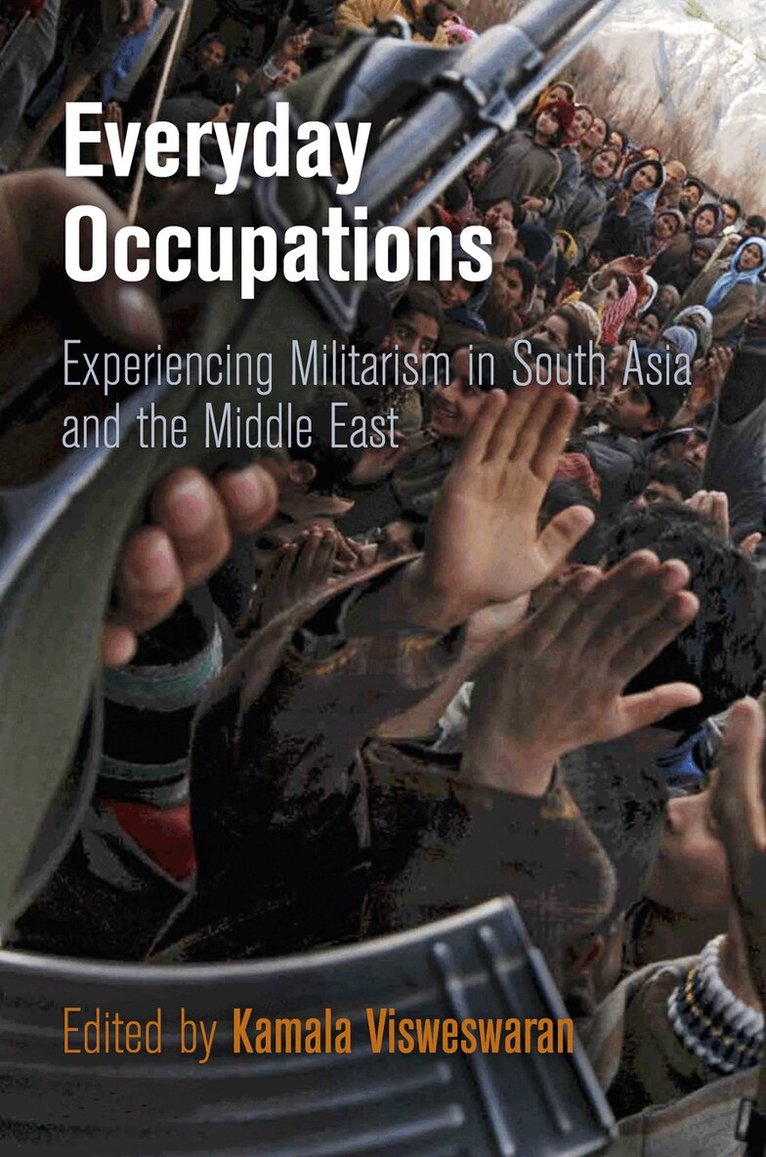
Everyday Occupations
Experiencing Militarism in South Asia and the Middle East
Inbunden, Engelska, 2013
909 kr
Skickas inom 10-15 vardagar
In the twenty-first century, political conflict and militarization have come to constitute a global social condition rather than a political exception. Military occupation increasingly informs the politics of both democracies and dictatorships, capitalist and formerly socialist regimes, raising questions about its relationship to sovereignty and the nation-state form. Israel and India are two of the world's most powerful postwar democracies yet have long-standing military occupations. Pakistan, Bangladesh, and Turkey have passed through periods of military dictatorship, but democracy has yielded little for their ethnic minorities who have been incorporated into the electoral process. Sri Lanka and Bangladesh (like India, Pakistan, and Turkey) have felt the imprint of socialism; declarations of peace after long periods of conflict in these countries have not improved the conditions of their minority or indigenous peoples but rather have resulted in "violent peace" and remilitarization. Indeed, the existence of standing troops and ongoing state violence against peoples struggling for self-determination in these regions suggests the expanding and everyday nature of military occupation. Such everydayness raises larger issues about the dominant place of the military in society and the social values surrounding militarism.Everyday Occupations examines militarization from the standpoints of both occupier and occupied. With attention to gender, poetics, satire, and popular culture, contributors who have lived and worked in occupied areas in the Middle East and South Asia explore what kinds of society are foreclosed or made possible by militarism. The outcome is a powerful contribution to the ethnography of political violence.Contributors: Nosheen Ali, Kabita Chakma, Richard Falk, Sandya Hewamanne, Mohamad Junaid, Rhoda Kanaaneh, Hisyar Ozsoy, Cheran Rudhramoorthy, Serap Ruken Sengul, Kamala Visweswaran.
256 kr
Skickas inom 7-10 vardagar
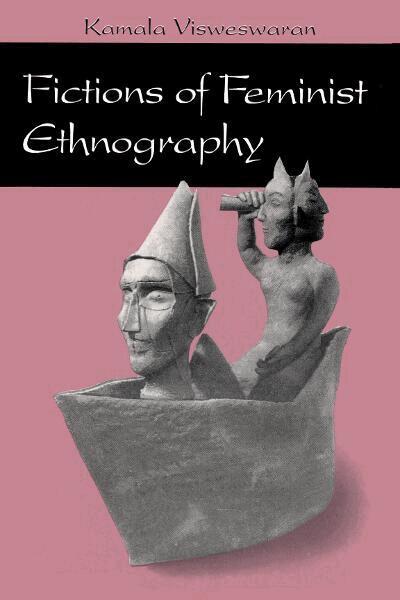
Although feminist ethnography is an emerging genre, the question of what the term means remains open. Recent texts that fall under this rubric rely on unexamined notions of "sisterhood" and the recovery of "lost" voices. Writing about her work with women in Southern India, Kamala Visweswaran addresses such troubled questions in the essays that make up Fictions of Feminist Ethnography. Blurring distinctions between ethnographic and literary genres, the author employs the narrative strategies of history, fiction, autobiography and biography, deconstruction, and postcolonial discourse to reveal the fictions of ethnography and the ethnography in fiction. In the process of reflecting on the nature of anthropology itself Visweswaran devises an experimental approach to writing feminist ethnography.What sets this work apart from other self-reflexive feminist ethnographies is its rigorous engagement with the concrete inequalities, refusals, and misunderstandings between the author and the women she worked with in India. In each essay, she takes up the specific ellipses of power differentials in her field research and works out their epistemological consequences. The result is a series of contextualizations of the politics of identity in the field, at "home," and within the lives of women who particpated in the Indian nationalist movement. We learn in lucid detail about the partiality of knowledge and the inevitable difficulties and violations involved in representing the lives of women, both inside and outside the United States. Clearly and forcefully written, this book should be of interest not only to anthropologists but also to cultural theorists and critics, feminist scholars and writers, and other social scientists who grapple with epistemological and political issues in their fields.
414 kr
Skickas inom 7-10 vardagar
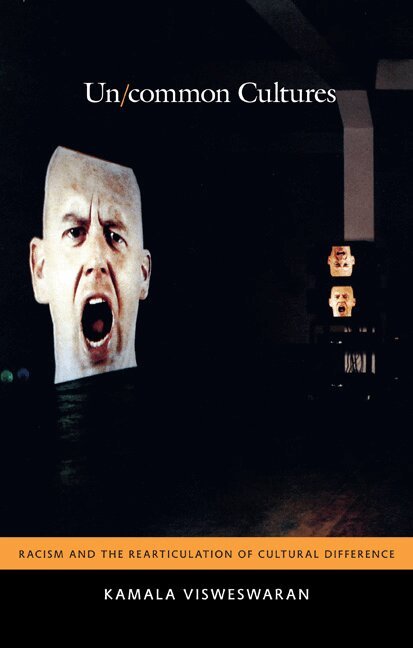
In Un/common Cultures, Kamala Visweswaran develops an incisive critique of the idea of culture at the heart of anthropology, describing how it lends itself to culturalist assumptions. She holds that the new culturalism-the idea that cultural differences are definitive, and thus divisive-produces a view of “uncommon cultures” defined by relations of conflict rather than forms of collaboration. The essays in Un/common Cultures straddle the line between an analysis of how racism works to form the idea of “uncommon cultures” and a reaffirmation of the possibilities of “common cultures,” those that enact new forms of solidarity in seeking common cause. Such “cultures in common” or “cultures of the common” also produce new intellectual formations that demand different analytic frames for understanding their emergence. By tracking the emergence and circulation of the culture concept in American anthropology and Indian and French sociology, Visweswaran offers an alternative to strictly disciplinary histories. She uses critical race theory to locate the intersection between ethnic/diaspora studies and area studies as a generative site for addressing the formation of culturalist discourses. In so doing, she interprets the work of social scientists and intellectuals such as Elsie Clews Parsons, Alice Fletcher, Franz Boas, Louis Dumont, Claude LÉvi-Strauss, Clifford Geertz, W. E. B. Du Bois, and B. R. Ambedkar.
Del 6 - Global Perspectives
Perspectives on Modern South Asia
A Reader in Culture, History, and Representation
Inbunden, Engelska, 2011
1 172 kr
Skickas inom 7-10 vardagar
Perspectives on Modern South Asia presents an exciting core collection of essays drawn from anthropology, literary and cultural studies, history, sociology, economics, and political science to reveal the complexities of a region that is home to a fifth of humanity. Presents an interdisciplinary overview of the origins and development of the eight nations comprising modern South Asia: Afghanistan, Bhutan, Bangladesh, India, the Maldives, Nepal, Pakistan, and Sri LankaExplores South Asia’s common cultures, languages and religions and their relationship to its ethnic and national differencesFeatures essays that provide understandings of the central dynamics of South Asia as an important cultural, political, and economic region of the world