Kameelah L. Martin - Böcker
Visar alla böcker från författaren Kameelah L. Martin. Handla med fri frakt och snabb leverans.
5 produkter
5 produkter
2 100 kr
Skickas inom 10-15 vardagar
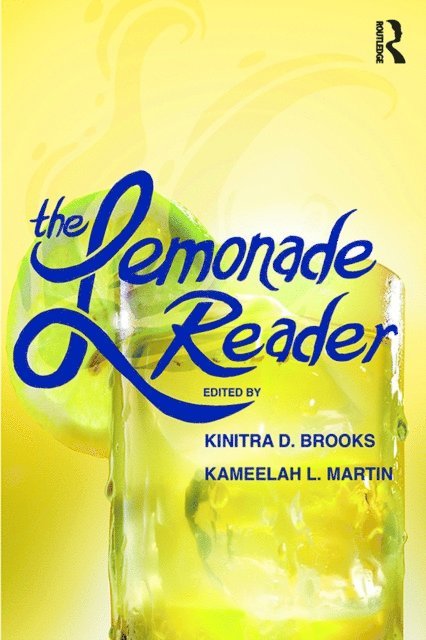
The Lemonade Reader is an interdisciplinary collection that explores the nuances of Beyoncé’s 2016 visual album, Lemonade. The essays and editorials present fresh, cutting-edge scholarship fueled by contemporary thoughts on film, material culture, religion, and black feminism.Envisioned as an educational tool to support and guide discussions of the visual album at postgraduate and undergraduate levels, The Lemonade Reader critiques Lemonade’s multiple Afrodiasporic influences, visual aesthetics, narrative arc of grief and healing, and ethnomusicological reach. The essays, written by both scholars and popular bloggers, reflects a broad yet uniquely specific black feminist investigation into constructions of race, gender, spirituality, and southern identity. The Lemonade Reader gathers a newer generation of black feminist scholars to engage in intellectual discourse and confront the emotional labor around the Lemonade phenomena. It is the premiere source for examining Lemonade, a text that will continue to have a lasting impact on black women’s studies and popular culture.
574 kr
Skickas inom 10-15 vardagar
The Lemonade Reader is an interdisciplinary collection that explores the nuances of Beyoncé’s 2016 visual album, Lemonade. The essays and editorials present fresh, cutting-edge scholarship fueled by contemporary thoughts on film, material culture, religion, and black feminism.Envisioned as an educational tool to support and guide discussions of the visual album at postgraduate and undergraduate levels, The Lemonade Reader critiques Lemonade’s multiple Afrodiasporic influences, visual aesthetics, narrative arc of grief and healing, and ethnomusicological reach. The essays, written by both scholars and popular bloggers, reflects a broad yet uniquely specific black feminist investigation into constructions of race, gender, spirituality, and southern identity. The Lemonade Reader gathers a newer generation of black feminist scholars to engage in intellectual discourse and confront the emotional labor around the Lemonade phenomena. It is the premiere source for examining Lemonade, a text that will continue to have a lasting impact on black women’s studies and popular culture.
272 kr
Skickas inom 7-10 vardagar
This collection of interviews with Julie Dash (b. 1952) offers an in-depth exploration of the life, career, and creative processes of one of the most groundbreaking filmmakers in American cinema. Dash, whose landmark film Daughters of the Dust (1991) became the first feature by an African American woman to receive a wide theatrical release in the United States, has continuously pushed the boundaries of cinematic representation, exploring African American history, culture, and identity through a distinctly poetic and visionary lens.Dash’s use of Black feminist narrative and her ability to supplant the status quo of Black women’s representation in cinema aligned with the evolution of Black women’s writing and visual arts that exploded in the eighties and early nineties. Starting with her debut film Illusions (1982) and touching upon other works such as Praise House (1991), the eighteen interviews collected in this volume weave together the stylistic integrity and unconventional model of storytelling that Dash thoughtfully midwives into existence. Julie Dash: Interviews will put students, scholars, and admirers of Dash’s oeuvre in close proximity to her creative thought process and influences as well as make accessible an archive of conversations in which she discusses the longevity of her career, intergenerational shifts, and the reception of her work across the globe.
1 231 kr
Skickas inom 7-10 vardagar
This collection of interviews with Julie Dash (b. 1952) offers an in-depth exploration of the life, career, and creative processes of one of the most groundbreaking filmmakers in American cinema. Dash, whose landmark film Daughters of the Dust (1991) became the first feature by an African American woman to receive a wide theatrical release in the United States, has continuously pushed the boundaries of cinematic representation, exploring African American history, culture, and identity through a distinctly poetic and visionary lens. Dash’s use of Black feminist narrative and her ability to supplant the status quo of Black women’s representation in cinema aligned with the evolution of Black women’s writing and visual arts that exploded in the eighties and early nineties. Starting with her debut film Illusions (1982) and touching upon other works such as Praise House (1991), the eighteen interviews collected in this volume weave together the stylistic integrity and unconventional model of storytelling that Dash thoughtfully midwives into existence. Julie Dash: Interviews will put students, scholars, and admirers of Dash’s oeuvre in close proximity to her creative thought process and influences as well as make accessible an archive of conversations in which she discusses the longevity of her career, intergenerational shifts, and the reception of her work across the globe.
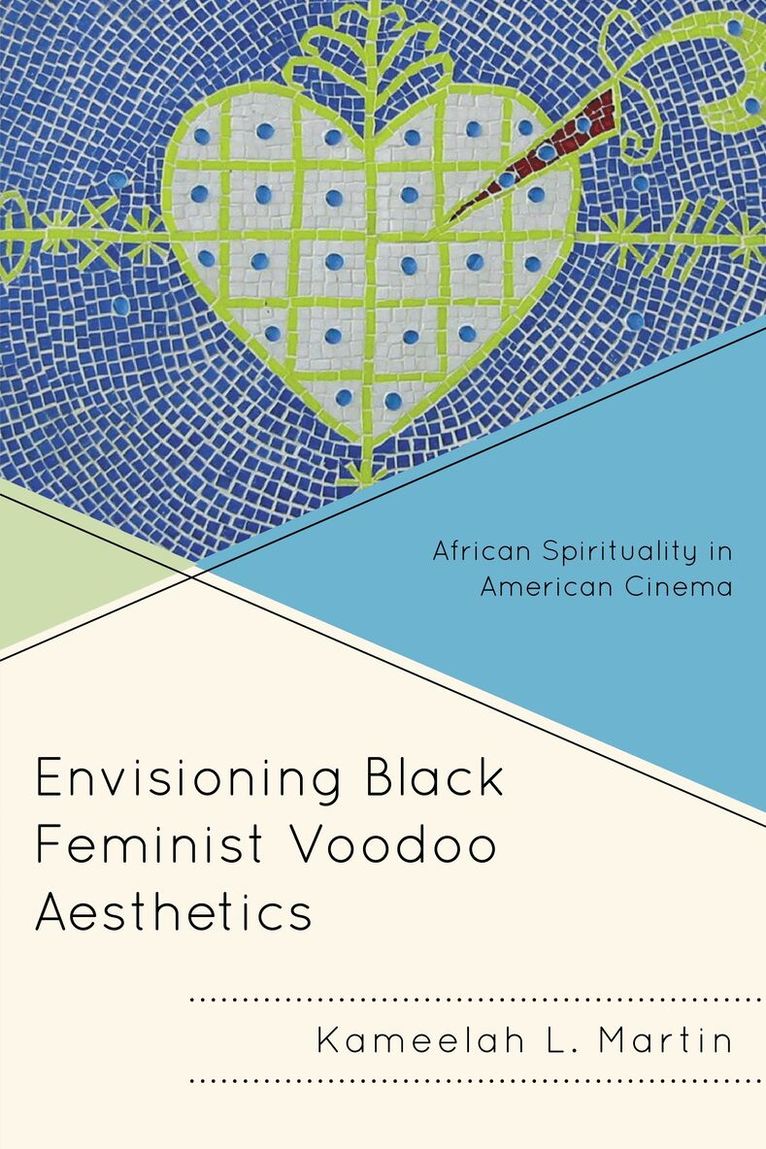
Envisioning Black Feminist Voodoo Aesthetics
African Spirituality in American Cinema
Häftad, Engelska, 2018
622 kr
Skickas inom 10-15 vardagar
In the twenty-first century, American popular culture increasingly makes visible the performance of African spirituality by black women. Disney’s Princess and the Frog and Pirates of the Caribbean franchise are two notable examples. The reliance on the black priestess of African-derived religion as an archetype, however, has a much longer history steeped in the colonial othering of Haitian Vodou and American imperialist fantasies about so-called ‘black magic’. Within this cinematic study, Martin unravels how religious autonomy impacts the identity, function, and perception of Africana women in the American popular imagination. Martin interrogates seventy-five years of American film representations of black women engaged in conjure, hoodoo, obeah, or Voodoo to discern what happens when race, gender, and African spirituality collide. She develops the framework of Voodoo aesthetics, or the inscription of African cosmologies on the black female body, as the theoretical lens through which to scrutinize black female religious performance in film. Martin places the genre of film in conversation with black feminist/womanist criticism, offering an interdisciplinary approach to film analysis. Positioning the black priestess as another iteration of Patricia Hill Collins’ notion of controlling images, Martin theorizes whether film functions as a safe space for a racial and gendered embodiment in the performance of African diasporic religion. Approaching the close reading of eight signature films from a black female spectatorship, Martin works chronologically to express the trajectory of the black priestess as cinematic motif over the last century of filmmaking. Conceptually, Martin recalibrates the scholarship on black women and representation by distinctly centering black women as ritual specialists and Black Atlantic spirituality on the silver screen.