Karen Grumberg - Böcker
Visar alla böcker från författaren Karen Grumberg. Handla med fri frakt och snabb leverans.
4 produkter
4 produkter
1 036 kr
Skickas inom 7-10 vardagar
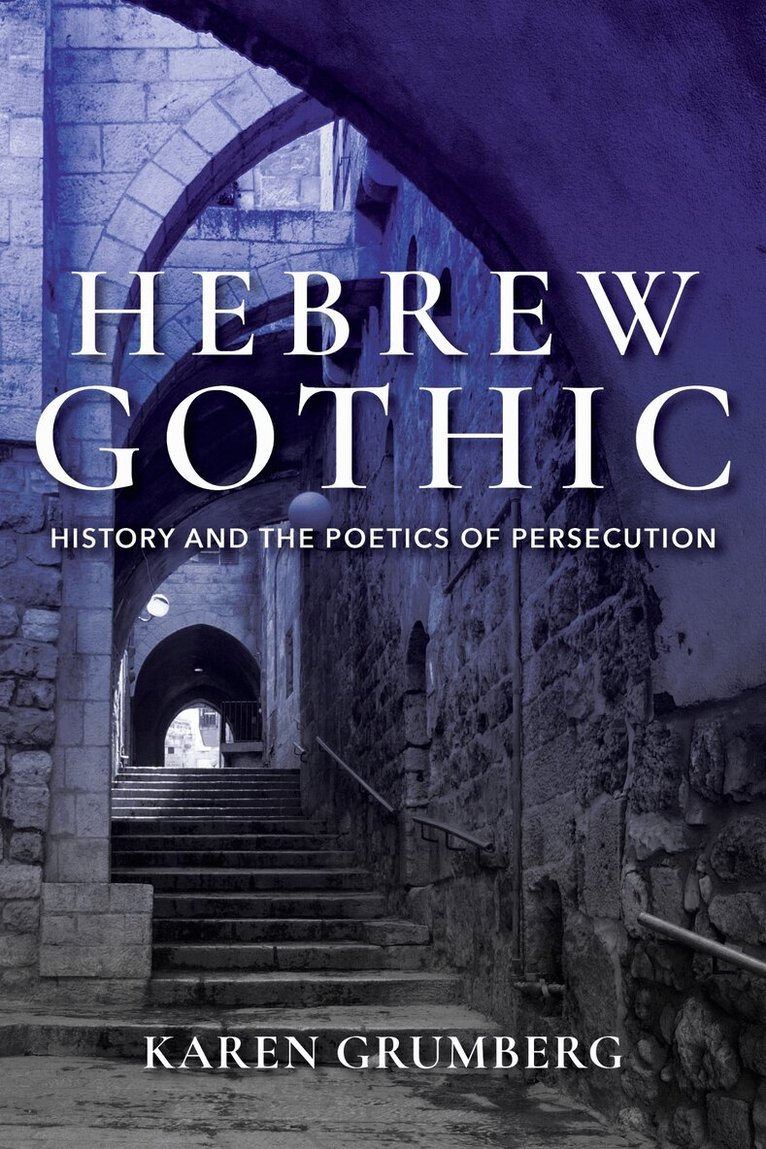
Sinister tales written since the early 20th century by the foremost Hebrew authors, including S. Y. Agnon, Leah Goldberg, and Amos Oz, reveal a darkness at the foundation of Hebrew culture. The ghosts of a murdered Talmud scholar and his kidnapped bride rise from their graves for a nocturnal dance of death; a girl hidden by a count in a secret chamber of an Eastern European castle emerges to find that, unbeknownst to her, World War II ended years earlier; a man recounts the act of incest that would shape a trajectory of personal and national history. Reading these works together with central British and American gothic texts, Karen Grumberg illustrates that modern Hebrew literature has regularly appropriated key gothic ideas to help conceptualize the Jewish relationship to the past and, more broadly, to time. She explores why these authors were drawn to the gothic, originally a European mode associated with antisemitism, and how they use it to challenge assumptions about power and powerlessness, vulnerability and violence, and to shape modern Hebrew culture. Grumberg provides an original perspective on Hebrew literary engagement with history and sheds new light on the tensions that continue to characterize contemporary Israeli cultural and political rhetoric.
409 kr
Skickas inom 7-10 vardagar
Sinister tales written since the early 20th century by the foremost Hebrew authors, including S. Y. Agnon, Leah Goldberg, and Amos Oz, reveal a darkness at the foundation of Hebrew culture. The ghosts of a murdered Talmud scholar and his kidnapped bride rise from their graves for a nocturnal dance of death; a girl hidden by a count in a secret chamber of an Eastern European castle emerges to find that, unbeknownst to her, World War II ended years earlier; a man recounts the act of incest that would shape a trajectory of personal and national history. Reading these works together with central British and American gothic texts, Karen Grumberg illustrates that modern Hebrew literature has regularly appropriated key gothic ideas to help conceptualize the Jewish relationship to the past and, more broadly, to time. She explores why these authors were drawn to the gothic, originally a European mode associated with antisemitism, and how they use it to challenge assumptions about power and powerlessness, vulnerability and violence, and to shape modern Hebrew culture. Grumberg provides an original perspective on Hebrew literary engagement with history and sheds new light on the tensions that continue to characterize contemporary Israeli cultural and political rhetoric.
492 kr
Skickas inom 7-10 vardagar
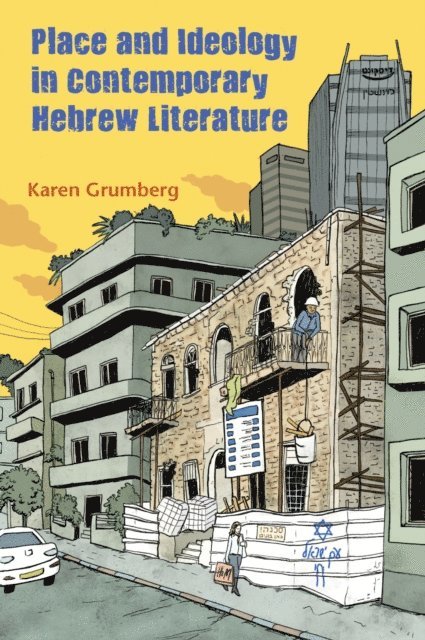
John Brinckerhoff Jackson has theorized the vernacular landscape as one that reflects a way of life guided by tradition and custom, distanced from the larger world of politics and law. The quotidian space is shaped by the everyday culture of its inhabitants. In Place and Ideology in Contemporary Hebrew Literature, Grumberg sets anchor in this and other contemporary theories of space and place, then embarks on subtle close readings of recent Israeli fiction that demonstrate how literature in practice can complicate those discourses. Literature in Israel over the past twenty-five years tends to be set in ordinary spaces rather than in explicitly, ideologically charged locations such as contested borders and debated territories. Rarely taking place in settings of war and political violence, it is replete with evocative descriptions of everyday places such as buses and cafés. Yet in academic discussions, the imaginative representations of these sites tend to be neglected in favor of spaces more relevant to religious and political debates. To fill this gap, Grumberg proposes a new understanding of how Israeli identity is mapped onto the spaces it inhabits, particularly the concrete sites encountered in the daily lives of ordinary citizens. She demonstrates that in the writing of many Israeli novelists even mundane places often have significant ideological implications. Exploring a wide range of authors, from Amos Oz to Orly Castel-Bloom, Grumberg argues that literary depictions of vernacular spaces play a profound and often unidentified role in serving or resisting ideology.
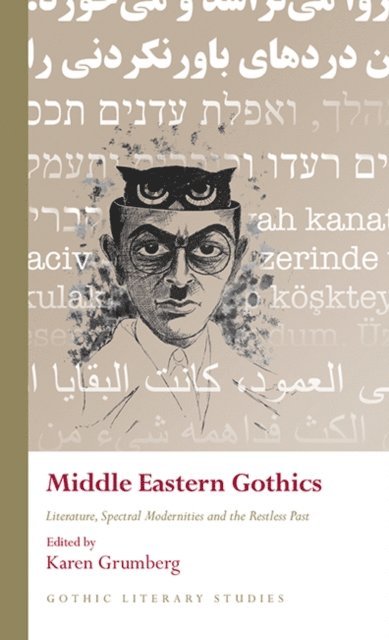
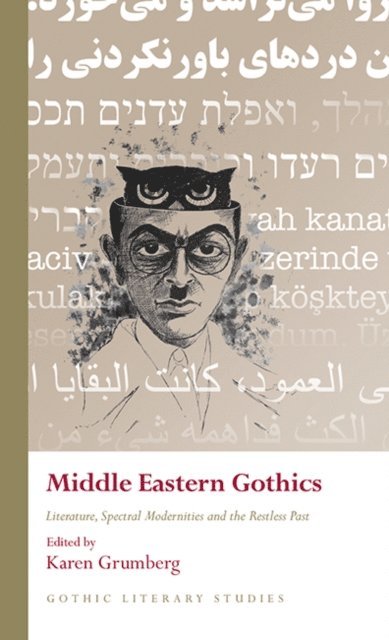
Middle Eastern Gothics
Literature, Spectral Modernities and the Restless Past
Inbunden, Engelska, 2022
1 019 kr
Skickas inom 5-8 vardagar
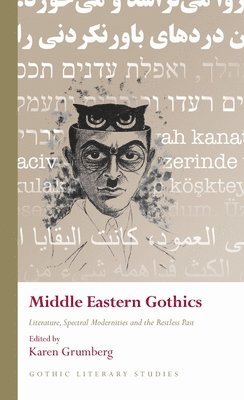
Middle Eastern Gothics is the first scholarly volume on Gothic literature from the Middle East and North Africa (MENA). Its nine chapters consider literary expressions of the Gothic in the major Middle Eastern languages – Arabic, Hebrew, Persian and Turkish. Spanning the Maghreb, the Arabian Peninsula, Iraq, Iran, Turkey, Egypt and Palestine, the book makes a case for the transnational region – a cohesive geographic space encompassing diverse cultures, languages and histories that parallel, intersect or overlap – as a crucial locus of Gothic Studies, alongside the nation, the globe or the hyper-local. Across the MENA region, the Gothic helps express ongoing literary negotiations with modernity, leaving its distinctive mark on representations of globalisation, colonialism and nationalism. At the same time, Middle Eastern literary texts expand the boundaries of the mode on their own terms, refracting broad histories through local and indigenous forms, figures and narratives that we might associate with the Gothic.