Karen Salt - Böcker
Visar alla böcker från författaren Karen Salt. Handla med fri frakt och snabb leverans.
2 produkter
2 produkter
180 kr
Skickas inom 5-8 vardagar
The newly pregnant woman faces a multitude of changes in her mind, life, and body, some of which are addressed by traditional medical care but many of which are not. In this holistic guide, the expectant mother will find warm and reassuring advice that will help her stay calm, focused, and energized during this exciting time and beyond.Rather than treat the arrival of a baby as strictly a one-moment-in-time medical event, author Karen Salt provides advice and wisdom to "treat" the whole woman-her emotions and her physical changes-and covers the entire year-long experience of pregnancy, childbirth, and the postpartum period. Salt's holistic approach unveils for mothers-to-be the backbone of the doula role-to provide support, information, advocacy, and facilitation to women during pregnancy, labour, and early motherhood-and teaches her the many ways to use the doula philosophy to nurture herself through the process. From meditation and relaxation exercises, to fitness and nutrition advice to tips for achieving "positive energy living," this comprehensive guide puts mothers in control of their pregnancy, their birthing experience, and their approach to this wonderful and life-altering time.
Del 13 - Liverpool Studies in International Slavery
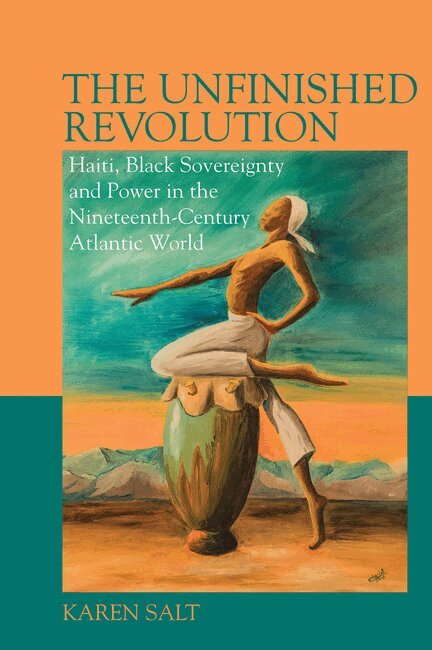
Unfinished Revolution
Haiti, Black Sovereignty and Power in the Nineteenth-Century Atlantic World
Inbunden, Engelska, 2019
719 kr
Skickas inom 7-10 vardagar
An Open Access edition of this book is available on the Liverpool University Press website and the OAPEN library.The Unfinished Revolution: Haiti, Black Sovereignty and Power in the Nineteenth-Century Atlantic World addresses post-revolutionary (and contemporary) sovereignty in Haiti. Working through an archive of black politics, The Unfinished Revolution examines the charged upheaval that Haiti’s arrival caused in the Atlantic world. Salt revisits this site of contestation in order to critically reflect on the ways that brokers from Haiti and across the Atlantic responded to the political existence of a nation forged from the fires of revolution and consistently racialized as black by other nation-states. These sovereign bodies—who Salt argues took their political cues regarding who can be sovereign from the Treaty of Westphalia (1648)—struggled to accept the existence of the independent nation-state of Haiti. Examining Haiti through the lens of blackness and sovereignty, Salt produces an original and compelling account of the challenges and constraints Haiti has encountered in fighting for its continued political existence. Assembling a wide range of materials—from photographs, newspaper articles, letters, diplomatic documents, essays and objects—Salt produces a cogent and nuanced book that moves beyond the revolutionary period of Haiti’s history in order to argue that Haiti remains in the midst of an unfinished revolution over its sovereignty.