Karina V. Korostelina - Böcker
Visar alla böcker från författaren Karina V. Korostelina. Handla med fri frakt och snabb leverans.
12 produkter
12 produkter
1 025 kr
Skickas inom 5-8 vardagar
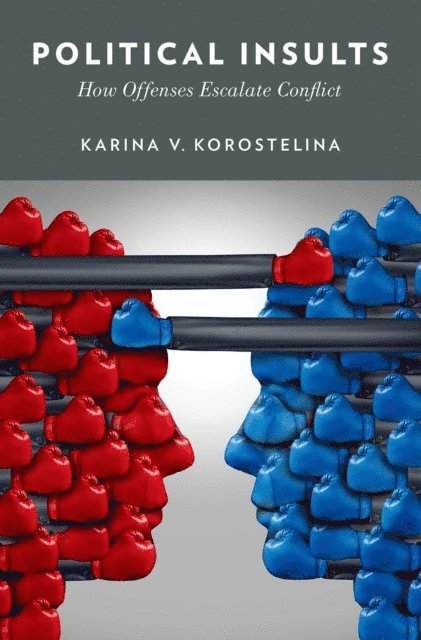
Five women entered the Cathedral of Christ the Saviour in Moscow and began a performance of a "Punk Prayer." Young people fried eggs on the eternal flame near the Tomb of the Unknown Soldier in Ukraine. A small island in the Japan Sea provoked a diplomatic spat between the leadership of Japan and South Korea. All of these incidents are examples of politically motivated insults that escalated into surprisingly significant clashes. While the field of conflict analysis has looked extensively at the dynamics of insults between individuals, it has largely ignored the more complicated dynamics of insult commited between groups, often of uneven political and social power. In this book, Karina V. Korostelina offers a novel framework for analyzing the ways in which seemingly minor insults between ethnic groups, nations, and other types of groups escalate to disproportionately violent behavior and political conflict. Insult can take many forms. Yet, as this book shows, it is always a social act mutually defined between groups, and it has the power to destablize and redefine social and power hierarchies. Korostelina identifies six different drivers of political insults, producing a theoretical model for analyzing intergroup insult and conflict. She uses her model to explore each of the incidents above, among other recent conflicts, to explicate the complicated dynamics that figure within them. The book concludes with practical suggestions for analyzing and resolving complex conflict situations.
335 kr
Skickas inom 10-15 vardagar
Professor Karina V. Korostelina presents insights into the "Trump effect" and explains how the support for Trump among the American general public is based on three complementary pillars. First, Trump champions a specific conception of American national identity that empowers his supporters. Second, Trump's leadership has, to an extent, been crafted from his ability to recognize where and with whom he can get the most return on his investment (e.g. his political comments) and address the perceived general malaise in the U.S. Trump also mirrors the emotions of a disenfranchised American public, and inspires the use of frustration based anger and insults to achieve desired aims. He addresses the public’s intolerance of uncertainty and ambivalence by providing simpler solutions to complex national problems and by blurring the boundary betweent he leading political parties. Further, Trump employs existing political polarization and has established a new kind of morality. Third, Trump challenges the existing political balance of power within the U.S. and globally.The overarching goal of this book is to show how the popularity of Trump has revealed substantial problems in the social, political, and economic fabric of American life. Aimed at the general public and students in the U.S. and internationally, the book goes beyond many explanations of the "Trump Effect". Using a multidisciplinary theoretical lens, it provides a systemic multifaceted analysis based on multiple theories of social identity, emotions, cognitions, morality, and power to explain the broader social phenomena of the rise of individuals in society.
786 kr
Skickas inom 10-15 vardagar
Identity, Morality, and Threat offers a critical examination of the social psychological processes that generate outgroup devaluation and ingroup glorification as the source of conflict. Dr. Daniel Rothbart and Dr. Karina Korostelina bring together essays analyzing the causal relationship between escalating violence and opposing images of the Self and Other. The essays confront the practice of demonizing the Other as a justification for violent conflict and the conditions that enable these distorted images to shape future decisions. The authors provide insight into the possibilities for transforming threat-narratives into collaboration-narratives, and for changing past opposition into mutual understanding. Identity, Morality, and Threat is a strong contribution to the study of identity-based conflict and psychological defenses.
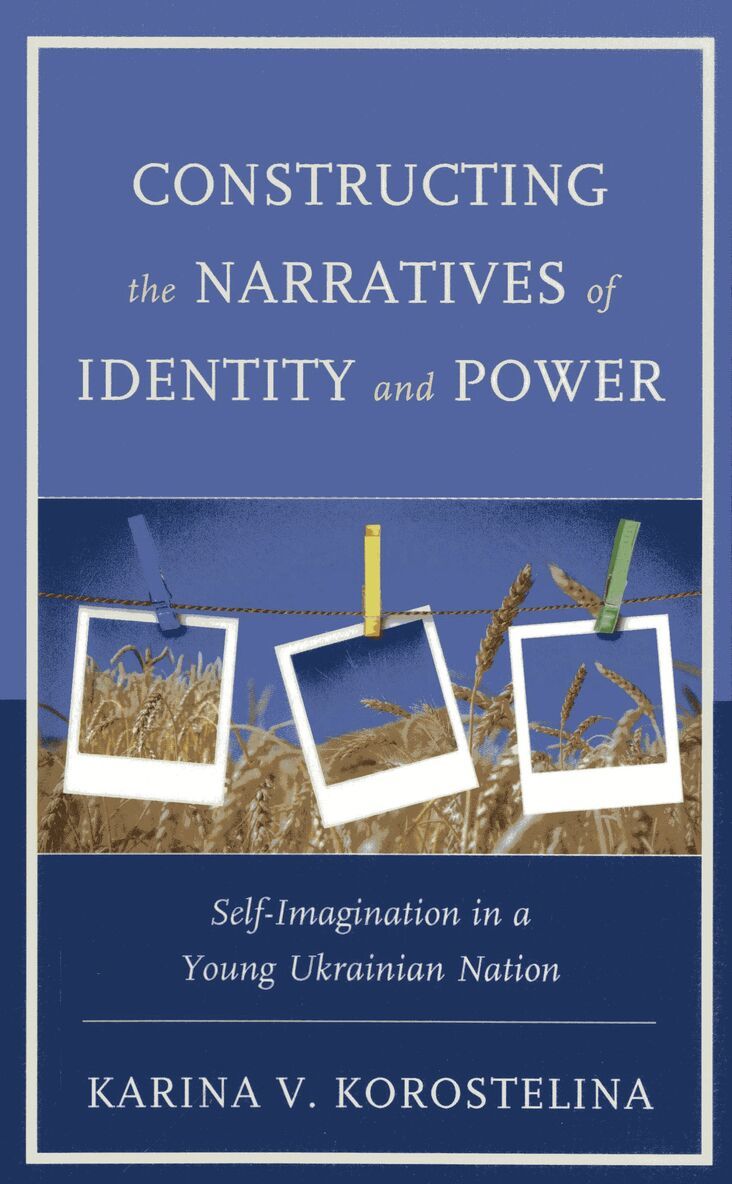
Constructing the Narratives of Identity and Power
Self-Imagination in a Young Ukrainian Nation
Inbunden, Engelska, 2013
1 520 kr
Skickas inom 10-15 vardagar
Twenty years ago Ukraine gained its independence and started on a path towards a free market economy and democratic governance. After four successive presidents and the Orange Revolution, the question of exactly which national model Ukraine should embrace remains an open question. Constructing the Narratives of Identity and Power provides a comprehensive outlook on Ukraine as it is presented through the views of intellectual and political elites. Based on extensive field work in Ukraine, Karina V. Korostelina describes the complex process of nation building. Despite the prevailing belief in a divide between two parts of Ukraine and an overwhelming variety of incompatible visions, Korostelina reveals seven prevailing conceptual models of Ukraine and five dominant narratives of national identity. Constructing the Narratives of Identity and Power analyzes the practice of national self-imagination. Karina V. Korostelina puts forward a structural-functional model of national narratives that describes three major components, dualistic order, mythic narratives, and normative order, and two main functions of national narratives, the development of the meaning of national identity and the legitimization of power. Korostelina describes the differences and conflicting elements of the national narratives that constitute the contested arena of nation-building in Ukraine.
2 100 kr
Skickas inom 10-15 vardagar
This book explores the resilience in urban neighborhoods affected by chronic conflict and violence, developing a new model for improving resilience policies.The neighborhood resilience approach is an inclusive form of building positive resilience, which recognizes that local communities possess valuable skills and experience of dealing with crises, and prioritizes the agency of local communities in the production of knowledge and developing practices. The book identifies and describes the repertoire of neighborhood resilience practices organized in four clusters: (1) addressing the structure of conflict; (2) increasing the effectiveness of external resources; (3) enhancing the community capacities; and (4) reflecting the dynamics of identity and power in neighborhoods. One of the key findings of the book is the nonlinear connections between structure and dynamics of conflict and neighborhood resilience practices represented in the Four Loops Model. The concentration on community-based practices addresses macro-level critiques of neo-liberalism in critical resilience studies and encourages rethinking the ways community-based indicators might operate in combination with existing macro indicators of resilience. The bottom-up indicators provide more specific details and essential localized experiences for improving resilience policies at the national level.This book will be of much interest to students of conflict resolution, resilience, urban studies, and US politics.
614 kr
Skickas inom 10-15 vardagar
This book explores the resilience in urban neighborhoods affected by chronic conflict and violence, developing a new model for improving resilience policies.The neighborhood resilience approach is an inclusive form of building positive resilience, which recognizes that local communities possess valuable skills and experience of dealing with crises, and prioritizes the agency of local communities in the production of knowledge and developing practices. The book identifies and describes the repertoire of neighborhood resilience practices organized in four clusters: (1) addressing the structure of conflict; (2) increasing the effectiveness of external resources; (3) enhancing the community capacities; and (4) reflecting the dynamics of identity and power in neighborhoods. One of the key findings of the book is the nonlinear connections between structure and dynamics of conflict and neighborhood resilience practices represented in the Four Loops Model. The concentration on community-based practices addresses macro-level critiques of neo-liberalism in critical resilience studies and encourages rethinking the ways community-based indicators might operate in combination with existing macro indicators of resilience. The bottom-up indicators provide more specific details and essential localized experiences for improving resilience policies at the national level.This book will be of much interest to students of conflict resolution, resilience, urban studies, and US politics.
2 100 kr
Skickas inom 10-15 vardagar
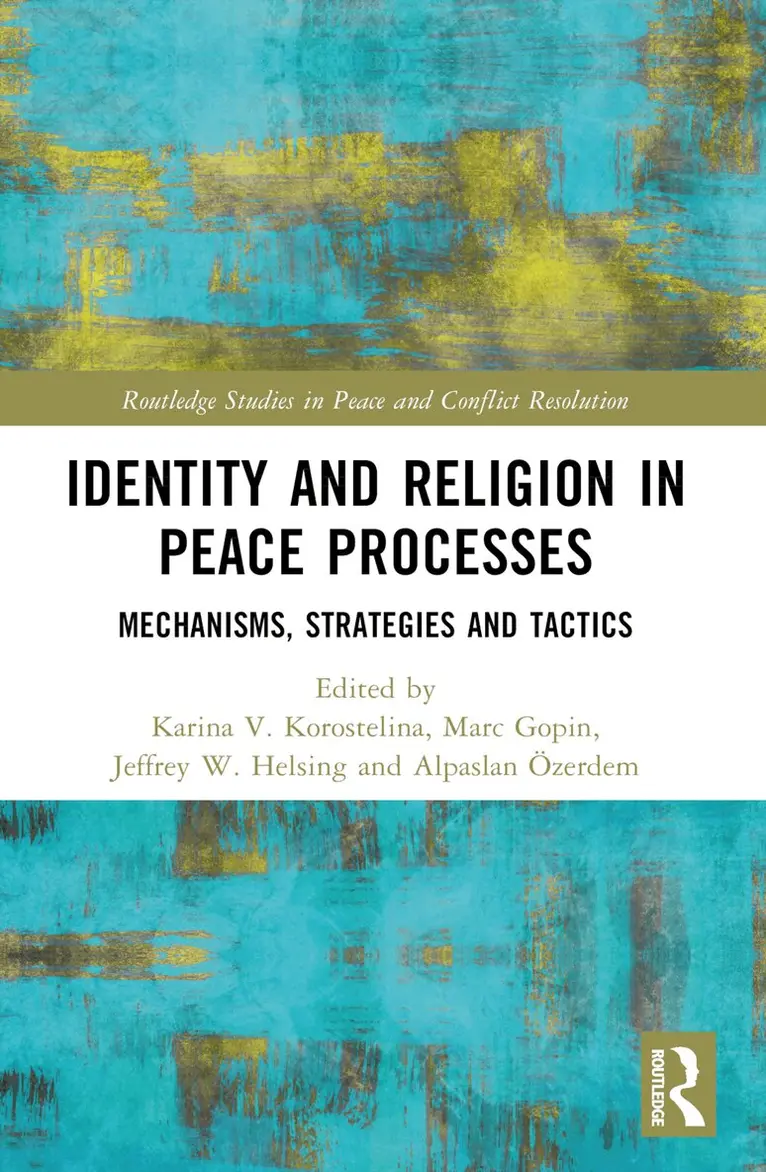
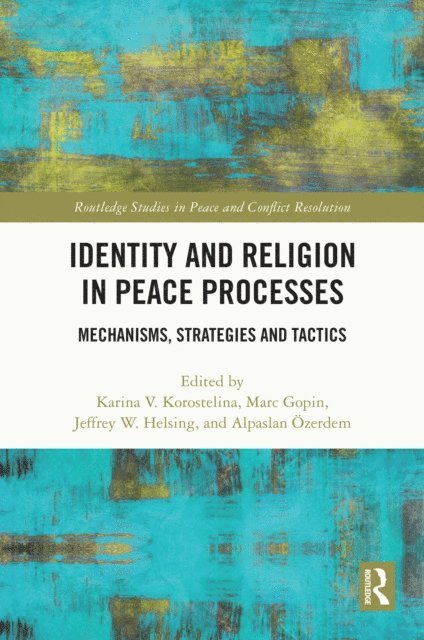
This book examines the complex role identity and religion play in global peace processes.Based on multiple case studies, this book unveils the complex role identity and religion play in peace processes across the globe. It demonstrates that the success and sustainability of a peace process depends on the systemic application of the BRIDGE model that is introduced here. This model describes five major strategies (Bonding, Reassuring, Involving, Determining Guides, and Equalizing) and numerous tactics for how peace processes and accords can deal with the central issues as well as important common challenges that run through identity-based ethnonational or religious conflicts. This represents the first comprehensive account of how the transition from enemies to neighbors is achieved and how intergroup relations and engagement are transformed in peace processes, impacting power, access to resources, legitimacy, and representation in national identity. The model also discusses what forms of peacebuilding authentically represent the interests, needs, and values of religious constituencies, and what can be learned from how religious constituencies escalate and de-escalate conflict. The book demonstrates why religion must also be included in peace processes and permanent solutions, owing to religion’s capacity to enhance commitment to bonding and peaceful values, such as justice, compassion, nonviolence, stability, care for children, and care for the environment, for the sick, the wounded, the traumatized, and the bereaved.This book will be of much interest to students of peace studies, intra-state conflict, religion studies, and International Relations.
628 kr
Skickas inom 10-15 vardagar
This book examines the complex role identity and religion play in global peace processes.Based on multiple case studies, this book unveils the complex role identity and religion play in peace processes across the globe. It demonstrates that the success and sustainability of a peace process depends on the systemic application of the BRIDGE model that is introduced here. This model describes five major strategies (Bonding, Reassuring, Involving, Determining Guides, and Equalizing) and numerous tactics for how peace processes and accords can deal with the central issues as well as important common challenges that run through identity-based ethnonational or religious conflicts. This represents the first comprehensive account of how the transition from enemies to neighbors is achieved and how intergroup relations and engagement are transformed in peace processes, impacting power, access to resources, legitimacy, and representation in national identity. The model also discusses what forms of peacebuilding authentically represent the interests, needs, and values of religious constituencies, and what can be learned from how religious constituencies escalate and de-escalate conflict. The book demonstrates why religion must also be included in peace processes and permanent solutions, owing to religion’s capacity to enhance commitment to bonding and peaceful values, such as justice, compassion, nonviolence, stability, care for children, and care for the environment, for the sick, the wounded, the traumatized, and the bereaved.This book will be of much interest to students of peace studies, intra-state conflict, religion studies, and International Relations.
1 965 kr
Skickas inom 10-15 vardagar
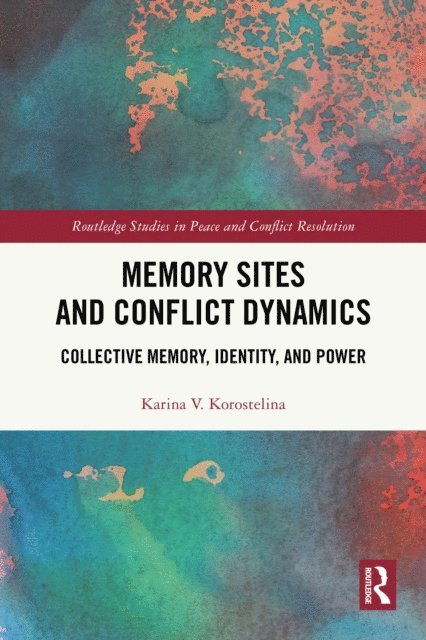
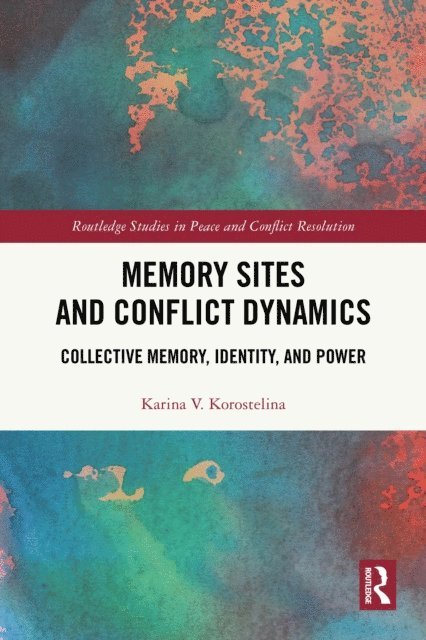
This book explores the ways in which memory sites contribute to the dynamics of identity-based conflicts, fueling fears and sharpening divisions, or promoting commonalities and reducing violence.Through an analysis of the dynamics of identity-based conflicts, the book shows how memory sites become intertwined with the transformations of social boundaries and perceptions of relative deprivation, outgroup threat, collective axiology, and power relations. It posits that these two sets of factors – the functioning of collective memory as an ideological construct and the transformation of conflictual social relations – define the role and influence of memory sites in the dynamics of identity-based conflicts. Through multiple case studies representing different dynamics – dealing with fascist and communist pasts in Italy, post-colonial relations between South Korea and Japan, ethnic conflict in Kosovo, and tribal acknowledgment for Native American Nations – the book discusses how memory sites contribute to competition over ownership, fights for legitimacy, claims of entitlements, and negative portrayals of the Other. In doing so, it outlines four major functions of memory sites – enhancing, ascribing, interacting, and legitimizing – and shows how they contribute to and shape the structure and dynamics of conflict. Concentrating on the linkages between memory sites, violence prevention, and reconciliation, the book proposes solutions for promoting peace, including the focus on plurality of heritage, recognition of fluidity of meanings, and resistance to singular interpretations and manipulations by identity entrepreneurs. This volume will be of much interest to students of peace and conflict studies, memory studies, and International Relations in general.
675 kr
Kommande
This book explores the ways in which memory sites contribute to the dynamics of identity-based conflicts, fueling fears and sharpening divisions, or promoting commonalities and reducing violence.Through an analysis of the dynamics of identity-based conflicts, the book shows how memory sites become intertwined with the transformations of social boundaries and perceptions of relative deprivation, outgroup threat, collective axiology, and power relations. It posits that these two sets of factors – the functioning of collective memory as an ideological construct and the transformation of conflictual social relations – define the role and influence of memory sites in the dynamics of identity-based conflicts. Through multiple case studies representing different dynamics – dealing with fascist and communist pasts in Italy, post-colonial relations between South Korea and Japan, ethnic conflict in Kosovo, and tribal acknowledgment for Native American Nations – the book discusses how memory sites contribute to competition over ownership, fights for legitimacy, claims of entitlements, and negative portrayals of the Other. In doing so, it outlines four major functions of memory sites – enhancing, ascribing, interacting, and legitimizing – and shows how they contribute to and shape the structure and dynamics of conflict. Concentrating on the linkages between memory sites, violence prevention, and reconciliation, the book proposes solutions for promoting peace, including the focus on plurality of heritage, recognition of fluidity of meanings, and resistance to singular interpretations and manipulations by identity entrepreneurs. This volume will be of much interest to students of peace and conflict studies, memory studies, and International Relations in general.
794 kr
Skickas inom 10-15 vardagar
Professor Karina V. Korostelina presents insights into the "Trump effect" and explains how the support for Trump among the American general public is based on three complementary pillars. First, Trump champions a specific conception of American national identity that empowers his supporters. Second, Trump's leadership has, to an extent, been crafted from his ability to recognize where and with whom he can get the most return on his investment (e.g. his political comments) and address the perceived general malaise in the U.S. Trump also mirrors the emotions of a disenfranchised American public, and inspires the use of frustration based anger and insults to achieve desired aims. He addresses the public’s intolerance of uncertainty and ambivalence by providing simpler solutions to complex national problems and by blurring the boundary betweent he leading political parties. Further, Trump employs existing political polarization and has established a new kind of morality. Third, Trump challenges the existing political balance of power within the U.S. and globally.The overarching goal of this book is to show how the popularity of Trump has revealed substantial problems in the social, political, and economic fabric of American life. Aimed at the general public and students in the U.S. and internationally, the book goes beyond many explanations of the "Trump Effect". Using a multidisciplinary theoretical lens, it provides a systemic multifaceted analysis based on multiple theories of social identity, emotions, cognitions, morality, and power to explain the broader social phenomena of the rise of individuals in society.
Constructing the Narratives of Identity and Power
Self-Imagination in a Young Ukrainian Nation
Häftad, Engelska, 2017
695 kr
Skickas inom 10-15 vardagar
Twenty years ago Ukraine gained its independence and started on a path towards a free market economy and democratic governance. After four successive presidents and the Orange Revolution, the question of exactly which national model Ukraine should embrace remains an open question. Constructing the Narratives of Identity and Power provides a comprehensive outlook on Ukraine as it is presented through the views of intellectual and political elites. Based on extensive field work in Ukraine, Karina V. Korostelina describes the complex process of nation building. Despite the prevailing belief in a divide between two parts of Ukraine and an overwhelming variety of incompatible visions, Korostelina reveals seven prevailing conceptual models of Ukraine and five dominant narratives of national identity. Constructing the Narratives of Identity and Power analyzes the practice of national self-imagination. Karina V. Korostelina puts forward a structural-functional model of national narratives that describes three major components, dualistic order, mythic narratives, and normative order, and two main functions of national narratives, the development of the meaning of national identity and the legitimization of power. Korostelina describes the differences and conflicting elements of the national narratives that constitute the contested arena of nation-building in Ukraine.