Karl Offen - Böcker
Visar alla böcker från författaren Karl Offen. Handla med fri frakt och snabb leverans.
2 produkter
2 produkter
797 kr
Skickas inom 3-6 vardagar
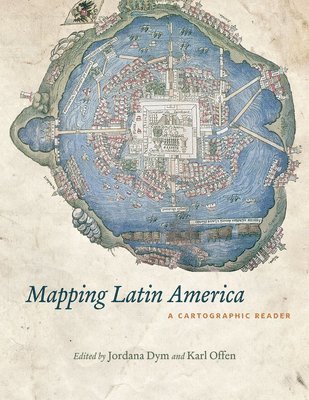
For many, a map is nothing more than a tool used to determine the location or distribution of something - a country, a city, or a natural resource. But maps reveal much more: to really read a map means to examine what it shows and what it doesn't, and to ask who made it, why, and for whom. The contributors to this new volume ask these sorts of questions about maps of Latin America, and in doing so they illuminate the ways cartography has helped to shape this region from the Rio Grande to Patagonia. In "Mapping Latin America", Jordana Dym and Karl Offen bring together scholars from a wide range of disciplines to examine and interpret more than five centuries of Latin American maps. Individual chapters take on maps of every size and scale and from a wide variety of mapmakers - from the hand-drawn maps of Native Americans, to those by famed explorers such as Alexander von Humboldt, to those produced in today's newspapers and magazines for the general public.The maps collected here, and the interpretations that accompany them, provide an excellent resource to help readers better understand how Latin American countries, regions, provinces, and municipalities came to be defined, measured, organized, occupied, settled, disputed, and understood - that is, how they came to have specific meanings to specific people at specific moments in time. The first book to deal with the broad sweep of mapping activities across modern Latin America, this lavishly illustrated volume will be required reading for students and scholars of geography and Latin American history and anyone interested in understanding the significance of maps in human cultures and societies.
Awakening Coast
An Anthology of Moravian Writings from Mosquitia and Eastern Nicaragua, 1849-1899
Inbunden, Engelska, 2014
792 kr
Skickas inom 7-10 vardagar
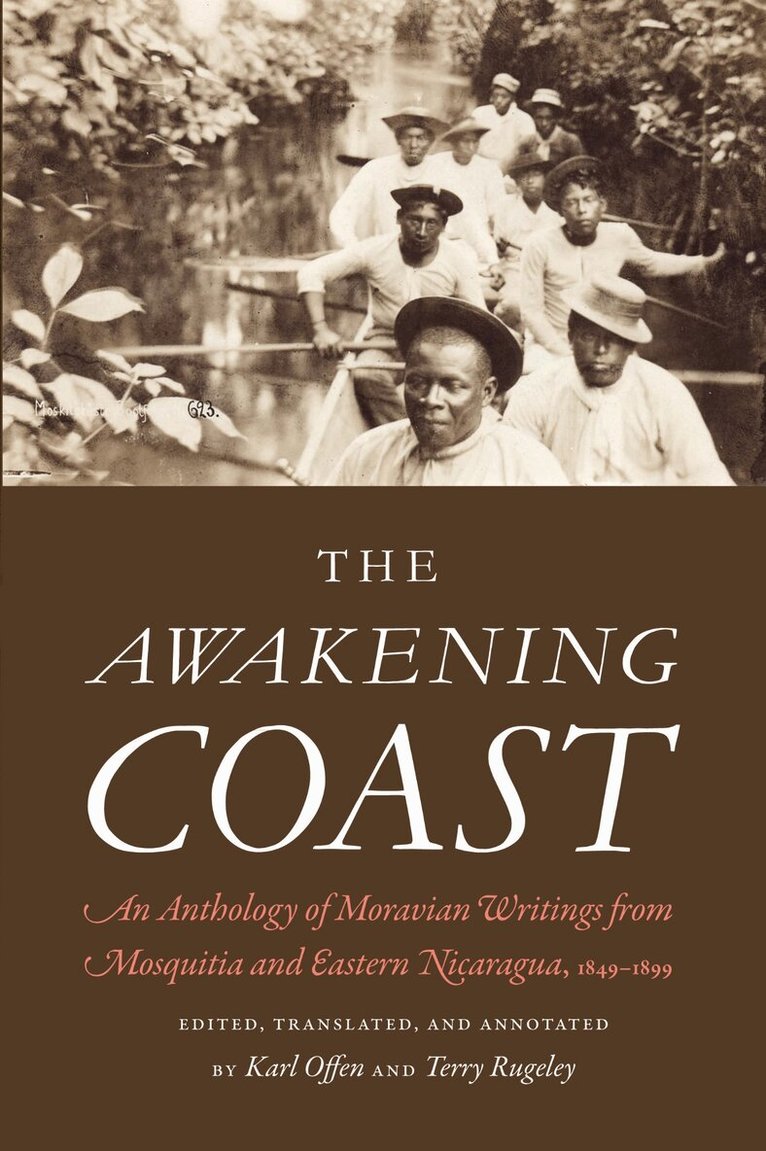
The indigenous and Creole inhabitants (Mosquitians of African descent) of the Mosquito Reserve in present-day Nicaragua underwent a key transformation when two Moravian missionaries arrived in 1849. Within a few short generations, the new faith became so firmly established there that eastern Nicaragua to this day remains one of the world's strongest Moravian enclaves.The Awakening Coast offers the first comprehensive English-language selection of the writings of the multinational missionaries who established the Moravian faith among the indigenous and Afro-descendant populations through the turbulent years of the Great Awakening of 1881 to 1882, when converts flocked to the church and the mission's membership more than doubled. The anthology tracks the intersection of religious, political, and economic forces that led to this dynamic religious shift and illustrates how the mission's first fifty years turned a relatively obscure branch of Protestantism into the most important political and spiritual institution in the region by contextualizing the Great Awakening, Protestant evangelism, and indigenous identity during this time of dramatic social change.