Karmen MacKendrick - Böcker
Visar alla böcker från författaren Karmen MacKendrick. Handla med fri frakt och snabb leverans.
18 produkter
18 produkter
989 kr
Skickas inom 7-10 vardagar
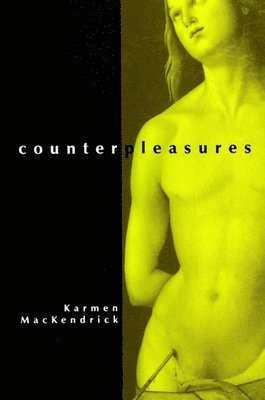
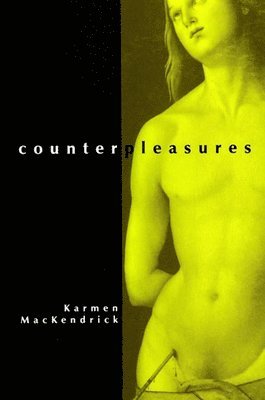
Takes up a series of literary and physical pleasures that do not appear to be pleasurable, ranging from Christian saintly asceticism to Sadean narrative to contemporary s/m practices.Counterpleasures takes up a series of literary and physical pleasures that do not appear to be pleasurable, ranging from saintly asceticism to Sadean narrative to leathersex. Each is placed in its cultural context to unfold a history of transgressive pleasure and to argue for the value and power of such pleasures as resistant to more totalizing forms of power.
440 kr
Tillfälligt slut
Takes up a series of literary and physical pleasures that do not appear to be pleasurable, ranging from Christian saintly asceticism to Sadean narrative to contemporary s/m practices.Counterpleasures takes up a series of literary and physical pleasures that do not appear to be pleasurable, ranging from saintly asceticism to Sadean narrative to leathersex. Each is placed in its cultural context to unfold a history of transgressive pleasure and to argue for the value and power of such pleasures as resistant to more totalizing forms of power.
989 kr
Skickas inom 7-10 vardagar
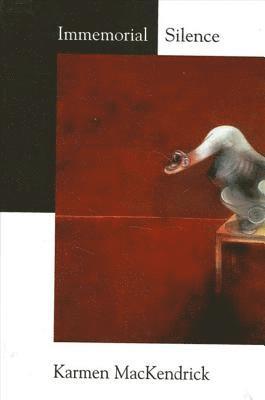
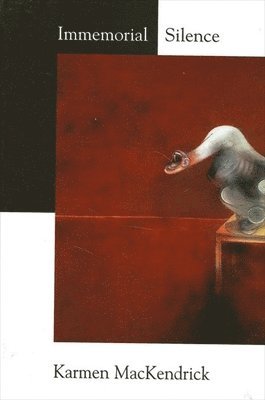
Treats time, eternity, language, and silence in an original way.Drawing on philosophy, theology, and literature, from the early Middle Ages to the present, Immemorial Silence traces a series of intertwined ideas. Exploring silence as the absence of language, which is nonetheless inherent in language itself, and eternity as the outside of time, cutting through time itself, the book unfolds a series of connections between these temporal and linguistic themes.
376 kr
Tillfälligt slut
Treats time, eternity, language, and silence in an original way.Drawing on philosophy, theology, and literature, from the early Middle Ages to the present, Immemorial Silence traces a series of intertwined ideas. Exploring silence as the absence of language, which is nonetheless inherent in language itself, and eternity as the outside of time, cutting through time itself, the book unfolds a series of connections between these temporal and linguistic themes.
1 021 kr
Skickas inom 10-15 vardagar
Today, body and language are prominent themes throughout philosophy. Each is strange enough on its own; this book asks what sense we might make of them together. Words reach out. Hands pick up books; eyes or fingertips scan text. But just where, if at all, do words and bodies touch?In a trio of paired chapters, each juxtaposing an illustrative story or case study to a theoretical exploration, MacKendrick examines three somatic figures of speech: the touch, the fold, and the cut. In the first pairing, resurrection stories in the Gospel of John are set against a chapter on touch, which draws on the work of Jean-Luc Nancy to argue that touch is, paradoxically, the most lasting of the sensory modes in which the resurrected body is presented. T. S. Eliot's "Ash Wednesday" is then paired with a Deleuzean meditation on the fold. The final pair of chapters examines the sacred heart, an extraordinarily popular Catholic devotional image with an intriguing set of devotees-medieval mystics, sweet old ladies, and tattooed punks-in light of theoretical work of Foucault on the idea of inscribed bodies, of the cut. Theologically and philosophically sophisticated, indeed masterly, the book never loses its ground in real, specific bodily experience, performing both at the highest levels of abstraction and at the most quotidian levels of everyday life.
407 kr
Skickas inom 10-15 vardagar
Today, body and language are prominent themes throughout philosophy. Each is strange enough on its own; this book asks what sense we might make of them together. Words reach out. Hands pick up books; eyes or fingertips scan text. But just where, if at all, do words and bodies touch?In a trio of paired chapters, each juxtaposing an illustrative story or case study to a theoretical exploration, MacKendrick examines three somatic figures of speech: the touch, the fold, and the cut. In the first pairing, resurrection stories in the Gospel of John are set against a chapter on touch, which draws on the work of Jean-Luc Nancy to argue that touch is, paradoxically, the most lasting of the sensory modes in which the resurrected body is presented. T. S. Eliot's "Ash Wednesday" is then paired with a Deleuzean meditation on the fold. The final pair of chapters examines the sacred heart, an extraordinarily popular Catholic devotional image with an intriguing set of devotees-medieval mystics, sweet old ladies, and tattooed punks-in light of theoretical work of Foucault on the idea of inscribed bodies, of the cut. Theologically and philosophically sophisticated, indeed masterly, the book never loses its ground in real, specific bodily experience, performing both at the highest levels of abstraction and at the most quotidian levels of everyday life.
1 021 kr
Skickas inom 10-15 vardagar
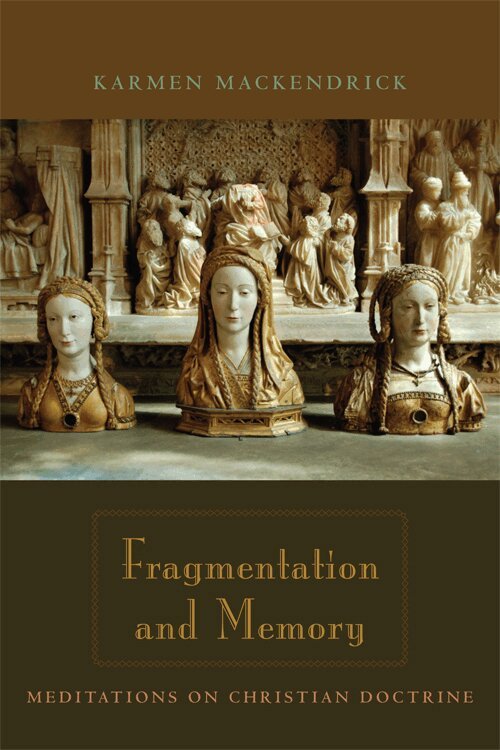
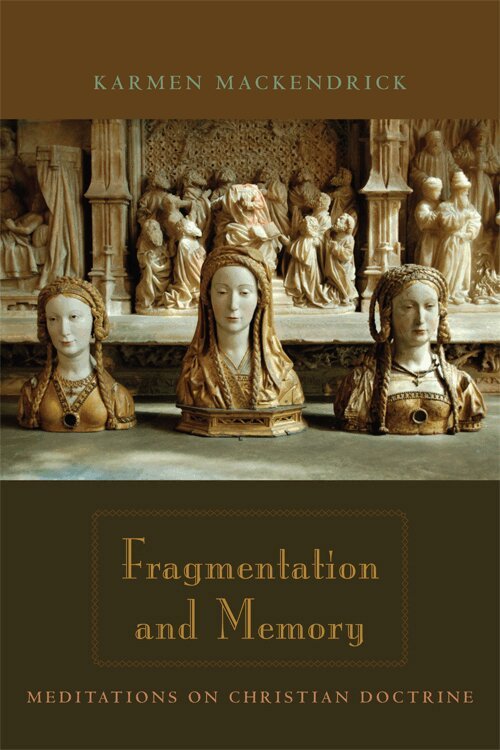
Philosophers have long and skeptically viewed religion as a source of overeasy answers, with a singular, totalizing "God" and the comfort of an immortal soul being the greatest among them. But religious thought has always been more interesting—indeed, a rich source of endlessly unfolding questions.With questions from the 1885 Baltimore Catechism of the Catholic Church as the starting point for each chapter, Karmen MacKendrick offers postmodern reflections on many of the central doctrines of the Church: the oneness of God, original sin, forgiveness, love and its connection to mortality, reverence for the relics of saints, and the doctrine of bodily resurrection. She maintains that we begin and end in questions and not in answers, in fragments and not in totalities—more precisely, in a fragmentation paradoxically integral to wholeness.Taking seriously Augustine's idea that we find the divine in memory, MacKendrick argues that memory does not lead us back in time to a tidy answer but opens onto a complicated and fragmented time in which we find that the one and the many, before and after and now, even sacred and profane are complexly entangled. Time becomes something lived, corporeal, and sacred, with fragments of eternity interspersed among the stretches of its duration. Our sense of ourselves is correspondingly complex, because theological considerations lead us not to the security of an everlasting, indivisible soul dwelling comfortably in the presence of a paternal deity but to a more complicated, perpetually peculiar, and paradoxical life in the flesh.Written out of MacKendrick's extensive background in both recent and late-ancient philosophy, this moving and poetic book can also be an inspiration to anyone, scholar or lay reader, seeking to find contemporary significance in these ancient theological doctrines.
967 kr
Skickas inom 10-15 vardagar
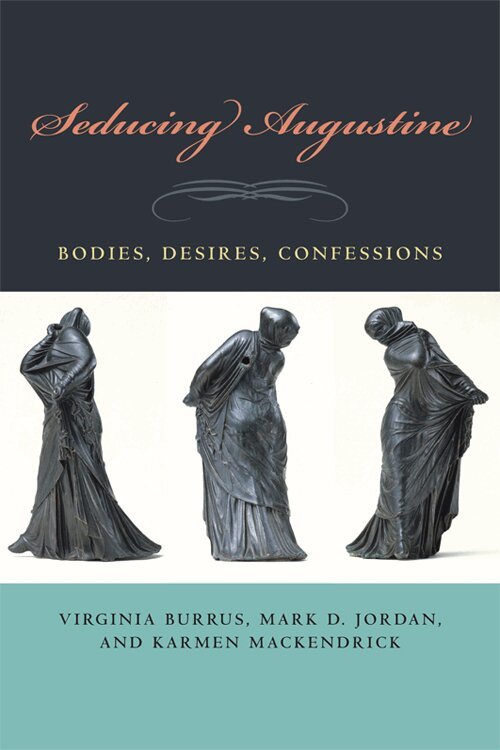
Augustine's Confessions is a text that seduces. But how often do its readers respond in kind? Here three scholars who share a longstanding fascination with sexuality and Christian discourse attempt to do just that. Where prior interpreters have been inclined either to defend or to criticize Augustine's views, Virginia Burrus, Mark Jordan, and Karmen MacKendrick set out both to seduce and to be seduced by his text.Often ambivalent but always passionately engaged, their readings of the Confessions center on four sets of intertwined themes—secrecy and confession, asceticism and eroticism, constraint and freedom, and time and eternity. Rather than expose Augustine's sexual history, they explore how the Confessions conjoins the erotic with the hidden, the imaginary, and the fictional. Rather than bemoan the repressiveness of his text, they uncover the complex relationship between seductive flesh and persuasive words that pervades all of its books. Rather than struggle to escape the control of the author, they embrace the painful pleasure of willed submission that lies at the erotic heart not only of the Confessions but also of Augustine's broader understanding of sin and salvation. Rather than mourn the fateful otherworldliness of his theologicalvision, they plumb the bottomless depths of beauty that Augustine discovers within creation, thereby extending desire precisely by refusing satisfaction.In unfolding their readings, the authors draw upon other works in Augustine's corpus while building on prior Augustinian scholarship in their own overlapping fields of history, theology, and philosophy.They also press well beyond the conventional boundaries of scholarly disciplines, conversing with such wide-ranging theorists of eroticism as Barthes, Baudrillard, Klossowski, Foucault, and Harpham. In the end, they offer not only a fresh interpretation of Augustine's famous work but also a multivocal literary-philosophical meditation on the seductive elusiveness of desire, bodies, language, and God.
407 kr
Skickas inom 10-15 vardagar
Augustine's Confessions is a text that seduces. But how often do its readers respond in kind? Here three scholars who share a longstanding fascination with sexuality and Christian discourse attempt to do just that. Where prior interpreters have been inclined either to defend or to criticize Augustine's views, Virginia Burrus, Mark Jordan, and Karmen MacKendrick set out both to seduce and to be seduced by his text.Often ambivalent but always passionately engaged, their readings of the Confessions center on four sets of intertwined themes—secrecy and confession, asceticism and eroticism, constraint and freedom, and time and eternity. Rather than expose Augustine's sexual history, they explore how the Confessions conjoins the erotic with the hidden, the imaginary, and the fictional. Rather than bemoan the repressiveness of his text, they uncover the complex relationship between seductive flesh and persuasive words that pervades all of its books. Rather than struggle to escape the control of the author, they embrace the painful pleasure of willed submission that lies at the erotic heart not only of the Confessions but also of Augustine's broader understanding of sin and salvation. Rather than mourn the fateful otherworldliness of his theologicalvision, they plumb the bottomless depths of beauty that Augustine discovers within creation, thereby extending desire precisely by refusing satisfaction.In unfolding their readings, the authors draw upon other works in Augustine's corpus while building on prior Augustinian scholarship in their own overlapping fields of history, theology, and philosophy.They also press well beyond the conventional boundaries of scholarly disciplines, conversing with such wide-ranging theorists of eroticism as Barthes, Baudrillard, Klossowski, Foucault, and Harpham. In the end, they offer not only a fresh interpretation of Augustine's famous work but also a multivocal literary-philosophical meditation on the seductive elusiveness of desire, bodies, language, and God.
849 kr
Skickas inom 7-10 vardagar
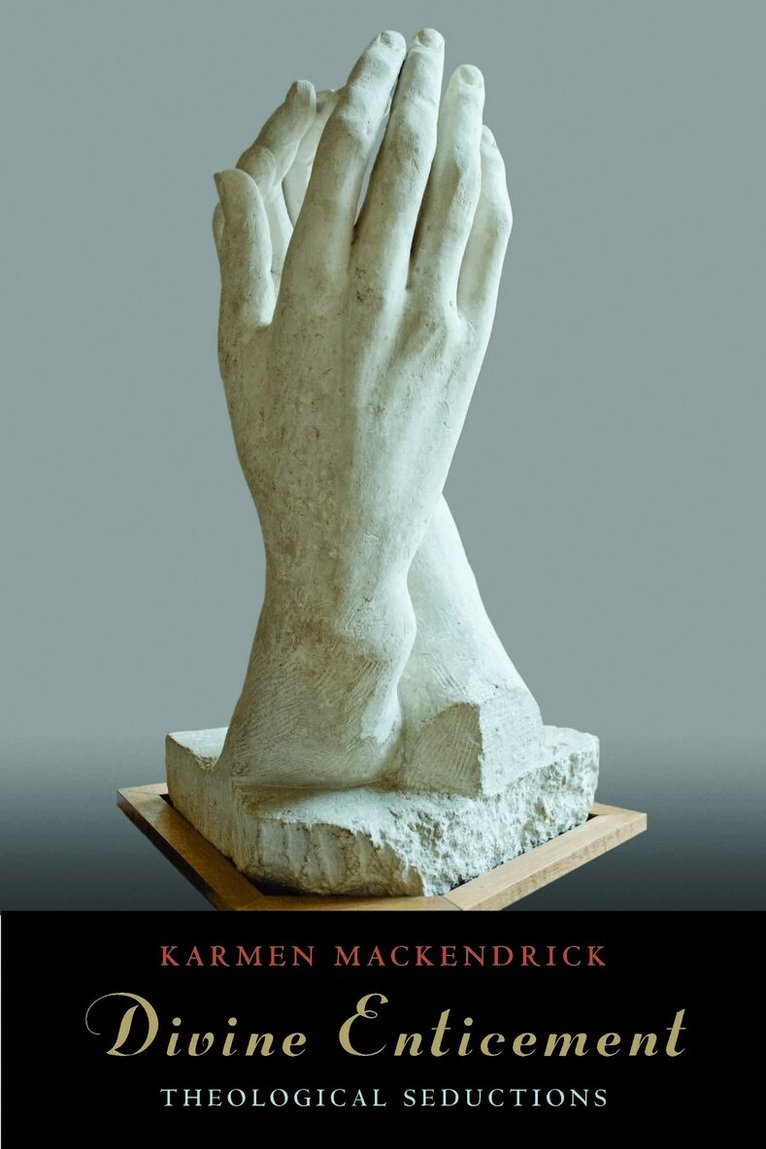
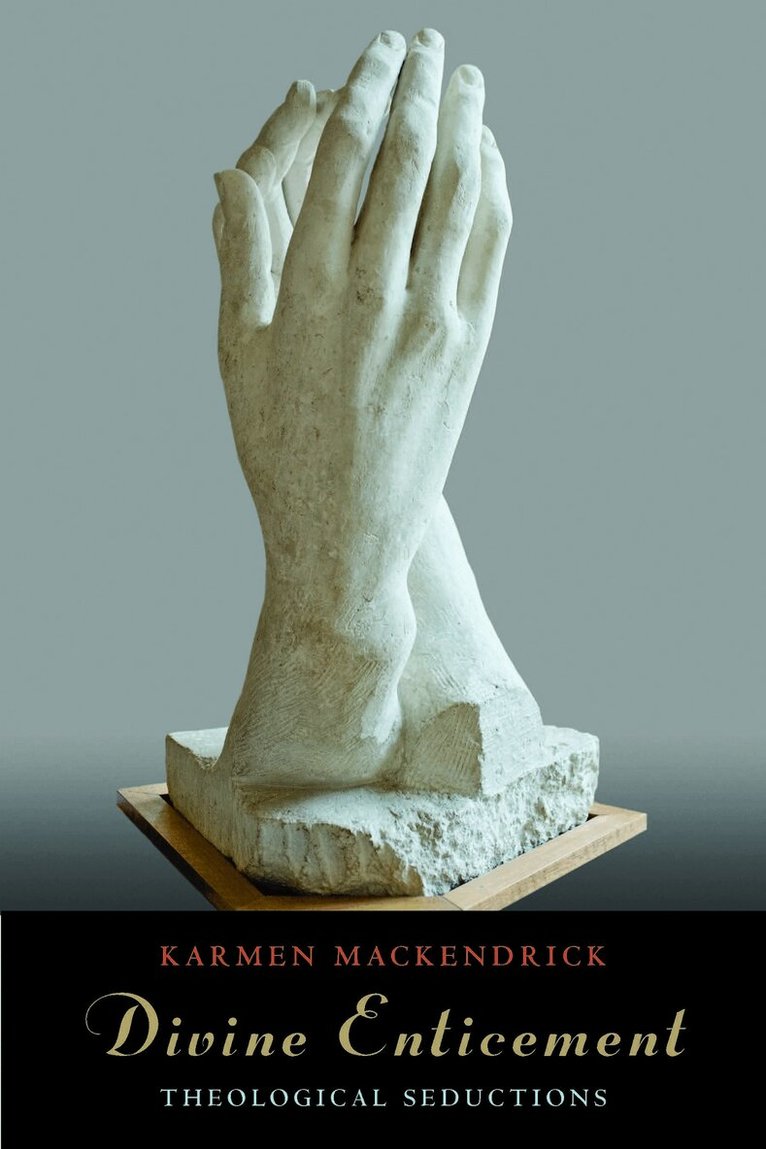
Theology usually appears to us to be dogmatic, judgmental, condescending, maybe therapeutic, or perhaps downright fantastical—but seldom enticing. Divine Enticement takes as its starting point that the meanings of theological concepts are not so much logical, truth-valued propositions—affirmative or negative—as they are provocations and evocations. Thus it argues for the seductiveness of both theology and its subject—for, in fact, infinite seduction and enticement as the very sense of theological query.The divine name is one by which we are drawn toward the limits of thought, language, and flesh. The use of language in such conceptualization calls more than it designates. This is not a flaw or a result of vagueness or imprecision in theological language but rather marks the correspondence of such language to its subject: that which, outside of or at the limit of our thought, draws us as an enticement to desire, not least to intellectual desire. Central to the text is the strange semiotics of divine naming, as a call on that for which there cannot be a standard referent. The entanglement of sign and body, not least in interpretations of the Christian incarnation, both grounds and complicates the theological abstractions.A number of traditional notions in Christian theology are reconceived here as enticements, modes of drawing the desires of both body and mind: faith as "thinking with assent"; sacraments as "visible words" read in community; ethics as responsiveness to beauty; prayer as the language of address; scripture as the story of meaning-making. All of these culminate in a sense of a call to and from the purely possible, the open space into which we can be enticed, within which we can be divinely enticing.
362 kr
Skickas inom 7-10 vardagar
Theology usually appears to us to be dogmatic, judgmental, condescending, maybe therapeutic, or perhaps downright fantastical—but seldom enticing. Divine Enticement takes as its starting point that the meanings of theological concepts are not so much logical, truth-valued propositions—affirmative or negative—as they are provocations and evocations. Thus it argues for the seductiveness of both theology and its subject—for, in fact, infinite seduction and enticement as the very sense of theological query.The divine name is one by which we are drawn toward the limits of thought, language, and flesh. The use of language in such conceptualization calls more than it designates. This is not a flaw or a result of vagueness or imprecision in theological language but rather marks the correspondence of such language to its subject: that which, outside of or at the limit of our thought, draws us as an enticement to desire, not least to intellectual desire. Central to the text is the strange semiotics of divine naming, as a call on that for which there cannot be a standard referent. The entanglement of sign and body, not least in interpretations of the Christian incarnation, both grounds and complicates the theological abstractions.A number of traditional notions in Christian theology are reconceived here as enticements, modes of drawing the desires of both body and mind: faith as "thinking with assent"; sacraments as "visible words" read in community; ethics as responsiveness to beauty; prayer as the language of address; scripture as the story of meaning-making. All of these culminate in a sense of a call to and from the purely possible, the open space into which we can be enticed, within which we can be divinely enticing.
901 kr
Skickas inom 7-10 vardagar
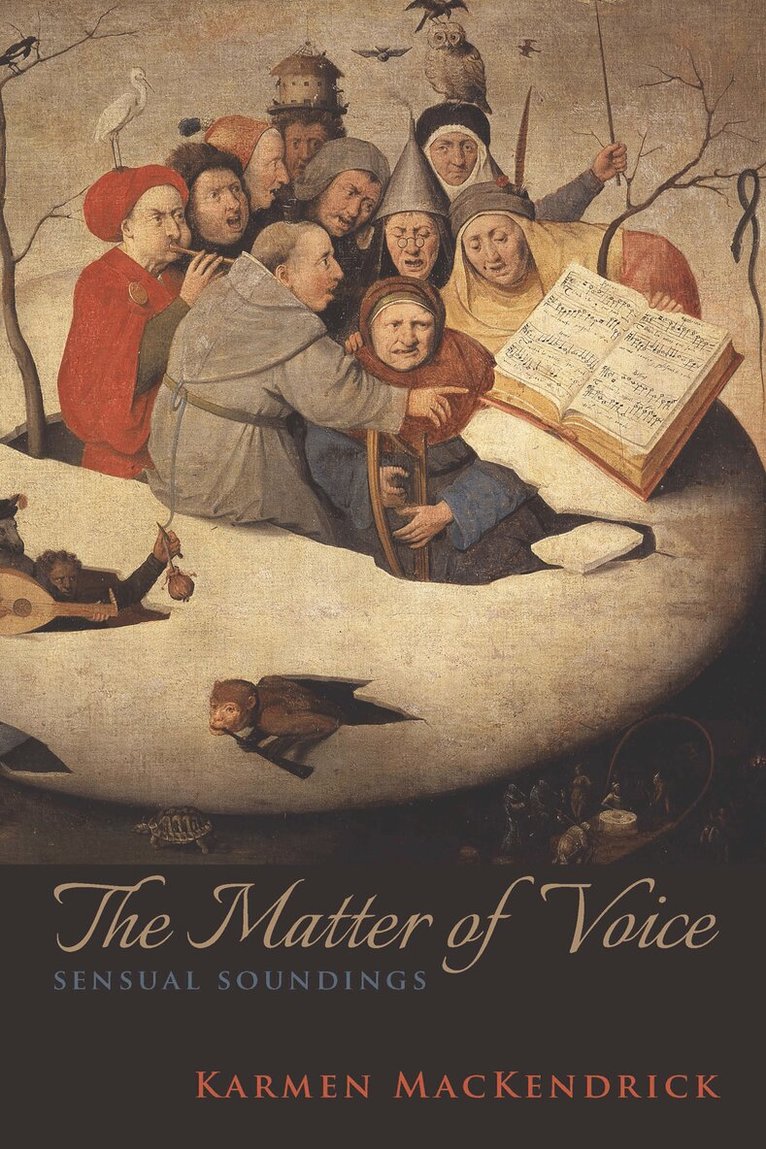
Philosophers for millennia have tried to silence the physical musicality of voice in favor of the purity of ideas without matter, souls without bodies. Nevertheless, voices resonate among bodies, among texts, and across denotation and sound; they are singular, as unique as fingerprints, but irreducibly collective too. They are material, somatic, and musical. But voices are also meaningful—they give body to concepts that cannot exist in abstractions, essential to sense yet in excess of it. They can be neither reduced to neurology nor silenced in abstraction. They complicate the logos of the beginning and emphasize the enfleshing of all words. Through explorations of theology and philosophy, pedagogy, translation, and semiotics, all interwoven with song, The Matter of Voice works toward reintegrating our thinking about both speaking and authorial voice as fleshy combinings of meaning and music.
283 kr
Skickas inom 7-10 vardagar
Philosophers for millennia have tried to silence the physical musicality of voice in favor of the purity of ideas without matter, souls without bodies. Nevertheless, voices resonate among bodies, among texts, and across denotation and sound; they are singular, as unique as fingerprints, but irreducibly collective too. They are material, somatic, and musical. But voices are also meaningful—they give body to concepts that cannot exist in abstractions, essential to sense yet in excess of it. They can be neither reduced to neurology nor silenced in abstraction. They complicate the logos of the beginning and emphasize the enfleshing of all words. Through explorations of theology and philosophy, pedagogy, translation, and semiotics, all interwoven with song, The Matter of Voice works toward reintegrating our thinking about both speaking and authorial voice as fleshy combinings of meaning and music.
1 127 kr
Skickas inom 10-15 vardagar
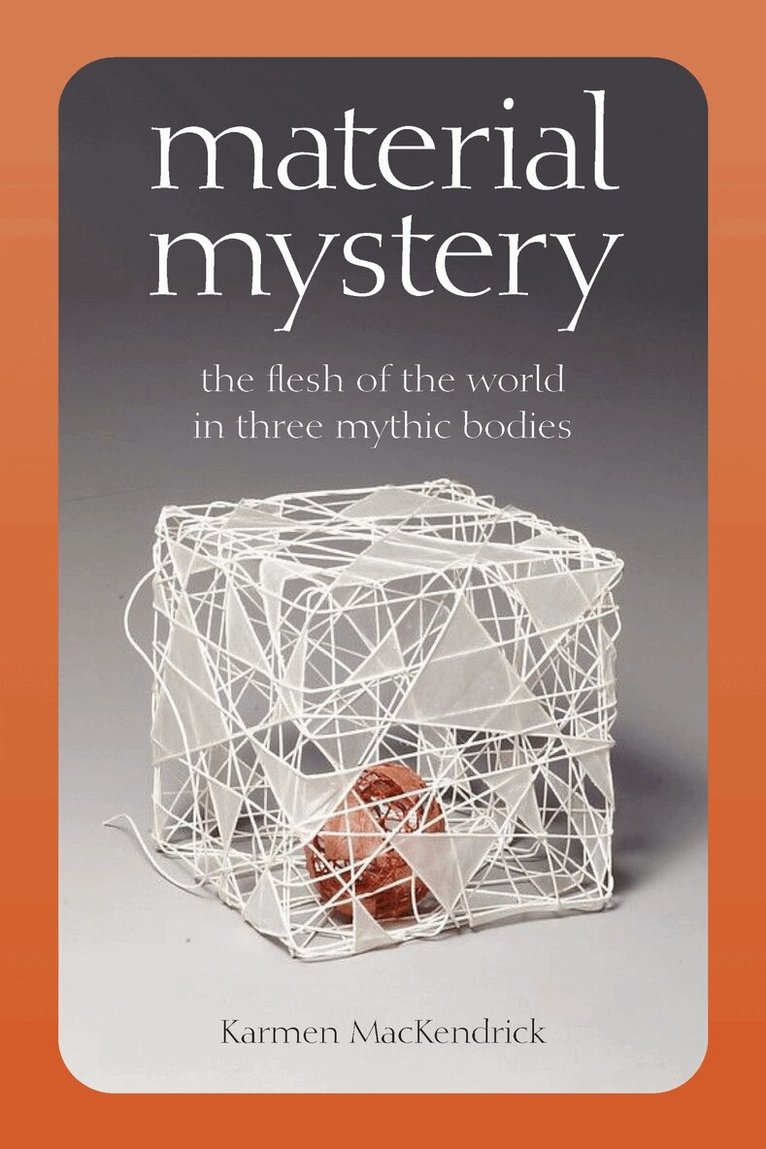
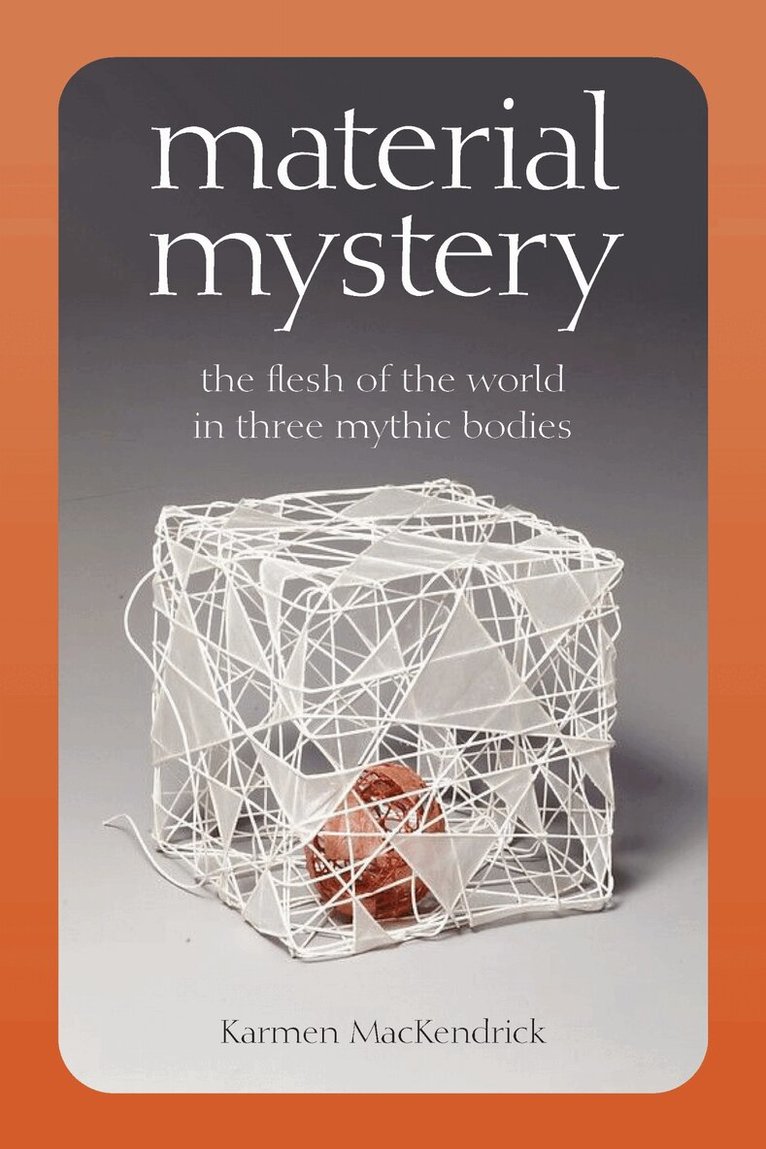
Material Mystery considers three apparently anthropocentric myths that are central to Abrahamic religions—those of the primal human, the incarnated and possibly divine redeemer, and the resurrected body. At first glance, these stories reinforce a human-centered theology and point to a very anthropomorphic God. Taking them seriously seems to ignore the material turn in the humanities entirely, with the same sort of willful ignorance that some of our politicians show in declaring that their myths count as facts, or that the point of the rest of the world is to further human consumption. But it is possible, Karmen MacKendrick shows, to read these figures through a particular tradition that emerges from the Hebrew Bible, the tradition of Wisdom as a creative force. Wisdom texts are common across the ancient Near East. As the idea of creative Wisdom develops from antiquity into the middle ages, it gathers philosophical influences from a range of philosophical traditions. This exuberantly promiscuous impurity—intellectual, artistic, and theological—generates new interpretive possibilities. In these interpretations, each human-like figure opens up onto the world''s matter, as an interdependent part of it, and matter is thoroughly mixed with divinity. Such mythic readings complement our factual, scientific understanding of the material world, to engage wider kinds of knowing and affective attention—particularly Wisdom''s combination of care and delight.
314 kr
Skickas inom 10-15 vardagar
Material Mystery considers three apparently anthropocentric myths that are central to Abrahamic religions—those of the primal human, the incarnated and possibly divine redeemer, and the resurrected body. At first glance, these stories reinforce a human-centered theology and point to a very anthropomorphic God. Taking them seriously seems to ignore the material turn in the humanities entirely, with the same sort of willful ignorance that some of our politicians show in declaring that their myths count as facts, or that the point of the rest of the world is to further human consumption. But it is possible, Karmen MacKendrick shows, to read these figures through a particular tradition that emerges from the Hebrew Bible, the tradition of Wisdom as a creative force. Wisdom texts are common across the ancient Near East. As the idea of creative Wisdom develops from antiquity into the middle ages, it gathers philosophical influences from a range of philosophical traditions. This exuberantly promiscuous impurity—intellectual, artistic, and theological—generates new interpretive possibilities. In these interpretations, each human-like figure opens up onto the world''s matter, as an interdependent part of it, and matter is thoroughly mixed with divinity. Such mythic readings complement our factual, scientific understanding of the material world, to engage wider kinds of knowing and affective attention—particularly Wisdom''s combination of care and delight.
382 kr
Tillfälligt slut
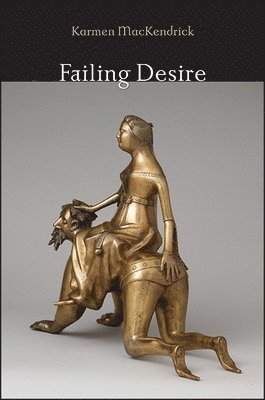
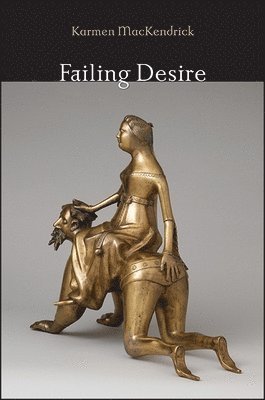
Draws on theology and queer theory to argue for the power of humiliating pleasures in a culture oriented very strongly to denying any enjoyment that is not about success.Luckily for human diversity, we are perfectly capable of desiring impossible things. Failing Desire explores a particular set of these impossibilities, those connected to humiliation. These include the failure of autonomy in submission, of inward privacy in confession, of visual modesty in exhibition, and of dignity in playing various roles. Historically, those who find pleasure in these failures range from ancient Cynics through early Christian monks to those now drawn by queer or perverse eroticism. As Judith Halberstam pointed out in The Queer Art of Failure, failure can actually be a mode of resistance to demands for what a culture defines as success. Karmen MacKendrick draws on this interest in queer refusals. To value, desire, or seek humiliation undercuts any striving for success, but it draws our attention particularly to the failures of knowledge as a form of power, whether that knowledge is of one body or of a population. How can we understand will that seeks not to govern itself, psychology that constructs inwardness by telling all, blushing shame that delights in exposure, or dignity that refuses its lofty position? Failing Desire suggests that the power of these desires and pleasures comes out of the very realization that this question can never quite be answered.
1 057 kr
Tillfälligt slut
Draws on theology and queer theory to argue for the power of humiliating pleasures in a culture oriented very strongly to denying any enjoyment that is not about success.Luckily for human diversity, we are perfectly capable of desiring impossible things. Failing Desire explores a particular set of these impossibilities, those connected to humiliation. These include the failure of autonomy in submission, of inward privacy in confession, of visual modesty in exhibition, and of dignity in playing various roles. Historically, those who find pleasure in these failures range from ancient Cynics through early Christian monks to those now drawn by queer or perverse eroticism. As Judith Halberstam pointed out in The Queer Art of Failure, failure can actually be a mode of resistance to demands for what a culture defines as success. Karmen MacKendrick draws on this interest in queer refusals. To value, desire, or seek humiliation undercuts any striving for success, but it draws our attention particularly to the failures of knowledge as a form of power, whether that knowledge is of one body or of a population. How can we understand will that seeks not to govern itself, psychology that constructs inwardness by telling all, blushing shame that delights in exposure, or dignity that refuses its lofty position? Failing Desire suggests that the power of these desires and pleasures comes out of the very realization that this question can never quite be answered.
322 kr
Skickas inom 7-10 vardagar
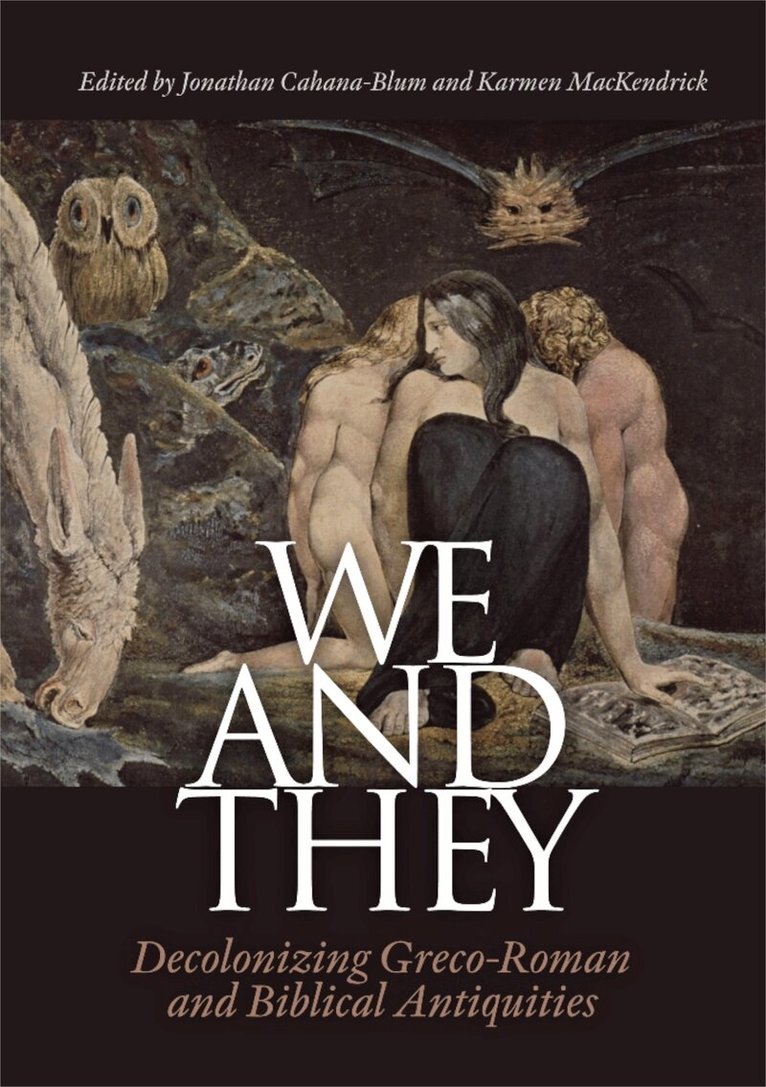
The articles collected in this volume share a very similar goal: to decolonize our understanding of antiquity, thus allowing modernity to converse with antiquity without constraining the latter to be either the direct precedent or the thoroughly other of the former. It is certainly true that the past is a foreign country. However, history has repeatedly demonstrated that colonialism never contributed to mutual understanding and constructive exchange of ideas, and that such is the dialogue we should strive forthwith our contemporaries as well as with our ancestors.