Mark D. Jordan – författare
Visar alla böcker från författaren Mark D. Jordan. Handla med fri frakt och snabb leverans.
19 produkter
19 produkter
Häftad, Engelska, 2013
176 kr
Skickas inom 5-8 vardagar
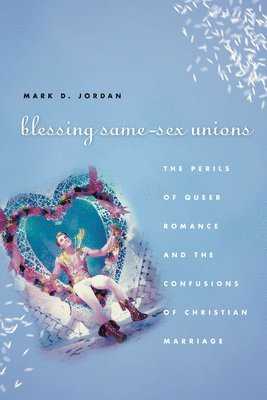
Why are so many churches vehemently opposed to blessing same-sex unions? In this incisive work, Mark D. Jordan shows how carefully selected ideals of Christian marriage have come to dominate recent debates over same-sex unions. Opponents of gay marriage, he reveals, too often confuse simplified ideals of matrimony with historical facts, purporting that there has been a stable Christian tradition of marriage across millennia, when the reality has been anything but. Raising trenchant questions about social obligations, impulses, intentions, and determination, Blessing Same-Sex Unions is a must-read for both sides of the ongoing American debate over gay marriage.
Inbunden, Engelska, 2005
313 kr
Skickas inom 5-8 vardagar
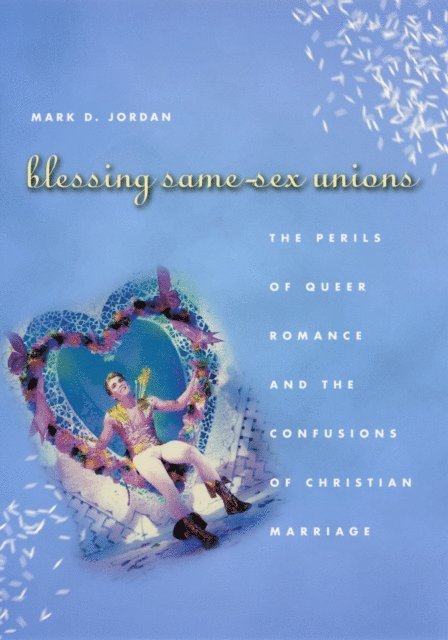
At most church weddings, the person presiding over the ritual is not a priest or a pastor, but the wedding planner, followed by the photographer, the florist, and the caterer. And in this day and age, more wedding theology is supplied by Modern Bride magazine or reality television than by any of the Christian treatises on holy matrimony. Indeed, church weddings have strayed long and far from distinctly Christian aspirations. The costumes and gestures might still be right, but the intentions are hardly religious. Why then, asks noted gay commentator Mark D. Jordan, are so many churches vehemently opposed to blessing same-sex unions? In this incisive work, Jordan shows how carefully selected ideals of Christian marriage have come to dominate recent debates over same-sex unions. Opponents of gay marriage, he reveals, too often confuse simplified ideals of matrimony with historical facts. They suppose, for instance, that there has been a stable Christian tradition of marriage across millennia, when in reality Christians have quarreled among themselves for centuries about even the most basic elements of marital theology, authorizing experiments like polygamy and divorce.Jordan also argues that no matter what the courts do, Christian churches will have to decide for themselves whether to bless same-sex unions. No civil compromise can settle the religious questions surrounding gay marriage. And queer Christians, he contends, will have to discover for themselves what they really want out of marriage. If they are not just after legal recognition as a couple or a place at the social table, do they really seek the blessing of God? Or just the garish melodrama of a white wedding? Posing trenchant questions such as these, Blessing Same-Sex Unions will be a must-read for both sides of the debate over gay marriage in America today.
Häftad, Engelska, 1998
249 kr
Skickas inom 5-8 vardagar
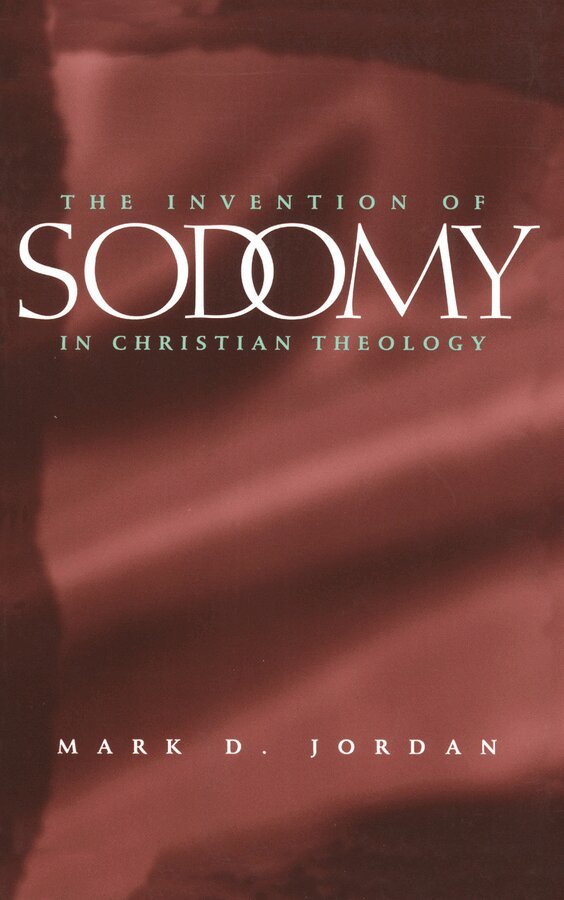
This text explores the invention of sodomy in medieval Christendom, examining its conceptual foundations in theology and gauging its impact on Christian sexual ethics both then and now. It traces the historical genealogy of this enduring cultural construct through many of the idiosyncratic worldviews of the Middle Ages - worldviews at war with themselves in their attitudes toward sex, love and eroticism. Moving from poetic conceit through medieval treatise to confessor's manual and scholastic summa, the text demonstrates that the medieval notion of sodomy was fashioned out of conceptual instabilities and tensions.
Inbunden, Engelska, 2000
805 kr
Skickas inom 5-8 vardagar
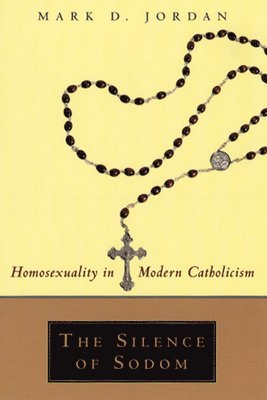
Sexual scandals in the Roman Catholic Church have been highly public in recent years, and increasingly shrill directives from the Vatican about homosexuality have become commonplace. The visibility of these issues begs the question of how the Catholic Church can be at once so homophobic and so homoerotic. Mark D. Jordan, the authors of the award-winning "The Invention of Sodomy in Christian Theology", takes up this fundamental question in a deeply learned yet readable study of the relationship between male homosexuality and Catholicism. "The Silence of Sodom" is devoted, first, to teasing out the Church's complex bureaucratic language about sexual morality. Rather than trying to point out that official Catholic documents are simply wrong in their discussions and directives regarding homosexuality, Jordan examines the rhetorical devices used by the Church throughout its history to actively produce silence around the topic of male homosexuality.Arguing that we cannot find the Church's knowledge of homosexuality in its documents, Jordan looks to the unspoken but widely known features of clerical culture to illuminate the striking analogies between clerical institutions and contemporary gay culture, particularly in the mechanisms of discipline, the training of seminarians and the ambiguities of liturgical celebration. The Catholic Church's long experiment with masculine desire cannot be discovered through sensationalist trials of priest-paedophiles or surveys of gay clergy. "The Silence of Sodom" looks deeply into the intertwining, in words and deeds, of Catholicism with homoeroticism; it is a profound reflection on both "being gay" and "being Catholic".
Häftad, Engelska, 2002
305 kr
Skickas inom 5-8 vardagar
Sexual scandals in the Roman Catholic Church have been highly public in recent years, and increasingly shrill directives from the Vatican about homosexuality have become commonplace. The visibility of these issues begs the question of how the Catholic Church can be at once so homophobic and so homoerotic. Mark D. Jordan, the authors of the award-winning "The Invention of Sodomy in Christian Theology", takes up this fundamental question in a deeply learned yet readable study of the relationship between male homosexuality and Catholicism. "The Silence of Sodom" is devoted, first, to teasing out the Church's complex bureaucratic language about sexual morality. Rather than trying to point out that official Catholic documents are simply wrong in their discussions and directives regarding homosexuality, Jordan examines the rhetorical devices used by the Church throughout its history to actively produce silence around the topic of male homosexuality.Arguing that we cannot find the Church's knowledge of homosexuality in its documents, Jordan looks to the unspoken but widely known features of clerical culture to illuminate the striking analogies between clerical institutions and contemporary gay culture, particularly in the mechanisms of discipline, the training of seminarians and the ambiguities of liturgical celebration. The Catholic Church's long experiment with masculine desire cannot be discovered through sensationalist trials of priest-paedophiles or surveys of gay clergy. "The Silence of Sodom" looks deeply into the intertwining, in words and deeds, of Catholicism with homoeroticism; it is a profound reflection on both "being gay" and "being Catholic".
Häftad, Engelska, 2010
702 kr
Skickas inom 5-8 vardagar
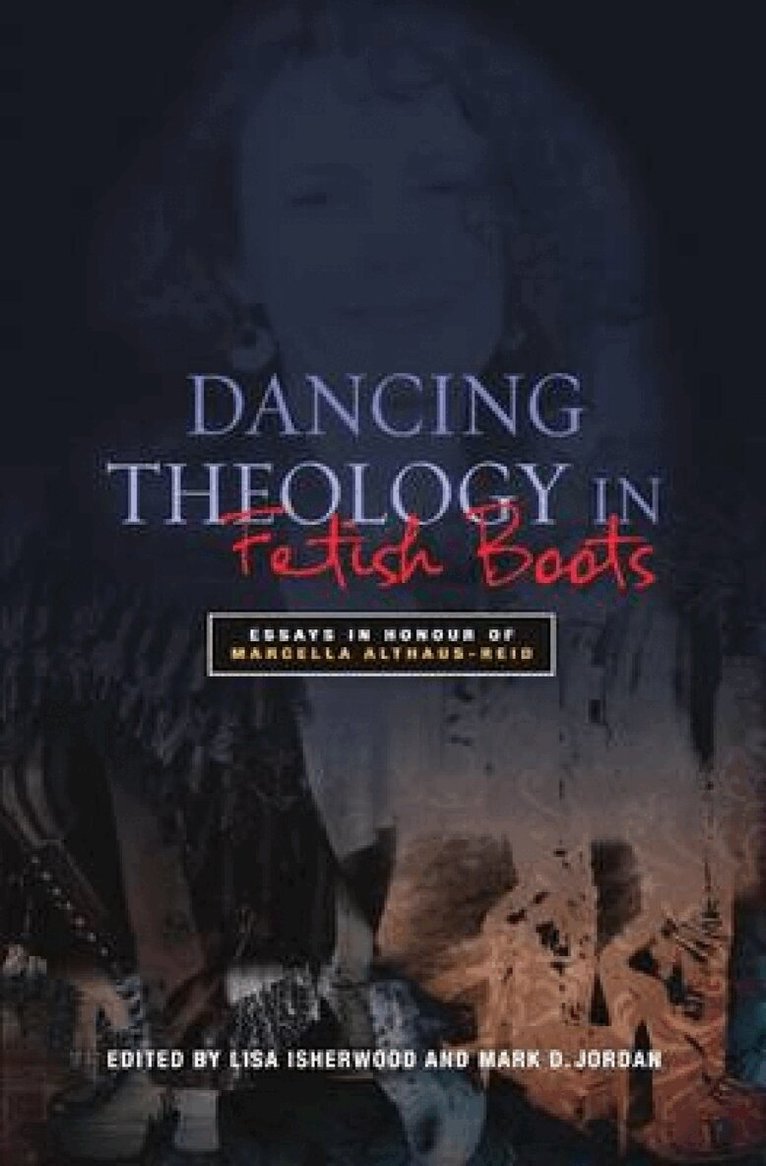
Marcella Althaus-Reid was one of the most fascinating and controversial theologians of the twentieth and early twenty-first century. Her strong personality and her iconoclastic work inspired a whole generation of theologians in the UK and worldwide. Marcella's creative life was cut short by her death from cancer in 2009. Yet she lives on, not least in those who have been inspired by her work and continue to engage with it. "Dancing Theology in Fetish Boots" draws together a number of world-class scholars and others who engage with the main themes of Marcella's work and show how the critical and controversial conversations which Marcella has begun can and do continue. It is therefore far more than a Festschrift, but a celebration of an intellectual life Marcella-style.
Häftad, Engelska, 2001
580 kr
Skickas inom 5-8 vardagar
Mark Jordan has written a provocative and stimulating introduction to the issues surrounding sexual ethics and sexuality and theology, filling a much-needed void in this field. Jordan summarizes key topics and themes in the teaching and discussion of religious ethics as well as pushing forward the debate in interesting and original directions.
Inbunden, Engelska, 2006
611 kr
Skickas inom 5-8 vardagar
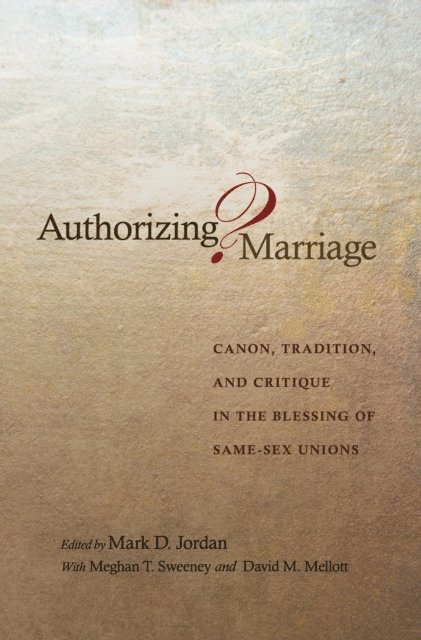
The opponents of legal recognition for same-sex marriage frequently appeal to a "Judeo-Christian" tradition. But does it make any sense to speak of that tradition as a single teaching on marriage? Are there elements in Jewish and Christian traditions that actually authorize religious and civil recognition of same-sex couples? And are contemporary heterosexual marriages well supported by those traditions? As evidenced by the ten provocative essays assembled and edited by Mark D. Jordan, the answers are not as simple as many would believe. The scholars of Judaism and Christianity gathered here explore the issue through a wide range of biblical, historical, liturgical, and theological evidence. From David's love for Jonathan through the singleness of Jesus and Paul to the all-male heaven of John's Apocalypse, the collection addresses pertinent passages in the Hebrew Bible and the New Testament with scholarly precision. It reconsiders whether there are biblical precedents for blessing same-sex unions in Jewish and Christian liturgies.The book concludes by analyzing typical religious arguments against such unions and provides a comprehensive response to claims that the Judeo-Christian tradition prohibits same-sex unions from receiving religious recognition. The essays, most of which are in print here for the first time, are by Saul M. Olyan, Mary Ann Tolbert, Daniel Boyarin, Laurence Paul Hemming, Steven Greenberg, Kathryn Tanner, Susan Frank Parsons, Eugene F. Rogers, Jr., and Mark D. Jordan.
Häftad, Engelska, 2021
166 kr
Skickas
Inbunden, Engelska, 2014
1 287 kr
Skickas inom 5-8 vardagar
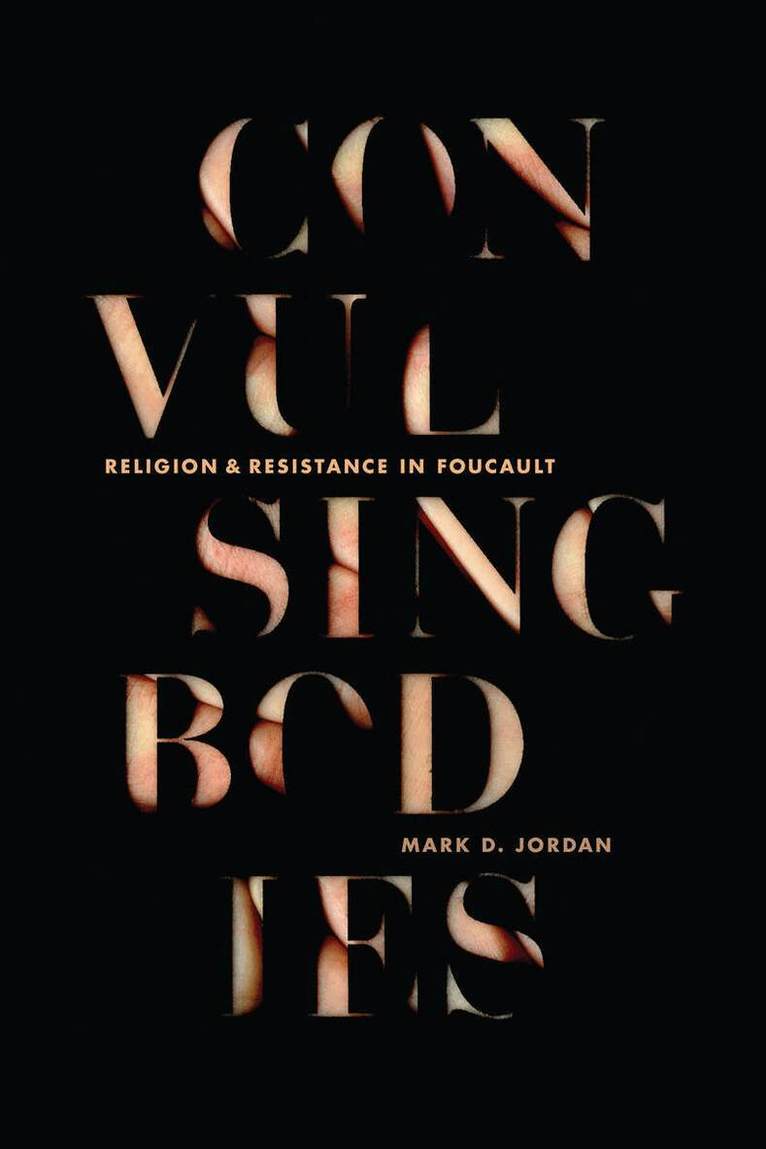
By using religion to get at the core concepts of Michel Foucault's thinking, this book offers a strong alternative to the way that the philosopher's work is read across the humanities. Foucault was famously interested in Christianity as both the rival to ancient ethics and the parent of modern discipline and was always alert to the hypocrisy and the violence in churches. Yet many readers have ignored how central religion is to his thought, particularly with regard to human bodies and how they are shaped. The point is not to turn Foucault into some sort of believer or to extract from him a fixed thesis about religion as such. Rather, it is to see how Foucault engages religious rhetoric page after page—even when religion is not his main topic. When readers follow his allusions, they can see why he finds in religion not only an object of critique, but a perennial provocation to think about how speech works on bodies—and how bodies resist.Arguing that Foucault conducts experiments in writing to frustrate academic expectations about history and theory, Mark Jordan gives equal weight to the performative and theatrical aspects of Foucault's writing or lecturing. How does Foucault stage possibilities of self-transformation? How are his books or lectures akin to the rituals and liturgies that he dissects in them? Convulsing Bodies follows its own game of hide-and-seek with the agents of totalizing systems (not least in the academy) and gives us a Foucault who plays with his audiences as he plays for them—or teaches them.
Häftad, Engelska, 2014
314 kr
Skickas inom 5-8 vardagar
By using religion to get at the core concepts of Michel Foucault's thinking, this book offers a strong alternative to the way that the philosopher's work is read across the humanities. Foucault was famously interested in Christianity as both the rival to ancient ethics and the parent of modern discipline and was always alert to the hypocrisy and the violence in churches. Yet many readers have ignored how central religion is to his thought, particularly with regard to human bodies and how they are shaped. The point is not to turn Foucault into some sort of believer or to extract from him a fixed thesis about religion as such. Rather, it is to see how Foucault engages religious rhetoric page after page—even when religion is not his main topic. When readers follow his allusions, they can see why he finds in religion not only an object of critique, but a perennial provocation to think about how speech works on bodies—and how bodies resist.Arguing that Foucault conducts experiments in writing to frustrate academic expectations about history and theory, Mark Jordan gives equal weight to the performative and theatrical aspects of Foucault's writing or lecturing. How does Foucault stage possibilities of self-transformation? How are his books or lectures akin to the rituals and liturgies that he dissects in them? Convulsing Bodies follows its own game of hide-and-seek with the agents of totalizing systems (not least in the academy) and gives us a Foucault who plays with his audiences as he plays for them—or teaches them.
Häftad, Engelska, 2004
241 kr
Skickas inom 5-8 vardagar
Inbunden, Engelska, 2010
1 075 kr
Skickas inom 10-15 vardagar
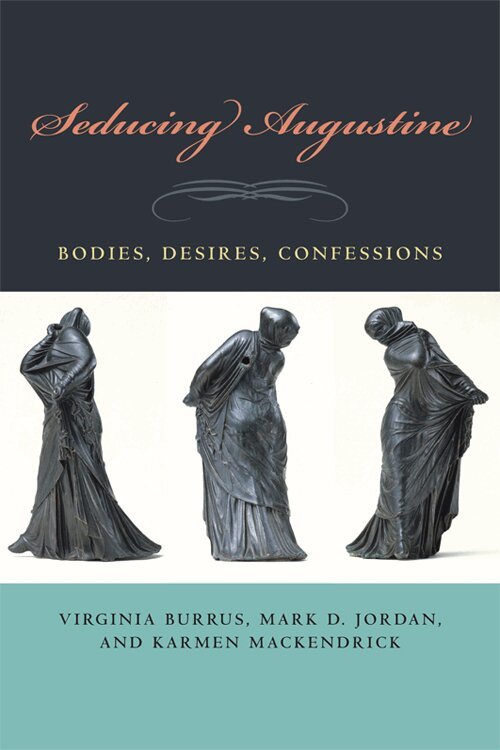
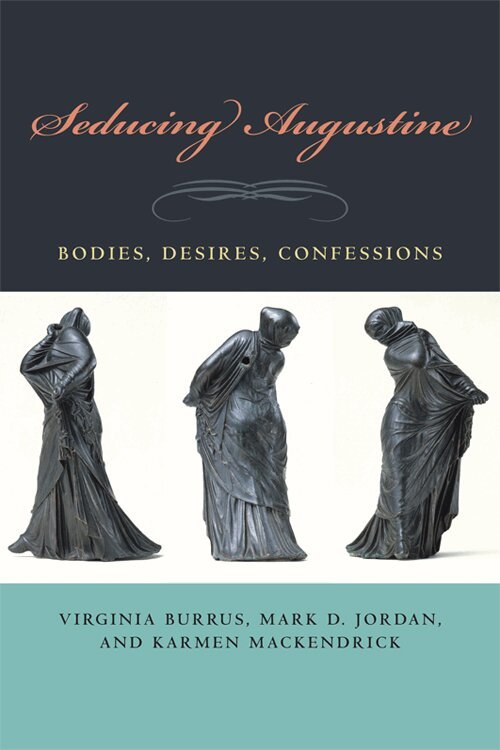
Augustine's Confessions is a text that seduces. But how often do its readers respond in kind? Here three scholars who share a longstanding fascination with sexuality and Christian discourse attempt to do just that. Where prior interpreters have been inclined either to defend or to criticize Augustine's views, Virginia Burrus, Mark Jordan, and Karmen MacKendrick set out both to seduce and to be seduced by his text.Often ambivalent but always passionately engaged, their readings of the Confessions center on four sets of intertwined themes—secrecy and confession, asceticism and eroticism, constraint and freedom, and time and eternity. Rather than expose Augustine's sexual history, they explore how the Confessions conjoins the erotic with the hidden, the imaginary, and the fictional. Rather than bemoan the repressiveness of his text, they uncover the complex relationship between seductive flesh and persuasive words that pervades all of its books. Rather than struggle to escape the control of the author, they embrace the painful pleasure of willed submission that lies at the erotic heart not only of the Confessions but also of Augustine's broader understanding of sin and salvation. Rather than mourn the fateful otherworldliness of his theologicalvision, they plumb the bottomless depths of beauty that Augustine discovers within creation, thereby extending desire precisely by refusing satisfaction.In unfolding their readings, the authors draw upon other works in Augustine's corpus while building on prior Augustinian scholarship in their own overlapping fields of history, theology, and philosophy.They also press well beyond the conventional boundaries of scholarly disciplines, conversing with such wide-ranging theorists of eroticism as Barthes, Baudrillard, Klossowski, Foucault, and Harpham. In the end, they offer not only a fresh interpretation of Augustine's famous work but also a multivocal literary-philosophical meditation on the seductive elusiveness of desire, bodies, language, and God.
Häftad, Engelska, 2010
453 kr
Skickas inom 10-15 vardagar
Augustine's Confessions is a text that seduces. But how often do its readers respond in kind? Here three scholars who share a longstanding fascination with sexuality and Christian discourse attempt to do just that. Where prior interpreters have been inclined either to defend or to criticize Augustine's views, Virginia Burrus, Mark Jordan, and Karmen MacKendrick set out both to seduce and to be seduced by his text.Often ambivalent but always passionately engaged, their readings of the Confessions center on four sets of intertwined themes—secrecy and confession, asceticism and eroticism, constraint and freedom, and time and eternity. Rather than expose Augustine's sexual history, they explore how the Confessions conjoins the erotic with the hidden, the imaginary, and the fictional. Rather than bemoan the repressiveness of his text, they uncover the complex relationship between seductive flesh and persuasive words that pervades all of its books. Rather than struggle to escape the control of the author, they embrace the painful pleasure of willed submission that lies at the erotic heart not only of the Confessions but also of Augustine's broader understanding of sin and salvation. Rather than mourn the fateful otherworldliness of his theologicalvision, they plumb the bottomless depths of beauty that Augustine discovers within creation, thereby extending desire precisely by refusing satisfaction.In unfolding their readings, the authors draw upon other works in Augustine's corpus while building on prior Augustinian scholarship in their own overlapping fields of history, theology, and philosophy.They also press well beyond the conventional boundaries of scholarly disciplines, conversing with such wide-ranging theorists of eroticism as Barthes, Baudrillard, Klossowski, Foucault, and Harpham. In the end, they offer not only a fresh interpretation of Augustine's famous work but also a multivocal literary-philosophical meditation on the seductive elusiveness of desire, bodies, language, and God.
Häftad, Engelska, 2016
359 kr
Skickas inom 10-15 vardagar
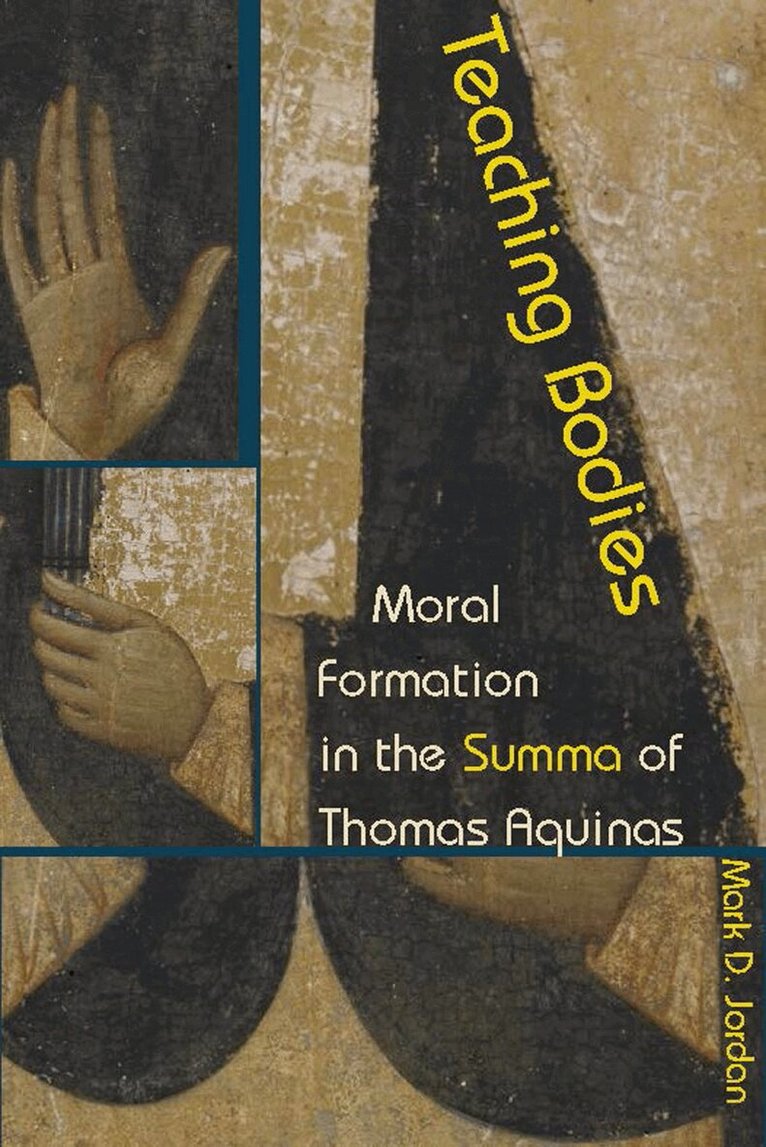
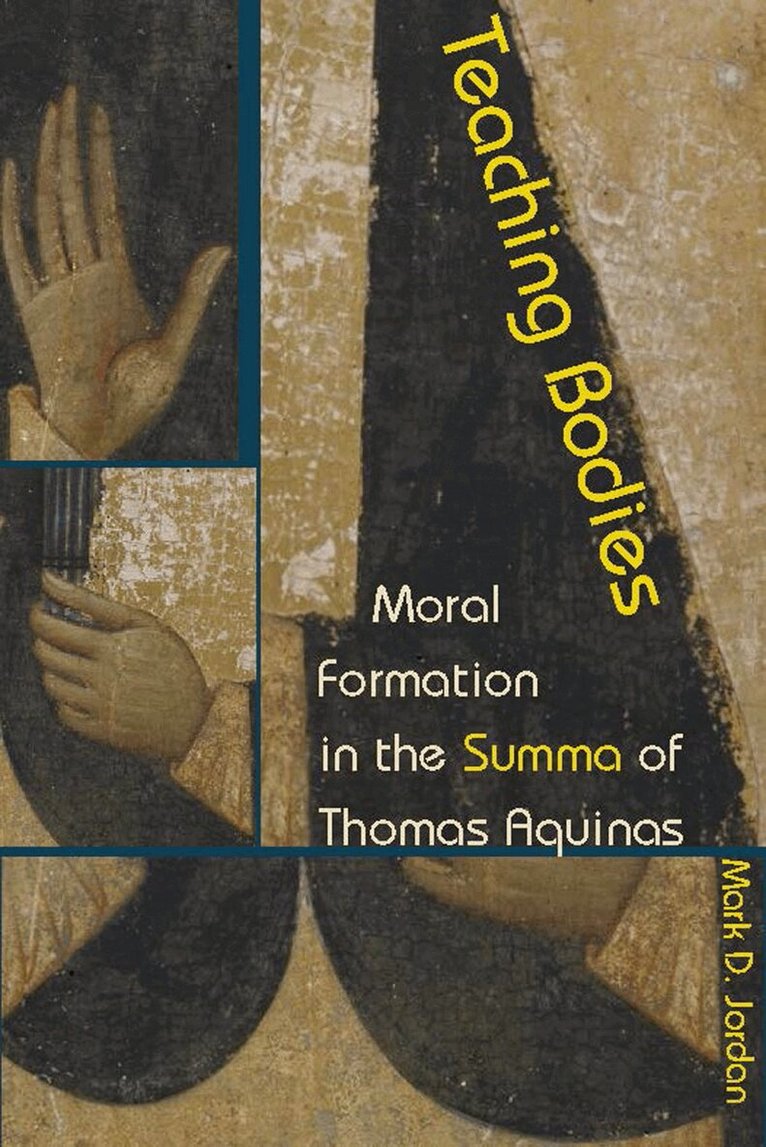
In Teaching Bodies, leading scholar of Christian thought Mark D. Jordan offers an original reading of the Summa of Theology of Thomas Aquinas. Reading backward, Jordan interprets the main parts of the Summa, starting from the conclusion, to reveal how Thomas teaches morals by directing attention to the way God teaches morals, namely through embodied scenes: the incarnation, the gospels, and the sacraments. It is Thomas's confidence in bodily scenes of instruction that explains the often overlooked structure of the middle part of the Summa, which begins and ends with Christian revisions of classical exhortations of the human body as a pathway to the best human life. Among other things, Jordan argues, this explains Thomas's interest in the stages of law and the limits of virtue as the engine of human life.Rather than offer a synthesis of Thomistic ethics, Jordan insists that we read Thomas as theology to discover the unification of Christian wisdom in a pattern of ongoing moral formation. Jordan supplements his close readings of the Summa with reflections on Thomas's place in the history of Christian moral teaching—and thushis relevance for teaching and writing in the present. What remains a puzzle is why Thomas chose to stage this incarnational moral teaching within the then-new genres of university disputation—the genres we think of as "Scholastic." Yet here again the structure of the Summa provides an answer. In Jordan's deft analysis, Thomas's minimalist refusal to tell a new story except by juxtaposing selections from inherited philosophical and theological traditions is his way of opening room for God's continuing narration in the development of the human soul.The task of writing theology, as Thomas understands it, is to open a path through the inherited languages of classical thought so that divine pedagogy can have its effect on the reader. As such, the task of the Summa, in Mark Jordan's hands, is a crucial and powerful way to articulate Christian morals today.
Del 15 - Challenges in Contemporary Theology
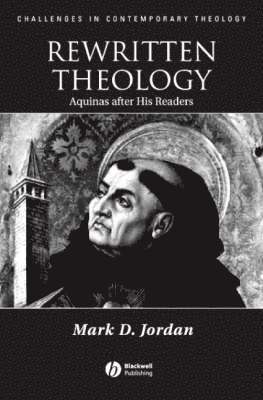
Rewritten Theology
Aquinas After His Readers
Inbunden, Engelska, 2005
1 289 kr
Skickas inom 11-20 vardagar
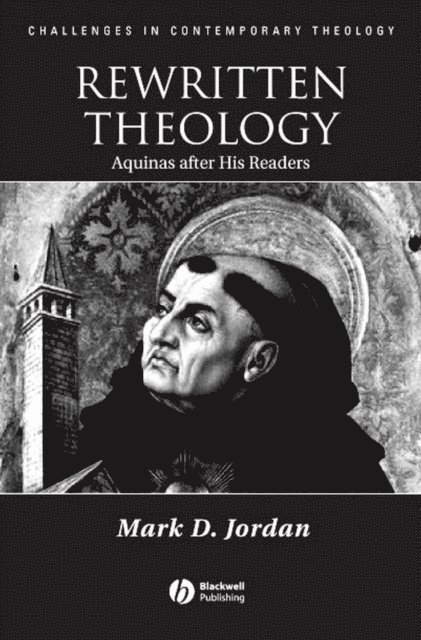
Responding to the recent upsurge of interest in Thomas Aquinas, this book goes straight to the heart of the contemporary debates about Thomism. Focuses on the concept of authority, both in terms of Aquinas’s own attitude to authority, and how the Church authorities have used Aquinas’s texts. Engages with appropriations of Aquinas’s work by a range of theologians, from liberal Catholics to the creators of radical orthodoxy. Argues for future readings of Aquinas which are substantially different from those which have gone before.
Häftad, Engelska, 2005
522 kr
Skickas inom 5-8 vardagar
Responding to the recent upsurge of interest in Thomas Aquinas, this book goes straight to the heart of the contemporary debates about Thomism. Focuses on the concept of authority, both in terms of Aquinas’s own attitude to authority, and how the Church authorities have used Aquinas’s texts. Engages with appropriations of Aquinas’s work by a range of theologians, from liberal Catholics to the creators of radical orthodoxy. Argues for future readings of Aquinas which are substantially different from those which have gone before.
Inbunden, Engelska, 2023
959 kr
Skickas inom 5-8 vardagar
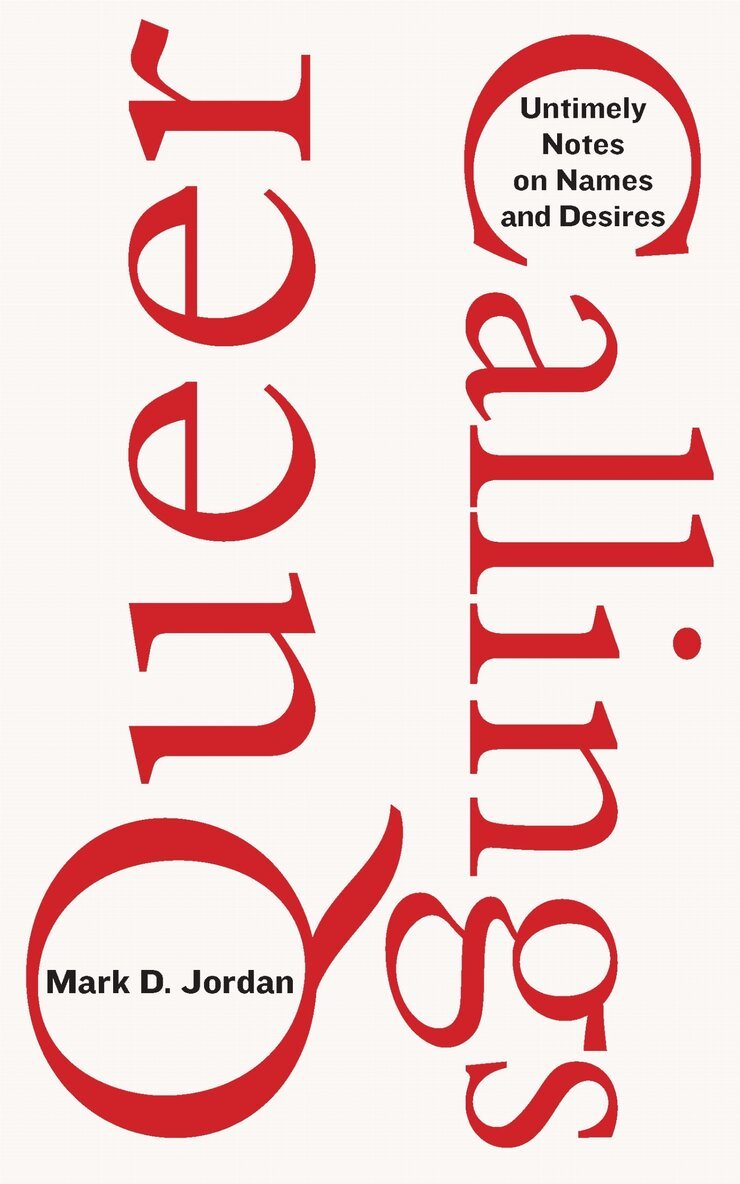
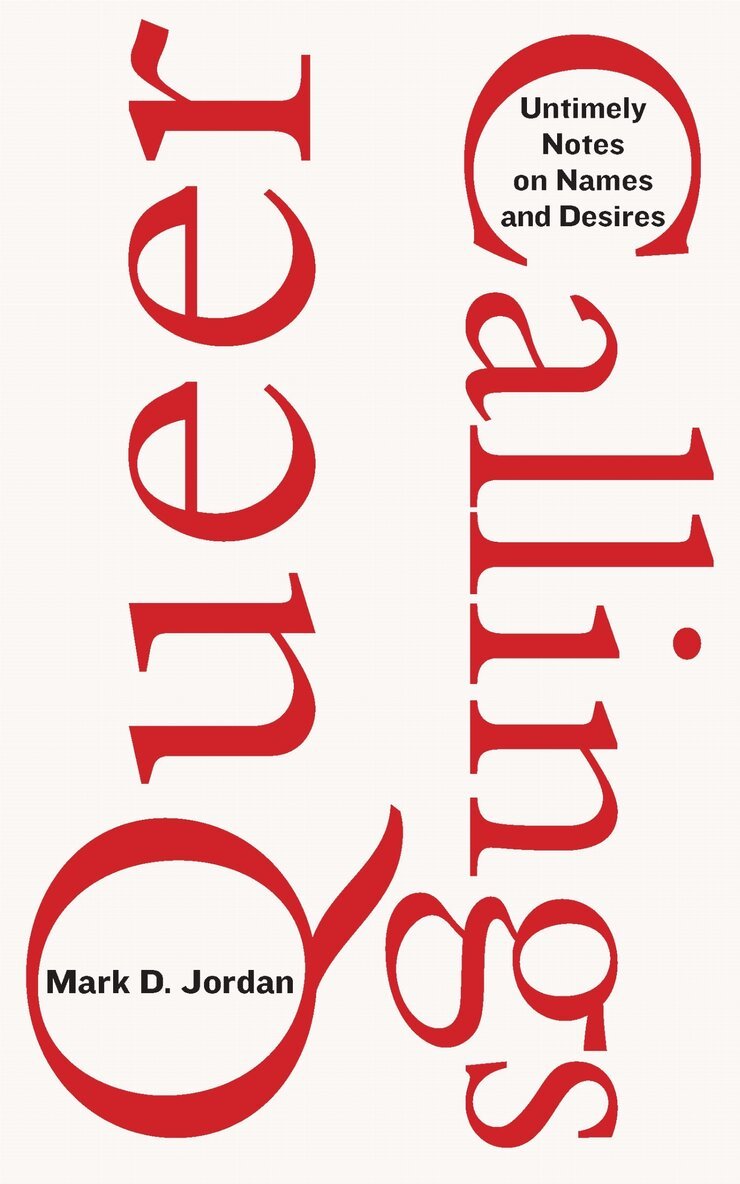
CHOICE: OUTSTANDING ACADEMIC TITLEFINALIST, THE RANDY SHILTS AWARD FOR GAY NONFICTION, THE PUBLISHING TRIANGLE AWARDS A passionate exhortation to expand the ways we talk about human sex, sexuality, and gender.Twenty-five years ago, Mark D. Jordan published his landmark book on the invention and early history of the category "sodomy," one that helped to decriminalize certain sexual acts in the United States and to remove the word sodomy from the updated version of a standard English translation of the Christian Bible. In Queer Callings, Jordan extends the same kind of illuminating critical analysis to present uses of "identity" with regard to sexual difference. While the stakes might not seem as high, he acknowledges, his newest history of sexuality is just as vital to a better present and future.Shaking up current conversations that focus on "identity language," this essential new book seeks to restore queer languages of desire by inviting readers to consider how understandings of "sexual identity" have shifted—and continue to shift—over time. Queer Callings re-reads texts in various genres—literary and political, religious and autobiographical—that have been preoccupied with naming sex/gender diversity beyond a scheme of LGBTQ+ identities. Engaging a wide range of literary and critical works concerned with sex/gender self-understanding in relation to "spirituality," Jordan takes up the writings of Oscar Wilde, Marcel Proust, Djuna Barnes, Samuel R. Delany, Audre Lorde, Geoff Mains, Eve Kosofsky Sedgwick, Gloria Anzaldúa, Maggie Nelson, and others.Before it's possible to perceive sexual identities differently, Jordan argues, current habits for classifying them have to be disrupted. In this way, Queer Callings asks us to reach beyond identity language and invites us to re-perform a selection of alternate languages—some from before the invention of phrases like "sexual identity," others more recent. Tracing a partial genealogy for "sexual identity" and allied phrases, Jordan reveals that the terms are newer than we might imagine. Many queer folk now counted as literary or political ancestors didn't claim a sexual or gender identity: They didn't know they were supposed to have one. Finally, Queer Callings joins the writers it has evoked to resist any remaining confidence that it's possible to give neatly contained accounts of human desire. Reaching into the past to open our eyes to extraordinary opportunities in our present and future, Queer Callings is a generatively destabilizing and essential read.
Häftad, Engelska, 2025
236 kr
Skickas
CHOICE: OUTSTANDING ACADEMIC TITLEFINALIST, THE RANDY SHILTS AWARD FOR GAY NONFICTION, THE PUBLISHING TRIANGLE AWARDSA passionate exhortation to expand the ways we talk about human sex, sexuality, and gender.Twenty-five years ago, Mark D. Jordan published his landmark book on the invention and early history of the category "sodomy," one that helped to decriminalize certain sexual acts in the United States and to remove the word sodomy from the updated version of a standard English translation of the Christian Bible. In Queer Callings, Jordan extends the same kind of illuminating critical analysis to present uses of "identity" with regard to sexual difference. While the stakes might not seem as high, he acknowledges, his newest history of sexuality is just as vital to a better present and future.Shaking up current conversations that focus on "identity language," this essential new book seeks to restore queer languages of desire by inviting readers to consider how understandings of "sexual identity" have shifted – and continue to shift – over time. Queer Callings re-reads texts in various genres – literary and political, religious and autobiographical – that have been preoccupied with naming sex/gender diversity beyond a scheme of LGBTQ identities. Engaging a wide range of literary and critical works concerned with sex/gender self-understanding in relation to "spirituality," Jordan takes up the writings of Oscar Wilde, Marcel Proust, Djuna Barnes, Samuel R. Delany, Audre Lorde, Geoff Mains, Eve Kosofsky Sedgwick, Gloria Anzaldúa, Maggie Nelson, and others.Before it’s possible to perceive sexual identities differently, Jordan argues, current habits for classifying them have to be disrupted. In this way, Queer Callings asks us to reach beyond identity language and invites us to re-perform a selection of alternate languages—some from before the invention of phrases like "sexual identity," others more recent. Tracing a partial genealogy for "sexual identity" and allied phrases, Jordan reveals that the terms are newer than we might imagine. Many queer folk now counted as literary or political ancestors didn’t claim a sexual or gender identity: They didn’t know they were supposed to have one. Finally, Queer Callings joins the writers it has evoked to resist any remaining confidence that it’s possible to give neatly contained accounts of human desire. Reaching into the past to open our eyes to extraordinary opportunities in our present and future, Queer Callings is a generatively destabilizing and essential read.