Kartina A. Choong – Författare
Visar alla böcker från författaren Kartina A. Choong. Handla med fri frakt och snabb leverans.
4 produkter
4 produkter
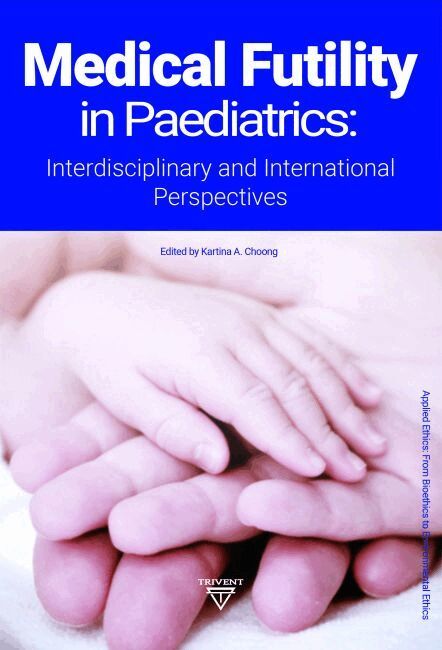
Medical Futility in Paediatrics
Interdisciplinary and International Perspectives
Inbunden, Engelska, 2019
1 595 kr
Skickas inom 7-10 vardagar
This book addresses the issues and challenges raised by the high-profile cases of Charlie Gard and Alfie Evans. The individual chapters, which complement one other, were written by scholars with expertise in Law, Medicine, Medical Ethics, Theology, Health Policy and Management, English Literature, Nursing and History, from the UK, Australia, Canada, the Czech Republic, France, Germany, India, Spain, Turkey and the USA.The following are among the key questions explored in the book. Is the courtroom an appropriate forum for resolving conflicts relating to medical futility in paediatrics? If so, should parental rights be protected by confining judicial powers only to cases where there is a risk of significant harm to the infant; or should the "best interests" test continue to be recognised as the "gold standard" for paediatric cases? If not, should mediation be used instead, but how well would this alternative method of dispute resolution work for medical futility conflicts? Further, should social media be deployed to garner support, and should outsiders who are not fully acquainted with the medical facts refrain from intervening? And, how are comparable situations likely to be managed in different countries? What lessons can be learned from them as well as from religious perspectives?
1 378 kr
Skickas inom 10-15 vardagar
Diagnosis of death by neurological criteria (DNC) is a construct which has been part of the British medico-legal landscape for nearly half a century. This book examines the factors behind its emergence, and discusses the various changes that took place in the last few decades that culminated in the current definition and clinical criteria for determining brain-based death. It highlights the continuities and discontinuities in practice, and the impact they have on the issue of withdrawal of mechanical ventilation in intensive care units and on the field of organ transplantation. The book also explores the law’s response to the introduction and development of DNC in clinical practice. It demonstrates how the legitimacy of the definition and criteria used by the medical profession were forged in the courtroom rather than in Parliament. It documents why case law were introduced in court, and assesses whether organ donation was a consideration in the deliberations. It will be emphasised that courts have given insufficient consideration to requests made in recent cases to consider a broader range of methods to determine death. Those pleas were made on the grounds that the definition and criteria used in the UK are dissimilar to those used in other jurisdictions that also adopt DNC; and that faith communities have a different understanding of death. By taking a close look at those other approaches before highlighting the inherent limitations of the courtroom as the forum that confers DNC its legitimacy, the book puts forward the argument that the democratic process should be engaged.
634 kr
Skickas inom 5-8 vardagar
1 378 kr
Skickas inom 10-15 vardagar
Diagnosis of death by neurological criteria (DNC) is a construct which has been part of the British medico-legal landscape for nearly half a century. This book examines the factors behind its emergence, and discusses the various changes that took place in the last few decades that culminated in the current definition and clinical criteria for determining brain-based death. It highlights the continuities and discontinuities in practice, and the impact they have on the issue of withdrawal of mechanical ventilation in intensive care units and on the field of organ transplantation. The book also explores the law’s response to the introduction and development of DNC in clinical practice. It demonstrates how the legitimacy of the definition and criteria used by the medical profession were forged in the courtroom rather than in Parliament. It documents why case law were introduced in court, and assesses whether organ donation was a consideration in the deliberations. It will be emphasised that courts have given insufficient consideration to requests made in recent cases to consider a broader range of methods to determine death. Those pleas were made on the grounds that the definition and criteria used in the UK are dissimilar to those used in other jurisdictions that also adopt DNC; and that faith communities have a different understanding of death. By taking a close look at those other approaches before highlighting the inherent limitations of the courtroom as the forum that confers DNC its legitimacy, the book puts forward the argument that the democratic process should be engaged.