Kate Fullagar - Böcker
Visar alla böcker från författaren Kate Fullagar. Handla med fri frakt och snabb leverans.
5 produkter
5 produkter
397 kr
Skickas inom 7-10 vardagar
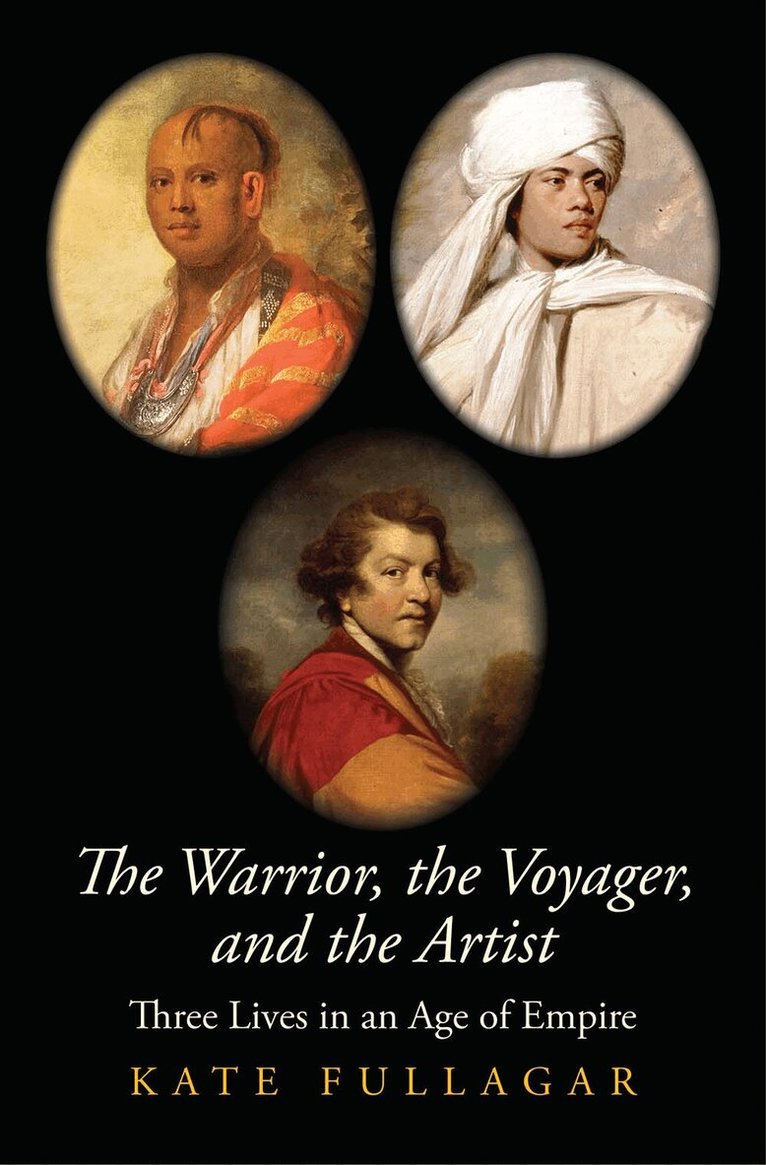
A portrait of empire through the biographies of a Native American, a Pacific Islander, and the British artist who painted them both Three interconnected eighteenth-century lives offer a fresh account of the British empire and its intrusion into Indigenous societies. This engaging history brings together the stories of Joshua Reynolds and two Indigenous men, the Cherokee Ostenaco and the Ra‘iatean Mai. Fullagar uncovers the life of Ostenaco, tracing his emergence as a warrior, his engagement with colonists through war and peace, and his eventual rejection of imperial politics during the American Revolution. She delves into the story of Mai, examining his confrontation with conquest and displacement, his voyage to London on Cook’s imperial expedition, and his return home with a burning ambition to right past wrongs. Woven throughout is a new history of Reynolds—growing up in Devon near a key port in England, becoming a portraitist of empire, rising to the top of Britain’s art world, and yet remaining ambivalent about his nation’s expansionist trajectory.
Del 3 - Berkeley Series in British Studies
Savage Visit
New World People and Popular Imperial Culture in Britain, 1710–1795
Häftad, Engelska, 2012
312 kr
Skickas inom 7-10 vardagar
In eighteenth-century Britain, the appearance of "savages" from the New World provoked intense fascination. Though such people had been arriving periodically for decades, it was only then that the "savage visit" became a sensation. Using a wealth of sources, Kate Fullagar shows why the phenomenon grew and how it related to bitter debates over the morality of imperial expansion.
331 kr
Skickas
Redrawing the map and resetting the clock of the Age of RevolutionsIn 2015, Bryan Banks and Cindy Ermus launched AgeofRevolutions.com, a site offering critical reconsideration of the foundational concept of revolution and centered on three key questions: What was the Age of Revolutions? Where was the Age of Revolutions? And are we still living in an Age of Revolutions? This collection represents the best of scholars' answers to these expansive, urgent questions. Throughout, contributors place the revolutionary era within a larger and more fluid context of global interconnections, situating it within multiple overlapping narratives of resistance and transformation and encouraging a more nuanced and expansive conception of revolution across time and space. They challenge traditional understandings that placed the Age of Revolutions between the years 1775 and 1848 and that confined it to Europe and the Atlantic world. Instead, this volume demonstrates that the Age of Revolutions began much earlier in the eighteenth century and continues through the present day and across the globe—from Haiti to Hong Kong. Collectively, these field-defining essays explore the implications of this new understanding of the concept, offering snapshots of the diverse nature of revolutionary change across all continents.
479 kr
Skickas inom 7-10 vardagar
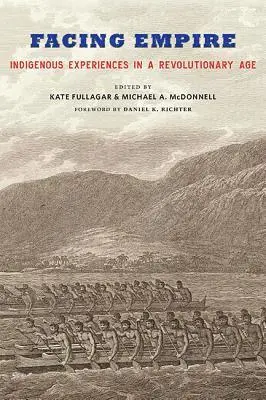
A comprehensive volume that interrogates European imperialism from the perspective of indigenous experiences.The contributors to Facing Empire reimagine the Age of Revolution from the perspective of indigenous peoples. Rather than treating indigenous peoples as distant and passive players in the political struggles of the time, this book argues that they helped create and exploit the volatility that marked an era while playing a central role in the profound acceleration in encounters and contacts between peoples around the world. Focusing in particular on indigenous peoples’ experiences of the British Empire, this volume takes a unique comparative approach in thinking about how indigenous peoples shaped, influenced, redirected, ignored, and sometimes even forced the course of modern imperialism. The essays demonstrate how indigenous-shaped local exchanges, cultural relations, and warfare provoked discussion and policymaking in London as much as it did in Charleston, Cape Town, or Sydney. Facing Empire charts a fresh way forward for historians of empire, indigenous studies, and the Age of Revolution and shows why scholars can no longer continue to exclude indigenous peoples from histories of the modern world. These past conflicts over land and water, labor and resources, and hearts and minds have left a living legacy of contested relations that continue to resonate in contemporary politics and societies today. Covering the Indian and Pacific Oceans, Australia, and West and South Africa, as well as North America, this book looks at the often misrepresented and underrepresented complexity of the indigenous experience on a global scale.Contributors: Tony Ballantyne, Justin Brooks, Colin G. Calloway, Kate Fullagar, Bill Gammage, Robert Kenny, Shino Konishi, Elspeth Martini, Michael A. McDonnell, Jennifer Newell, Joshua L. Reid, Daniel K. Richter, Rebecca Shumway, Sujit Sivasundaram, Nicole Ulrich
221 kr
Skickas
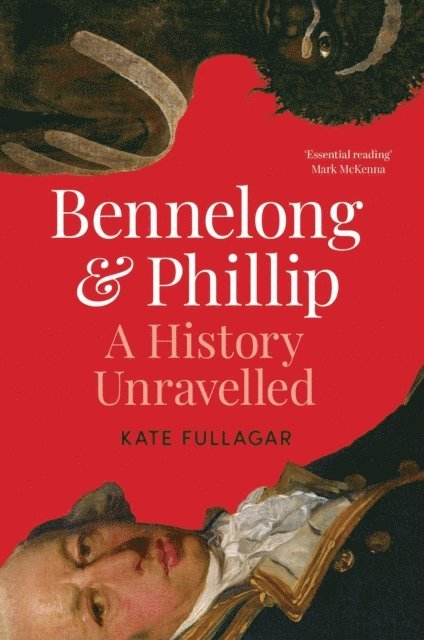
The first joint biography of Bennelong and Governor Arthur Phillip, two pivotal figures in Australian history – the colonised and coloniser – and a bold and innovative new portrait of both.Australian Book Review Books of the Year 2023Sydney Morning Herald Best Reads of the Year for 2023Bennelong and Phillip were leaders of their two sides in the first encounters between Britain and Indigenous Australians, Phillip the colony’s first governor, and Bennelong the Yiyura leader. The pair have come to represent the conflict that flared and has never settled.Fullagar’s account is also the first full biography of Bennelong of any kind and it challenges many misconceptions, among them that he became alienated from his people and that Phillip was a paragon of Enlightenment benevolence. It tells the story of the men’s marriages, including Bennelong’s best-known wife, Barangaroo, and Phillip’s unusual domestic arrangements, and places the period in the context of the Aboriginal world and the demands of empire.To present this history afresh, Bennelong & Phillip relates events in reverse, moving beyond the limitations of typical Western ways of writing about the past, which have long privileged the coloniser over the colonised. Bennelong’s world was hardly linear at all, and in Fullagar’s approach his and Phillip’s histories now share an equally unfamiliar framing.