Kate Loveman – författare
Visar alla böcker från författaren Kate Loveman. Handla med fri frakt och snabb leverans.
6 produkter
6 produkter
585 kr
Skickas inom 7-10 vardagar
Samuel Pepys was a great collector of books, news, and gossip. This study uses his surviving papers to examine reading practices, collecting, and the exchange of information in the late seventeenth century. Offering the first extensive history of reading during the Restoration, it traces developments in the book trade and news transmission at a time when England was the scene of dramatic political and religious upheavals. The investigation goes beyond Pepys's famous diary of the 1660s, employing a variety of sources to explore the role that reading played in Pepys's life and in the lives of his contemporaries. It begins by examining what it meant to be a reader in Restoration London: the skills, the people, and the places involved. Pepys's wide-ranging interests serve as starting points for considering news exchange and the reception of major literary genres in the Restoration. Particular attention is given to conduct books, histories, religious works, and recreational reading (romances, drama, and novels). The appeal that these works held for readers was not always what we might expect -or, indeed, what the authors and publishers had expected. Additional chapters explore the social interactions surrounding information gathering: the ways people acquired oral and written news in London; the experience of book-buying; and the acquisition of manuscript and print through social networks. Analysed alongside other records, Pepys's papers provide unrivalled insights into literary and cultural developments in the second half of the seventeenth century.
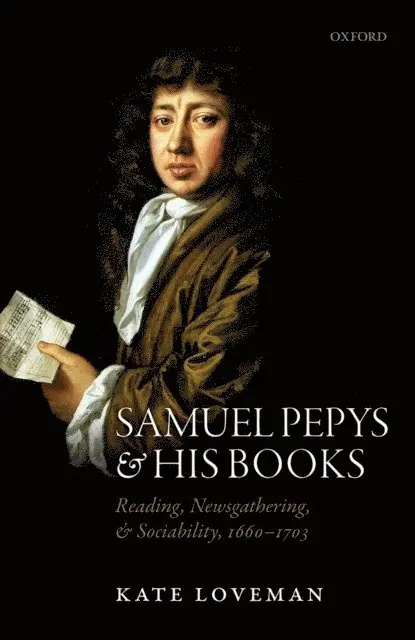
Samuel Pepys and his Books
Reading, Newsgathering, and Sociability, 1660-1703
Inbunden, Engelska, 2015
1 800 kr
Skickas inom 5-8 vardagar
Samuel Pepys was a great collector of books, news, and gossip. This study uses his surviving papers to examine reading practices, collecting, and the exchange of information in the late seventeenth century. Offering the first extensive history of reading during the Restoration, it traces developments in the book trade and news transmission at a time when England was the scene of dramatic political and religious upheavals. The investigation goes beyond Pepys's famous diary of the 1660s, employing a variety of sources to explore the role that reading played in Pepys's life and in the lives of his contemporaries. It begins by examining what it meant to be a reader in Restoration London: the skills, the people, and the places involved. Pepys's wide-ranging interests serve as starting points for considering news exchange and the reception of major literary genres in the Restoration. Particular attention is given to conduct books, histories, religious works, and recreational reading (romances, drama, and novels). The appeal that these works held for readers was not always what we might expect -or, indeed, what the authors and publishers had expected. Additional chapters explore the social interactions surrounding information gathering: the ways people acquired oral and written news in London; the experience of book-buying; and the acquisition of manuscript and print through social networks. Analysed alongside other records, Pepys's papers provide unrivalled insights into literary and cultural developments in the second half of the seventeenth century.
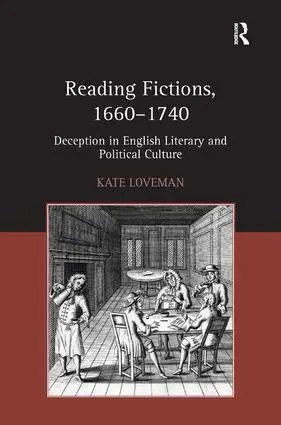
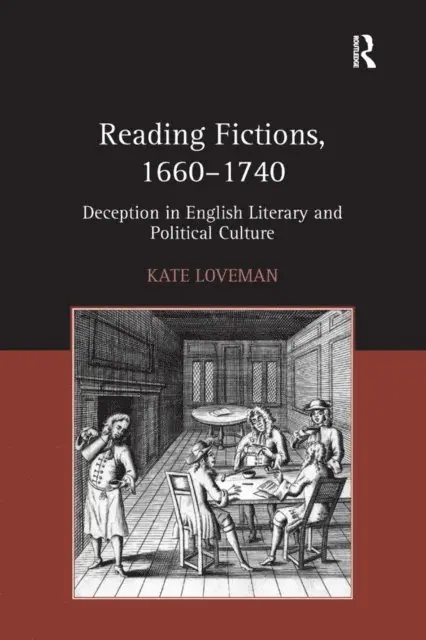
Reading Fictions, 1660-1740
Deception in English Literary and Political Culture
Inbunden, Engelska, 2008
2 508 kr
Skickas inom 10-15 vardagar
English society in the late seventeenth and early eighteenth centuries was fascinated by deception, and concerns about deceptive narratives had a profound effect on reading practices. Kate Loveman's interdisciplinary study explores the ways in which reading habits, first developed to deal with suspect political and religious texts, were applied to a range of genres, and, as authors responded to readers' critiques, shaped genres. Examining responses to authors such as Defoe, Swift, Richardson and Fielding, Loveman investigates reading as a sociable activity. She uncovers a lost critical discourse, centred on strategies of 'shamming', which involved readers in public displays of reason, wit and ironic pretence as they discussed the credibility of oral and written narratives. Widely understood by early modern readers and authors, the codes of this rhetoric have now been forgotten, to the detriment of our perception of the period's literature and politics. Loveman's lively book offers a striking new approach to Restoration and eighteenth-century literary culture and, in particular, to understanding the development of the novel.
234 kr
Skickas inom 7-10 vardagar
During the 1660s, Samuel Pepys kept a secret diary full of intimate details and political scandal. Had the contents been revealed, they could have destroyed his marriage, ended his career, and seen him arrested. This engaging book explores the creation of the most famous journal in the English language, how it came to be published in 1825, and the many remarkable roles it has played in British culture since then. Kate Loveman - one of the few people who can read Pepys's shorthand - unlocks the riddles of the diary, investigating why he chose to preserve such private matters for later generations. She also casts fresh light on the women and sexual relationships in Pepys's life and on Black Britons living in or near his household. Exploring the many inventive uses to which the diary has been put, Loveman shows how Pepys's history became part of the history of the nation.
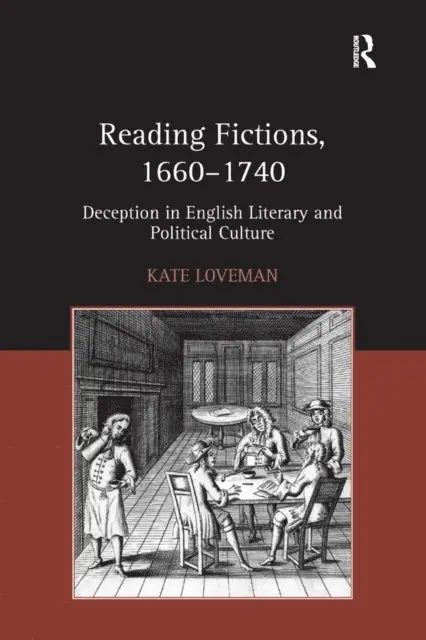
Reading Fictions, 1660-1740
Deception in English Literary and Political Culture
Häftad, Engelska, 2018
837 kr
Skickas inom 10-15 vardagar
English society in the late seventeenth and early eighteenth centuries was fascinated by deception, and concerns about deceptive narratives had a profound effect on reading practices. Kate Loveman's interdisciplinary study explores the ways in which reading habits, first developed to deal with suspect political and religious texts, were applied to a range of genres, and, as authors responded to readers' critiques, shaped genres. Examining responses to authors such as Defoe, Swift, Richardson and Fielding, Loveman investigates reading as a sociable activity. She uncovers a lost critical discourse, centred on strategies of 'shamming', which involved readers in public displays of reason, wit and ironic pretence as they discussed the credibility of oral and written narratives. Widely understood by early modern readers and authors, the codes of this rhetoric have now been forgotten, to the detriment of our perception of the period's literature and politics. Loveman's lively book offers a striking new approach to Restoration and eighteenth-century literary culture and, in particular, to understanding the development of the novel.
221 kr
Skickas
When Samuel Pepys (1633–1703) began writing in 1660 he was a young clerk living in London, struggling to pay his rent. Over the next nine years as he kept his journal, he rose to be a powerful naval administrator. He became eyewitness to some of the most significant events in seventeenth-century English history, among them, the Restoration of the monarchy in 1660 (he was in the ship that brought back Charles II from exile), the plague that ravaged the capital in 1665, and the Great Fire of 1666, described with poetry and horror.Pepys's diary gives vivid descriptions of spectacular events, but much of the richness of the diary lies in the details it provides about the minor dramas of daily life. While Pepys was keen to hear the King's views, he was also ready to talk with a soldier, a housekeeper, or a child rag-picker. He records with searing frankness his tumultuous personal and professional life: the pleasures and frustrations of his marriage, together with his infidelities, his ambitions, and his power schemes. All of this was set down in shorthand, to protect it from prying eyes. The result is a lively, often astonishing, diary and an unrivalled account of life in seventeenth-century London.