• Fri frakt över 249 kr
  • •
  • Snabba leveranser
  • •
  • Billiga böcker
Kundservice

Du är på sajten för privatpersoner.

Företag, bibliotek eller offentlig verksamhet?

Du handlar på classic.bokus.com, där alla dina funktioner finns intakta.
Till classic.bokus.com
Bokus logotyp. Gå till startsidan.
  • Erbjudanden
  • Student
  • Topplistor
  • Barn & ungdom
  • Bokus Play
  • E-böcker
  • Ljudböcker
  • Pocketböcker
  • Spel och pussel

5% studentrabatt – använd koden KURSBOK27 →

Sidfot

Mina sidor

    Hjälp

    • Kundservice
    • Vanliga frågor och svar
    • Frakt och leverans
    • Retur vid ångerrätt
    • Reklamera vara
    • Betalning
    • Köpvillkor
    • Allmänna villkor
    • Information om webbplatsens tillgänglighet

    Om Bokus

    • Om oss
    • Pressrum
    • För studenter
    • För företag
    • För bibliotek och offentlig verksamhet
    • För leverantörer
    • Hållbarhet

    Populärt

    • Aktuella erbjudanden
    • Presentkort
    • Studentlitteratur
    • Nya böcker
    • Topplistor
    • Signerade böcker
    • Engelska böcker

    Inspiration

    • Boktips
    • BookTok
    • Barnbokskaraktärer
    • Populära författare
    Logotyp för Bokus
    Följ oss på Facebook (extern länk)Följ oss på Instagram (extern länk)Följ oss på YouTube (extern länk)Följ oss på TikTok (extern länk)
    bokus @ CookiesAnpassa cookiesIntegritetspolicyKöpvillkor
    Till Citymail hemsida (extern länk)Till Budbee hemsida (extern länk)Till Postnord hemsida (extern länk)Till Schenker hemsida (extern länk)Till Early Bird hemsida (extern länk)Till Walleys hemsida (extern länk)
    1. Skönlitteratur
    2. Litteraturvetenskap
    3. Litteraturvetenskap

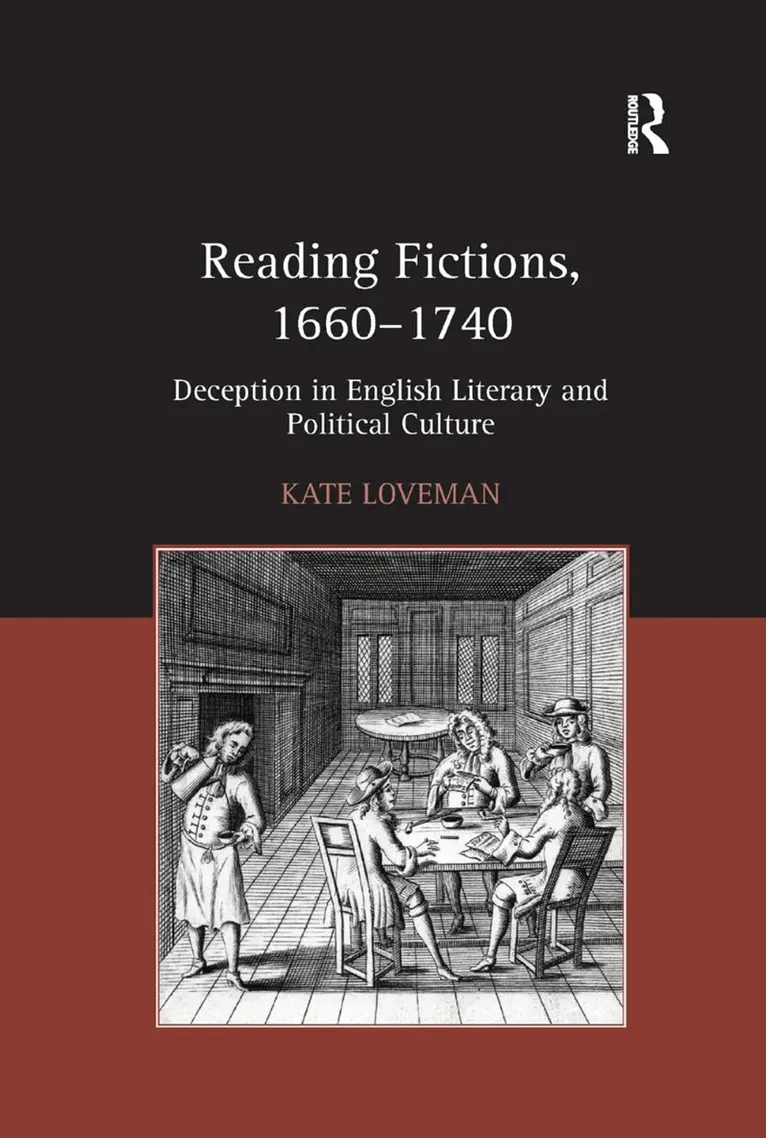
    Reading Fictions, 1660-1740

    Deception in English Literary and Political Culture

    AvKate Loveman

    Häftad, Engelska, 2018

    907 kr

    Beställningsvara. Skickas inom 10-15 vardagar. Fri frakt över 249 kr.

    Fler format och utgåvor

    Inbunden

    2 771 kr

    E-bok

    1 083 kr

    E-bok

    1 080 kr

    Beskrivning

    English society in the late seventeenth and early eighteenth centuries was fascinated by deception, and concerns about deceptive narratives had a profound effect on reading practices. Kate Loveman's interdisciplinary study explores the ways in which reading habits, first developed to deal with suspect political and religious texts, were applied to a range of genres, and, as authors responded to readers' critiques, shaped genres. Examining responses to authors such as Defoe, Swift, Richardson and Fielding, Loveman investigates reading as a sociable activity. She uncovers a lost critical discourse, centred on strategies of 'shamming', which involved readers in public displays of reason, wit and ironic pretence as they discussed the credibility of oral and written narratives. Widely understood by early modern readers and authors, the codes of this rhetoric have now been forgotten, to the detriment of our perception of the period's literature and politics. Loveman's lively book offers a striking new approach to Restoration and eighteenth-century literary culture and, in particular, to understanding the development of the novel.

    Produktinformation

    • Utgivningsdatum:2018-12-19
    • Mått:156 x 234 x 13 mm
    • Vikt:453 g
    • Format:Häftad
    • Språk:Engelska
    • Antal sidor:232
    • Förlag:Taylor & Francis Ltd
    • ISBN:9781138376229

    Utforska kategorier

    • Litteraturvetenskap inom Skönlitteratur

    Mer om författaren

    Kate Loveman is lecturer in English at the University of Leicester, UK.

    Recensioner i media

    'In this elegant, informed, and daring study, Kate Loveman presents an argument that lies athwart the critical preoccupation with the genealogy of the novel. Loveman shows that what we call the novel emerged from within a rich culture of tale-telling in which fictions of all kinds were endemic to coffee house circles, to a world in which detecting shams endowed social prestige and which therefore encouraged skeptical reading within an essentially ludic culture, whose habits persisted even after the emergence of sentimental modes of apprehension.' Richard Kroll, University of California, Irvine, and author of Restoration Drama and 'The Circle of Commerce': Tragicomedy, Politics, and Trade in the Seventeenth Century (2007) '... an impressive work of scholarship...’ Review of English Studies ’Sometimes common sense, especially when joined by excellent research, a clear head, and a prose style resolutely devoted to informing rather than impressing, rises to the level of genius. Reading Fictions is in this class, and is required reading for students of both Augustan irony and the early novel.’ Eighteenth-Century Fiction ’... learned, audacious, and gracefully written... No student of Defoe or Swift [...] can afford to neglect Loveman’s extremely powerful chapters on those writers. From this point forward, any study of the novel’s Restoration and early eighteenth-century origins which fails to pick up on Loveman’s ideas will be fit only for posterior uses.’ Modern Language Review '... Loveman has [succeeded] in surveying so broad a field and distilling such a cogent argument from her evidence.' Royal Stuart Journal 'Loveman’s arguments are subtle and always alive to the nuances of particular biographical circumstances and publishing history; a great deal of the material is unfamiliar, and that which is familiar is seen in a new and interesting way.' Modern Philology 'This scholarly and elegantly written book does not only provide new approaches to

    Innehållsförteckning

    • Contents: Introduction; Sceptical reading in the 17th and early 18th centuries; The Strange Finding Out of Moses his Tombe: strategies and motives for hoaxing; 'Florishing lyes': coffee-house wit in the Restoration; More Shams Still: reading in the Popish Plot and Exclusion crisis; News, novels and imposture, 1688-1702; Defoe and his 'ill-disposed' readers; Swift's bites: 18th-century raillery in theory and practice; Bubbling sentiments: Richardson's Pamela and Fielding's Shamela; Conclusion; Select bibliography; Index.