Kate Meagher - Böcker
Visar alla böcker från författaren Kate Meagher. Handla med fri frakt och snabb leverans.
7 produkter
7 produkter
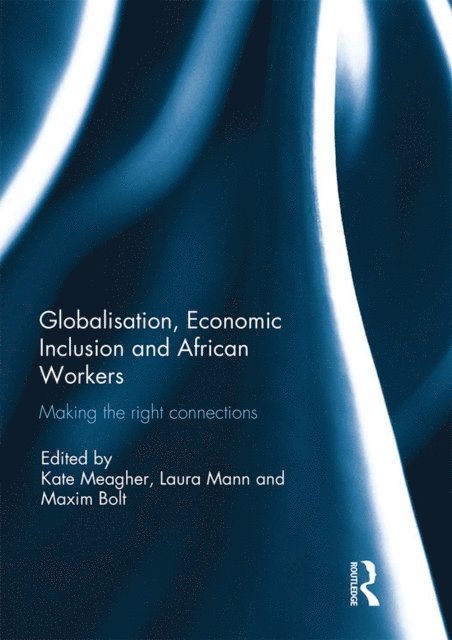
Globalisation, Economic Inclusion and African Workers
Making the Right Connections
Häftad, Engelska, 2018
674 kr
Skickas inom 10-15 vardagar
This book addresses the question of whether greater inclusion in the global economy offers a solution to rising unemployment and poverty in contemporary Africa. The authors trace the connection between global demographic change and new mechanisms of economic inclusion via global value chains, digital networks, labour migration, and corporate engagement with the bottom of the pyramid, challenging the claim that African workers have become functionally irrelevant to the global economy. They expose the shift of global demand for African workers from formal to increasingly informalised labour arrangements, mediated by social enterprises, labour brokers, graduate entrepreneurs and grassroots associations. Focusing on global employment connections initiated from above and from below, the authors examine whether global labour linkages increase or reduce problems of vulnerable and unstable working conditions within African countries, and considers the economic and political conditions needed for African workers to capture the gains of inclusion in the global economy. This book was previously published as a special issue of the Journal of Development Studies.
1 045 kr
Skickas inom 10-15 vardagar
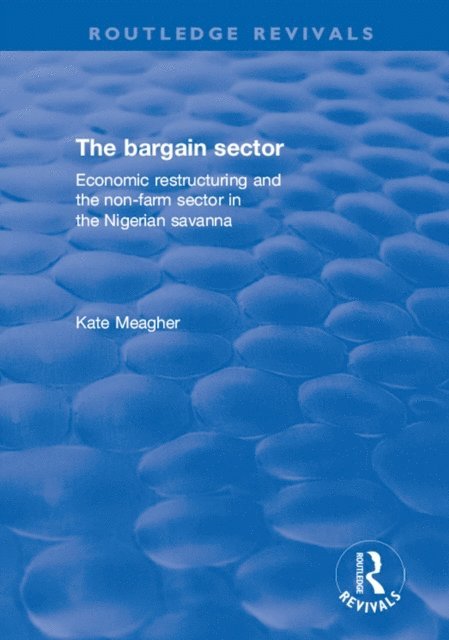
This title was first published in 2001: Does the non-farm sector offer new hope for rural Africa? In the face of economic crisis and restructuring across Africa, small-scale enterprise has come to play a central role in rural livelihood and accumulation strategies. This apparent dynamism has attracted favourable attention from development thinkers and policy-makers, who have identified non-farm enterprise as a new low-cost agent of rural development. The research in this book challenges the growing consensus on the developmental potential of the non-farm sector. On the basis of recent fieldwork, the author argues that the prospects for non-farm led growth have been seriously undermined by the crippling pressures of structural adjustment, agricultural instability and rural as well as interregional inequality. Detailed village case-studies from the populous and highly commercialized grain surplus region of the Nigerian savanna leads the reader to investigate the link between local economic and social realities, and the wider regional, national and global processes that form the development of the non-farm sector in Africa. Far from offering a bargain solution, the author demonstrates that significant investment in agriculture and entrepreneurial development will be needed to create an enabling environment for non-farm growth.
Globalisation, Economic Inclusion and African Workers
Making the Right Connections
Inbunden, Engelska, 2016
2 160 kr
Skickas inom 10-15 vardagar
This book addresses the question of whether greater inclusion in the global economy offers a solution to rising unemployment and poverty in contemporary Africa. The authors trace the connection between global demographic change and new mechanisms of economic inclusion via global value chains, digital networks, labour migration, and corporate engagement with the bottom of the pyramid, challenging the claim that African workers have become functionally irrelevant to the global economy. They expose the shift of global demand for African workers from formal to increasingly informalised labour arrangements, mediated by social enterprises, labour brokers, graduate entrepreneurs and grassroots associations. Focusing on global employment connections initiated from above and from below, the authors examine whether global labour linkages increase or reduce problems of vulnerable and unstable working conditions within African countries, and considers the economic and political conditions needed for African workers to capture the gains of inclusion in the global economy. This book was previously published as a special issue of the Journal of Development Studies.
484 kr
Skickas inom 10-15 vardagar
Does the non-farm sector offer new hope for rural Africa? In the face of economic crisis and restructuring across Africa, small-scale enterprise has come to play a central role in rural livelihood and accumulation strategies. This apparent dynamism has attracted favourable attention from development thinkers and policy-makers, who have identified non-farm enterprise as a new low-cost agent of rural development. The research in this book challenges the growing consensus on the developmental potential of the non-farm sector. On the basis of recent fieldwork, the author argues that the prospects for non-farm led growth have been seriously undermined by the crippling pressures of structural adjustment, agricultural instability and rural as well as interregional inequality. Detailed village case-studies from the populous and highly commercialized grain surplus region of the Nigerian savanna leads the reader to investigate the link between local economic and social realities, and the wider regional, national and global processes that form the development of the non-farm sector in Africa. Far from offering a bargain solution, the author demonstrates that significant investment in agriculture and entrepreneurial development will be needed to create an enabling environment for non-farm growth.
Del 25 - African Issues
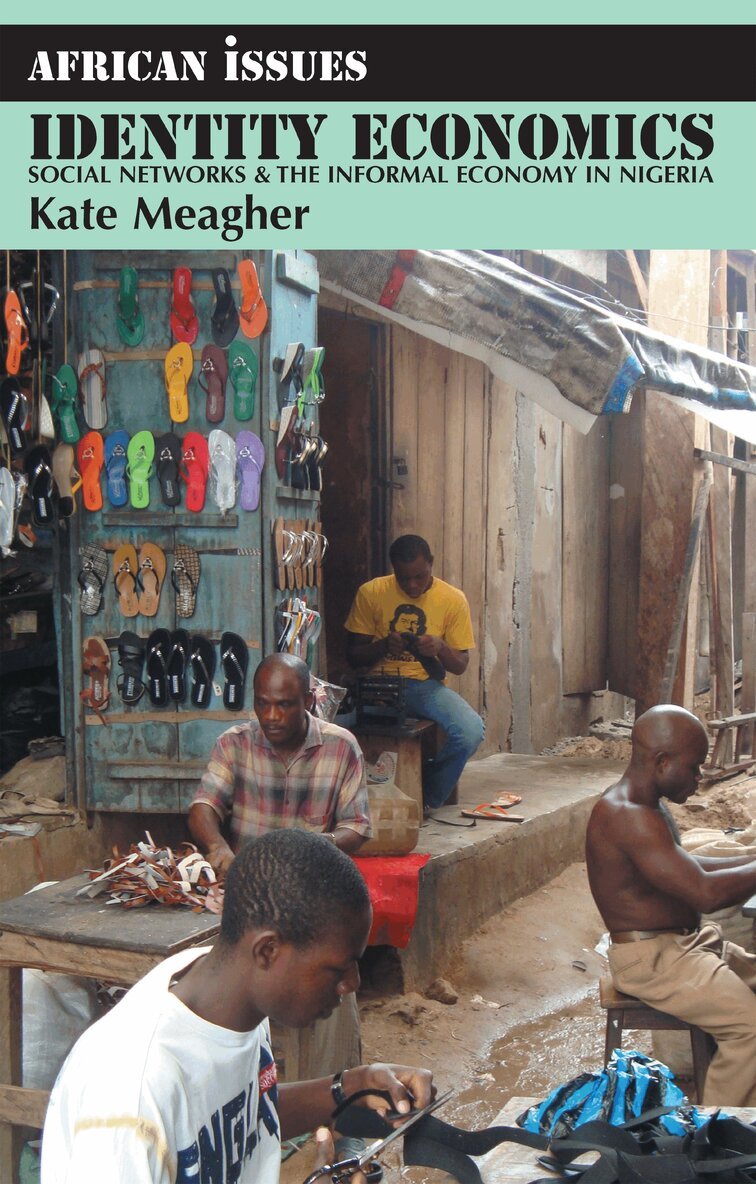
Identity Economics
Social Networks and the Informal Economy in Nigeria
Häftad, Engelska, 2010
286 kr
Skickas inom 7-10 vardagar
This book is essential reading for those interested in the role of the informal economy in contemporary processes of growth and economic governance in Africa.Why have informal enterprise networks failed to promote economic development in Africa? Although social networks were thought to offer a solution to state incapacity and market failure, the proliferation of socially embedded enterprise networks across Africa has generated disorder and economic decline rather than development. This book challenges the prevailing assumption that the problem of African development lies in bad cultural institutions by showingthat informal economic governance in Nigeria is shaped, not just by culture, but by the disruptive effects of rapid liberalization, state decline and political capture.Identity Economics traces the rise of two dynamic informal enterprise clusters in Nigeria, and explores their slide into trajectories of Pentecostalism, poverty and violent vigilantism. Drawing on over twenty years of empirical research on African informal economies, the author highlights the institutional legacies, networking strategies and globalizing dynamics that shape the regulatory role of social networks in Africa's largest and most turbulent economy. Through an ethnography of informal economicgovernance, this book shows how ties of ethnicity, class, gender and religion are used to restructure enterprise networks in response to contemporary economic challenges. Moving beyond primordialist interpretations of African culture, attention is drawn to the critical role of the state and the macro-economic policy environment in shaping trajectories of informal economic governance. KATE MEAGHER is a former Research Associate at Queen Elizabeth House, University of Oxford and is currently a Lecturer in the Development Studies Institute at the London School of Economics.Nigeria: HEBN
Del 15 - Western Africa Series
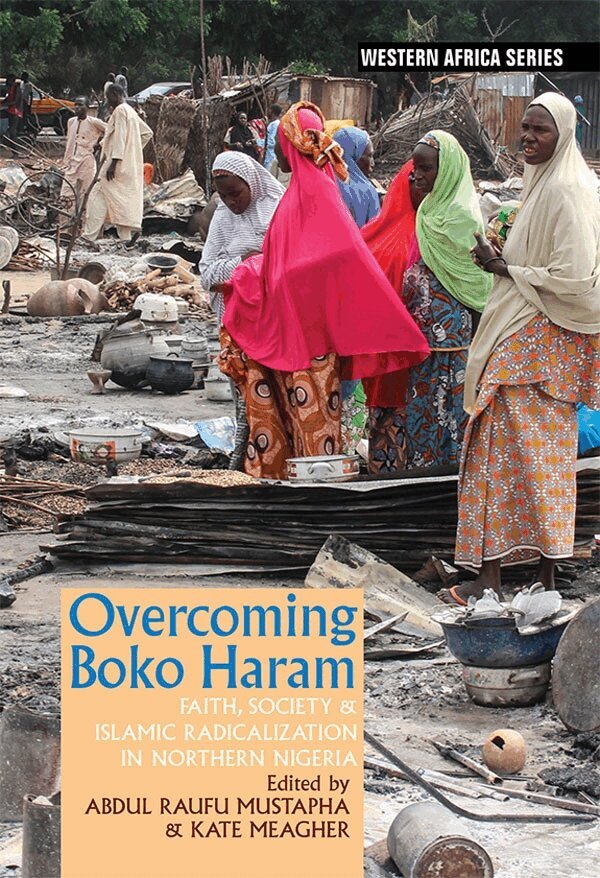
Overcoming Boko Haram
Faith, Society & Islamic Radicalization in Northern Nigeria
Inbunden, Engelska, 2020
1 430 kr
Skickas inom 10-15 vardagar
A comparative, whole-of-society approach to the Boko Haram insurgency that offers a more nuanced understanding of the risks, resilience and resolution of violent radicalization in Nigeria and beyond.It is now more than a decade since the violent Islamic group Boko Haram launched its reign of terror across northern Nigeria, claiming more than 27,000 lives and displacing over 2 million people. While its territorial gains have largely been recaptured, the insurgency rages on, devastating communities across vast stretches of the north-east and disrupting governance, livelihoods and food security, as well as posing a security risk to Niger, Chad and Cameroon.Less attention is paid to the pervasive popular rejection of violent extremism on the ground. How did a diverse and economically dynamic West African society unravel so violently, and for so long? Why does radicalizationhave so little influence on large Muslim populations in surrounding areas, such as the Yoruba in south-western Nigeria, or the poor ethnically similar Muslim majority in central Niger just north of the border? This book looks beyond the details of the insurgency to examine the wider social and political processes that explain why Boko Haram emerged when and where it did, and what forces exist within society to contain it. Drawing on the detailed fieldworkof specialist Nigerian and Nigerianist scholars from Nigeria, connecting the worst of Boko Haram violence to the wider realities of the present, the book offers new insights into the drivers of Islamic extremism in Nigeria - poverty, regional inequality, environmental stress, migration, youth unemployment, and state corruption and human rights abuses - with a view to charting more sustainable paths out of the conflict.Nigeria: Premium Times Books
Del 15 - Western Africa Series
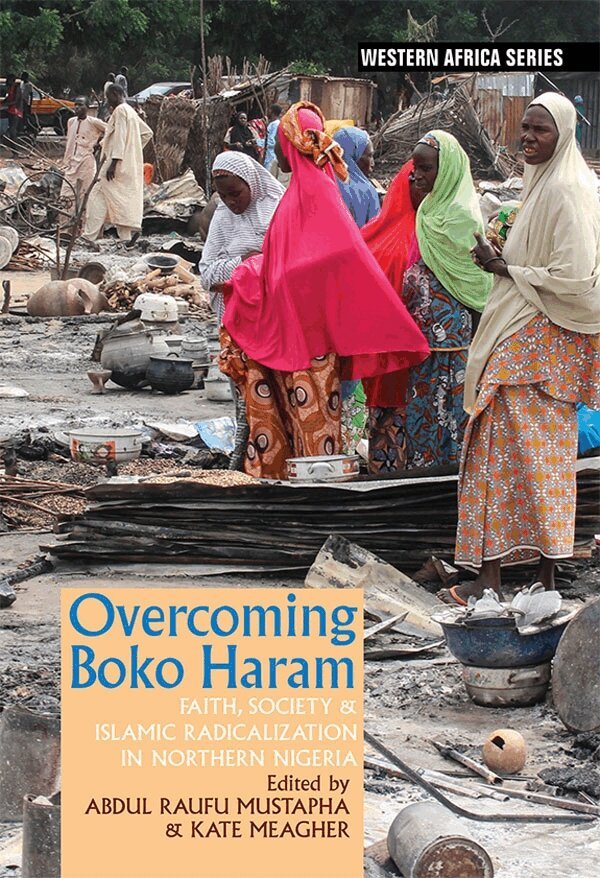
Overcoming Boko Haram
Faith, Society & Islamic Radicalization in Northern Nigeria
Häftad, Engelska, 2022
368 kr
Skickas inom 7-10 vardagar
A comparative, whole-of-society approach to the Boko Haram insurgency that offers a more nuanced understanding of the risks, resilience and resolution of violent radicalization in Nigeria and beyond.It is now more than a decade since the violent Islamic group Boko Haram launched its reign of terror across northern Nigeria, claiming more than 27,000 lives and displacing over 2 million people. While its territorial gains have largely been recaptured, the insurgency rages on, devastating communities across vast stretches of the north-east and disrupting governance, livelihoods and food security, as well as posing a security risk to Niger, Chad and Cameroon.Less attention is paid to the pervasive popular rejection of violent extremism on the ground. How did a diverse and economically dynamic West African society unravel so violently, and for so long? Why does radicalizationhave so little influence on large Muslim populations in surrounding areas, such as the Yoruba in south-western Nigeria, or the poor ethnically similar Muslim majority in central Niger just north of the border? This book looks beyond the details of the insurgency to examine the wider social and political processes that explain why Boko Haram emerged when and where it did, and what forces exist within society to contain it. Drawing on the detailed fieldworkof specialist Nigerian and Nigerianist scholars from Nigeria, connecting the worst of Boko Haram violence to the wider realities of the present, the book offers new insights into the drivers of Islamic extremism in Nigeria - poverty, regional inequality, environmental stress, migration, youth unemployment, and state corruption and human rights abuses - with a view to charting more sustainable paths out of the conflict.Nigeria: Premium Times Books