Katharina Hall - Böcker
Visar alla böcker från författaren Katharina Hall. Handla med fri frakt och snabb leverans.
4 produkter
4 produkter
191 kr
Tillfälligt slut
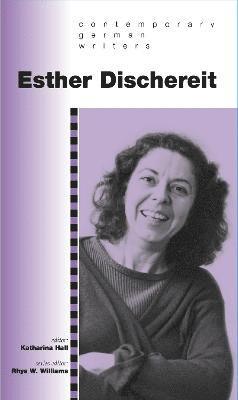
Esther Dischereit is a Berlin-based, Jewish-German author, who has played a prominent literary and cultural role in Germany since the 1980s. Through a series of academic articles in English and German this volume examines Dischereit's explorations of female Jewish-German identity in her numerous novels, poems, plays and essays, as well as how she views her own, sometimes conflicted position as a Jewish-German writer in the post-Holocaust Germany of today. The volume also includes previously unpublished work by Dischereit, and an in-depth interview with the author, held during her period as writer-in-residence at the Centre for Contemporary German Literature, Swansea University in July and September 2003.
1 019 kr
Skickas inom 5-8 vardagar
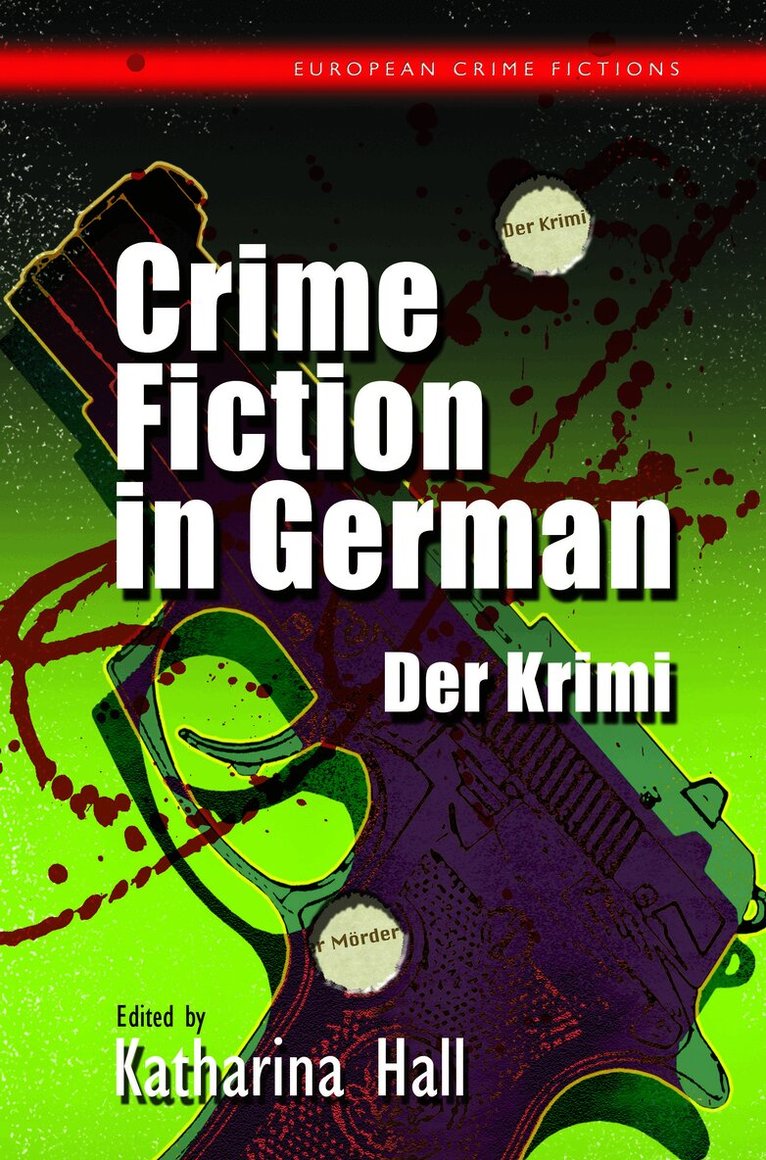
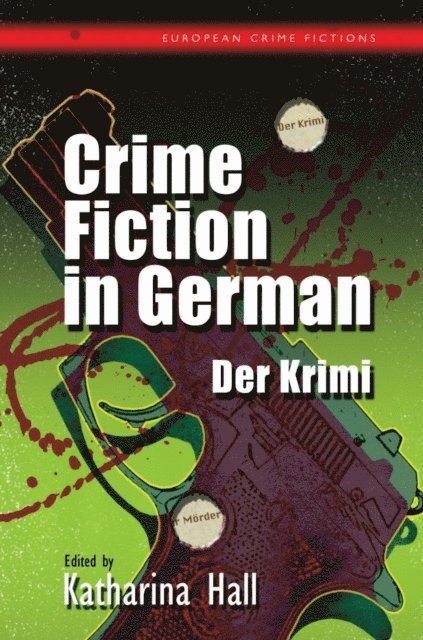
Crime Fiction in German is the first volume in English to offer a comprehensive overview of German-language crime fiction from its origins in the early nineteenth century to its vibrant growth in the new millennium. As well as introducing readers to crime fiction from Germany, Austria, Switzerland and the former East Germany, the volume expands the notion of a German crime-writing tradition by investigating Nazi crime fiction, Jewish-German crime fiction, Turkish-German crime fiction and the Afrika-Krimi. Other key areas, including the West German social crime novel, women’s crime writing, regional crime fiction, historical crime fiction and the Fernsehkrimi (TV crime drama) are also explored, highlighting the genre’s distinctive features in German-language contexts.The volume includes a map of German-speaking Europe, a chronology of crime publishing milestones, extracts from primary texts, and an annotated bibliography of print and online resources in English and German.ContentsMap of German-speaking areas in EuropeCrime Fiction in German Chronology1. Crime Fiction in German: Key Concepts, Developments and Trends, Katharina Hall:Der Krimi; The pioneers (1828–1933); Crime fiction under National Socialism (1933–45); Post-war crime narratives (1945–59) and East German crime fiction (1949–70); The West German Soziokrimi (1960–) and further East German crime fiction (1971–89); Turkish-German crime fiction and the Frauenkrimi (1980–); Historical crime fiction, regional crime fiction and the rise of the Afrika-Krimi (1989–); Crime fiction of the new millennium and the lacuna of Jewish-German crime fiction (available Open Access at Swansea University)2. The Emergence of Crime Fiction in German: An Early Maturity, Mary Tannert3. Austrian Crime Fiction: Experimentation, Critical Memory and Humour, Marieke Krajenbrink4. Swiss Crime Fiction: Loosli, Glauser, Dürrenmatt and Beyond, Martin Rosenstock5. Der Afrika-Krimi: German Crime Fiction in Africa, Julia Augart6. Der Frauenkrimi: Women's Crime Writing in German, Faye Stewart7. Historical Crime Fiction in German: The Turbulent Twentieth Century, Katharina Hall8. Der Fernsehkrimi: A Short History of Television Crime Drama in German, Katharina HallAnnotated Bibliography of Resources on German-language Crime Fiction, Katharina Hall‘Katharina Hall’s knowledge of and enthusiasm for crime fiction in translation is prodigious, but (crucially) it is matched by her nonpareil analytic skills. This combination, when focused on her particular speciality of genre fiction from Germany, makes her the perfect editor for and contributor to Crime Fiction in German: Der Krimi. The book becomes at a stroke the definitive modern guide to the subject – scholarly, lively and accessible.’Barry Forshaw, author of Euro Noir and Nordic Noir
244 kr
Skickas inom 5-8 vardagar
Crime Fiction in German is the first volume in English to offer a comprehensive overview of German-language crime fiction from its origins in the early nineteenth century to its vibrant growth in the new millennium. As well as introducing readers to crime fiction from Germany, Austria, Switzerland and the former East Germany, the volume expands the notion of a German crime-writing tradition by investigating Nazi crime fiction, Jewish-German crime fiction, Turkish-German crime fiction and the Afrika-Krimi. Other key areas, including the West German social crime novel, women’s crime writing, regional crime fiction, historical crime fiction and the Fernsehkrimi (TV crime drama) are also explored, highlighting the genre’s distinctive features in German-language contexts.The volume includes a map of German-speaking Europe, a chronology of crime publishing milestones, extracts from primary texts, and an annotated bibliography of print and online resources in English and German.ContentsMap of German-speaking areas in EuropeCrime Fiction in German Chronology1. Crime Fiction in German: Key Concepts, Developments and Trends, Katharina Hall:Der Krimi; The pioneers (1828–1933); Crime fiction under National Socialism (1933–45); Post-war crime narratives (1945–59) and East German crime fiction (1949–70); The West German Soziokrimi (1960–) and further East German crime fiction (1971–89); Turkish-German crime fiction and the Frauenkrimi (1980–); Historical crime fiction, regional crime fiction and the rise of the Afrika-Krimi (1989–); Crime fiction of the new millennium and the lacuna of Jewish-German crime fiction (available Open Access at Swansea University)2. The Emergence of Crime Fiction in German: An Early Maturity, Mary Tannert3. Austrian Crime Fiction: Experimentation, Critical Memory and Humour, Marieke Krajenbrink4. Swiss Crime Fiction: Loosli, Glauser, Dürrenmatt and Beyond, Martin Rosenstock5. Der Afrika-Krimi: German Crime Fiction in Africa, Julia Augart6. Der Frauenkrimi: Women's Crime Writing in German, Faye Stewart7. Historical Crime Fiction in German: The Turbulent Twentieth Century, Katharina Hall8. Der Fernsehkrimi: A Short History of Television Crime Drama in German, Katharina HallAnnotated Bibliography of Resources on German-language Crime Fiction, Katharina Hall‘Katharina Hall’s knowledge of and enthusiasm for crime fiction in translation is prodigious, but (crucially) it is matched by her nonpareil analytic skills. This combination, when focused on her particular speciality of genre fiction from Germany, makes her the perfect editor for and contributor to Crime Fiction in German: Der Krimi. The book becomes at a stroke the definitive modern guide to the subject – scholarly, lively and accessible.’Barry Forshaw, author of Euro Noir and Nordic Noir
Del 15 - Cultural History & Literary Imagination
Constructions of Conflict
Transmitting Memories of the Past in European Historiography, Culture and Media
Häftad, Engelska, 2011
592 kr
Skickas inom 5-8 vardagar
This collection of essays explores the ways in which memories of social, political and military conflicts have been transmitted by twentieth- and twenty-first-century European historiography, culture and media, and the diverse representations, or constructions of conflict, that have emerged as a result.Encompassing world wars, national conflicts, civil protests and acts of terrorism from 1914 to 2009, the volume examines constructions of conflict in multiple national contexts, including East/West Germany, post-reunification Germany, Spain, France, Italy, Great Britain and Iran. Individual essays investigate the roles played by agents and mediators of memory, from protesters, soldiers, policemen and sports officials to historians, journalists, writers and bloggers. In the process, they explore the complex interaction between state-sanctioned memories, political memories and personal recollections. The nature and influence of different carriers of memory are also discussed, such as historical narratives, commemorative ceremonies, memorials, literature, films, the new media of the World Wide Web and mobile phones, and visual representations including graphic novels and photographs. Organised around three key themes – ‘public and private discourses of memory’, ‘counter-memories’ and ‘commemorative practices’ – the contributions to this volume engage in a vibrant and instructive dialogue about contemporary processes of representing and constructing conflict.