Katherine Astbury – författare
Visar alla böcker från författaren Katherine Astbury. Handla med fri frakt och snabb leverans.
9 produkter
9 produkter
Häftad, Engelska, 2020
751 kr
Skickas inom 10-15 vardagar
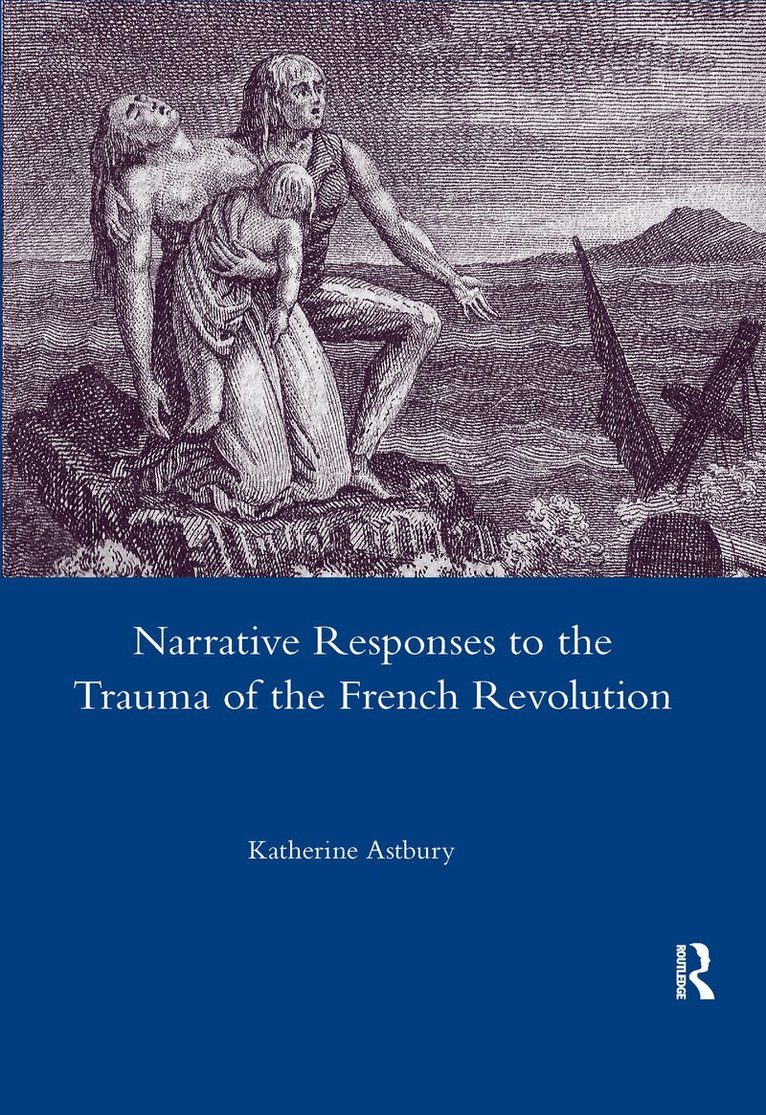
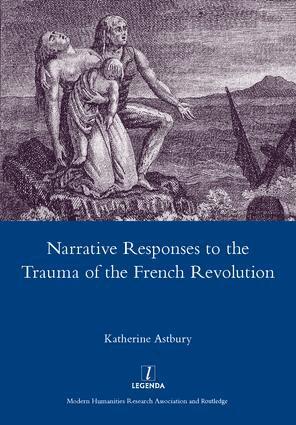
This book examines both the notion that the non-political fiction of the Revolution is responding to the events in France and the idea that trauma theory might shed light on the ways in which novelists responded to the Revolution.
Häftad, Engelska, 2002
1 860 kr
Skickas inom 5-8 vardagar
Between 1761 and 1780 the Contes moraux of the self-proclaimed inventor of the moral tale, Jean-François Marmontel, were republished more times than Rousseau’s La Nouvelle Héloïse. They were an instant success throughout Europe and imitators quickly capitalised on readers’ enthusiasm for the moral tale. In fact Marmontel was merely exploiting a growing tendency towards using short fiction in the periodicals of the time and his achievements can only be understood in a wider context. The moral tale came into being in the 1750s in response to a new cultural climate in both France and Germany which focussed on morality and virtue as a means to regenerate society. Authors soon came to see the potential for social comment in their depiction of contemporary society and the moral tale became a form of popular expression of enlightened ideas about injustice, the position of women in society, poverty, the relationship between the growing middle classes and the aristocracy, between citizens and the state. This move towards greater political comment took place against the backdrop of literary developments, as writers exploited the vogue for sensibility and became more aware not only of the specific nature of short fiction, but also of the demands of a growing reading public who had changing tastes and expectations. Realism in terms of plot, structure, characterisation and narration in the moral tale all undergo transformation as the century progresses, primarily because many of the leading literary figures of the period wrote moral tales, from Diderot to Wieland, Louis-Sébastien Mercier to Sophie von La Roche. But the moral tale does not just reflect the development of literary, social and political issues, it also evolves in its own right. By the 1780s the German moral tale had become distinct from the French model, and increasingly its focus on frameworks and other narrative devices prepared the way for the Novelle.
Inbunden, Franska, 2004
2 405 kr
Skickas inom 5-8 vardagar
E-bok
Engelska, 2017890 kr
Läs direkt efter köp
During the French Revolution, traditional literary forms such as the sentimental novel and the moral tale dominate literary production. At first glance, it might seem that these texts are unaffected by the upheavals in France; in fact they reveal not only a surprising engagement with politics but also an internalised emotional response to the turbulence of the period. In this innovative and wide-ranging study, Katherine Astbury uses trauma theory as a way of exploring the apparent contradiction between the proliferation of non-political literary texts and the events of the Revolution. Through the narratives of established bestselling literary figures of the Ancien Regime (primarily Marmontel, Madame de Genlis and Florian), and the early works of first generation Romantics Madame de Stael and Chateaubriand, she traces how the Revolution shapes their writing, providing an intriguing new angle on cultural production of the 1790s.Katherine Astbury is Senior Lecturer in French Studies at the University of Warwick.
E-bok
PDF, Engelska, 2017858 kr
Läs direkt efter köp
During the French Revolution, traditional literary forms such as the sentimental novel and the moral tale dominate literary production. At first glance, it might seem that these texts are unaffected by the upheavals in France; in fact they reveal not only a surprising engagement with politics but also an internalised emotional response to the turbulence of the period. In this innovative and wide-ranging study, Katherine Astbury uses trauma theory as a way of exploring the apparent contradiction between the proliferation of non-political literary texts and the events of the Revolution. Through the narratives of established bestselling literary figures of the Ancien Regime (primarily Marmontel, Madame de Genlis and Florian), and the early works of first generation Romantics Madame de Stael and Chateaubriand, she traces how the Revolution shapes their writing, providing an intriguing new angle on cultural production of the 1790s.Katherine Astbury is Senior Lecturer in French Studies at the University of Warwick.
Inbunden, Engelska, 2012
1 543 kr
Skickas inom 10-15 vardagar
This book examines both the notion that the non-political fiction of the Revolution is responding to the events in France and the idea that trauma theory might shed light on the ways in which novelists responded to the Revolution.
Inbunden, Engelska, 2018
1 222 kr
Skickas inom 10-15 vardagar
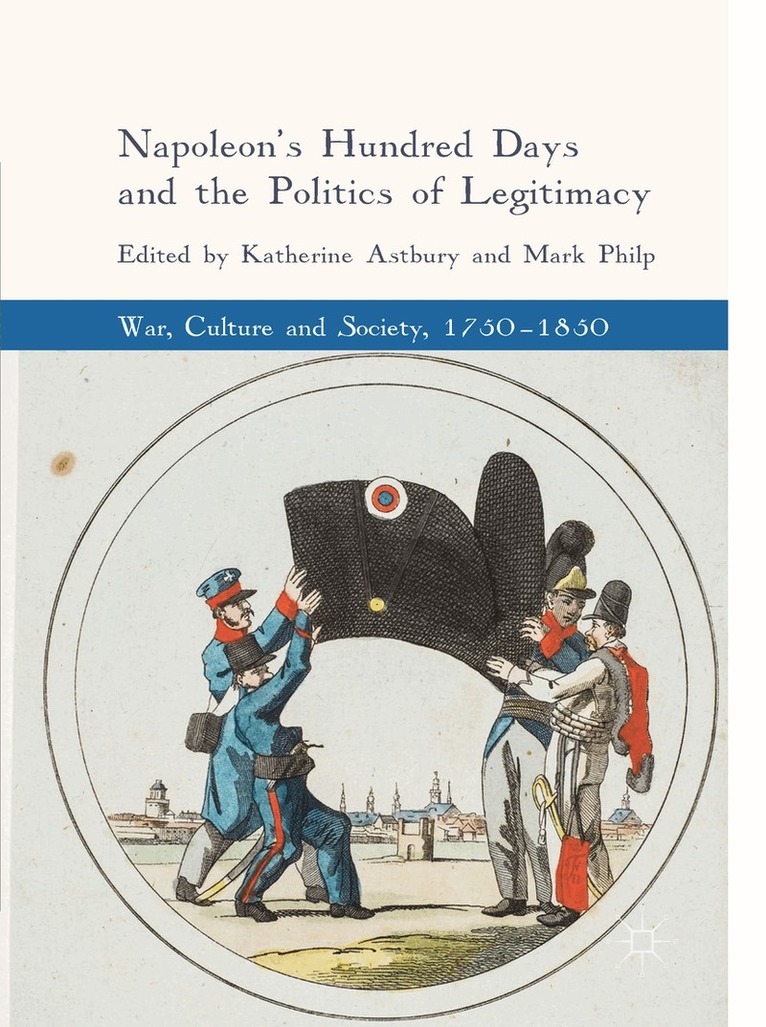
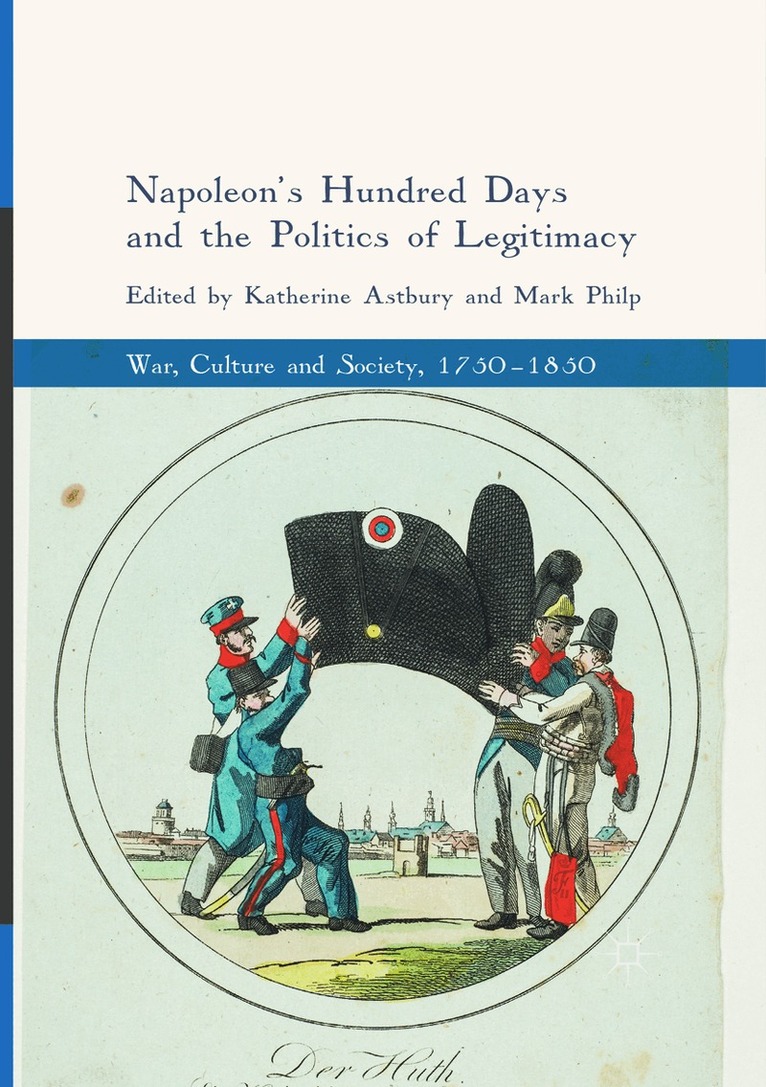
This book examines the politics of legitimacy as they played out across Europe in response to Napoleon’s dramatic return to power in France after his exile to Elba in 1814. Napoleon had to re-establish his claim to power with initially minimal military resources. Moreover, as the rest of Europe united against him, he had to marshal popular support for his new regime, while simultaneously demanding men and money to back what became an increasingly inevitable military campaign. The initial return – known as ‘the flight of the eagle’ – gradually turned into a dogged attempt to bolster support using a range of mechanisms, including constitutional amendments, elections, and public ceremonies. At the same time, his opponents had to marshal their resources to challenge his return, relying on populations already war-weary and resentful of the costs they had had to bear. The contributors to this volume explore how, for both sides, cultural politics became central in supporting or challenging the legitimacy of these political orders in the path to Waterloo.
E-bok
Engelska, 20181 141 kr
Läs direkt efter köp
This book examines the politics of legitimacy as they played out across Europe in response to Napoleon’s dramatic return to power in France after his exile to Elba in 1814. Napoleon had to re-establish his claim to power with initially minimal military resources. Moreover, as the rest of Europe united against him, he had to marshal popular support for his new regime, while simultaneously demanding men and money to back what became an increasingly inevitable military campaign. The initial return – known as ‘the flight of the eagle’ – gradually turned into a dogged attempt to bolster support using a range of mechanisms, including constitutional amendments, elections, and public ceremonies. At the same time, his opponents had to marshal their resources to challenge his return, relying on populations already war-weary and resentful of the costs they had had to bear. The contributors to this volume explore how, for both sides, cultural politics became central in supporting or challenging the legitimacy of these political orders in the path to Waterloo.
Häftad, Engelska, 2019
891 kr
Skickas inom 10-15 vardagar
This book examines the politics of legitimacy as they played out across Europe in response to Napoleon’s dramatic return to power in France after his exile to Elba in 1814. Napoleon had to re-establish his claim to power with initially minimal military resources. Moreover, as the rest of Europe united against him, he had to marshal popular support for his new regime, while simultaneously demanding men and money to back what became an increasingly inevitable military campaign. The initial return – known as ‘the flight of the eagle’ – gradually turned into a dogged attempt to bolster support using a range of mechanisms, including constitutional amendments, elections, and public ceremonies. At the same time, his opponents had to marshal their resources to challenge his return, relying on populations already war-weary and resentful of the costs they had had to bear. The contributors to this volume explore how, for both sides, cultural politics became central in supporting or challenging the legitimacy of these political orders in the path to Waterloo.