Katherine Elaine Bliss - Böcker
Visar alla böcker från författaren Katherine Elaine Bliss. Handla med fri frakt och snabb leverans.
3 produkter
3 produkter
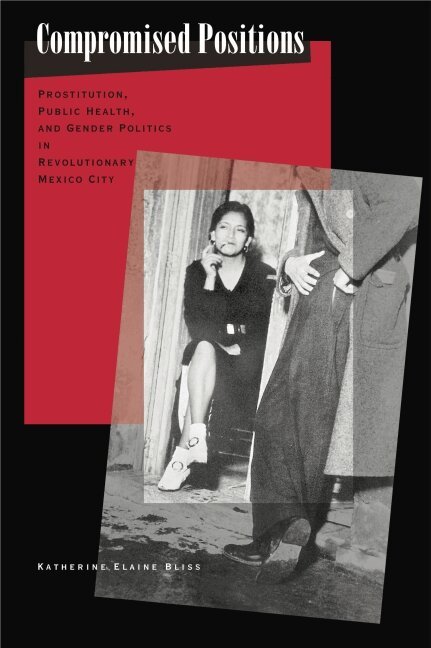
Compromised Positions
Prostitution, Public Health, and Gender Politics in Revolutionary Mexico City
Inbunden, Engelska, 2001
859 kr
Skickas inom 7-10 vardagar
To illuminate the complex cultural foundations of state formation in modern Mexico, Compromised Positions explains how and why female prostitution became politicized in the context of revolutionary social reform between 1910 and 1940. Focusing on the public debates over legalized sexual commerce and the spread of sexually transmitted disease in the first half of the twentieth century, Katherine Bliss argues that political change was compromised time and again by reformers' own antiquated ideas about gender and class, by prostitutes' outrage over official attempts to undermine their livelihood, and by clients' unwillingness to forgo visiting brothels despite revolutionary campaigns to promote monogamy, sexual education, and awareness of the health risks associated with sexual promiscuity. In the Mexican public's imagination, the prostitute symbolized the corruption of the old regime even as her redemption represented the new order's potential to dramatically alter gender relations through social policy. Using medical records, criminal case files, and letters from prostitutes and their patrons to public officials, Compromised Positions reveals how the contradictory revolutionary imperatives of individual freedom and public health clashed in the effort to eradicate prostitution and craft a model of morality suitable for leading Mexico into the modern era.
1 873 kr
Skickas inom 5-8 vardagar
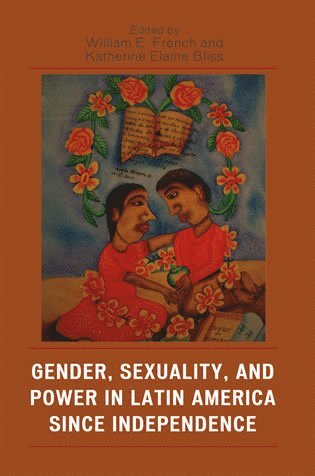
Featuring the original primary research of a number of leading scholars, this innovative volume integrates gender and sexuality into the main currents of historical interpretation concerning Latin America. The book argues that gender and sexuality—rather than simply supplementing existing explanations of political, social, cultural, and economic phenomena—are central to understanding these processes. Focusing on subjects as varied as murder, motherhood and the death penalty in early Republican Venezuela, dueling in Uruguay, midwifery in Brazil, youth culture in Mexico, and revolution in Nicaragua, contributors explore the many ways that gender and sexuality have been essential to the operation of power in Latin America over the last two hundred years. The linked questions of agency, identity, the body, and ethnicity are woven throughout their analysis. By analyzing a rich array of medical, criminological, juridical, social scientific, and human rights discourses throughout Latin America, the authors challenge students as well as scholars to reconsider our understanding of the past through the lenses of gender and sexuality. Making the case for the centrality of gender and sexuality to any study of political and social relations, this volume also will help chart the future direction of research in Latin American history since Independence.
789 kr
Skickas inom 5-8 vardagar
Featuring the original primary research of a number of leading scholars, this innovative volume integrates gender and sexuality into the main currents of historical interpretation concerning Latin America. The book argues that gender and sexuality—rather than simply supplementing existing explanations of political, social, cultural, and economic phenomena—are central to understanding these processes. Focusing on subjects as varied as murder, motherhood and the death penalty in early Republican Venezuela, dueling in Uruguay, midwifery in Brazil, youth culture in Mexico, and revolution in Nicaragua, contributors explore the many ways that gender and sexuality have been essential to the operation of power in Latin America over the last two hundred years. The linked questions of agency, identity, the body, and ethnicity are woven throughout their analysis. By analyzing a rich array of medical, criminological, juridical, social scientific, and human rights discourses throughout Latin America, the authors challenge students as well as scholars to reconsider our understanding of the past through the lenses of gender and sexuality. Making the case for the centrality of gender and sexuality to any study of political and social relations, this volume also will help chart the future direction of research in Latin American history since Independence.