Katherine Hirschfeld - Böcker
Visar alla böcker från författaren Katherine Hirschfeld. Handla med fri frakt och snabb leverans.
4 produkter
4 produkter
1 132 kr
Tillfälligt slut
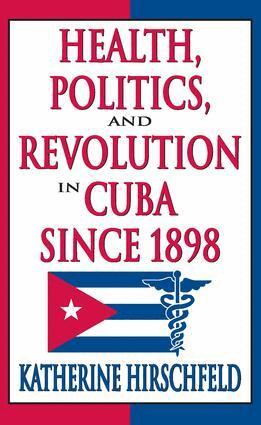
Challenging many of the assumptions scholars have made about the Cuban Revolution's impact on healthcare, this volume recounts one anthropologist's quest to discover the truth behind the complicated relationship between Cuba's revolution, politics, and healthcare system. Katherine Hirschfeld became interested in Cuba in the mid-1990s, after reading numerous laudatory books and articles describing the Castro regime's achievements in health and medicine. Cuba's population health indicators seemed to be far superior to those of neighboring countries, the national health costs low, and medical care free at point-of-service to the entire people. Historical records indicated that most of these positive health trends resulted from the changes instituted by Castro in 1959. Few of these authors, however, had actually spent time on the island. Thus, Hirschfeld found that academic writing on Cuba was often long on praise, but short on empirical research about what exactly had changed in Cuban medicine since 1959.After much bureaucratic wrangling, Hirschfeld managed to secure permission to conduct long-term ethnographic research in Cuba, where she lived with families from Havana and Santiago, conducted clinic observations, interviewed doctors and patients, and was treated in a Cuban hospital during an epidemic of dengue fever. The reality of the Cuban healthcare system turned out to be different than the scholarly ideal: it was bureaucratized, authoritarian, and repressive, and most people preferred to seek healthcare in the informal economy rather than endure the material shortages, red tape, and political surveillance of the public sector. Written in the form of a first-person narrative, Health, Politics, and Revolution in Cuba Since 1898 not only critically reevaluates Cuban healthcare after the 1959 revolution; it includes chapters detailing Cuban health trends from the Spanish-American War (1898) through the fall of Fulgencio Batista in 1959 and into the present.
687 kr
Skickas inom 10-15 vardagar
Challenging many of the assumptions scholars have made about the Cuban Revolution's impact on healthcare, this volume recounts one anthropologist's quest to discover the truth behind the complicated relationship between Cuba's revolution, politics, and healthcare system. Katherine Hirschfeld became interested in Cuba in the mid-1990s, after reading numerous laudatory books and articles describing the Castro regime's achievements in health and medicine. Cuba's population health indicators seemed to be far superior to those of neighboring countries, the national health costs low, and medical care free at point-of-service to the entire people. Historical records indicated that most of these positive health trends resulted from the changes instituted by Castro in 1959. Few of these authors, however, had actually spent time on the island. Thus, Hirschfeld found that academic writing on Cuba was often long on praise, but short on empirical research about what exactly had changed in Cuban medicine since 1959.After much bureaucratic wrangling, Hirschfeld managed to secure permission to conduct long-term ethnographic research in Cuba, where she lived with families from Havana and Santiago, conducted clinic observations, interviewed doctors and patients, and was treated in a Cuban hospital during an epidemic of dengue fever. The reality of the Cuban healthcare system turned out to be different than the scholarly ideal: it was bureaucratized, authoritarian, and repressive, and most people preferred to seek healthcare in the informal economy rather than endure the material shortages, red tape, and political surveillance of the public sector. Written in the form of a first-person narrative, Health, Politics, and Revolution in Cuba Since 1898 not only critically reevaluates Cuban healthcare after the 1959 revolution; it includes chapters detailing Cuban health trends from the Spanish-American War (1898) through the fall of Fulgencio Batista in 1959 and into the present.
New Wars and Old Plagues
Armed Conflict, Environmental Change and Resurgent Malaria in the Southern Caucasus
Inbunden, Engelska, 2023
549 kr
Skickas inom 10-15 vardagar
This Open Access book uses Mary Kaldor’s concept of “New Wars” to explore how ethnic conflict reshaped the social and environmental landscape of the Southern Caucuses following the collapse of the Soviet Union.
New Wars and Old Plagues : Armed Conflict, Environmental Change and Resurgent Malaria in the Southern Caucasus
Engelska, 2023
631 kr
Skickas inom 5-8 vardagar