Katherine Withy - Böcker
Visar alla böcker från författaren Katherine Withy. Handla med fri frakt och snabb leverans.
4 produkter
4 produkter
1 091 kr
Skickas inom 5-8 vardagar
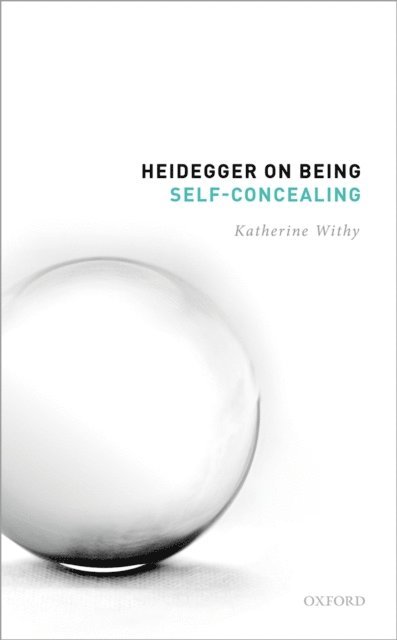
What is Heidegger talking about when he says that being conceals itself? This is the first study to systematically address that question. Katherine Withy analyses texts from across Heidegger's philosophical career and sorts the various phenomena of concealing and concealment that Heidegger discusses into a highly-structured taxonomy. The taxonomy clarifies the relationships and differences between such phenomena as lēthē (forgottenness), the nothing, earth, excess, the backgrounding of the world, and un-truth, as well as speaking falsely, talking idly, secrets, mysteries, seeming, and inauthentic discovering. But in relating and differentiating these phenomena, the taxonomy shows that none of them is the self-concealing of being. Having established what the self-concealing of being is not, Withy establishes what it is. She argues that being conceals itself in that it shows up to us as lacking the sorts of contrast cases that render entities determinate and intelligible. This novel and powerful interpretation of the self-concealing of being explains why the secondary literature to date has discussed it in vague and metaphorical terms, as well as why Heidegger tends to collapse being's self-concealing into the concealment of lēthē. Withy's interpretation is both a clarification of and a corrective to Heidegger's notoriously difficult and sometimes misleading discussions of being as self-concealing.
513 kr
Skickas inom 10-15 vardagar
There are moments when things suddenly seem strange—objects in the world lose their meaning, we feel like strangers to ourselves, or human existence itself strikes us as bizarre and unintelligible. Through a detailed philosophical investigation of Heidegger’s concept of uncanniness (Unheimlichkeit), Katherine Withy explores what such experiences reveal about us. She argues that while others (such as Freud, in his seminal psychoanalytic essay, “The Uncanny”) take uncanniness to be an affective quality of strangeness or eeriness, Heidegger uses the concept to go beyond feeling uncanny to reach the ground of this feeling in our being uncanny.Heidegger on Being Uncanny answers those who wonder whether human existence is fundamentally strange to itself by showing that we can be what we are only if we do not fully understand what it is to be us. This fundamental finitude in our self-understanding is our uncanniness. In this first dedicated interpretation of Heidegger’s uncanniness, Withy tracks this concept from his early analyses of angst through his later interpretations of the choral ode from Sophocles’s Antigone. Her interpretation uncovers a novel and robust continuity in Heidegger’s thought and in his vision of the human being as uncanny, and it points the way toward what it is to live well as an uncanny human being.
753 kr
Skickas inom 7-10 vardagar
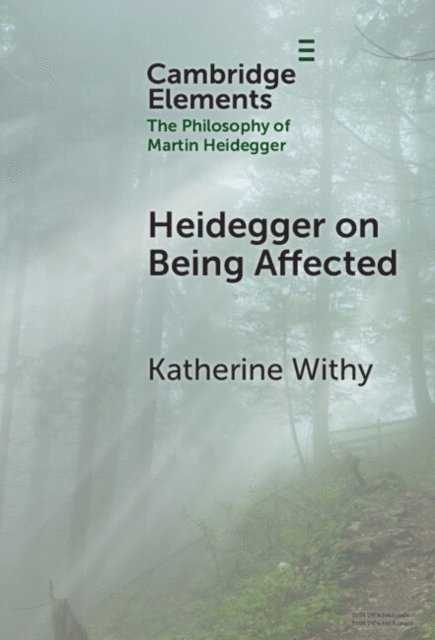
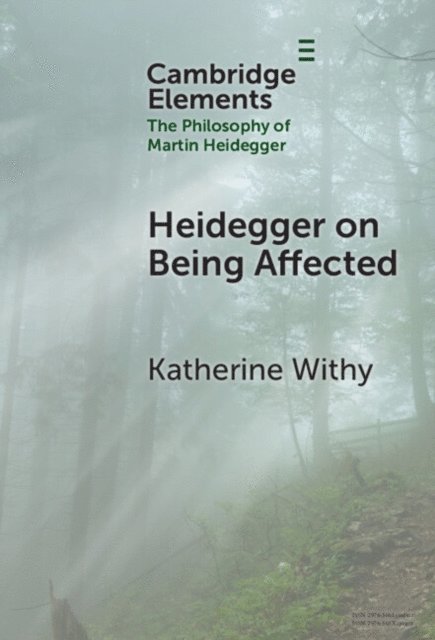
Things get to us. We are moved or affected by 'things' in the ordinary sense=the paraphernalia of our daily lives-and also by ourselves, by others, and by ontological phenomena such as being and time. How can such things get to us? How can things matter to me? Heidegger answers this question with his concepts of finding (Befindlichkeit) and attunement (Stimmung). This Element explores how being finding allows things to matter to us in attunements such as fear and hope by allowing those things to show up as benefits or detriments to our pursuits and so to put those pursuits at stake. It also explores how we can be affected ontologically-that is, affected by being-in special attunements such as angst and boredom, as well as how Heidegger's account of being affected has contributed to our understanding of emotions, moods, and affective disorders.
234 kr
Skickas inom 7-10 vardagar
Things get to us. We are moved or affected by 'things' in the ordinary sense=the paraphernalia of our daily lives-and also by ourselves, by others, and by ontological phenomena such as being and time. How can such things get to us? How can things matter to me? Heidegger answers this question with his concepts of finding (Befindlichkeit) and attunement (Stimmung). This Element explores how being finding allows things to matter to us in attunements such as fear and hope by allowing those things to show up as benefits or detriments to our pursuits and so to put those pursuits at stake. It also explores how we can be affected ontologically-that is, affected by being-in special attunements such as angst and boredom, as well as how Heidegger's account of being affected has contributed to our understanding of emotions, moods, and affective disorders.