Katherine Zubovich - Böcker
Visar alla böcker från författaren Katherine Zubovich. Handla med fri frakt och snabb leverans.
4 produkter
4 produkter
412 kr
Skickas inom 7-10 vardagar
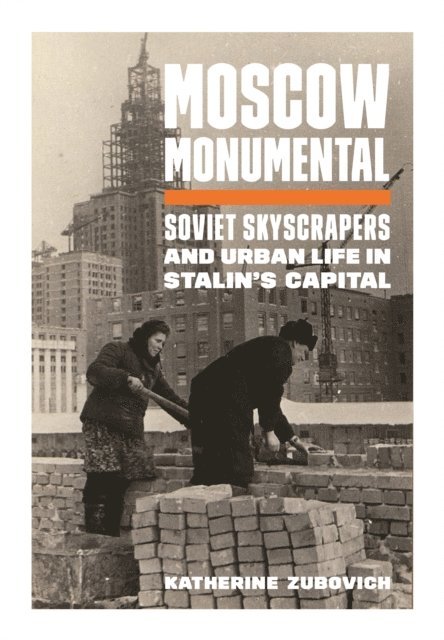
An in-depth history of the Stalinist skyscraperIn the early years of the Cold War, the skyline of Moscow was forever transformed by a citywide skyscraper building project. As the steel girders of the monumental towers went up, the centuries-old metropolis was reinvented to embody the greatness of Stalinist society. Moscow Monumental explores how the quintessential architectural works of the late Stalin era fundamentally reshaped daily life in the Soviet capital.Drawing on a wealth of original archival research, Katherine Zubovich examines the decisions and actions of Soviet elites—from top leaders to master architects—and describes the experiences of ordinary Muscovites who found their lives uprooted by the ambitious skyscraper project. She shows how the Stalin-era quest for monumentalism was rooted in the Soviet Union's engagement with Western trends in architecture and planning, and how the skyscrapers required the creation of a vast and complex infrastructure. As laborers flooded into the city, authorities evicted and rehoused tens of thousands of city residents living on the plots selected for development. When completed in the mid-1950s, these seven ornate neoclassical buildings served as elite apartment complexes, luxury hotels, and ministry and university headquarters.Moscow Monumental tells a story that is both local and broadly transnational, taking readers from the streets of interwar Moscow and New York to the marble-clad halls of the bombastic postwar structures that continue to define the Russian capital today.
266 kr
Skickas inom 7-10 vardagar
An in-depth history of the Stalinist skyscraperIn the early years of the Cold War, the skyline of Moscow was forever transformed by a citywide skyscraper building project. As the steel girders of the monumental towers went up, the centuries-old metropolis was reinvented to embody the greatness of Stalinist society. Moscow Monumental explores how the quintessential architectural works of the late Stalin era fundamentally reshaped daily life in the Soviet capital.Drawing on a wealth of original archival research, Katherine Zubovich examines the decisions and actions of Soviet elites—from top leaders to master architects—and describes the experiences of ordinary Muscovites who found their lives uprooted by the ambitious skyscraper project. She shows how the Stalin-era quest for monumentalism was rooted in the Soviet Union's engagement with Western trends in architecture and planning, and how the skyscrapers required the creation of a vast and complex infrastructure. As laborers flooded into the city, authorities evicted and rehoused tens of thousands of city residents living on the plots selected for development. When completed in the mid-1950s, these seven ornate neoclassical buildings served as elite apartment complexes, luxury hotels, and ministry and university headquarters.Moscow Monumental tells a story that is both local and broadly transnational, taking readers from the streets of interwar Moscow and New York to the marble-clad halls of the bombastic postwar structures that continue to define the Russian capital today.
775 kr
Skickas inom 7-10 vardagar
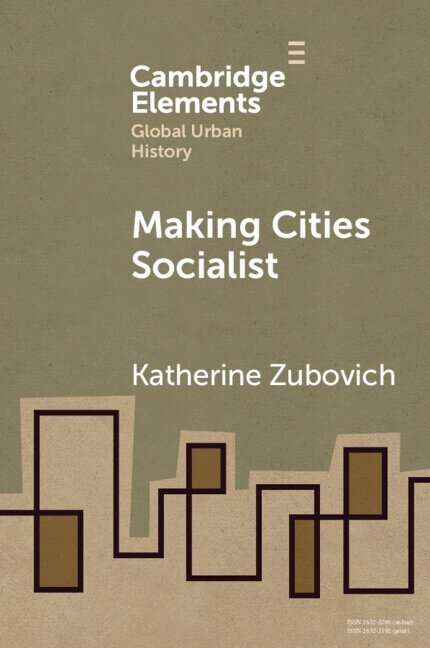
This Element explores the history of urban planning, city building, and city life in the socialist world. It follows the global trajectories of architects, planners, and ideas about socialist urbanism developed during the twentieth century, while also highlighting features of everyday life in socialist cities. The Element opens with a section on the socialist city as it took shape first in the Soviet Union. Subsequent sections take a comparative and transnational approach to the history of socialist urbanism, tracing socialist city development in the Union of Soviet Socialist Republics (USSR), Eastern Europe, Asia, Africa, and Latin America.
241 kr
Skickas inom 7-10 vardagar
This Element explores the history of urban planning, city building, and city life in the socialist world. It follows the global trajectories of architects, planners, and ideas about socialist urbanism developed during the twentieth century, while also highlighting features of everyday life in socialist cities. The Element opens with a section on the socialist city as it took shape first in the Soviet Union. Subsequent sections take a comparative and transnational approach to the history of socialist urbanism, tracing socialist city development in the Union of Soviet Socialist Republics (USSR), Eastern Europe, Asia, Africa, and Latin America.