Kathleen A. Hansen - Böcker
Visar alla böcker från författaren Kathleen A. Hansen. Handla med fri frakt och snabb leverans.
3 produkter
3 produkter
833 kr
Skickas inom 10-15 vardagar
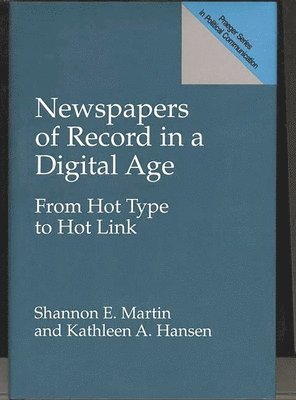
Newspapers as a record of the day's events and conduit for public business have been part of life in the United States for several hundred years. While some newspapers claim the newspaper of record characteristics for themselves, others are so designated to serve specific community functions, such as the town chronicler or public notice distributor. The expression newspaper of record is most often found among works by lawyers, historians, and librarians. Yet many newspapers are now developing online news products that do not correspond directly to the newsprint version. Many are asking whether online newspapers will replace traditional newsprint products and whether the online version can or should be treated as equal to the newsprint version. State and municipal governments are exploring electronic distribution of public notices, challenging newspapers' exclusive claim to legal notice advertising revenue.Martin and Hansen focus on some of the traditional uses of newspapers by groups who use the newspaper of record concept, and they compare traditional newspapers to online newspapers as records. After a historical review, they examine legal and archival uses for newspapers, report on several case studies of online newspaper production, and conclude with suggestions for future scholarly, legal, and industry focus on the newspaper of record concept. This valuable analysis serves professionals in journalism and law as well as scholars and researchers in journalism and archive management.
502 kr
Skickas inom 10-15 vardagar
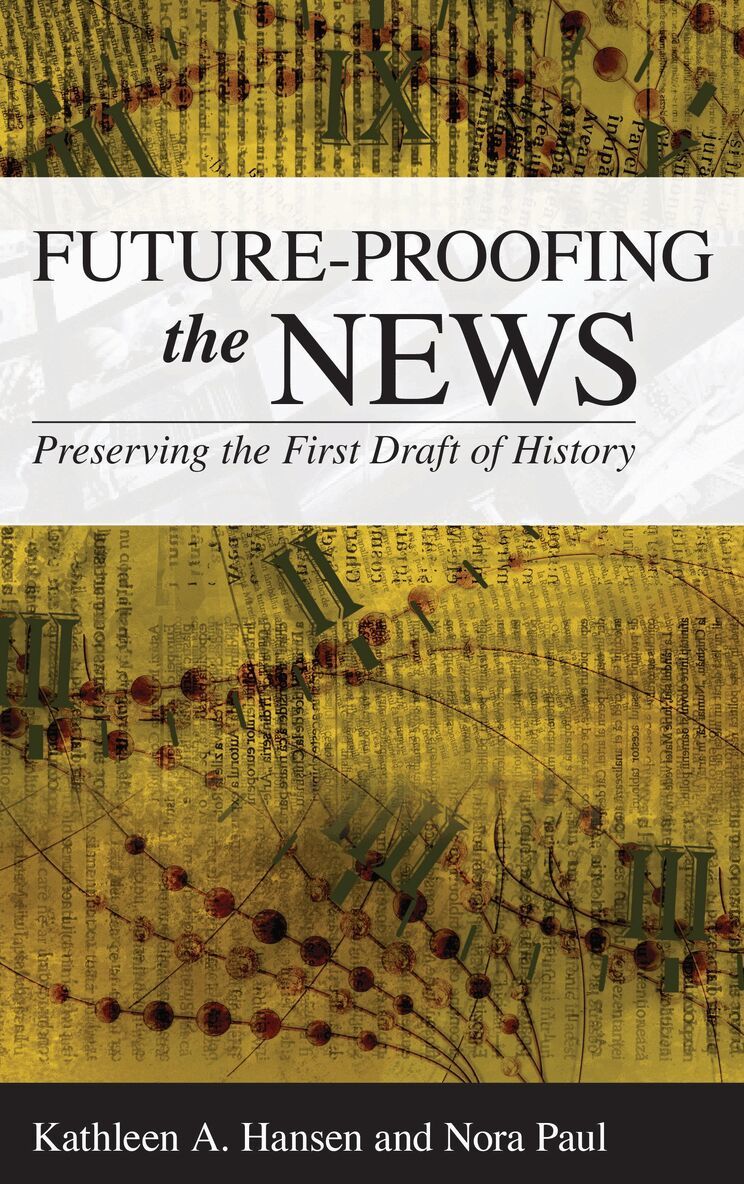
News coverage is often described as the “first draft of history.” From the publication in 1690 of the first American newspaper, Publick Occurrences, to the latest tweet, news has been disseminated to inform its audience about what is going on in the world. But the preservation of news content has had its technological, legal, and organizational challenges. Over the centuries, as new means of finding, producing, and distributing news were developed, the methods used to ensure future generations’ access changed, and new challenges for news content preservation arose. This book covers the history of news preservation (or lack thereof), the decisions that helped ensure (or doom) its preservation, and the unique preservation issues that each new form of media brought. All but one copy of Publick Occurrences were destroyed by decree. The wood-pulp based newsprint used for later newspapers crumbled to dust. Early microfilm disintegrates to acid and decades of microfilmed newspapers have already dissolved in their storage drawers. Early radio and television newscasts were rarely captured and when they were, the technological formats for accessing the tapes are long superseded. Sounds and images stored on audio and videotapes fade and become unreadable. The early years of web publication by news organizations were lost by changes in publishing platforms and a false security that everything on the Internet lives forever. In 50 or 100 years, what will we be able to retrieve from today’s news output? How will we tell the story of this time and place? Will we have better access to news produced in 1816 than news produced in 2016? These are some of the questions Future-Proofing the News aims to answer.
283 kr
Skickas inom 10-15 vardagar
News coverage is often described as the “first draft of history.” From the publication in 1690 of the first American newspaper, Publick Occurrences, to the latest tweet, news has been disseminated to inform its audience about what is going on in the world. But the preservation of news content has had its technological, legal, and organizational challenges. Over the centuries, as new means of finding, producing, and distributing news were developed, the methods used to ensure future generations’ access changed, and new challenges for news content preservation arose. This book covers the history of news preservation (or lack thereof), the decisions that helped ensure (or doom) its preservation, and the unique preservation issues that each new form of media brought. All but one copy of Publick Occurrences were destroyed by decree. The wood-pulp based newsprint used for later newspapers crumbled to dust. Early microfilm disintegrates to acid and decades of microfilmed newspapers have already dissolved in their storage drawers. Early radio and television newscasts were rarely captured and when they were, the technological formats for accessing the tapes are long superseded. Sounds and images stored on audio and videotapes fade and become unreadable. The early years of web publication by news organizations were lost by changes in publishing platforms and a false security that everything on the Internet lives forever. In 50 or 100 years, what will we be able to retrieve from today’s news output? How will we tell the story of this time and place? Will we have better access to news produced in 1816 than news produced in 2016? These are some of the questions Future-Proofing the News aims to answer.