
Kathleen Fitzpatrick – författare
Visar alla böcker från författaren Kathleen Fitzpatrick. Handla med fri frakt och snabb leverans.
14 produkter
14 produkter
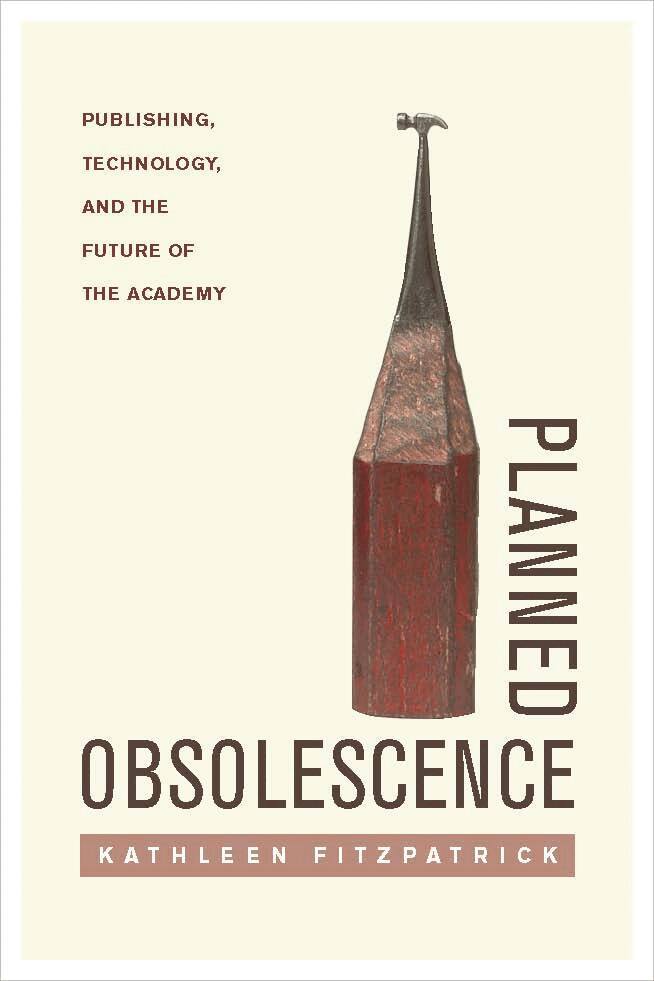
Inbunden, Engelska, 2011
909 kr
Skickas inom 10-15 vardagar
Choice's Outstanding Academic Title list for 2013A bold approach to re-envisioning the future of academic publishingAcademic institutions are facing a crisis in scholarly publishing at multiple levels: presses are stressed as never before, library budgets are squeezed, faculty are having difficulty publishing their work, and promotion and tenure committees are facing a range of new ways of working without a clear sense of how to understand and evaluate them.Planned Obsolescence is both a provocation to think more broadly about the academy's future and an argument for re-conceiving that future in more communally-oriented ways. Facing these issues head-on, Kathleen Fitzpatrick focuses on the technological changes—especially greater utilization of internet publication technologies, including digital archives, social networking tools, and multimedia—necessary to allow academic publishing to thrive into the future. But she goes further, insisting that the key issues that must be addressed are social and institutional in origin.Springing from original research as well as Fitzpatrick's own hands-on experiments in new modes of scholarly communication through MediaCommons, the digital scholarly network she co-founded, Planned Obsolescence explores these aspects of scholarly work, as well as issues surrounding the preservation of digital scholarship and the place of publishing within the structure of the contemporary university. Written in an approachable style designed to bring administrators and scholars into a conversation, Planned Obsolescence explores both symptom and cure to ensure that scholarly communication will remain relevant in the digital future.Related Articles:"Do 'the Risky Thing' in Digital Humanities"—Chronicle of Higher Education"Academic Publishing and Zombies"—Inside Higher Ed
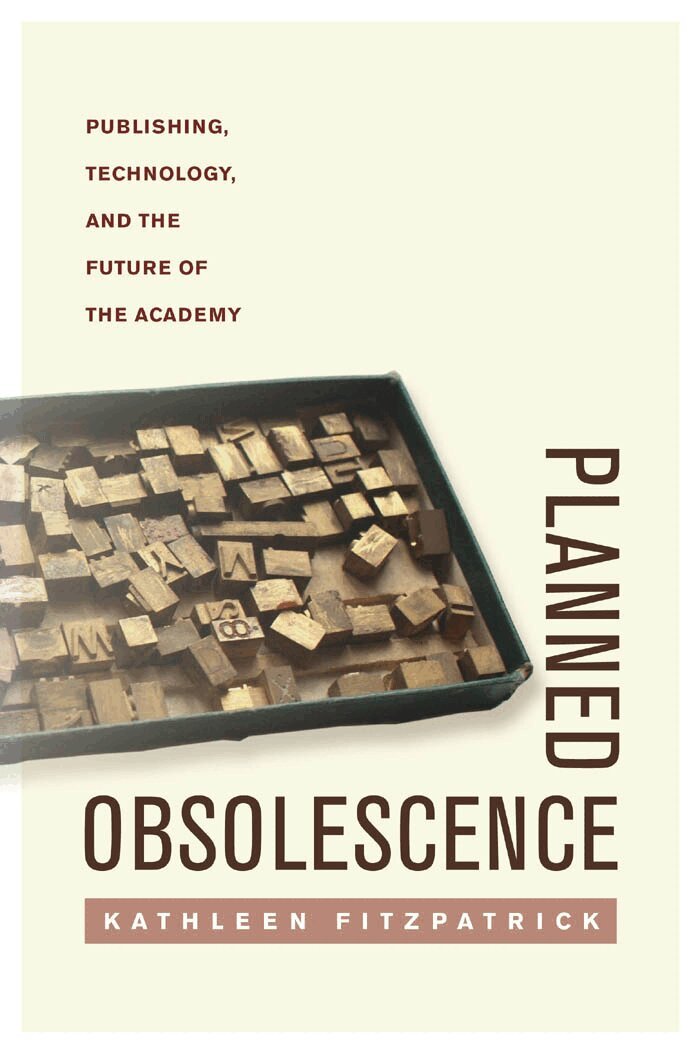
Häftad, Engelska, 2011
360 kr
Skickas inom 5-8 vardagar
Choice's Outstanding Academic Title list for 2013A bold approach to re-envisioning the future of academic publishingAcademic institutions are facing a crisis in scholarly publishing at multiple levels: presses are stressed as never before, library budgets are squeezed, faculty are having difficulty publishing their work, and promotion and tenure committees are facing a range of new ways of working without a clear sense of how to understand and evaluate them.Planned Obsolescence is both a provocation to think more broadly about the academy's future and an argument for re-conceiving that future in more communally-oriented ways. Facing these issues head-on, Kathleen Fitzpatrick focuses on the technological changes—especially greater utilization of internet publication technologies, including digital archives, social networking tools, and multimedia—necessary to allow academic publishing to thrive into the future. But she goes further, insisting that the key issues that must be addressed are social and institutional in origin.Springing from original research as well as Fitzpatrick's own hands-on experiments in new modes of scholarly communication through MediaCommons, the digital scholarly network she co-founded, Planned Obsolescence explores these aspects of scholarly work, as well as issues surrounding the preservation of digital scholarship and the place of publishing within the structure of the contemporary university. Written in an approachable style designed to bring administrators and scholars into a conversation, Planned Obsolescence explores both symptom and cure to ensure that scholarly communication will remain relevant in the digital future.Related Articles:"Do 'the Risky Thing' in Digital Humanities"—Chronicle of Higher Education"Academic Publishing and Zombies"—Inside Higher Ed
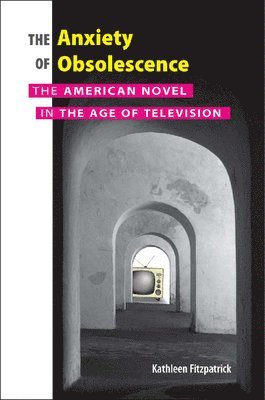
Inbunden, Engelska, 2006
1 726 kr
Skickas inom 3-6 vardagar
It almost goes without saying that the rise in popularity of television has killed the audience for "serious" literature. This is such a given that reading Fitzpatrick's challenge to this notion can be very disconcerting, as she traces the ways in which a small cadre of writers of "serious" literature - DeLillo, Pynchon, and Franzen, for instance - have propagated this myth in order to set themselves up as the last bastions of good writing. Fitzpatrick first explores whether serious literature was ever as all-pervasive as critics of the television culture claim, and then asks the obvious question: what, or who, exactly, are these guys defending good writing against? Fitzpatrick examines the ways in which the anxiety about the supposed death of the novel is built on a myth of the novel's past ubiquity and its present displacement by television. She explores the ways in which this myth plays out in and around contemporary fiction, and how it serves as a kind of unacknowledged discourse about race, class, and gender. The declaration constructs a minority status for the "white male author" who needs protecting from television's largely female and increasingly non-white audience.The novel, then, is transformed from a primary means of communication into an ancient, almost forgotten, and thus, treasured form reserved for the well-educated and well-to-do, and the men who practice it are exalted as the practitioners of an almost lost art. Such positioning serves to further marginalize women writers and writers of color, because it makes the novel, by definition, the preserve of the poor endangered white man. If the novel is only a product of a small group of white men, how can the contributions of women and writers of color be recognized? Instead, this positioning abandons women and people of color to television as a creative outlet, and in return, cedes television to them. Fitzpatrick argues that there's a level of unrecognized patronization in assuming that television serves no purpose but to provide dumb entertainment to bored women and others too stupid to understand novels. And, instead, she demonstrates the real positive effects of a televisual culture.
Häftad, Engelska, 2006
649 kr
Skickas inom 5-8 vardagar
It almost goes without saying that the rise in popularity of television has killed the audience for ""serious"" literature. This is such a given that reading Fitzpatrick's challenge to this notion can be very disconcerting, as she traces the ways in which a small cadre of writers of ""serious"" literature - DeLillo, Pynchon, and Franzen, for instance - have propagated this myth in order to set themselves up as the last bastions of good writing. Fitzpatrick first explores whether serious literature was ever as all-pervasive as critics of the television culture claim, and then asks the obvious question: what, or who, exactly, are these guys defending good writing against? Fitzpatrick examines the ways in which the anxiety about the supposed death of the novel is built on a myth of the novel's past ubiquity and its present displacement by television. She explores the ways in which this myth plays out in and around contemporary fiction, and how it serves as a kind of unacknowledged discourse about race, class, and gender. The declaration constructs a minority status for the ""white male author"" who needs protecting from television's largely female and increasingly non-white audience. The novel, then, is transformed from a primary means of communication into an ancient, almost forgotten, and thus, treasured form reserved for the well-educated and well-to-do, and the men who practice it are exalted as the practitioners of an almost lost art. Such positioning serves to further marginalize women writers and writers of color, because it makes the novel, by definition, the preserve of the poor endangered white man. If the novel is only a product of a small group of white men, how can the contributions of women and writers of color be recognized? Instead, this positioning abandons women and people of color to television as a creative outlet, and in return, cedes television to them. Fitzpatrick argues that there's a level of unrecognized patronization in assuming that television serves no purpose but to provide dumb entertainment to bored women and others too stupid to understand novels. And, instead, she demonstrates the real positive effects of a televisual culture.
Häftad, Engelska, 2025
216 kr
Skickas inom 5-8 vardagar
Inbunden, Engelska, 2025
385 kr
Skickas inom 5-8 vardagar

Inbunden, Engelska, 2026
378 kr
Skickas inom 5-8 vardagar

Häftad, Engelska, 2026
242 kr
Skickas inom 5-8 vardagar
Inbunden, Engelska, 2019
364 kr
Skickas inom 5-8 vardagar
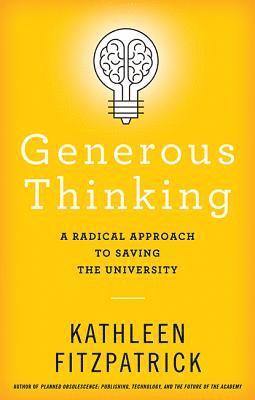
Can the university solve the social and political crisis in America?Higher education occupies a difficult place in twenty-first-century American culture. Universities—the institutions that bear so much responsibility for the future health of our nation—are at odds with the very publics they are intended to serve. As Kathleen Fitzpatrick asserts, it is imperative that we re-center the mission of the university to rebuild that lost trust. Critical thinking—the heart of what academics do—can today often negate, refuse, and reject new ideas. In an age characterized by rampant anti-intellectualism, Fitzpatrick charges the academy with thinking constructively rather than competitively, building new ideas rather than tearing old ones down. She urges us to rethink how we teach the humanities and to refocus our attention on the very human ends—the desire for community and connection—that the humanities can best serve. One key aspect of that transformation involves fostering an atmosphere of what Fitzpatrick dubs "generous thinking," a mode of engagement that emphasizes listening over speaking, community over individualism, and collaboration over competition.Fitzpatrick proposes ways that anyone who cares about the future of higher education can work to build better relationships between our colleges and universities and the public, thereby transforming the way our society functions. She encourages interested stakeholders to listen to and engage openly with one another's concerns by reading and exploring ideas together; by creating collective projects focused around common interests; and by ensuring that our institutions of higher education are structured to support and promote work toward the public good. Meditating on how and why we teach the humanities, Generous Thinking is an audacious book that privileges the ability to empathize and build rather than simply tear apart.
Häftad, Engelska, 2021
292 kr
Skickas
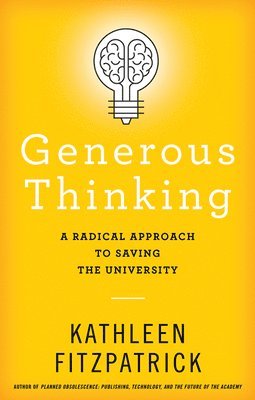
Can the university solve the social and political crisis in America?Higher education occupies a difficult place in twenty-first-century American culture. Universities—the institutions that bear so much responsibility for the future health of our nation—are at odds with the very publics they are intended to serve. As Kathleen Fitzpatrick asserts, it is imperative that we re-center the mission of the university to rebuild that lost trust. Critical thinking—the heart of what academics do—can today often negate, refuse, and reject new ideas. In an age characterized by rampant anti-intellectualism, Fitzpatrick charges the academy with thinking constructively rather than competitively, building new ideas rather than tearing old ones down. She urges us to rethink how we teach the humanities and to refocus our attention on the very human ends—the desire for community and connection—that the humanities can best serve. One key aspect of that transformation involves fostering an atmosphere of what Fitzpatrick dubs "generous thinking," a mode of engagement that emphasizes listening over speaking, community over individualism, and collaboration over competition.Fitzpatrick proposes ways that anyone who cares about the future of higher education can work to build better relationships between our colleges and universities and the public, thereby transforming the way our society functions. She encourages interested stakeholders to listen to and engage openly with one another's concerns by reading and exploring ideas together; by creating collective projects focused around common interests; and by ensuring that our institutions of higher education are structured to support and promote work toward the public good. Meditating on how and why we teach the humanities, Generous Thinking is an audacious book that privileges the ability to empathize and build rather than simply tear apart.
Inbunden, Engelska, 2024
331 kr
Skickas inom 5-8 vardagar
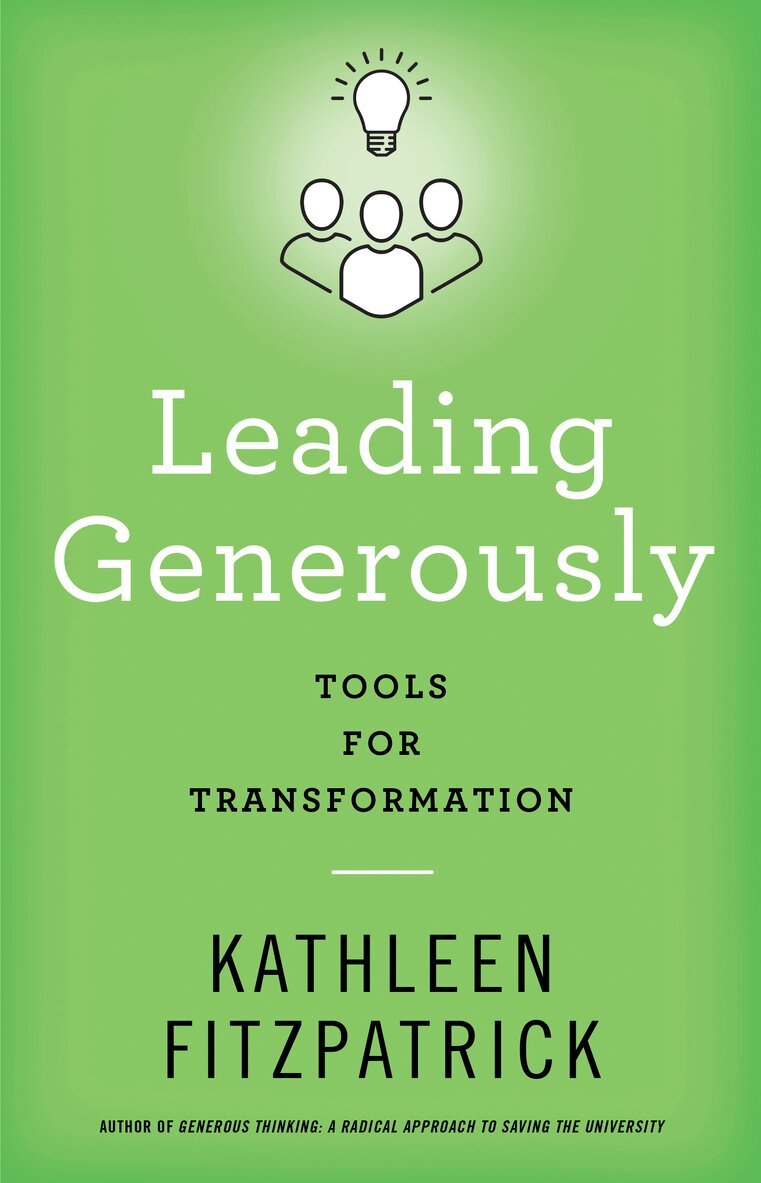
From the author of Generous Thinking: A Radical Approach to Saving the University comes a compelling guide to the art of collaborative leadership.In a world increasingly defined by crisis, public service institutions like colleges, universities, and nonprofit organizations require capable, dynamic, and trustworthy leadership—yet stories of leadership failures there abound. The problem, Kathleen Fitzpatrick argues in Leading Generously, is a fundamental mismatch between the communal purposes that leaders must serve and the individualistic structures under which they operate. Transforming institutions so they can be resilient in the face of uncertain futures will require a similar transformation in leadership practices, turning hierarchies into collective and collaborative spaces designed for the common good. Doing so, however, requires a willingness to reimagine the idea of leadership itself. In this concise, approachable book, Fitzpatrick explores not just the problems with the institutional status quo but also the tools to transform it. Her wide-ranging research brings together key theories of leadership with the experiences of successful leaders whose stories demonstrate innovative possibilities for collaboration in the service of institutional transformation.Building on her previous book Generous Thinking, this guide lays out a road map for how leaders can transform their institutions to truly align with their missions and can build more generous communities for the common good.

Häftad, Engelska, 2024
221 kr
Skickas inom 5-8 vardagar

Engelska, 2024
183 kr
Skickas inom 5-8 vardagar

Inbunden, Engelska, 2025
385 kr
Skickas inom 5-8 vardagar